Topic Overview
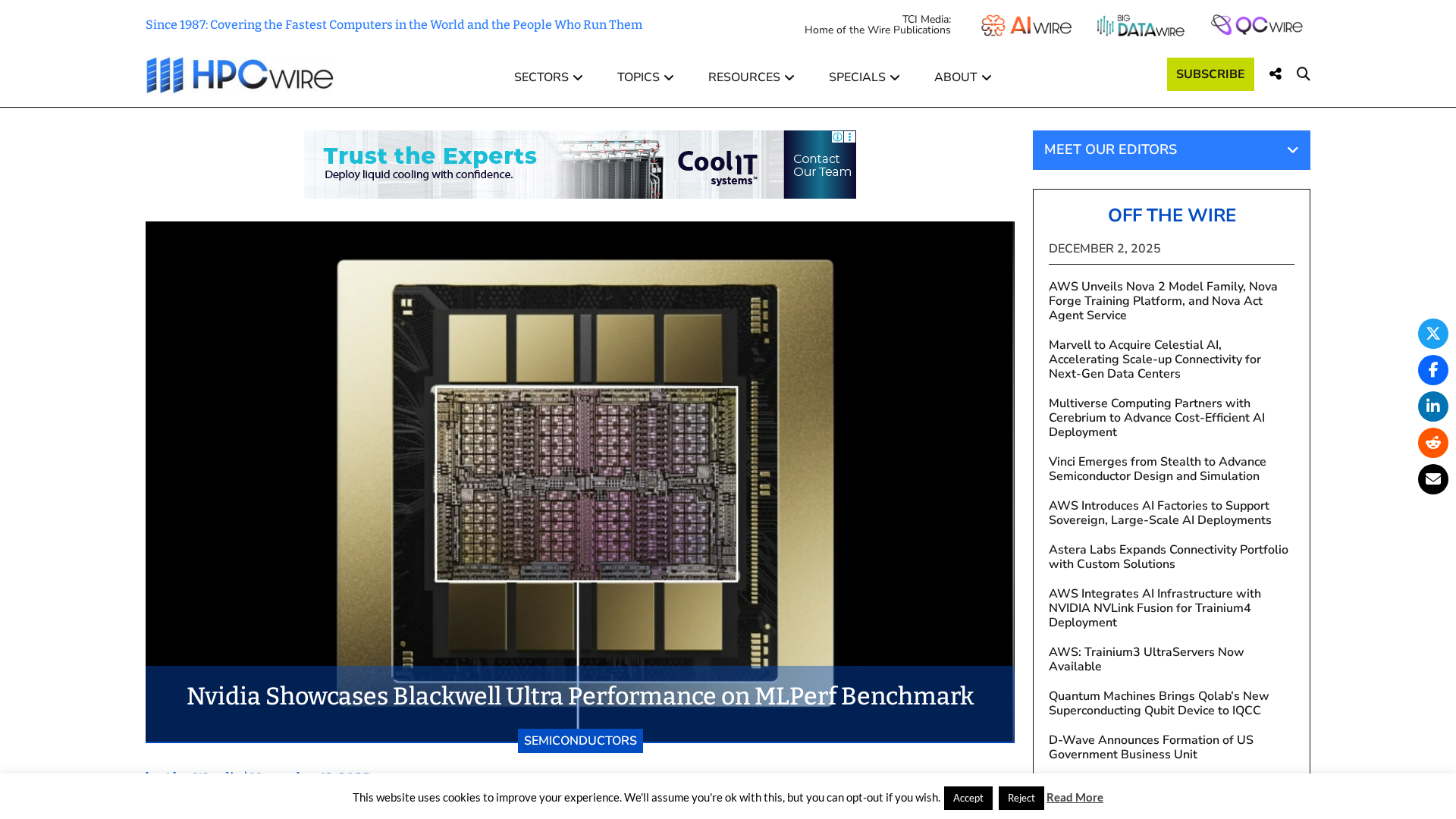
This topic covers inference servers and hardware-accelerated platforms: the specialized chips and orchestration software used to run large language models and other AI workloads in production. It focuses on cloud-native integrations and runtime tooling that connect model-serving stacks to context stores, vector databases, secure execution sandboxes, and platform engineering systems. Key hardware and runtimes include AWS Trainium/Inferentia for cost-optimized cloud inference, NVIDIA Blackwell Ultra GPUs for high-throughput datacenter serving, and Kubernetes-native runtimes such as the Red Hat Inference Server for operator-managed deployments. Relevance in late 2025: model sizes, latency expectations, and cost pressure continue to drive deployments onto accelerating hardware and cluster-aware inference servers. At the same time, application architectures increasingly rely on the Model Context Protocol (MCP), semantic memory, and vector search to support retrieval-augmented generation, making tight integration between inference infrastructure and auxiliary services essential. Representative tools and integrations: Daytona provides isolated sandboxes for securely executing AI-generated code at inference or runtime; Pinecone’s MCP server links model-serving workflows to vector databases for retrieval; the GibsonAI MCP server and mcp-memory-service provide managed database and memory interfaces for context and state; Cloudflare tooling enables deploying and interrogating edge workers and storage alongside inference endpoints; Baidu AppBuilder SDK and DevOps AI Toolkit illustrate how platform engineering and MCP-based automation bring AI-aware CI/CD and Kubernetes operations into the serving layer. Practical takeaway: selecting an inference stack in 2025 means balancing hardware choice (cost vs throughput), orchestration (Kubernetes/Red Hat operators), and integrations for secure execution, context management, and vector search—ensuring the serving layer is tightly coupled to MCP-compliant tooling and platform automation.
MCP Server Rankings – Top 7

Fast and secure execution of your AI generated code with Daytona sandboxes

MCP server that connects AI tools with Pinecone projects and documentation.

AI-Powered Cloud databases: Build, migrate, and deploy database instances with AI

Deploy, configure & interrogate your resources on the Cloudflare developer platform (e.g. Workers/KV/R2/D1)

Web search with Baidu Cloud's AI Search

AI-powered platform engineering and DevOps automation via intelligent Kubernetes operations and conversational workflows

Production-ready MCP memory service with zero locks, hybrid backend, and semantic memory search.