Topic Overview
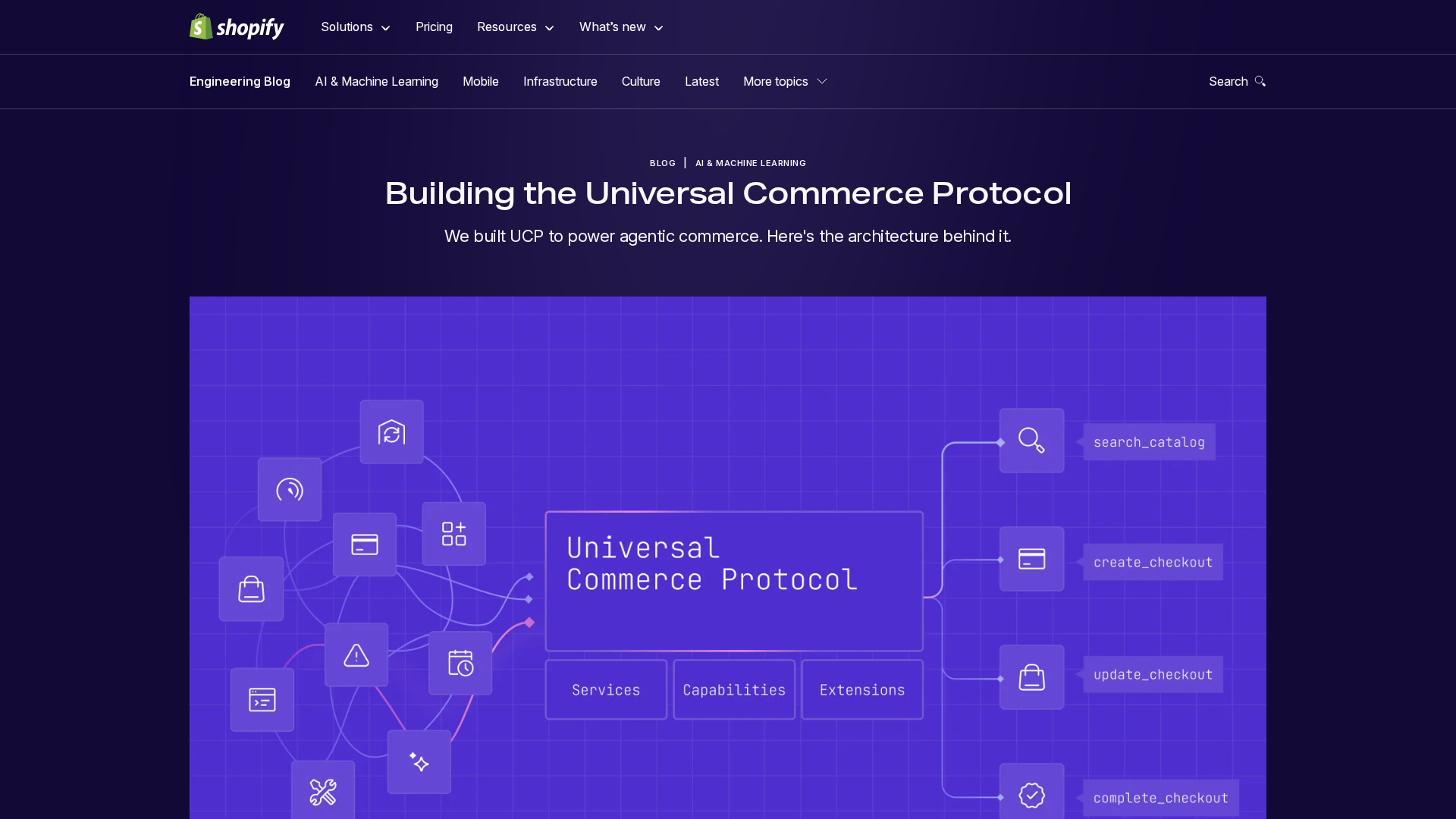
This topic examines how modern commerce systems are being connected to conversational AI through standardized integration protocols — notably Google’s Universal Commerce Protocol (UCP) and a set of competing standards — and how Model Context Protocol (MCP) implementations bridge LLMs to real-world commerce tooling. As of 2026, widespread deployment of large language models across shopping, checkout, and customer service has made stable, secure, and machine-readable commerce interfaces a practical necessity. Protocols like UCP aim to standardize product schemas, cart and checkout events, inventory signals, and fulfillment callbacks so AI agents can reliably read product data, initiate payments, manage orders, and handle returns. Competing efforts emphasize different tradeoffs—simpler payloads for rapid integration, richer event models for fulfillment orchestration, or privacy-preserving patterns for regulated markets. MCP servers and integration platforms are the operational layer that realize these protocols: n8n’s MCP server maps natural-language actions to workflow automations; Pipedream provides hosted connectors and event-driven integrations to thousands of APIs; Supabase’s MCP server exposes database and edge-function capabilities to LLMs; DBHub gateways connect to SQL stores; Playwright, Browserbase and Chrome DevTools MCP servers enable browser automation and scraping for legacy storefronts; and AWS MCP servers package cloud-native best practices for secure production deployments. Key trends: movement toward composable, real-time commerce; emphasis on authentication, consent, and data minimization; increased use of edge functions for latency-sensitive flows; and growing need for standardized error handling and observability. Evaluating UCP versus alternatives therefore requires testing for completeness (product/price/availability), security and auth, developer ergonomics, and how well MCP-based tools can operationalize the protocol across legacy and cloud-native systems.
MCP Server Rankings – Top 8

MCP server enabling AI assistants to manage n8n workflows via natural language.

Connect with 2,500 APIs with 8,000+ prebuilt tools.

Interact with Supabase: Create tables, query data, deploy edge functions, and more.

Universal database MCP server connecting to MySQL, MariaDB, PostgreSQL, and SQL Server.

This MCP Server will help you run browser automation and webscraping using Playwright

Automate browser interactions in the cloud (e.g. web navigation, data extraction, form filling, and more)

MCP server to control and inspect a live Chrome browser via DevTools.
Specialized MCP servers that bring AWS best practices directly to your development workflow.