Overview
AskCodi provides an OpenAI-compatible API layer and developer tooling to run, host, and route requests to custom or public language and code models across multiple providers (Continue.dev, Cline, OpenAI Codex, and others). It offers model versioning, governance controls, multi-provider routing, and IDE integrations (notably VS Code) with prebuilt Codi Apps for common coding tasks (code generation, documentation, testing, refactoring, bug detection). The platform emphasizes reduced vendor lock-in, flexible pricing, and governance for teams deploying domain-specific coding assistants and copilots. Documentation, SDKs, and onboarding guides are available on the website. Public mentions and references include Product Hunt, RealPython, G2/Capterra listings, Reddit, and community testimonials at love.askcodi.com.
Key Features
OpenAI-compatible API
Provides familiar OpenAI-style endpoints (chat/completions/embeddings) so existing clients require minimal changes.
Multi-provider model routing
Route requests to Continue.dev, Cline, OpenAI Codex, or other backends based on rules and context.
Custom model hosting & versioning
Host fine-tuned or private models, manage versions, test in sandbox, and promote to production.
Token-based flexible billing
Mix of subscription and usage-based billing with token allocations and pay-as-you-go options.
IDE integrations & Codi Apps
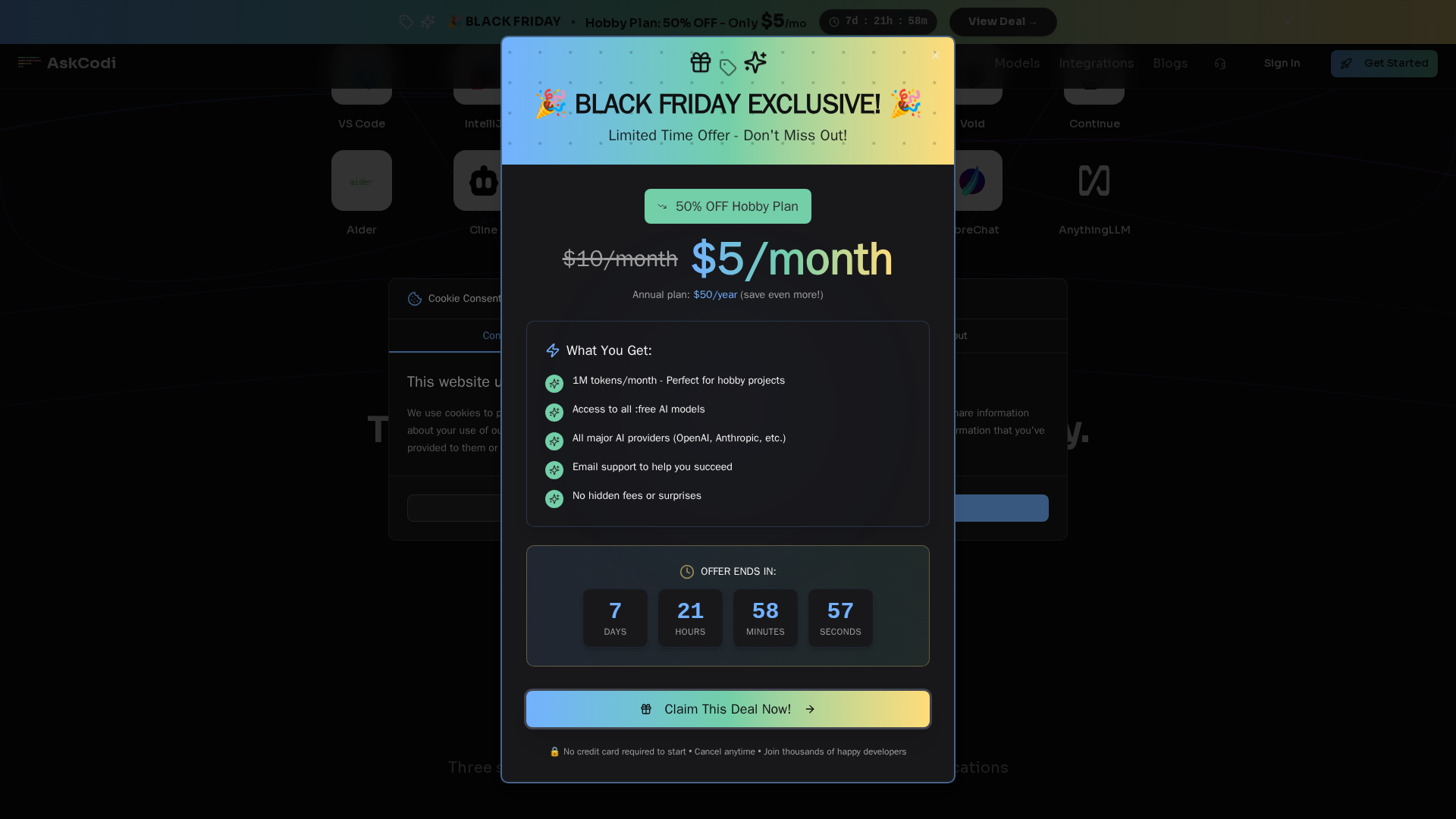
Prebuilt apps (code generation, documentation, testing, refactoring) and VS Code integration for in-editor assistance.
Governance, logging & analytics
Authentication, monitoring, model lifecycle controls, and custom logging for organizations.
Who Can Use This Tool?
- Developers:Speed up coding workflows with in-editor code generation and AI-assisted refactoring.
- Small Teams:Collaborate with shared workspaces, priority support, and team token allocations for projects.
- Enterprises:Deploy private models with governance, analytics, and custom logging for secure production use.
Pricing Plans
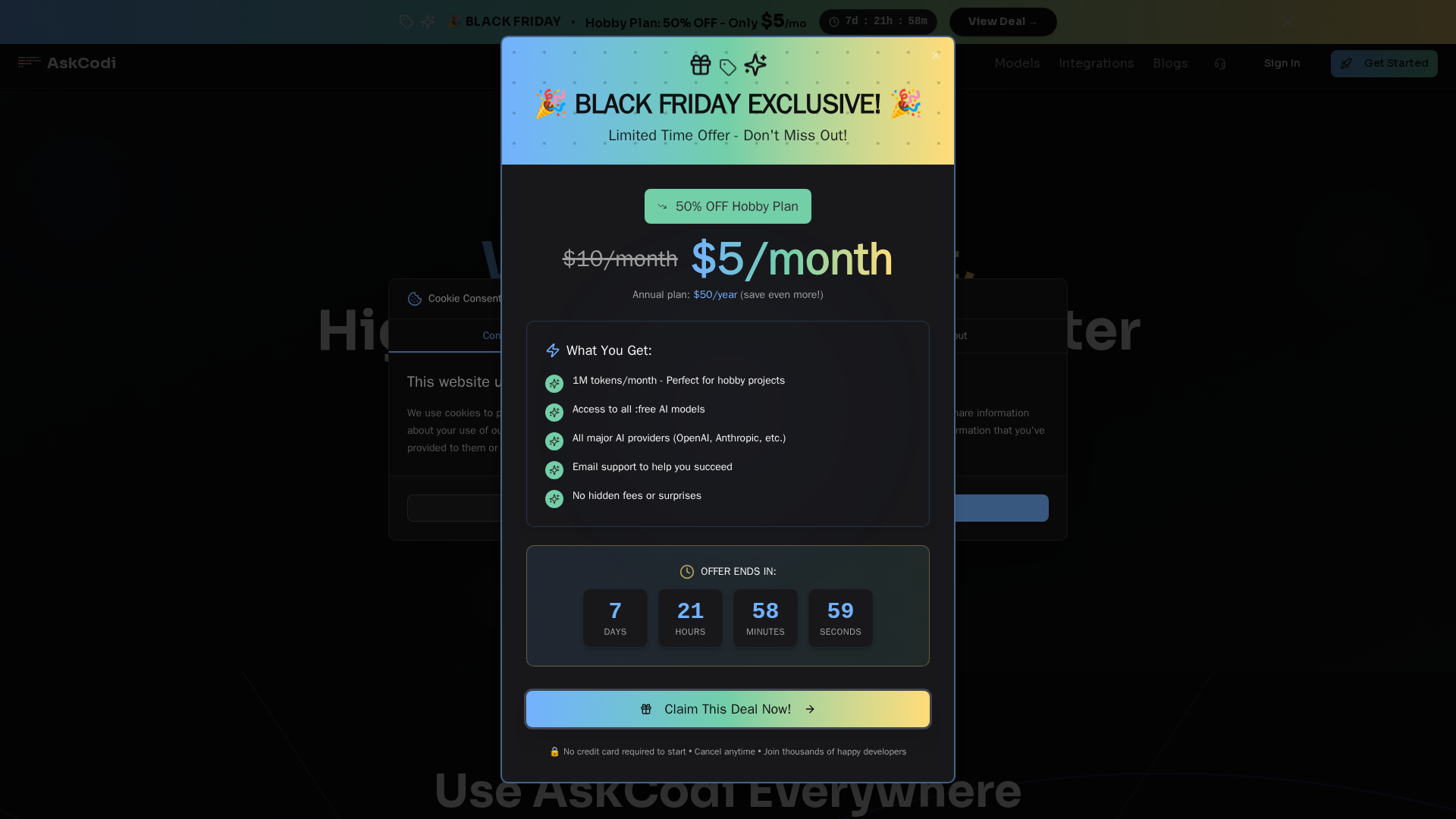
Perfect for trying AskCodi with limited daily requests and one workspace
- ✓Access to :free models
- ✓10 requests/day limit
- ✓1 workspace
- ✓Community support
- ✓⚠️ Data from :free models may be used for training
For hobbyists & side projects with 1M tokens monthly and email support
- ✓1M tokens/month
- ✓Access to all :free models
- ✓All providers (OpenAI, Anthropic, etc.)
- ✓Email support
- ✓Use models ending with :free
- ✓⚠️ Data from :free models may be used for training
Scale as needed with large token allocations, all AI models, and priority support
- ✓20M tokens (example allocation shown)
- ✓All AI models
- ✓Tokens don't expire
- ✓Priority support
- ✓Multiple workspaces
Custom for organizations with advanced controls, analytics, and unlimited workspaces
- ✓Custom pricing
- ✓Custom logging and analytics
- ✓Fine-grained model access
- ✓White labelling
- ✓Unlimited workspaces
- ✓Contact Sales / Get in touch
Pros & Cons
✓ Pros
- ✓OpenAI-compatible API makes migration and integration easy for existing clients
- ✓Multi-provider routing and custom model hosting reduces vendor lock-in
- ✓Flexible pricing (free tier + usage/subscription) and clear token allocations
- ✓IDE integrations (VS Code) and prebuilt Codi Apps speed developer productivity
- ✓Governance features: versioning, monitoring, and access controls for teams
✗ Cons
- ✗Data from :free models may be used for training (explicit notice on site)
- ✗Enterprise pricing/details require contacting sales (not fully transparent)
- ✗Product is newer in market — fewer long-term independent reviews than category giants
- ✗Launch year and some company history not clearly stated on site
Compare with Alternatives
Related Articles (12)
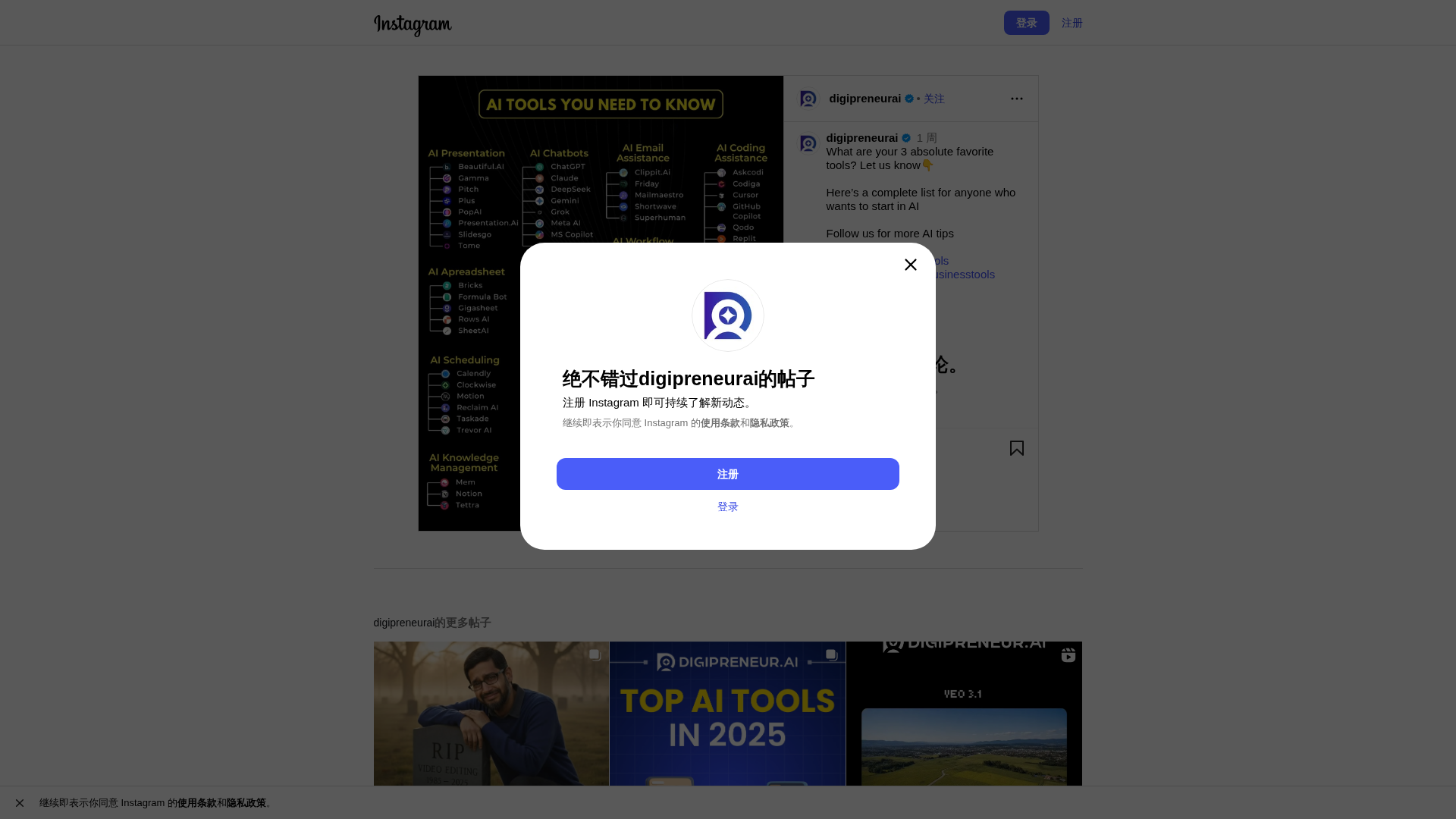
Content missing from the provided link; please supply the post's caption or description for analysis.

The article is gated behind a JavaScript/cookie wall, blocking access to its main content.
A guide to using an OpenAI-compatible API with custom models across Continue.dev, Cline, and Codex.
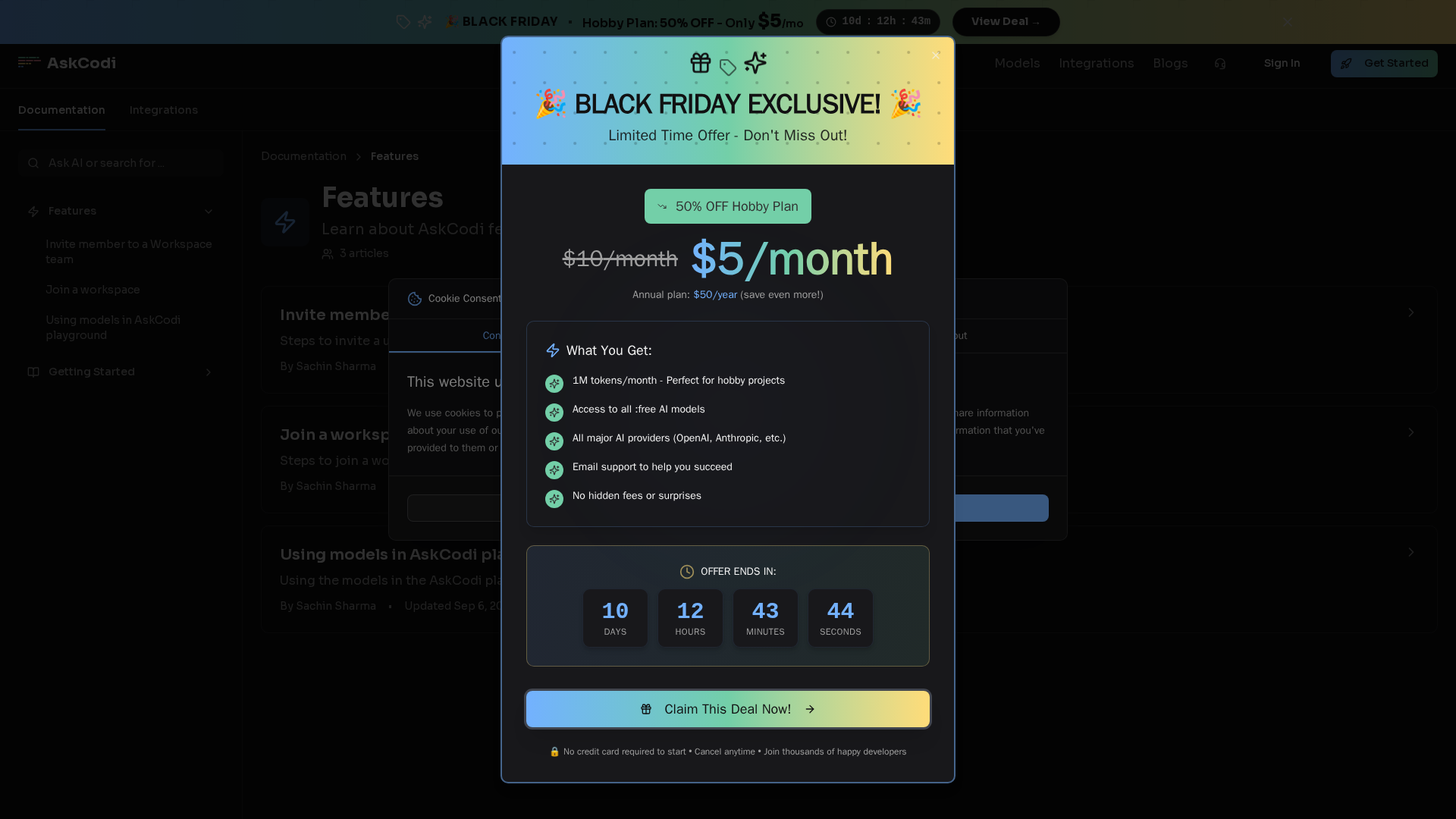
Discover an OpenAI-compatible API with custom models powering Continue.dev, Cline, and Codex-driven workflows.

<10-30 word quick-preview description>