
Overview
Labelbox is an end-to-end platform and service ecosystem designed to build, operate, and staff AI data factories for model builders and enterprises. It combines a feature-rich annotation product (Annotate), data cataloging, model-assisted labeling, and integrated model evaluation tools (rubric-based evaluations, RLVR, solvers/verifiers). In addition to software, Labelbox offers managed labeling and expert evaluation services through its Alignerr network for complex, high-quality human feedback and dataset creation. The platform supports multimodal data (images, video, text, audio, geospatial, medical), configurable workflows, quality controls, and integrations with SDKs and APIs to accelerate supervised fine-tuning and RLHF workflows. Labelbox is positioned for teams building frontier AI as well as organizations needing enterprise-grade data operations and scalable labeling services.
Key Features
Annotate (Configurable Labeling Editor)
A highly-configurable labeling editor with support for many feature types (bounding boxes, polygons, classifications), custom ontologies, and task-specific tooling.
Model-Assisted Labeling & Foundry
Integrates pre-labeling with model predictions and foundation models to accelerate human labeling and enable auto-annotation where appropriate.
Model Evaluation & Rubric-Based Scoring (RLVR, Solvers & Verifiers)
Rubric-based evaluations, RLVR (reinforcement learning from verifiable rewards), and automated verifier tools for multi-step or complex output checking and reward signal generation.
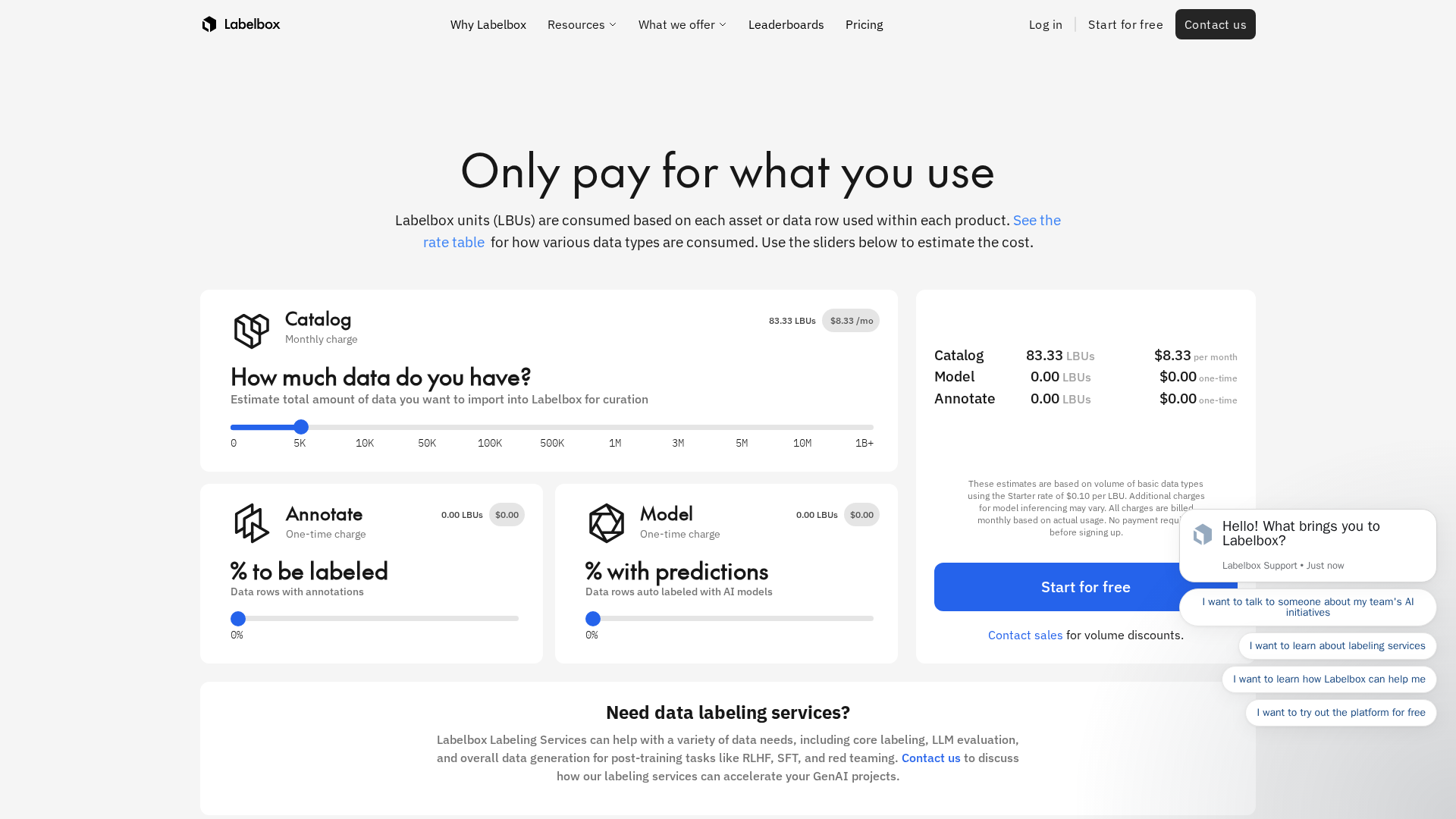
Labelbox Units (LBU) Billing & Pricing Calculator
Usage-metering across Catalog, Annotate, and Model with a public calculator and guidance on LBU accrual.
Managed Labeling & Alignerr Network
On-demand access to expert human evaluators and curated labeling teams for complex and high-quality data creation or model evaluations.
Multimodal & Enterprise Integrations
Native support for images, video, text, audio, PDFs, geospatial and medical data; SDKs (e.g., Python) and APIs for automation and large-scale programmatic workflows.
Who Can Use This Tool?
- Developers:Automate dataset ingestion, labeling pipelines, and integrate via SDKs and APIs for ML workflows.
- Data Scientists:Curate high-quality labeled data, run model evaluations, and prepare datasets for fine-tuning and analysis.
- ML Engineers/ML Ops:Manage scalable annotation workflows, LBU billing, model-assisted labeling, and production data pipelines.
- Enterprises:Provision enterprise-grade data factories, SLAs, dedicated support, and managed labeling services for large teams.
- Researchers / Educators:Access free or discounted educational plans for non-commercial research and benchmark dataset creation.
Pricing Plans
Usage-based plan at $0.10 per LBU, billed monthly.
- ✓$0.10 per Labelbox Unit (LBU) starter rate
- ✓Billed monthly based on actual LBU consumption
- ✓Covers Catalog, Annotate, and Model LBU consumption
Free for qualified educators and free signup with no upfront payment.
- ✓Free for qualified educational institutions (non-commercial research)
- ✓No payment required before signing up
- ✓Start for free to evaluate the platform
Custom enterprise pricing and volume discounts via sales.
- ✓Contact sales for volume discounts and bespoke pricing
- ✓Labelbox Labeling Services for managed labeling and data generation
- ✓SLAs, dedicated support and contractual enterprise terms available
Pros & Cons
✓ Pros
- ✓Comprehensive end-to-end toolset: annotation, model-assisted labeling, evaluation, cataloging.
- ✓Managed services (Alignerr) and expert network for high-quality human evaluations.
- ✓Strong multimodal support (images, video, text, audio, geospatial, medical).
- ✓Enterprise-ready features: workflows, quality controls, auditability, SDKs/APIs.
✗ Cons
- ✗Pricing can be complex (LBU-based) and can be costly for very large workloads.
- ✗Some public user feedback cites occasional performance or export slowdowns.
- ✗Video annotation and some edge-case workflows may have competing specialized tools that are stronger in those niches.
- ✗Number of publicly-available user reviews is modest compared to largest SaaS incumbents.
Related Articles (2)
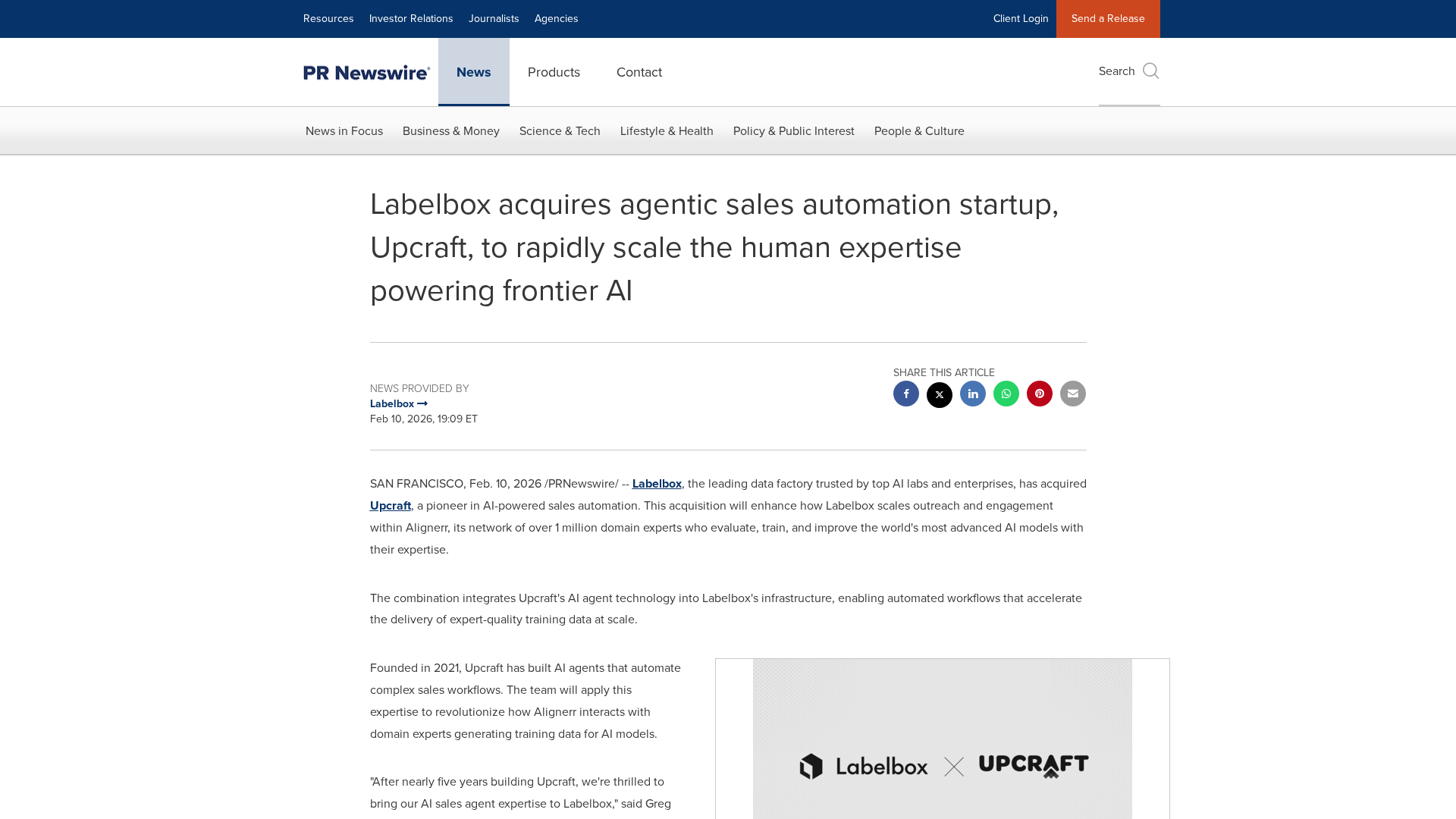
Labelbox acquires Upcraft to automate and scale expert-driven training data for frontier AI.
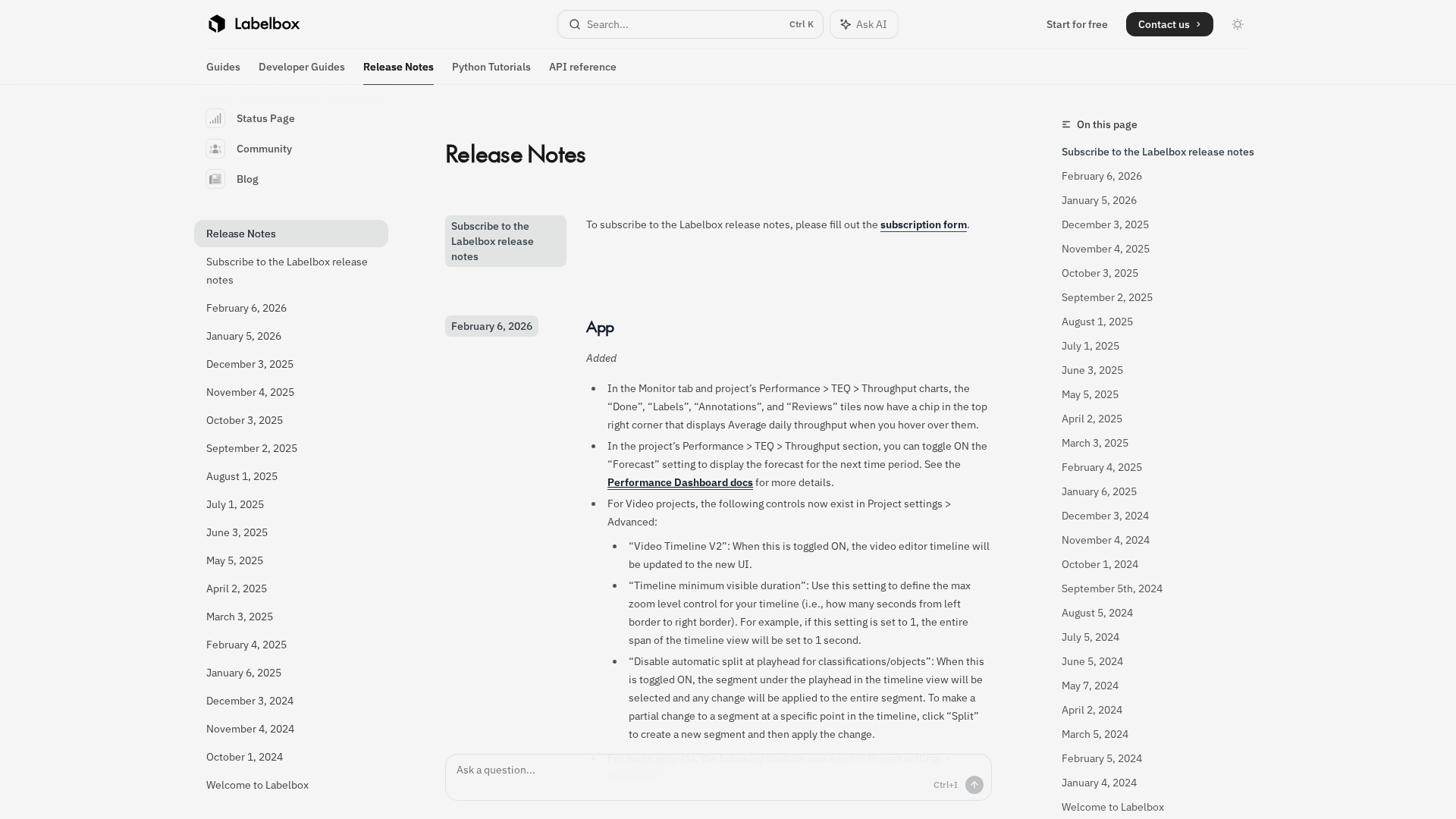
Comprehensive release notes detailing UI upgrades, AI features, timeline editors, and SDK/model changes across Labelbox.