Overview
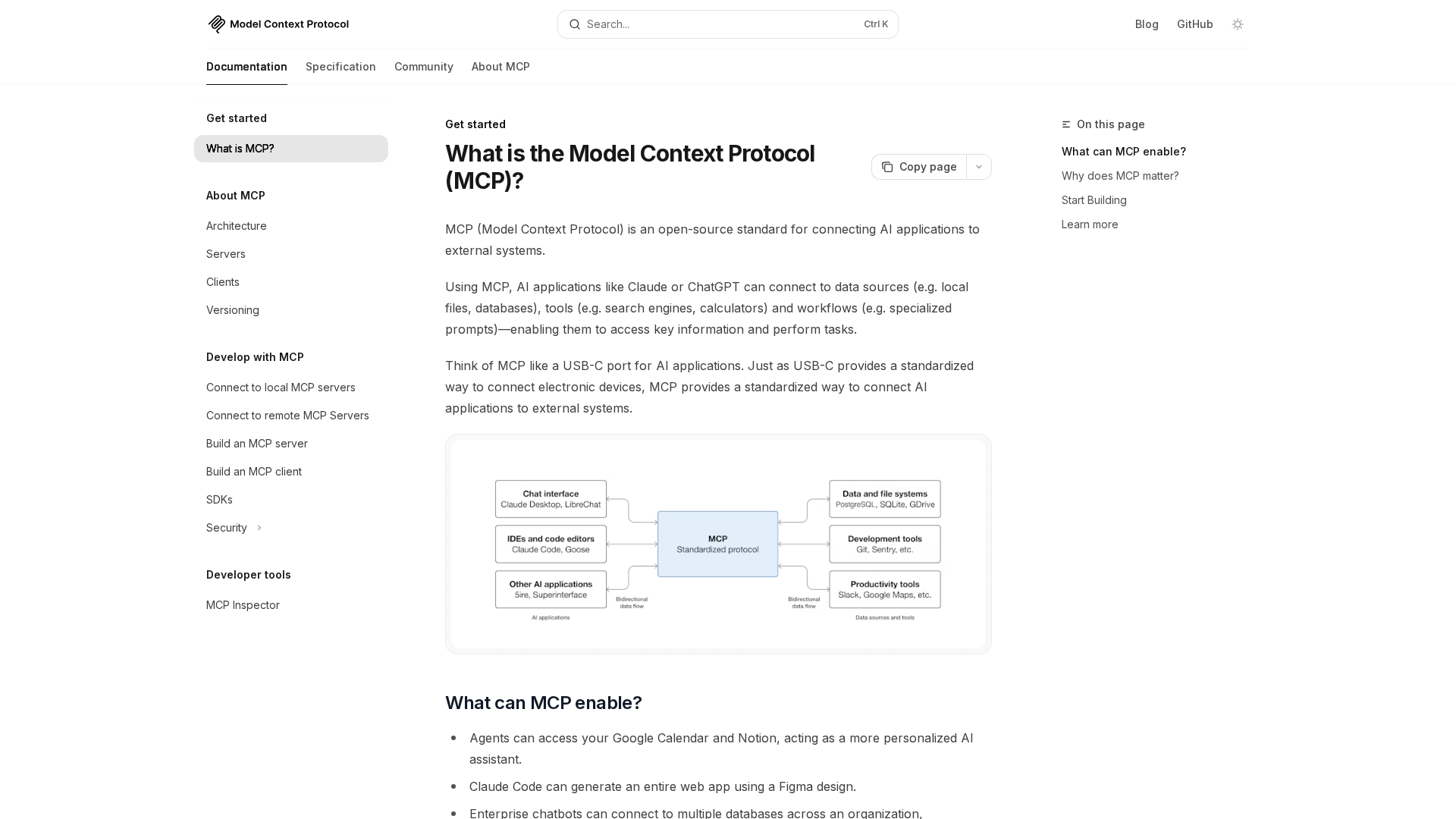
The Model Context Protocol (MCP) is an open, JSON-RPC–based standard that lets LLM hosts (AI applications) connect to external MCP servers which expose Resources (data/context), Tools (callable actions), Prompts (templates/workflows) and Sampling (server-driven LLM completions). MCP defines a lifecycle and transport layer (local STDIO, streamable HTTP), authorization guidance (OAuth 2.0 Resource Server patterns), and utilities for progress, logging, and error handling. Cross-language SDKs and a community registry support discovery and reuse of connectors so developers can build reusable servers and clients that give AI systems safe, consent-driven access to real data and automation.
Key Features
Standardized Data/Transport Layer
Uses JSON-RPC 2.0 with defined lifecycles and transports (STDIO for local, Streamable HTTP for remote) for consistent client-server communication.
Server Primitives: Tools, Resources, Prompts
Servers expose callable Tools, searchable/subscribe-able Resources (data), and reusable Prompts to host applications and models.
Sampling (Server-Initiated LLM Completions)
Servers can request model completions from hosts (sampling) with controls to limit server visibility into sensitive prompts.
Cross-language SDKs
Idiomatic SDKs (TypeScript, Python, etc.) provide type-safe contracts and helper utilities for building servers and clients across languages.
Discovery & Registry
Community registry and example servers enable discovery of pre-built connectors (Google Drive, GitHub, Filesystem, Memory, Time, etc.).
Authorization & Security Guidance
Recommends OAuth 2.0 Protected Resource Metadata and explicit user consent flows; docs include best practices for logging, access control, and risk mitigation.
Who Can Use This Tool?
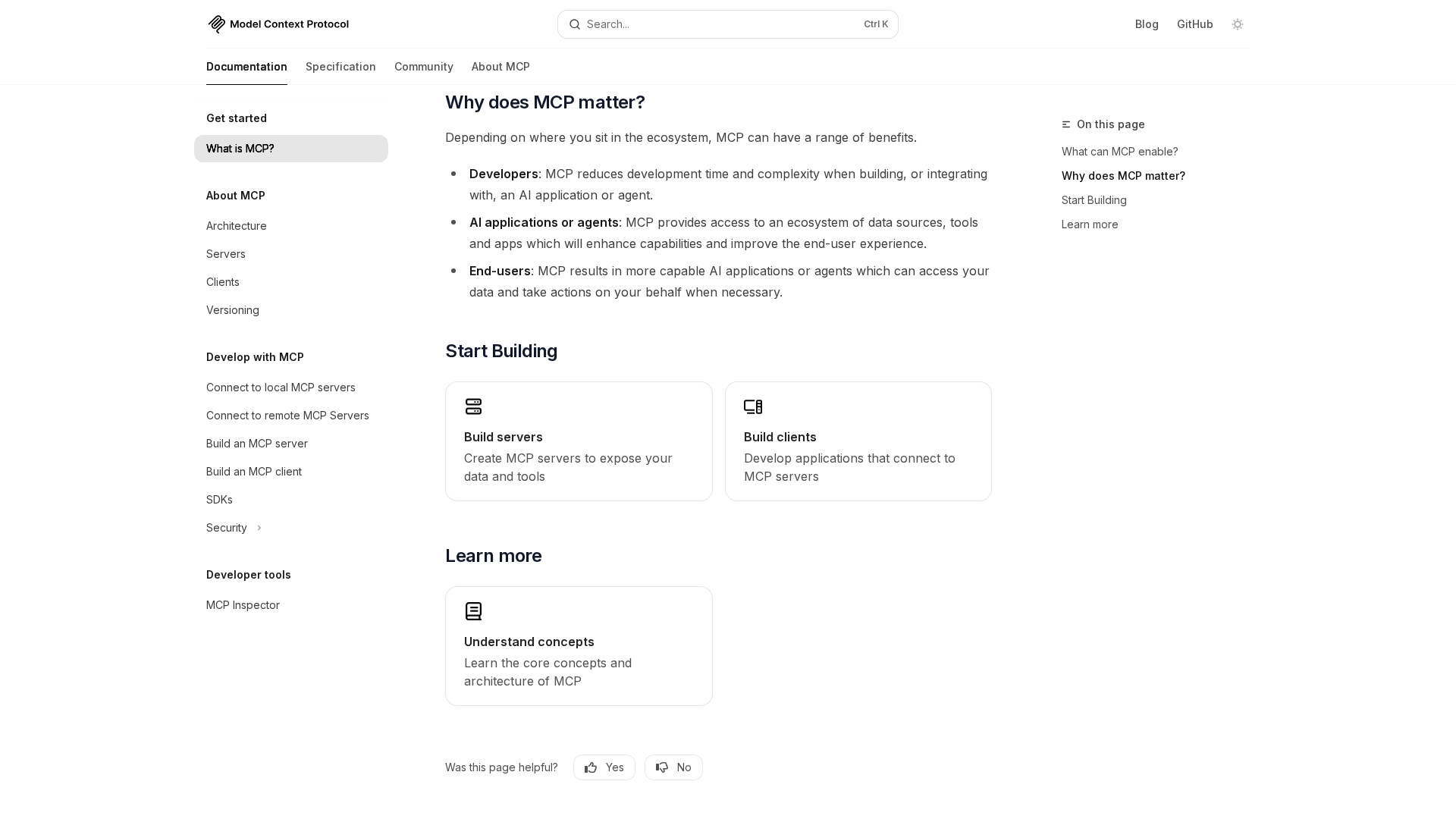
- Developers:Build MCP servers and clients to connect LLM apps with external data and tools.
- AI Teams:Integrate model-based assistants with internal systems and automate workflows securely.
- Enterprises:Provide standardized connectors for internal data sources and enterprise tools to multiple AI apps.
- Open-source Contributors:Create and maintain reference servers, SDKs, and community registries for the MCP ecosystem.
Pricing Plans
Pricing information is not available yet.
Pros & Cons
✓ Pros
- ✓Open, standardized connector model reduces duplicate integration work.
- ✓Cross-language SDKs and reference servers speed developer onboarding.
- ✓Explicit focus on security, consent, and auditing in docs and governance.
- ✓Large community ecosystem and client/server directories for reuse.
✗ Cons
- ✗Protocol-level guarantees rely on implementer best practices (security and safety cannot be fully enforced by protocol alone).
- ✗Requires adoption by hosts (LLM apps) and server maintainers to realize full benefit.
- ✗Tools that execute actions introduce safety and governance complexity.
Compare with Alternatives
| Feature | Model Context Protocol (MCP) | AgentOps | Lyzr |
|---|---|---|---|
| Pricing | N/A | $40/month | $99/month |
| Rating | 8.0/10 | 8.2/10 | 8.2/10 |
| Integration Surface | Yes | Yes | Yes |
| Protocol Abstraction | Yes | Partial | Partial |
| Server Primitives | Yes | No | Yes |
| Lifecycle Negotiation | Yes | No | Partial |
| Security & Governance | Yes | Partial | Yes |
| Observability & Replay | No | Yes | Yes |
| Deployment Flexibility | Cross-platform SDKs and APIs | Self-hosting and cloud deployments | Enterprise and model agnostic deployments |
Related Articles (8)
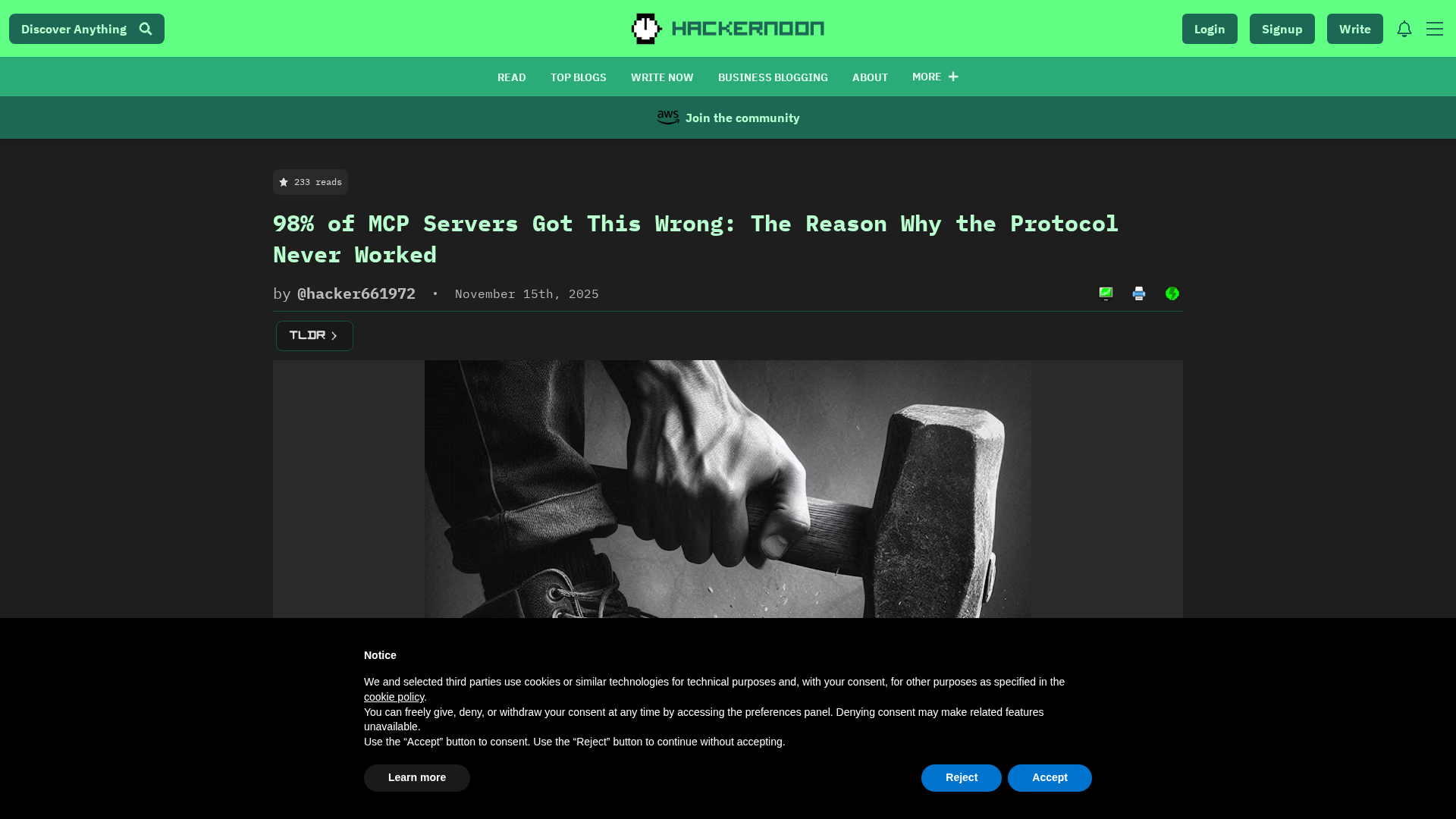
A contrarian take arguing that MCP’s failures are architectural—prioritize backend, on-demand context, and code execution over loading vast toolpacks.
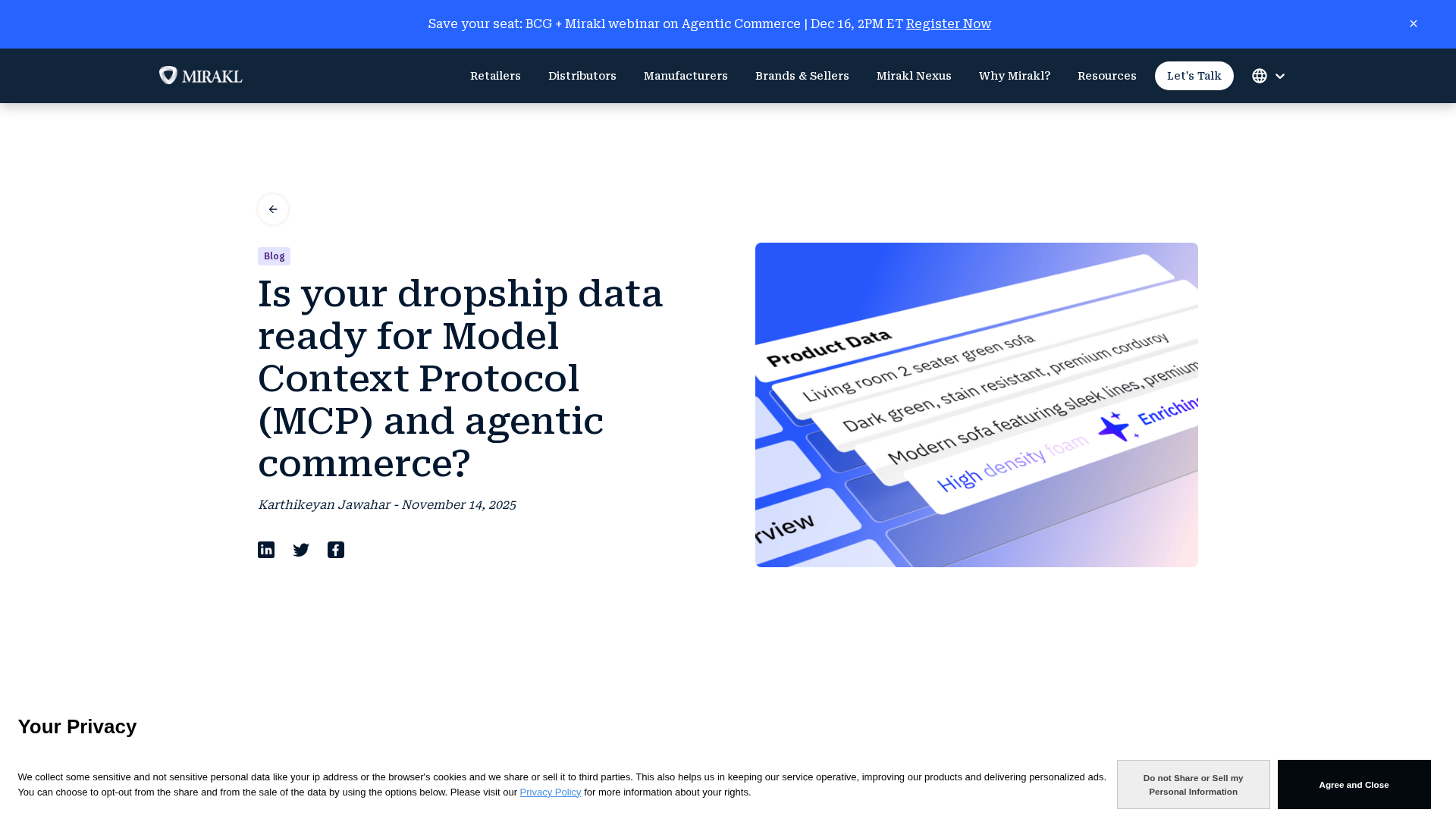
Explains MCP and agentic commerce, the data challenges for dropship, and why a platform is needed beyond MCP.
Governance-first AI: MCP governs tool use, auditability, and safe autonomy, bridging reasoning and action.
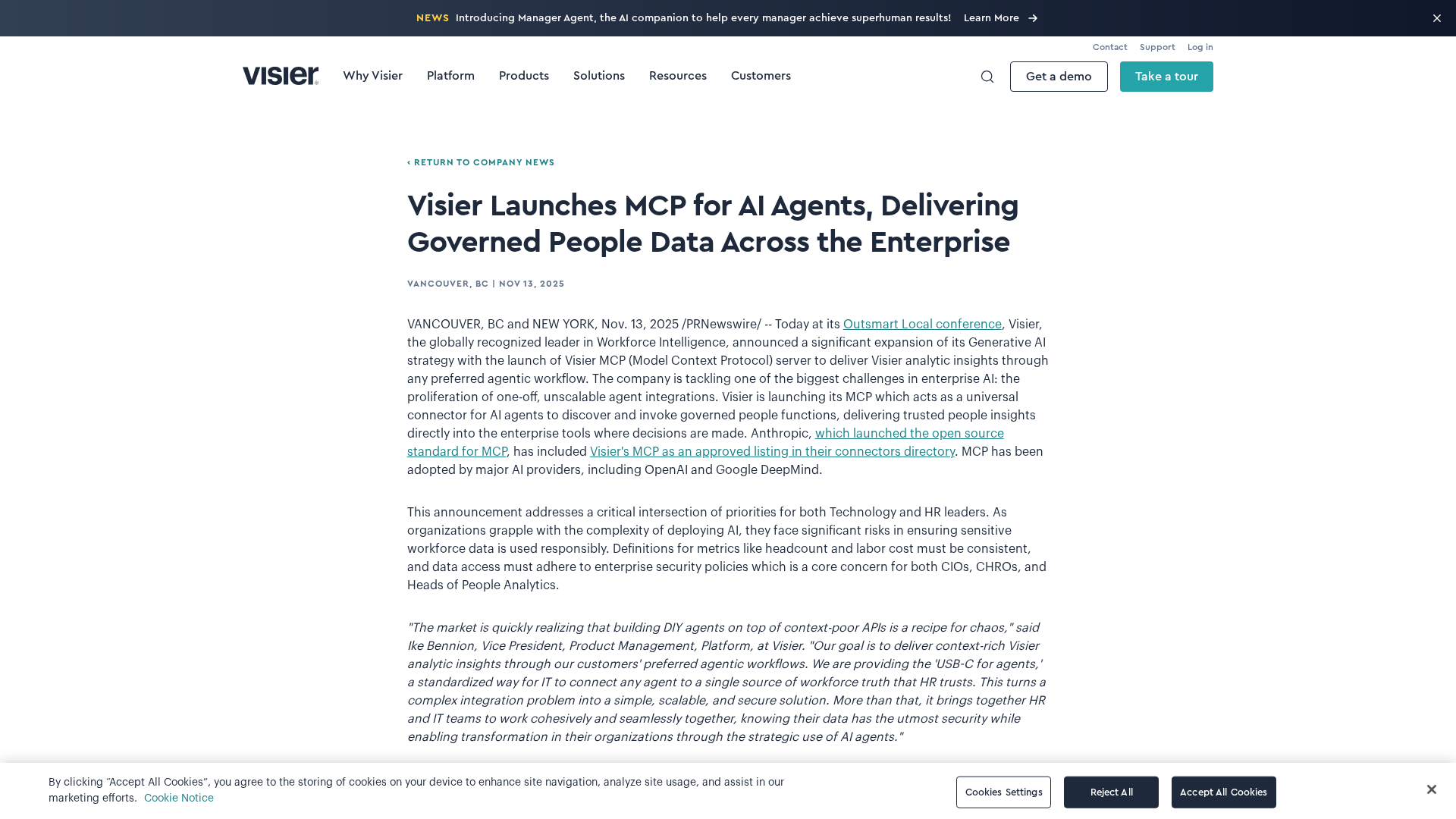
Visier launches MCP, a universal, governed data protocol enabling AI agents to securely access Visier’s workforce insights across enterprise apps.
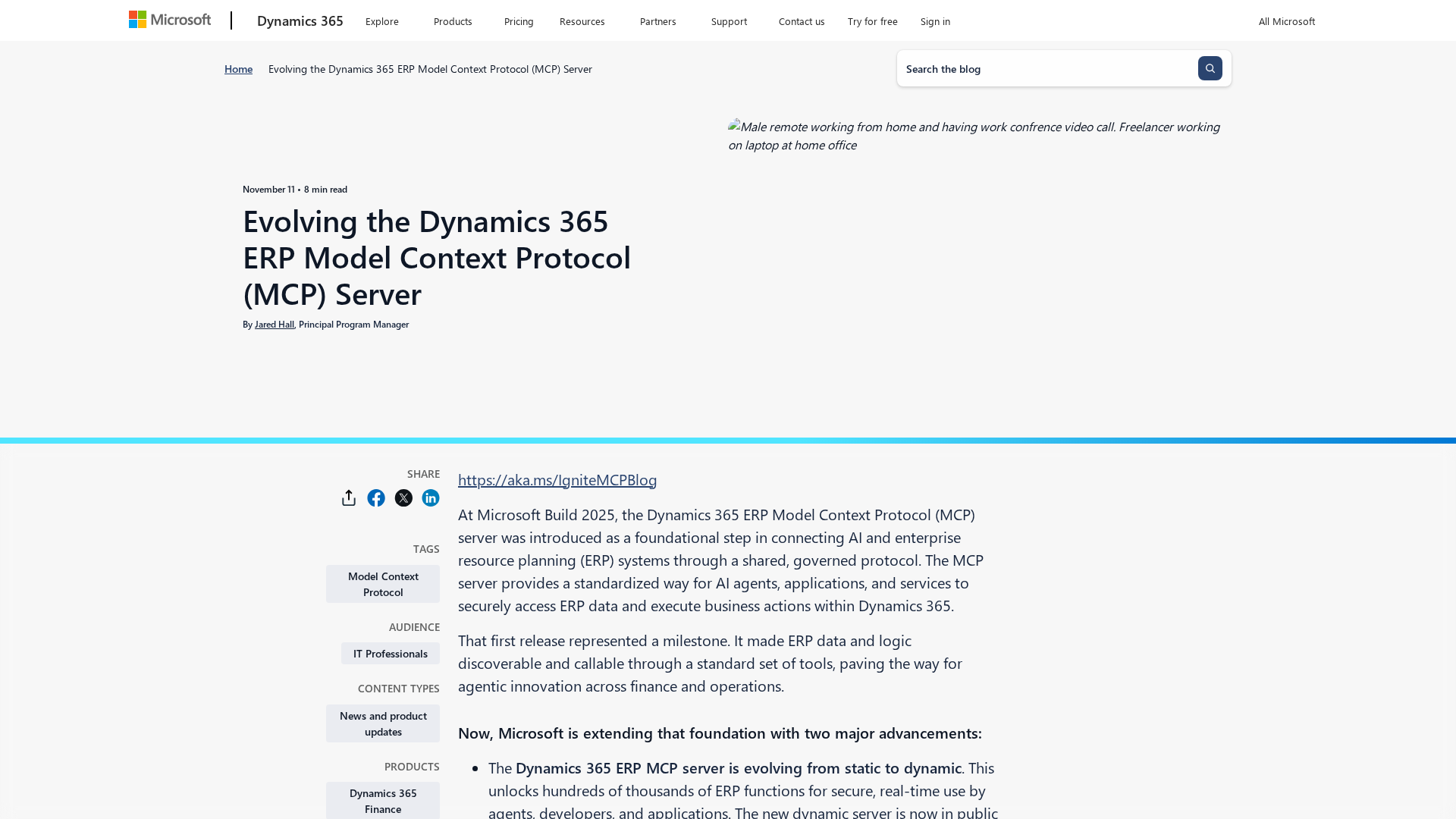
Microsoft unveils Dynamics 365 ERP MCP Server: dynamic, analytics-ready, and governance-enabled for AI-driven ERP and BI.