
Overview
Simbian provides an autonomous SecOps platform built around AI Agents (AI SOC Agent, AI Threat Hunt Agent, AI Pentest Agent, AI GRC Agent) that detect, reason, and act across an enterprise security stack. Central to the product is the Simbian Context Lake™, a unified knowledge graph that fuses telemetry, adversary behavior, asset context, ticket history, and tribal knowledge into a single source of truth. Agents use LLMs, planning modules, memory graphs, toolchains, and action policies to triage, investigate, respond to alerts, automate threat hunts, run continuous pentesting, and handle compliance and security questionnaires — with plug-and-play integrations to 70+ tools. The platform can be offered SaaS or on-premises and emphasizes rapid deployment, transparent step-by-step reasoning, continuous learning, and enterprise-scale automation aimed at reducing MTTR and alert fatigue.
Key Features
Context Lake
A unified knowledge graph that fuses telemetry, asset intelligence, ticket history, adversary behavior, and organizational data so agents can make context-aware decisions.
AI SOC Agent
Autonomous triage, investigation, and response across SIEMs/XDRs, prioritizing and resolving alerts without requiring pre-defined playbooks.
AI Threat Hunt Agent
Automates validation and scaling of hunting hypotheses across historical telemetry and integrated data sources.
AI Pentest Agent
Continuous, automated penetration testing to reveal exploitable weaknesses and guide remediation efforts.
AI GRC Agent
Automates compliance responses, security questionnaires, and audit workflows to reduce manual effort.
Broad Integrations
70+ native connectors plus on-demand custom connector development for proprietary tools and APIs.
Who Can Use This Tool?
- Security Teams:Reduce alert fatigue and automate triage, investigation, and response across security tooling.
- SOC Analysts:Shift analysts to higher-value tasks by automating routine investigations and response actions.
- Security Engineers:Integrate a context-aware agent platform via APIs and connectors to scale detection and remediation.
- Compliance/GRC Teams:Automate security questionnaires, audits, and compliance workflows to save time and increase accuracy.
Pricing Plans
Pricing information is not available yet.
Pros & Cons
✓ Pros
- ✓Autonomous 24/7 investigation and response across SIEM/XDR sources.
- ✓Context Lake provides unified organizational context for more accurate decisions.
- ✓70+ built-in connectors with on-demand custom integration capabilities.
- ✓Designed for rapid deployment (hours/days) and claims rapid ROI.
- ✓Transparent reasoning and continuous learning; analysts can steer actions.
✗ Cons
- ✗No public pricing or self-serve plans listed; likely enterprise sales process.
- ✗Limited public documentation or community links discovered.
- ✗Launch year and some corporate details not publicly listed on site.
Compare with Alternatives
| Feature | Simbian | Radiant Security | Bricklayer AI |
|---|---|---|---|
| Pricing | N/A | N/A | N/A |
| Rating | 8.4/10 | 8.4/10 | 8.3/10 |
| Agent Breadth | Yes | Partial | Yes |
| Context Lake Depth | Unified deep Context Lake | Comprehensive security data lake | Knowledge retention and lightweight store |
| Investigation Automation | Yes | Yes | Yes |
| Pentest & GRC | Yes | No | No |
| No-code Orchestration | No | No | Yes |
| AI Explainability | Partial | Yes | Yes |
| Deployment Flexibility | Yes | Partial | Partial |
| Integration Surface | Broad integrations | Broad integrations | Integrations and plugins |
Related Articles (6)
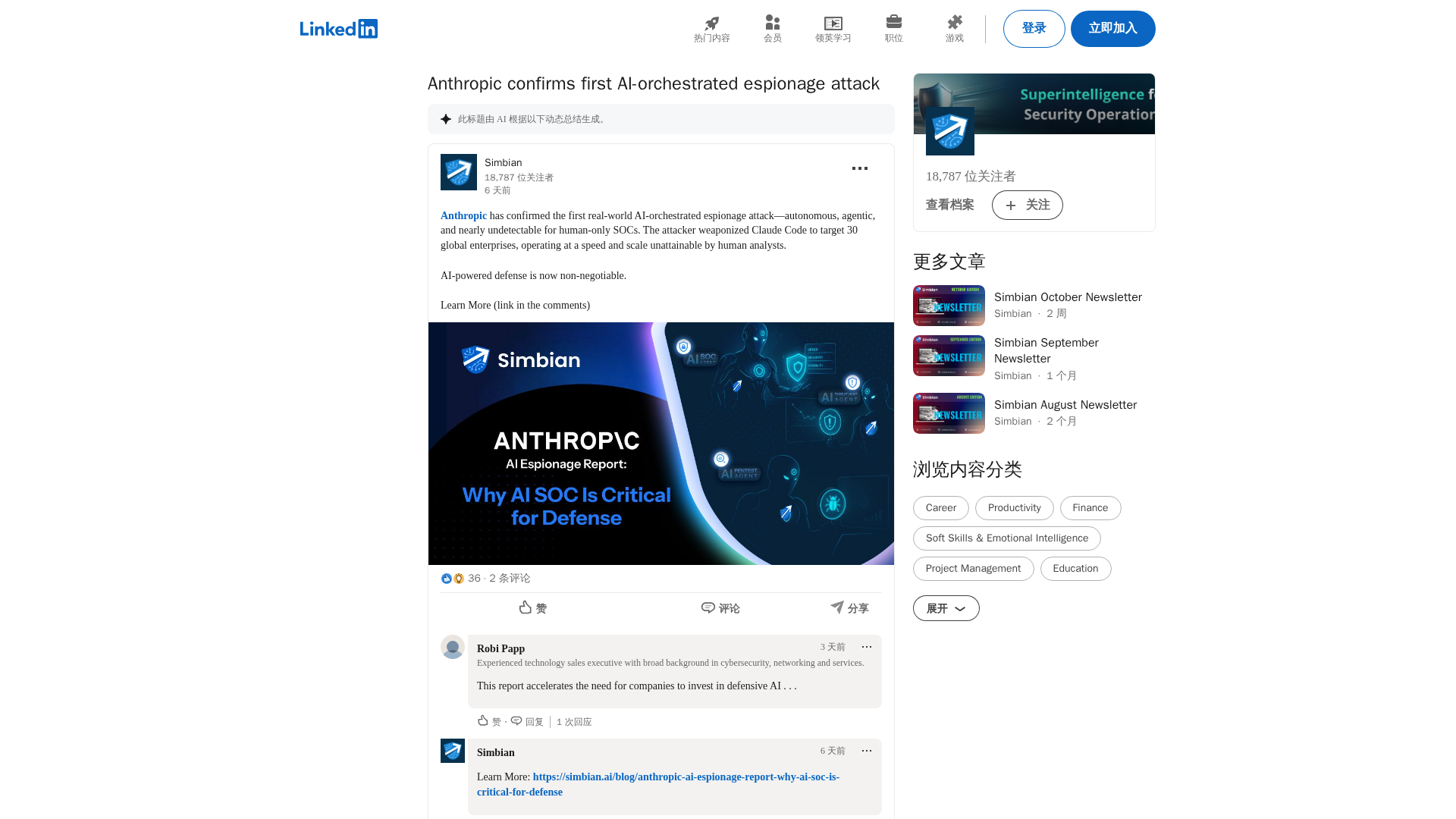
Anthropic reportedly confirms autonomous AI-driven espionage using Claude Code targeting 30 enterprises, underscoring the need for AI-enabled SOC defenses.
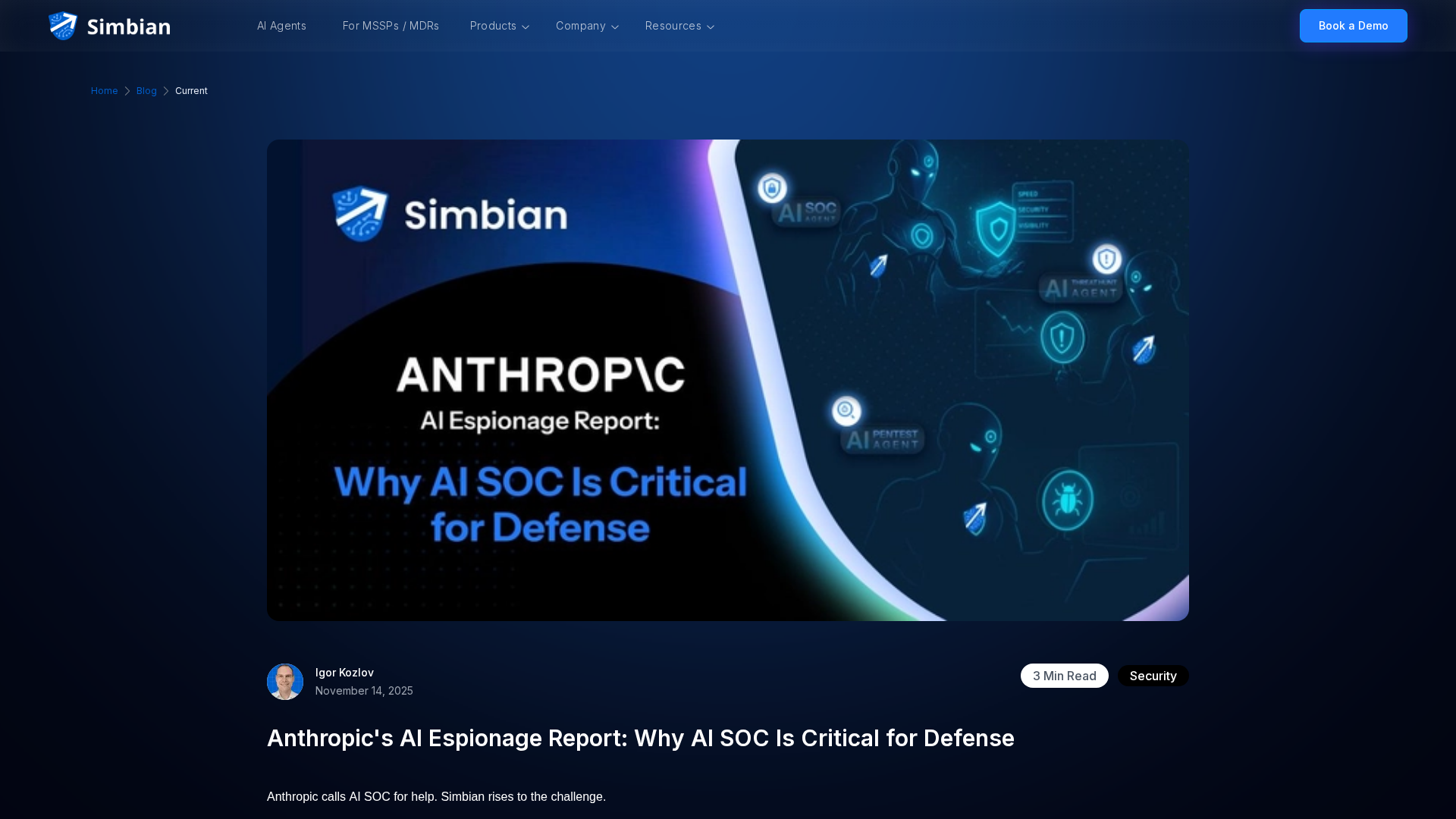
Promotional analysis linking Anthropic's AI espionage report to the need for AI SOC in defense.
Explains how AI SOCs should be built around a context lake and multi-agent design to enhance risk-based decisions while augmenting human analysts.
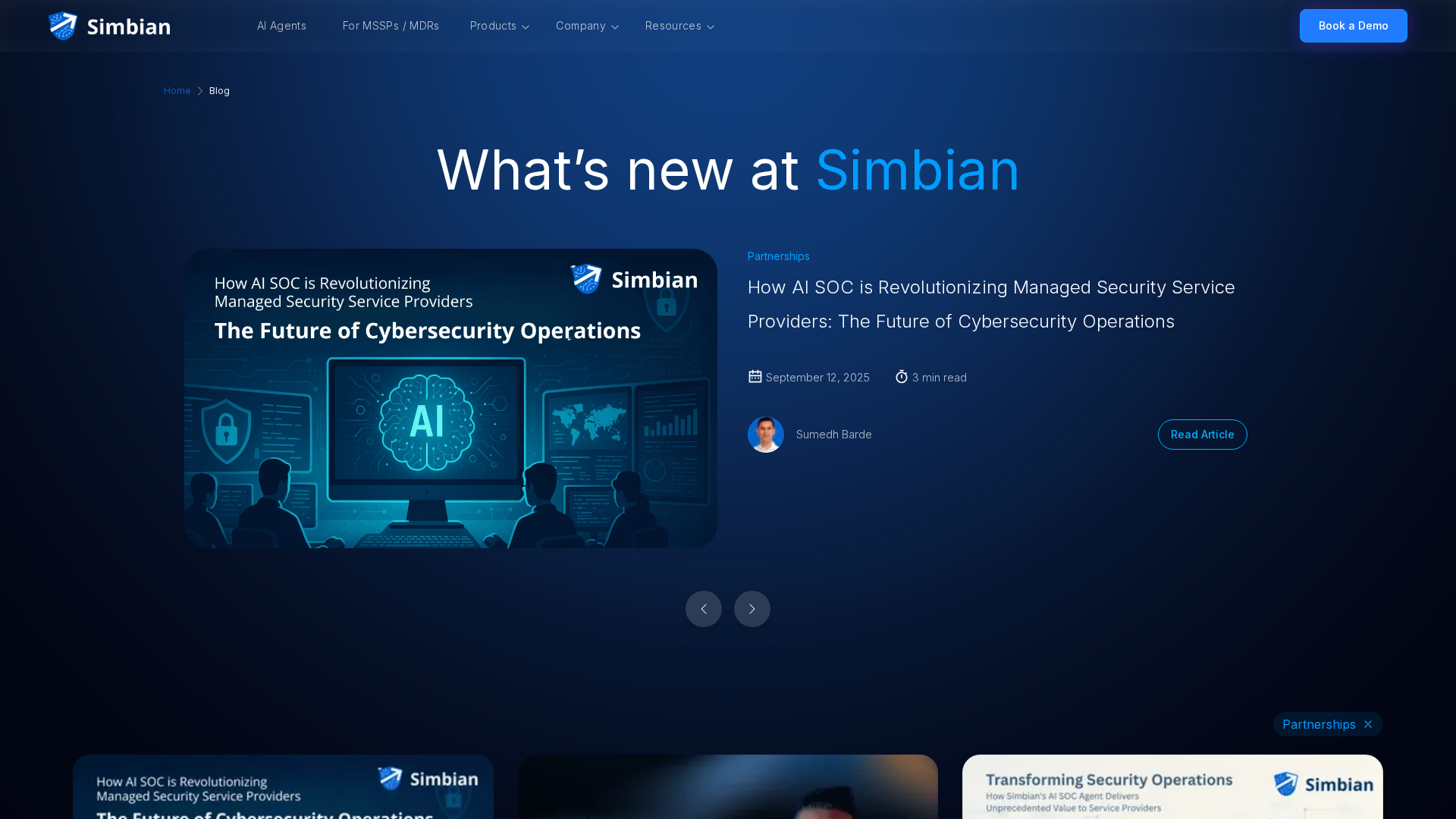
Explores how AI-driven SOCs empower MSSPs with automated threat detection, reduced alert fatigue, and faster incident response.
A perspective that AI should support SOC analysts, not replace them, through human–in–the–loop security automation.