Overview
SORA is a blockchain project focused on integrating post-quantum cryptography (PQC) into a live mainnet via soft forks, aiming to protect signature and hashing layers against quantum attacks. The project separates concerns into an ECDSA-protection stream (providing quantum-resistant sora1 address formats and PQC signature options) and a hash-protection stream (the "Satoshi is SHA-256" / SS256 effort addressing Grover's algorithm and SHA-256 resilience). SORA publishes a Layer-1 client (SorachanCoin) with multiple PQC algorithm options, CPU mining support, mining pool endpoints, and tooling for wallets and node operation. The site documents downloads, mining pool endpoints and configuration, faucet usage, and strategic messaging around exchange listings and adoption. The project emphasizes practical deployment (claims of PQC soft-fork integration and production operation), research into quantum-resistant hash functions, and provision of many PQC options (the site references support for up to 256 cryptographic types). Documentation and whitepaper links exist on the site (including a whitepaper PDF link), though some resources are partial or require direct download.
Key Features
Post-Quantum Cryptography (PQC) Integration
SORA implements PQC options on Layer-1 and claims PQC soft-fork deployment to provide resistance to Shor’s algorithm for signatures.
Sora1 Quantum-Resistant Address Format
A quantum-friendly address format (sora1) that triggers PQC protections when funds are sent to these addresses.
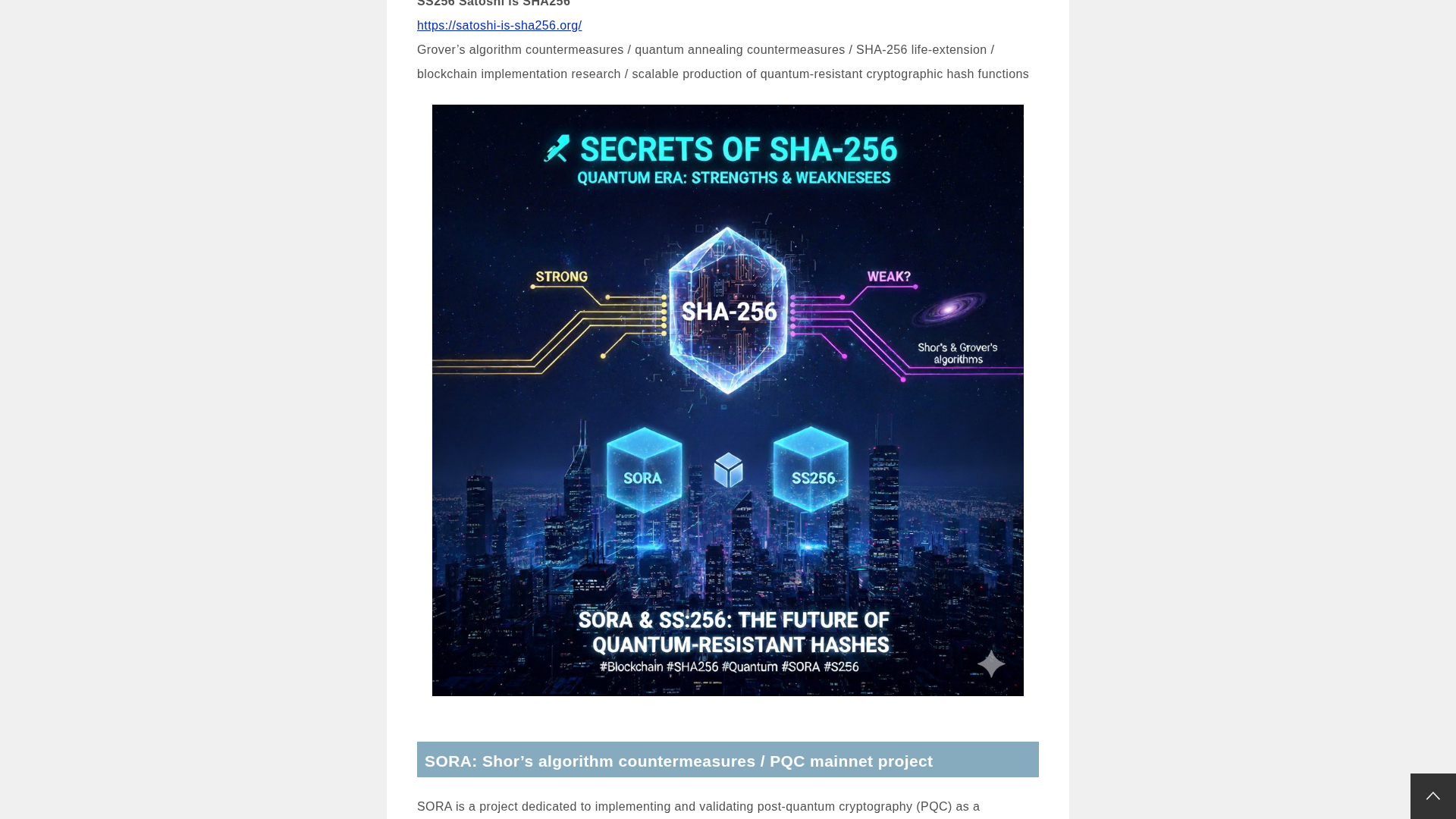
SS256 / Satoshi is SHA-256 (Hash-Layer Defense)
An initiative linked from the site that aims to extend SHA-256 resilience and counter Grover's algorithm, including research into quantum-resistant hash function implementations.
Multi-option PQC and Schnorr Aggregate Signatures
The client exposes many PQC algorithm choices (site references up to 256 types) and describes strong options like Schnorr aggregated signatures with thousands of keys.
Downloadable L1 Client and Wallet Tools
SorachanCoin-Core client distributed (Windows zip noted), with wallet encryption instructions and mining/console commands.
Mining & Pool Support (Scrypt PoW)
Official pool endpoints, Stratum connection strings, and sample miner CLI commands for different hardware classes (CPU/GPU/ASIC).
Who Can Use This Tool?
- Developers:Run and extend SorachanCoin client, test PQC algorithms, and contribute to protocol development.
- Miners / Operators:Participate in Scrypt PoW mining using provided pool endpoints and CLI configurations.
- Cryptography Researchers:Evaluate, test, and research PQC integrations and hash-layer resilience approaches (SS256).
Pricing Plans
Pricing information is not available yet.
Pros & Cons
✓ Pros
- ✓Focused, explicit implementation strategy for post-quantum cryptography (PQC) on Layer-1 via soft-fork.
- ✓Dual approach addressing both signature algorithms (Shor’s algorithm) and hash-layer risks (Grover’s algorithm / SS256).
- ✓Published downloadable client (SorachanCoin) and practical instructions for running nodes and CPU mining.
- ✓Mining pool endpoints and sample commands provided to support miners.
- ✓Provides multiple PQC options (site references support for many PQC types and strong multi-key Schnorr agg-sig options).
✗ Cons
- ✗Limited independent coverage, reviews, or evidence of broad adoption or major exchange listings.
- ✗Some resources (whitepaper PDF) on the site appear unavailable or incomplete in automated extraction; certain technical claims need independent verification.
- ✗Messaging on the site can be repetitive and lacking in detailed, peer-reviewed cryptographic proofs or benchmarks.
- ✗No explicit enterprise support, SLAs, or commercial pricing/model for organizations discovered.