Overview
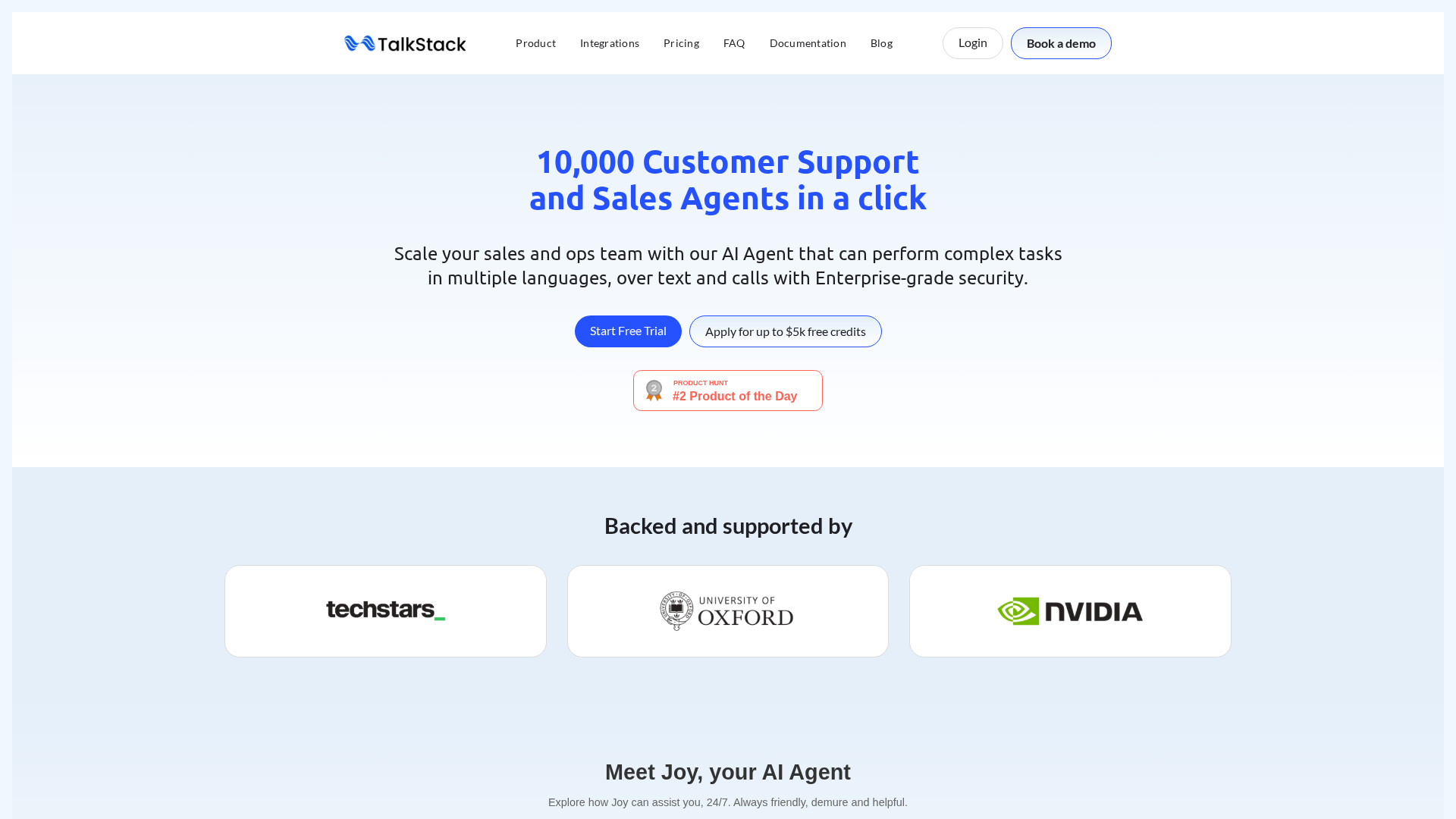
TalkStack provides enterprise-grade, no-code voice and text AI agents to automate customer support and sales workflows (lead qualification, appointment scheduling, reminders, contract renewals, etc.) with human-in-the-loop oversight. Key capabilities include a No-code Agent Studio for building voice and text agents quickly, multi-channel delivery (telephony/phone calls, SMS, WhatsApp, Email, Telegram and other messaging), speech-to-text and text-to-speech, support for custom/clone voice requests (manual review required), batch calling via uploaded spreadsheets, and workflow automation (chained checkpoints, waits, reminders). Monitoring and QA features include transcripts, call recordings, post-call analysis with configurable categories, and analytics for continuous learning. The platform supports multiple languages (including many Asian languages and major European languages) and graceful human escalation. Deployment and integration options include APIs, webhooks, Twilio (default) with Vonage and SignalWire supported for custom LLM flows, and optional on-prem LLM deployments for enterprise customers. Security posture described includes RBAC, VPC isolation, continuous monitoring, vulnerability scanning, DDoS protection via Cloudflare, Azure backups, penetration testing, and adherence to SOC 2 alignment and GDPR considerations. Pricing is usage-based (per-minute, prorated to the second) with a free trial; starter and enterprise volume tiers are described on the site. Documentation covers a no-code dashboard path, Custom LLM options, APIs for triggering calls and managing numbers, webhook delivery of transcripts/recordings, concurrency and prompt token limits (default pay-as-you-go up to 10 concurrent calls, prompt cap ~7,500 tokens unless arranged), and WhatsApp integration requiring Meta approval. Contact/demo information and relevant site pages are available on the TalkStack website.
Key Features
No-code Agent Studio
Build voice and text agents in minutes with configurable prompts, workflows, and the ability to clone voice/style/tone.
Multi-channel Delivery
Support for phone calls (telephony), SMS, WhatsApp, Email, Telegram and other messaging channels; Twilio is default telephony integration.
Voice & Telephony
Speech-to-text, text-to-speech, clone/custom voice requests (manual review/approval), and batch calls via uploaded spreadsheet.
Workflow Automation
Chain checkpoints, calls, wait times, and SMS/WhatsApp reminders to create end-to-end processes like appointment scheduling and lead qualification.
Monitoring & QA
Transcripts and call recordings, view calls as chat transcripts, listen to recordings, and post-call analysis with configurable categories.
Analytics & Continuous Learning
Call analytics and insights to improve agents and operational performance.
Who Can Use This Tool?
- Enterprises:Automate large-scale support and sales workflows with dedicated account management and optional on-prem deployment.
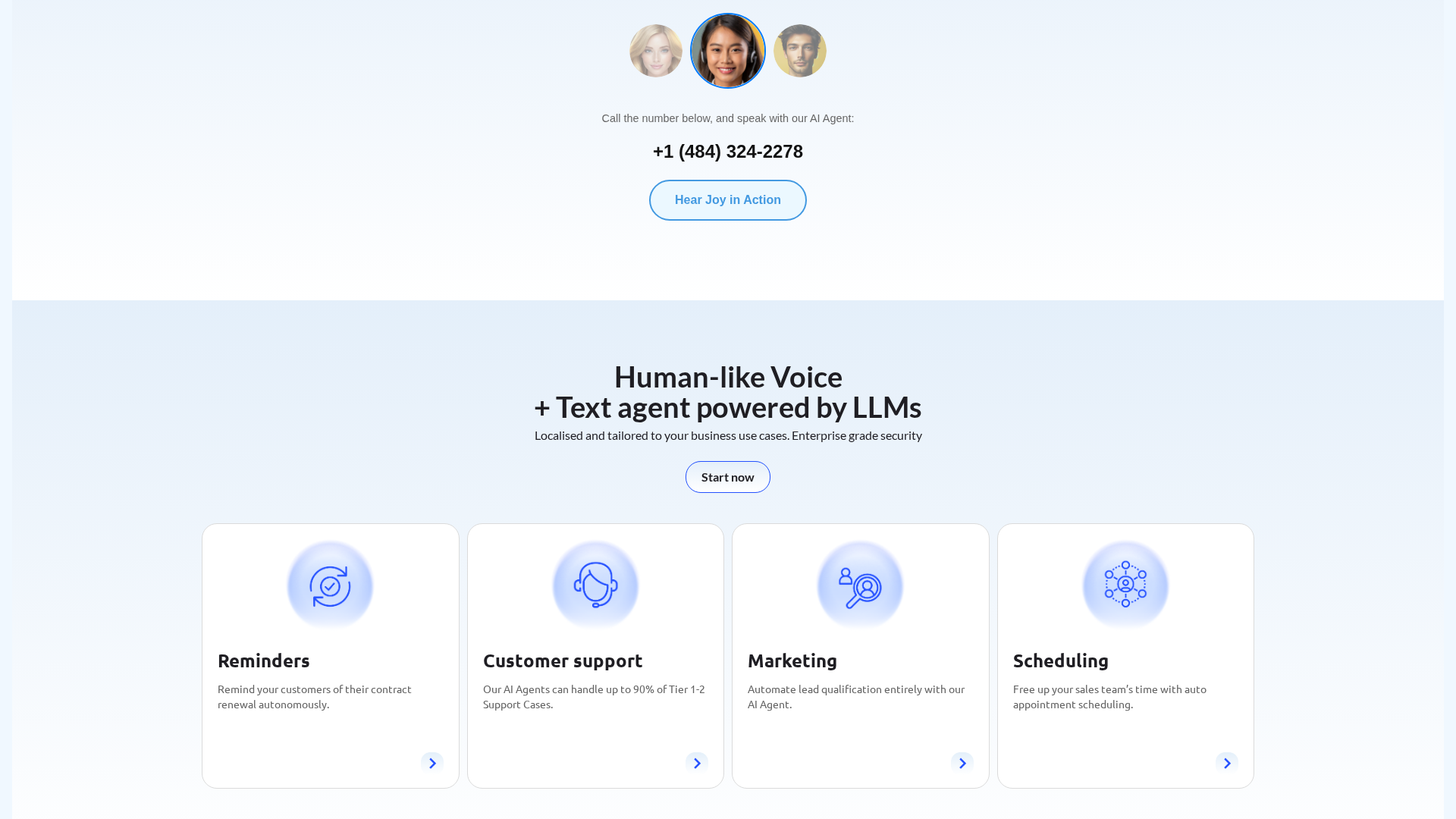
- Support & Sales Teams:Automate Tier 1–2 tasks, lead qualification, appointment scheduling, and reminders with human escalation.
Pricing Plans
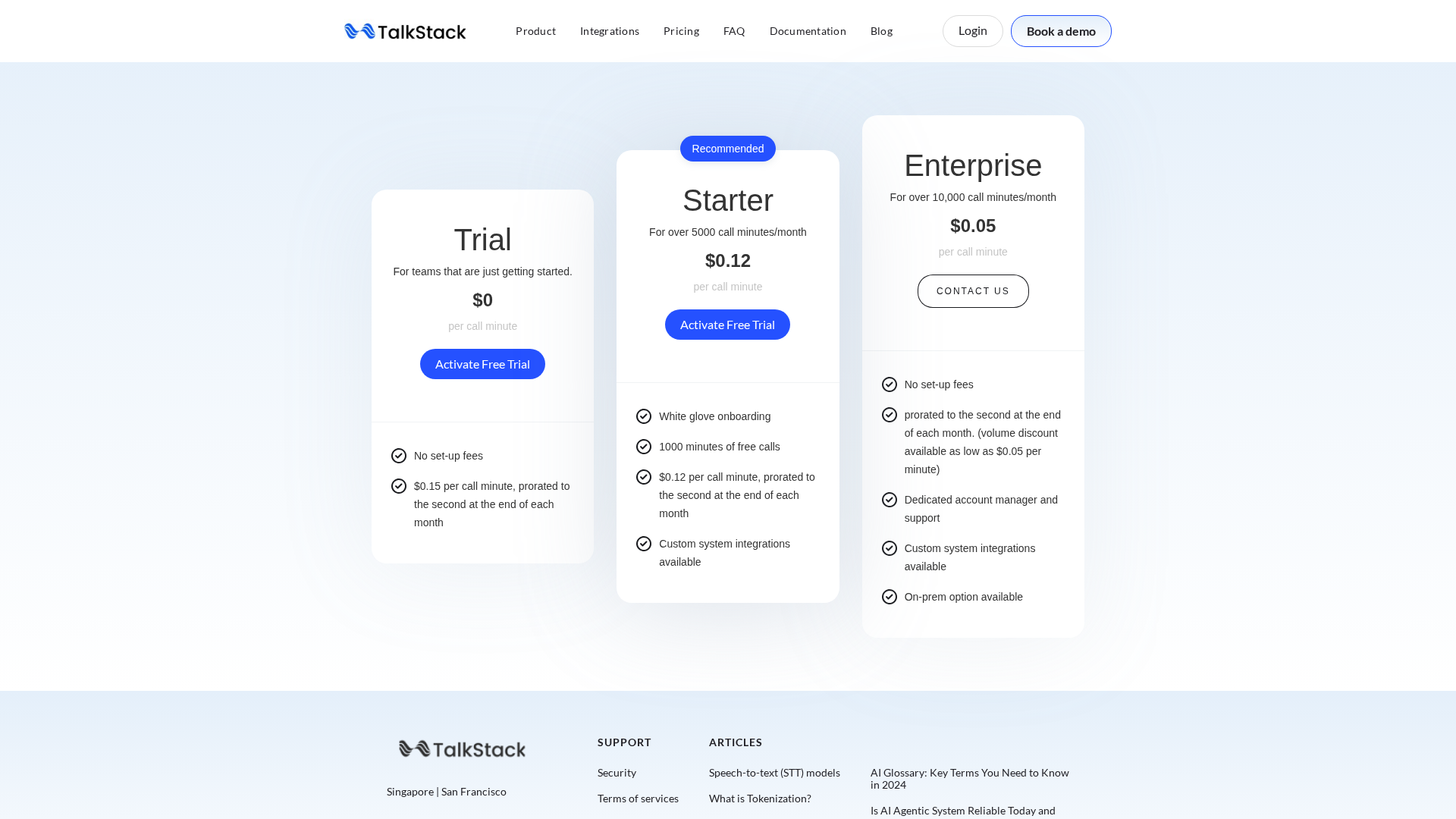
Free trial; introductory usage notes $0.15 per call minute (prorated to the second).
- ✓Free trial access
- ✓Introductory per-minute rate example ($0.15/min referenced)
- ✓Useful for initial proof-of-concept and testing
For >5,000 minutes/month — $0.12 per call minute (prorated), includes white-glove onboarding and 1,000 free minutes; custom integrations available.
- ✓Volume pricing for mid-scale usage
- ✓White-glove onboarding
- ✓1,000 free minutes included
- ✓Custom integrations available
For >10,000 minutes/month — volume pricing (as low as $0.05 per minute reported), no setup fees, dedicated account manager and support, custom integrations, optional on-prem deployment; contact sales for exact pricing.
- ✓Large-volume discounts (examples down to $0.05/min)
- ✓Dedicated account manager and support
- ✓No setup fees reported
- ✓Optional on-prem deployment and custom integrations
Pros & Cons
✓ Pros
- ✓No-code agent builder enabling rapid POCs and deployments
- ✓Multi-channel support including telephony and messaging
- ✓Enterprise-level security posture and optional on-prem deployment
- ✓Detailed monitoring, transcripts, recordings, and analytics
- ✓Multilingual support covering many Asian and European languages
- ✓Usage-based pricing suitable for scaled voice workloads
✗ Cons
- ✗WhatsApp integration requires Meta approval (additional steps)
- ✗Default concurrency and token limits (10 concurrent calls, ~7,500 token prompt cap) may require sales for higher limits
- ✗Exact enterprise pricing, minimums, and discounts require contacting sales
- ✗No explicit public founding/launch year found on the site
Compare with Alternatives
| Feature | TalkStack | PolyAI | LiaPlus |
|---|---|---|---|
| Pricing | N/A | N/A | $99/month |
| Rating | 8.1/10 | 8.5/10 | 8.2/10 |
| No-code Builder | Yes | Partial | No |
| Channel Coverage | Text voice messaging | Voice and chat | Voice focused |
| Voice Telephony Depth | Telephony and PSTN integration | In-house ASR and voice tuning | Low latency phone management |
| Workflow Automation | Yes | Partial | Partial |
| Real-time Monitoring | Monitoring and QA | Visibility and transparency | Real-time dashboards |
| Analytics & Learning | Continuous analytics and learning | Central brain with knowledge controls | Dashboards plus call logs and transcripts |
| Multilingual NLU | Yes | Yes | Yes |
| Enterprise Governance | Enterprise options with human escalation | Enterprise guardrails and compliance | ISO27001 SOC2 GDPR compliance |
Related Articles (7)
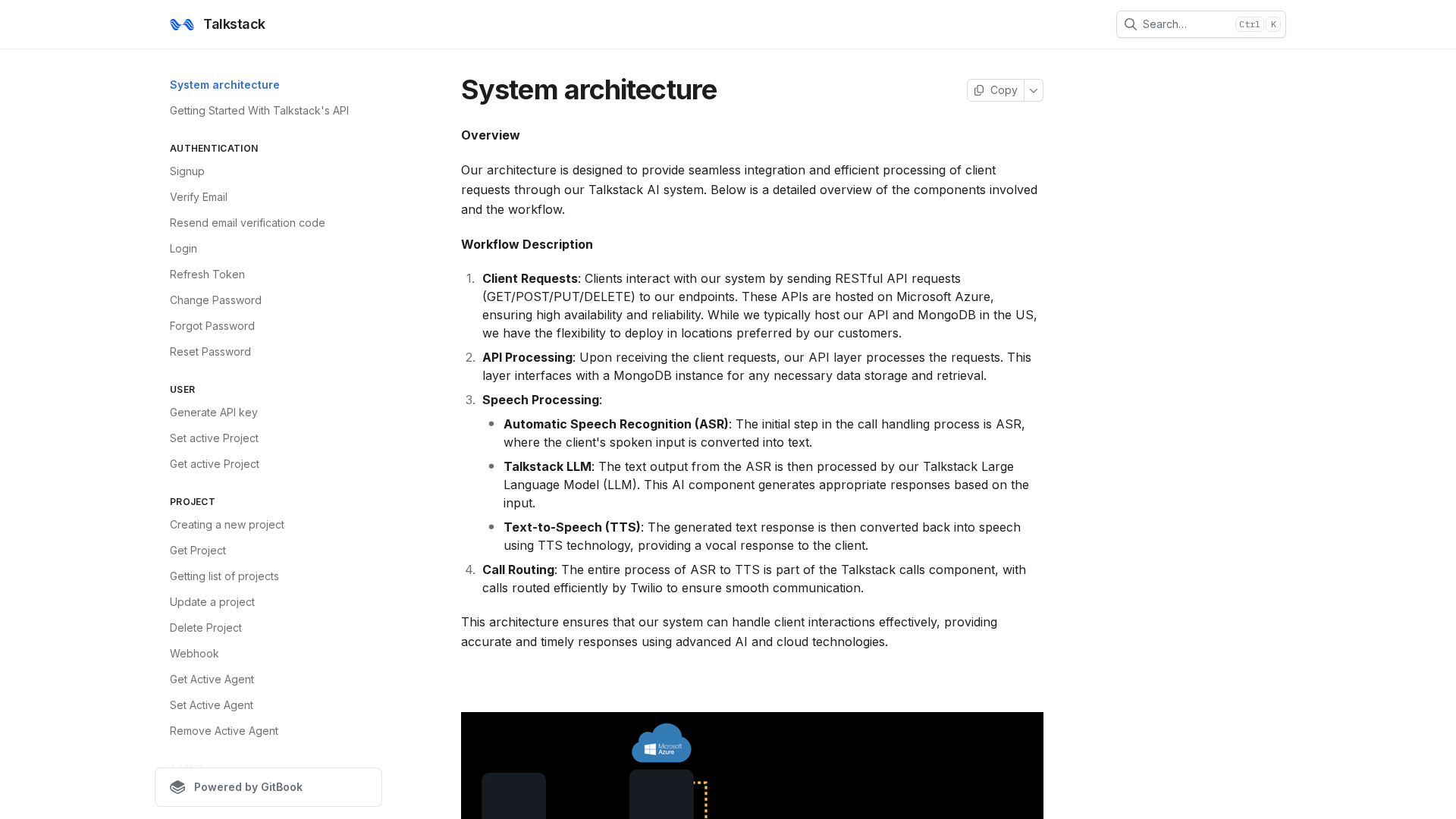
A concise overview of Talkstack's architecture, from API handling to ASR, LLM, and TTS with Twilio-powered call routing.
Explores Agentic AI, its autonomous architecture, and its transformative potential across finance, healthcare, transportation, and virtual assistance.
A blog delivering the latest news, insights, and innovations in communication and collaboration tech.
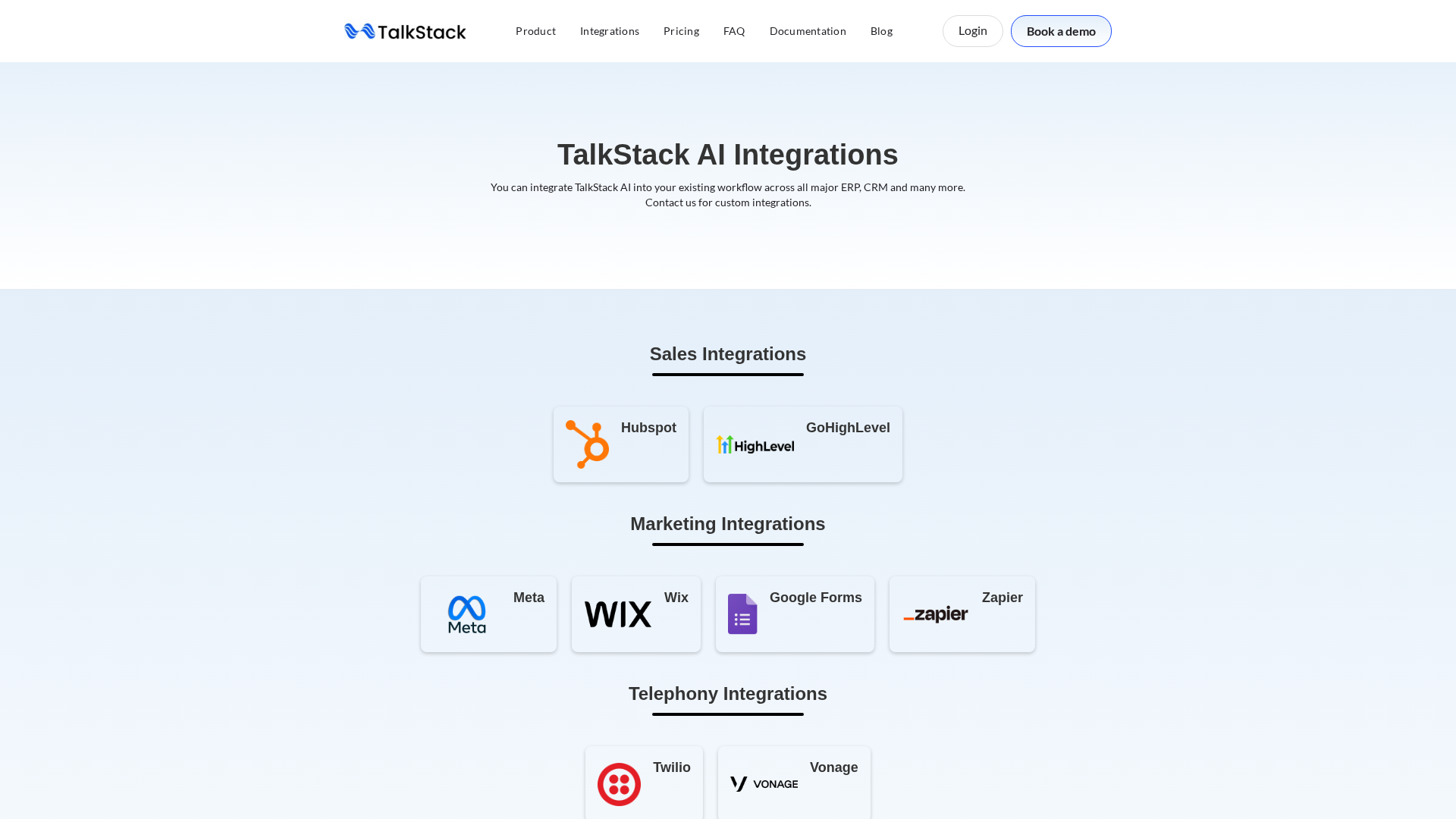
TalkStack AI offers seamless integrations with major ERP/CRM systems and other platforms, with custom integration options available.
Examines how real-time speech-to-speech models could transform multilingual, voice-driven conversations powered by LLMs.