Topic Overview
Agentic AI in healthcare platforms refers to autonomous or semi‑autonomous software agents that carry out clinical workflows, clinical decision support, care coordination, and administrative tasks across health systems. This topic contrasts platform‑level, agentic offerings (such as large cloud and vendor initiatives that embed multi‑step agents into EHR, telehealth, and payer systems) with focused clinical AI agents engineered for diagnostic reasoning, medication reconciliation, and point‑of‑care decision support. It is timely in 2026 because the technical capability to run stateful, agentic workflows at scale (via agent frameworks and cloud ML platforms) has matured while regulatory and governance pressure around safety, privacy, and auditability has intensified. Key tool categories shaping this space include: AI Agent Marketplaces and AI Tool Marketplaces (discover, procure, and monetize prebuilt agents); Agent Frameworks (LangChain for stateful agent engineering, GPTConsole and AutoGPT for lifecycle and automation tooling); Cloud ML platforms (Vertex AI for model training, deployment, monitoring and provenance); Enterprise model providers (Cohere, Mistral, Claude families for private, customizable LLMs and inference); and Regulatory Compliance and AI Security Governance platforms (Monitaur and similar tooling for policy, validation, monitoring, and vendor governance). Together these layers address the core needs of clinical deployments: model quality, data privacy, explainability, provenance, and continuous post‑market surveillance. Current trends emphasize hybrid architectures (on‑prem or VPC deployment of models), standardized evaluation pipelines, stronger vendor governance, and curated marketplaces that surface clinically validated agents. The result is a pragmatic balance: greater automation potential for workflows and accessibility, coupled with heightened demands for clinical validation, incident logging, role‑based access, and compliance with healthcare regulation and institutional risk policies.
Tool Rankings – Top 6

Unified, fully-managed Google Cloud platform for building, training, deploying, and monitoring ML and GenAI models.

Engineering platform and open-source frameworks to build, test, and deploy reliable AI agents.

Insurance-focused enterprise AI governance platform centralizing policy, monitoring, validation, vendor governance and证e

Enterprise-focused provider of open/efficient models and an AI production platform emphasizing privacy, governance, and

Enterprise-focused LLM platform offering private, customizable models, embeddings, retrieval, and search.

Developer-focused platform (SDK, API, CLI, web) to create, share and monetize production-ready AI agents.
Latest Articles (66)
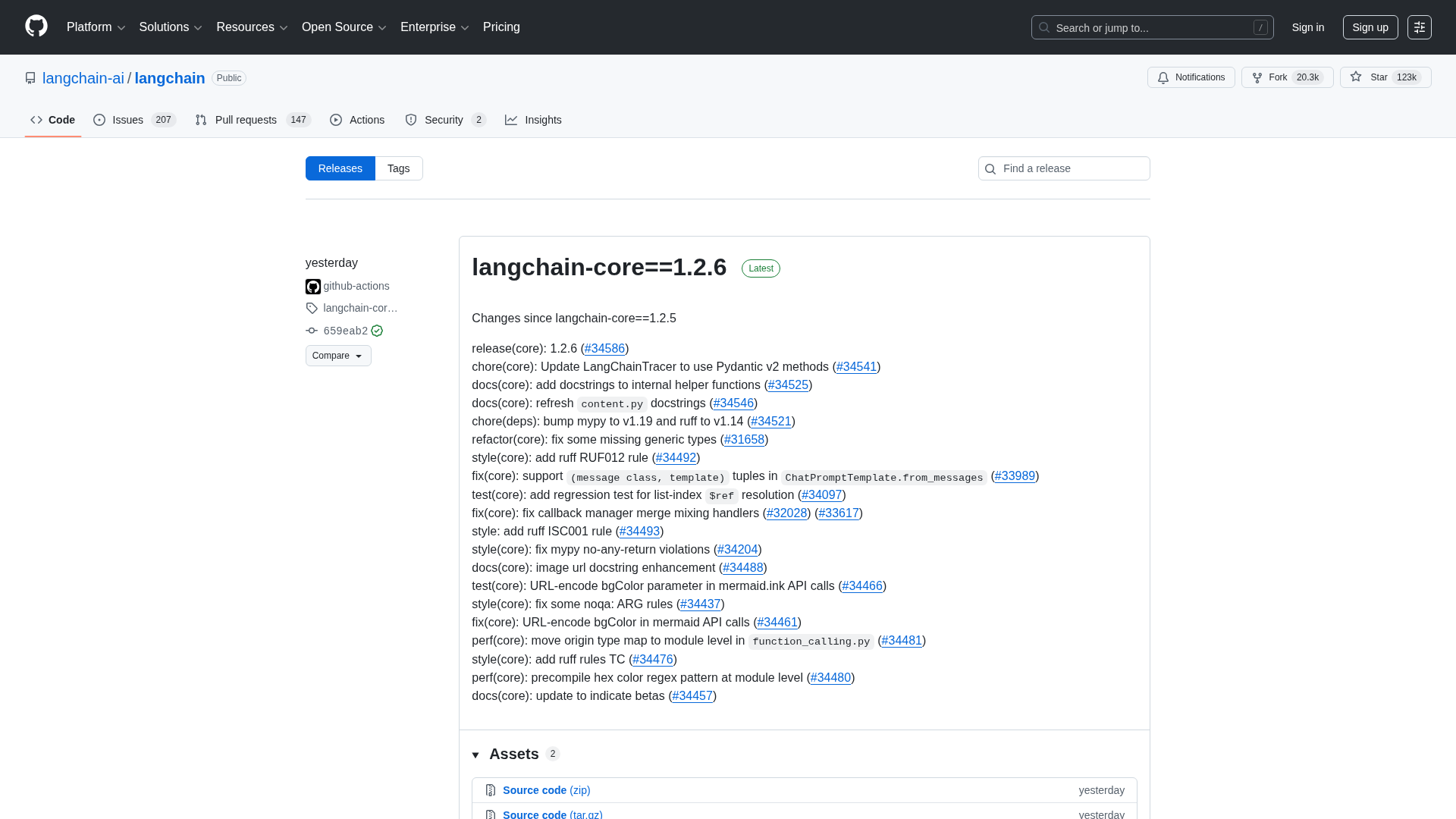
A comprehensive LangChain releases roundup detailing Core 1.2.6 and interconnected updates across XAI, OpenAI, Classic, and tests.

Cannot access the article content due to an access-denied error, preventing summarization.
A practical, step-by-step guide to fine-tuning large language models with open-source NLP tools.

A quick preview of POE-POE's pros and cons as seen in G2 reviews.
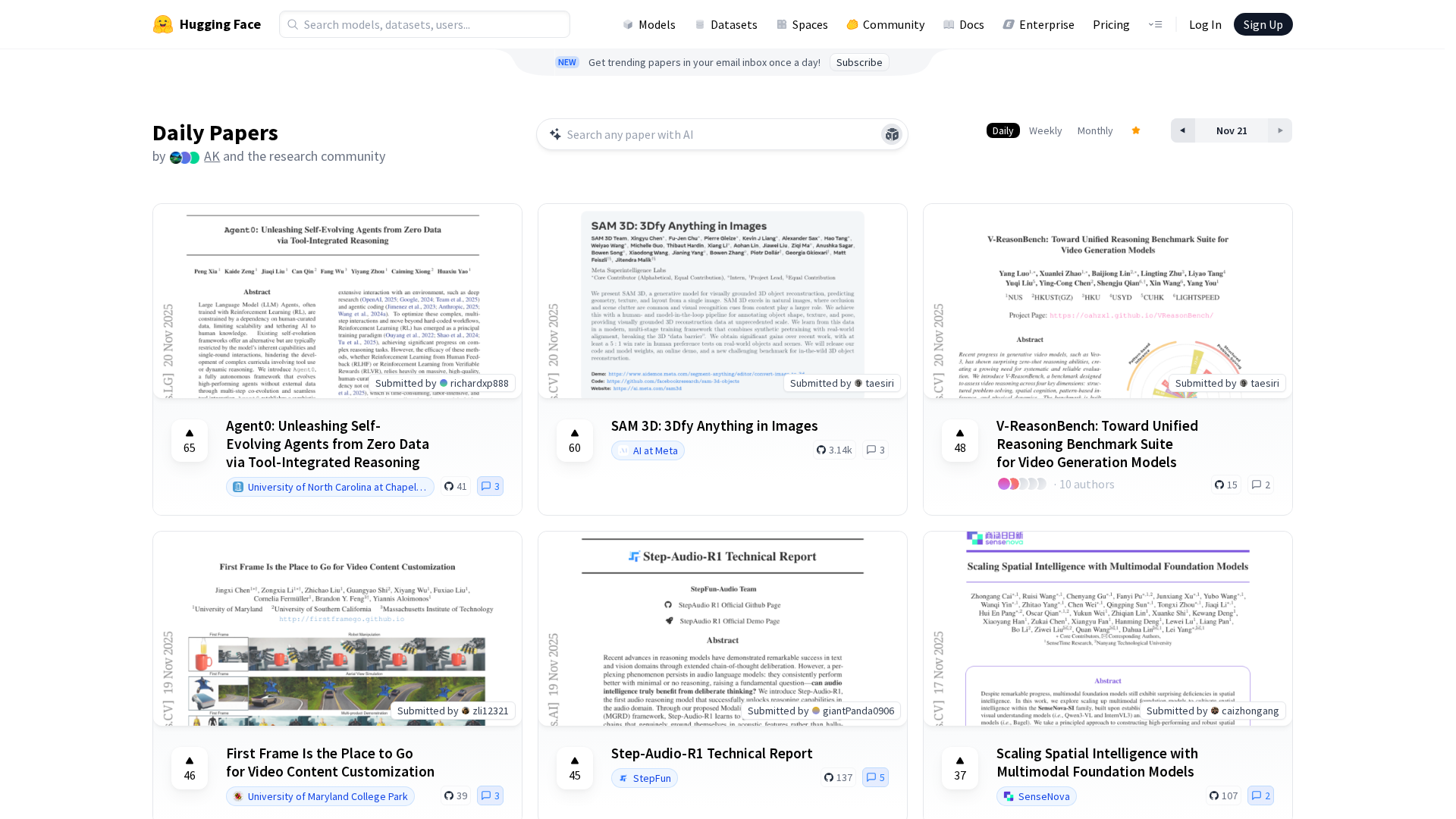
Get daily, curated trending ML papers delivered straight to your inbox.