Topic Overview
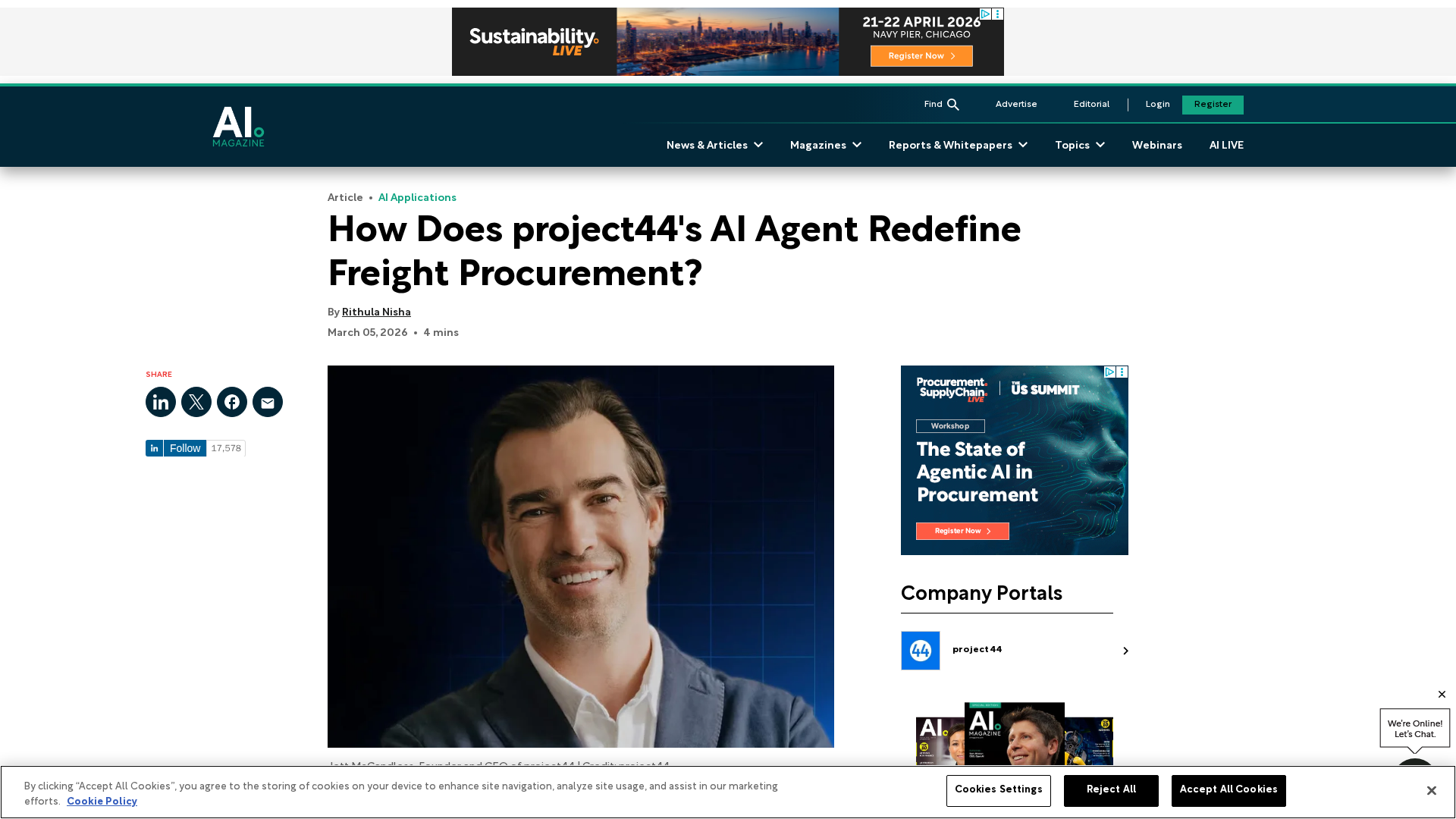
This topic examines how established freight-visibility platforms like project44 compare with a new generation of AI-driven procurement and carrier-negotiation tools that use autonomous agents and agentic frameworks. As of 2026-03-11, logistics teams increasingly combine real-time network visibility with automated bid management and negotiation workflows to reduce cost, speed tender cycles, and improve service reliability. That convergence makes it important to evaluate functional differences—visibility and carrier integration versus agentic automation, procurement logic, and governance. Key categories include Autonomous Logistics Tools (agent-driven orchestration of shipments), Bid Management Tools (automated tendering and comparison), AI Agent Marketplaces and Tool Marketplaces (discover, buy, and compose agents), and Agent Frameworks (infrastructure and governance for multi-agent systems). Representative technologies in this space: GEO (Generative Engine Optimization) for improving how procurement/agent content is surfaced by generative search; Tektonic AI (PrepMe) which blends neural and symbolic reasoning to encode business rules for revenue- and process-sensitive workflows; Xilos, an agentic infrastructure that emphasizes visibility into agent activity and connected services; Relevance AI, a no-code/low-code platform to build and scale autonomous agents; and GPTConsole, a developer-focused SDK/API/CLI for building production agent workflows. When comparing project44-style platforms to agent-first solutions, key evaluation points are: data and integration breadth (carrier connections, real-time telemetry), decision explainability and policy controls (important for automated negotiations), ease of composing procurement agents (no-code vs developer SDKs), and observability/audit trails. Organizations should weigh operational maturity and carrier network coverage against flexibility, governance, and the ability to automate complex procurement negotiations using agent frameworks and marketplaces.
Tool Rankings – Top 5

A framework and benchmark to optimize content for Generative Engines (GEs) and boost visibility in AI-driven search.

AI agents and a service layer blending neural and symbolic reasoning to automate enterprise processes; flagship PrepMe:
Intelligent Agentic AI Infrastructure

Enterprise-grade no-code/low-code platform to build, deploy, and manage autonomous AI agents and workflows.

Developer-focused platform (SDK, API, CLI, web) to create, share and monetize production-ready AI agents.
Latest Articles (49)
OpenAI’s bypass moment underscores the need for governance that survives inevitable user bypass and hardens system controls.
A call to enable safe AI use at work via sanctioned access, real-time data protections, and frictionless governance.
A real-world look at AI in SOCs, debunking myths and highlighting the human role behind automation with Bell Cyber experts.
Explores the human role behind AI automation and how Bell Cyber tackles AI hallucinations in security operations.
Identity won’t secure agentic AI; you need runtime visibility and action-based policy.