Topic Overview
AI privacy, model-training governance and compliance tools encompass the platforms, controls and data pipelines organizations use to build, deploy and audit AI systems while managing legal, ethical and operational risk. As enterprises push autonomous agents and large-context assistants into customer service, finance, legal and brand experiences, governance needs have shifted from ad‑hoc controls to integrated toolchains that cover data provenance, rights‑cleared training datasets, model provenance, access controls, monitoring and auditability. This category spans enterprise platforms (StackAI, Relevance AI, Hebbia, IBM watsonx Assistant, Yellow.ai) that provide no‑code/low‑code agent development plus built‑in governance; model and infrastructure providers (Mistral AI, Claude family) that emphasize model transparency, efficiency and privacy; and specialist layers such as Firsthand’s Lakebed governance and Tektonic’s hybrid neural‑symbolic service layer that help inject policy, explainability and compliance into workflows. Rights‑cleared data platforms and cataloging are increasingly central: organizations need to demonstrate lawful training data provenance, consent metadata and retention controls as part of procurement and audit processes. The topic is timely because regulatory scrutiny, enterprise risk frameworks and buyer requirements have converged on verifiable model training practices, data minimization, and operational controls. Practical approaches include lineage tracking, differential‑privacy and secure enclaves for sensitive data, continuous monitoring for drift and policy violations, and integrated reporting for compliance teams. Evaluations should therefore consider not only model quality but also governance primitives—data lineage, access controls, audit trails, and remediation workflows—alongside deployment features. Choosing tools that balance developer productivity (no‑code agents, large‑context retrieval) with enforceable governance and rights‑cleared data workflows is now a core procurement and operational priority for responsible AI adoption.
Tool Rankings – Top 6
End-to-end no-code/low-code enterprise platform for building, deploying, and governing AI agents that automate work onun

Enterprise-grade no-code/low-code platform to build, deploy, and manage autonomous AI agents and workflows.

Enterprise AI platform (Matrix) for large-context, multi-step knowledge work in finance, law, and corporate functions.
Anthropic's Claude family: conversational and developer AI assistants for research, writing, code, and analysis.

Enterprise virtual agents and AI assistants built with watsonx LLMs for no-code and developer-driven automation.

Enterprise-focused provider of open/efficient models and an AI production platform emphasizing privacy, governance, and
Latest Articles (113)
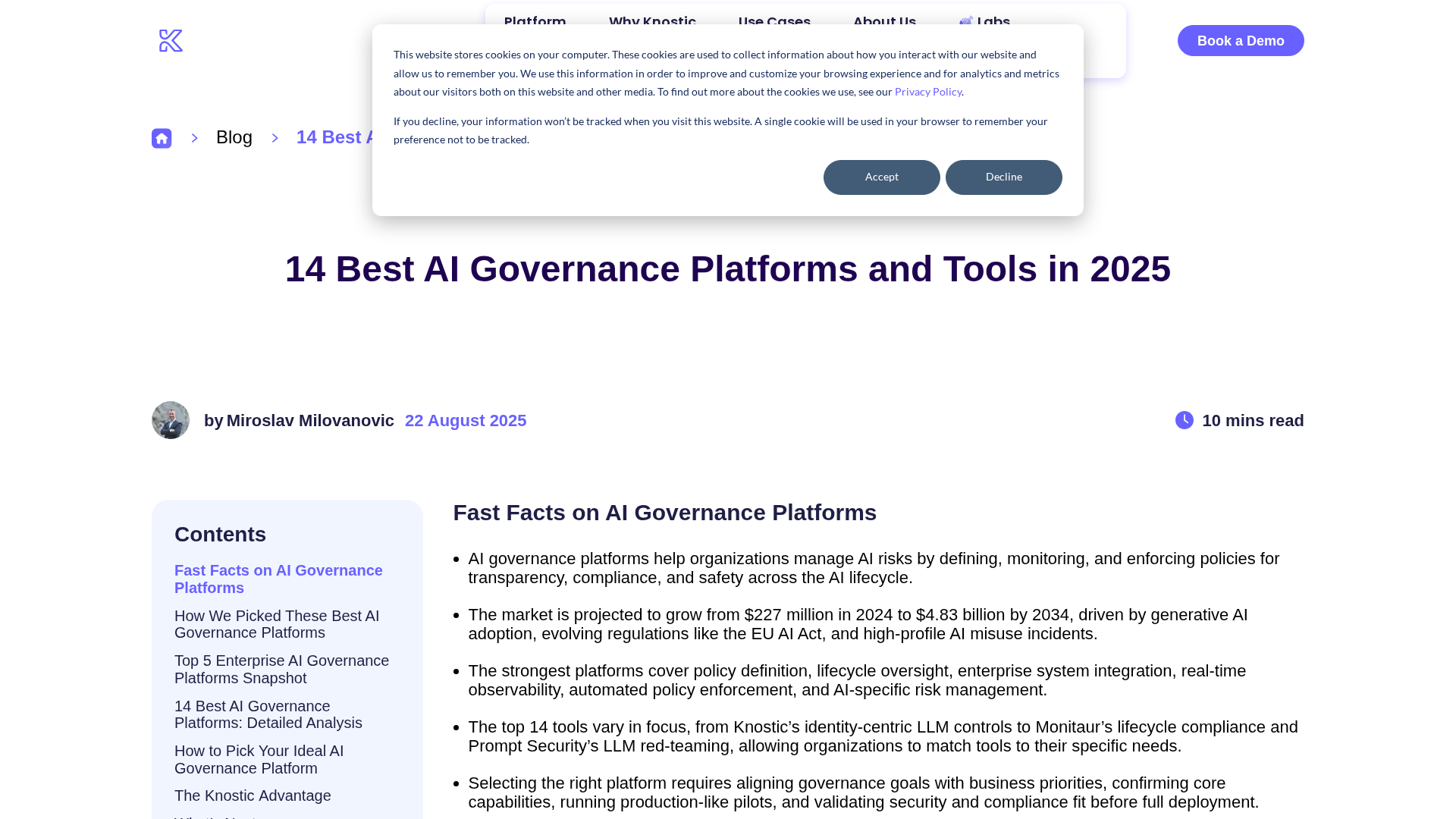
A vendor‑agnostic guide to the 14 best AI governance platforms in 2025, with criteria, comparisons, and practical buying guidance.

Adobe nears a $19 billion deal to acquire Semrush, expanding its marketing software capabilities, according to WSJ reports.
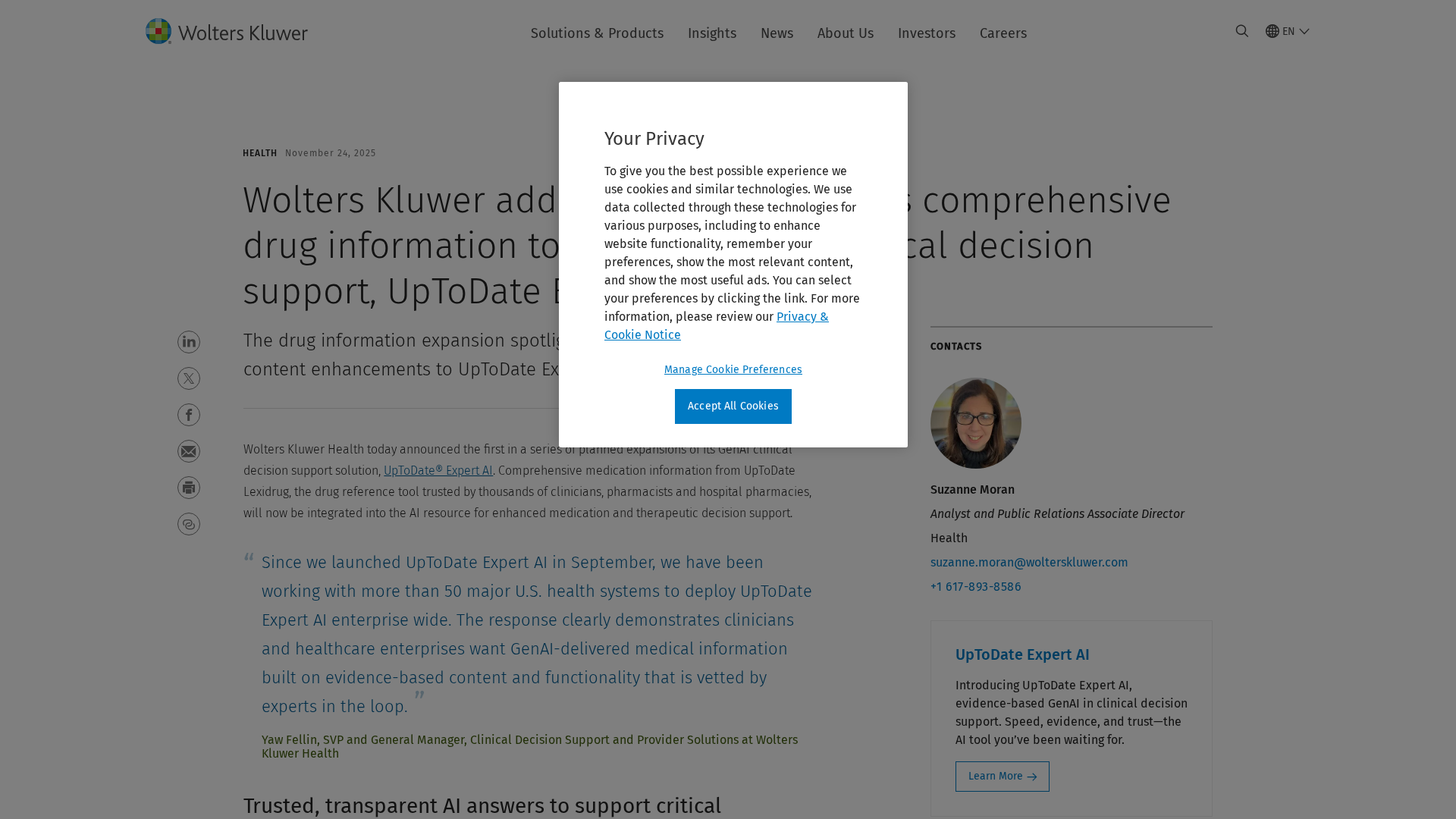
Wolters Kluwer expands UpToDate Expert AI with UpToDate Lexidrug to bolster drug information and medication decision support.
A practical guide to auditing AI in hiring for bias, legality, and governance.
A practical, step-by-step guide to fine-tuning large language models with open-source NLP tools.