Topic Overview
Agentic health AI platforms combine autonomous LLM-driven agents, orchestration layers, and clinical documentation tooling to automate tasks across care workflows while meeting clinical, privacy, and regulatory requirements. By 2026, organizations are moving beyond point pilots to embed agentic assistants in EHRs, clinical documentation workflows, and care coordination pipelines—increasing demand for reliable frameworks, observability, and governance. Key categories include AI agent marketplaces (discovering and procuring prebuilt clinical agents), agent frameworks (engineering, state management, and testing for custom agents), and clinical documentation tools (structured note generation, coding assistance, and billing-aware summaries). Representative platforms: IBM watsonx Assistant focuses on enterprise virtual agents and multi-agent orchestration with no-code and developer-driven options; LangChain supplies open-source engineering frameworks and stateful tooling (e.g., LangGraph) for building, debugging, evaluating, and deploying agentic LLM applications; Xilos positions itself as enterprise agentic infrastructure offering end-to-end visibility into connected services and agent activity—useful for audit trails and operational monitoring. Relevant trends: tighter clinical and data governance, wider adoption of FHIR-based EHR integrations, a shift from single-turn assistants to stateful, multi-agent orchestrations, and emphasis on observability and evaluation pipelines to validate safety and accuracy. Procurement choices balance no-code speed (faster clinical adoption) against developer frameworks (customization, testing, and reproducibility). For healthcare teams selecting platforms, priority considerations include EHR interoperability, auditability, model provenance, evaluation tooling, and deployment controls that align with clinical safety and compliance.
Tool Rankings – Top 3

Enterprise virtual agents and AI assistants built with watsonx LLMs for no-code and developer-driven automation.

Engineering platform and open-source frameworks to build, test, and deploy reliable AI agents.
Intelligent Agentic AI Infrastructure
Latest Articles (35)
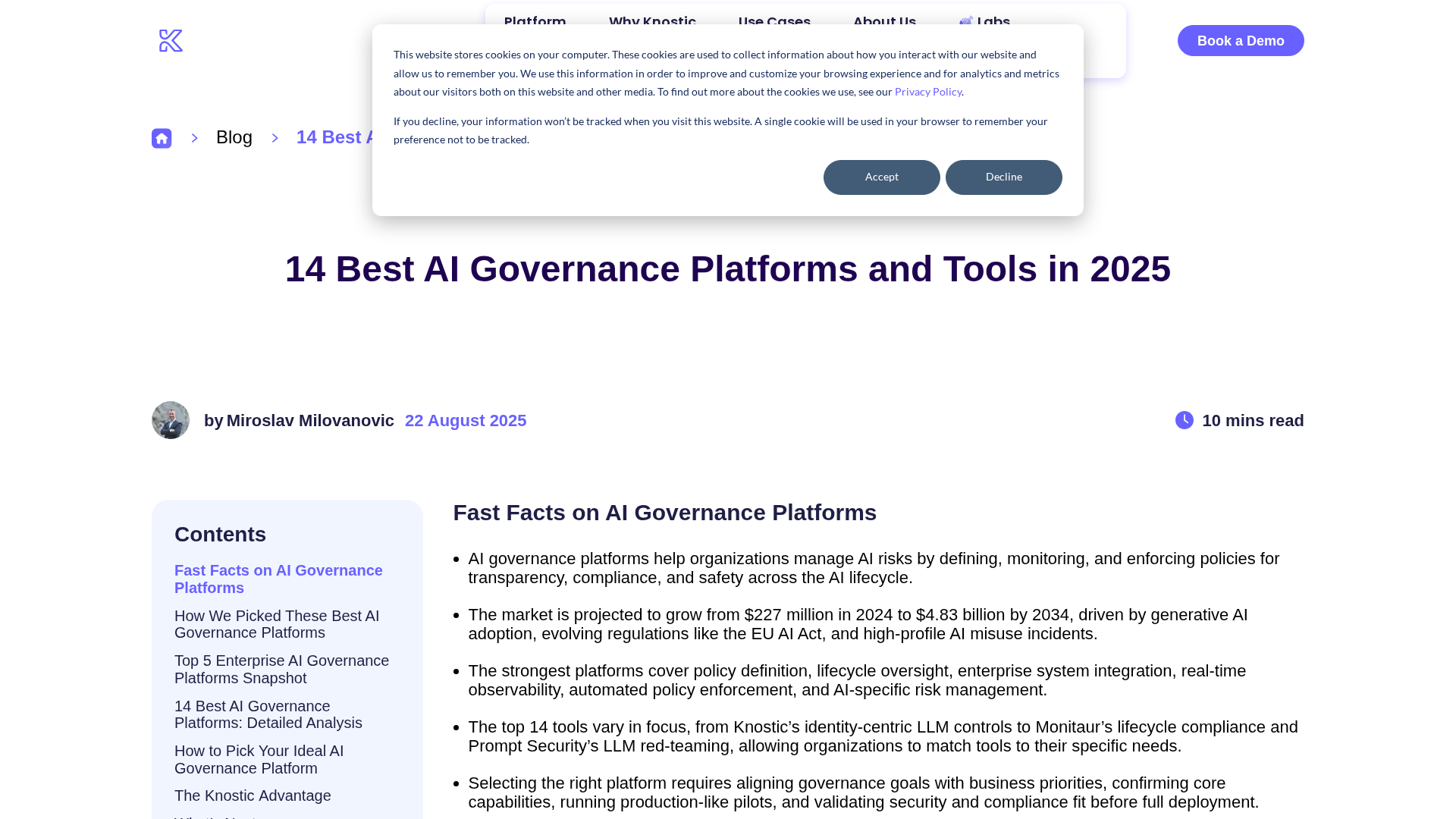
A vendor‑agnostic guide to the 14 best AI governance platforms in 2025, with criteria, comparisons, and practical buying guidance.
OpenAI’s bypass moment underscores the need for governance that survives inevitable user bypass and hardens system controls.
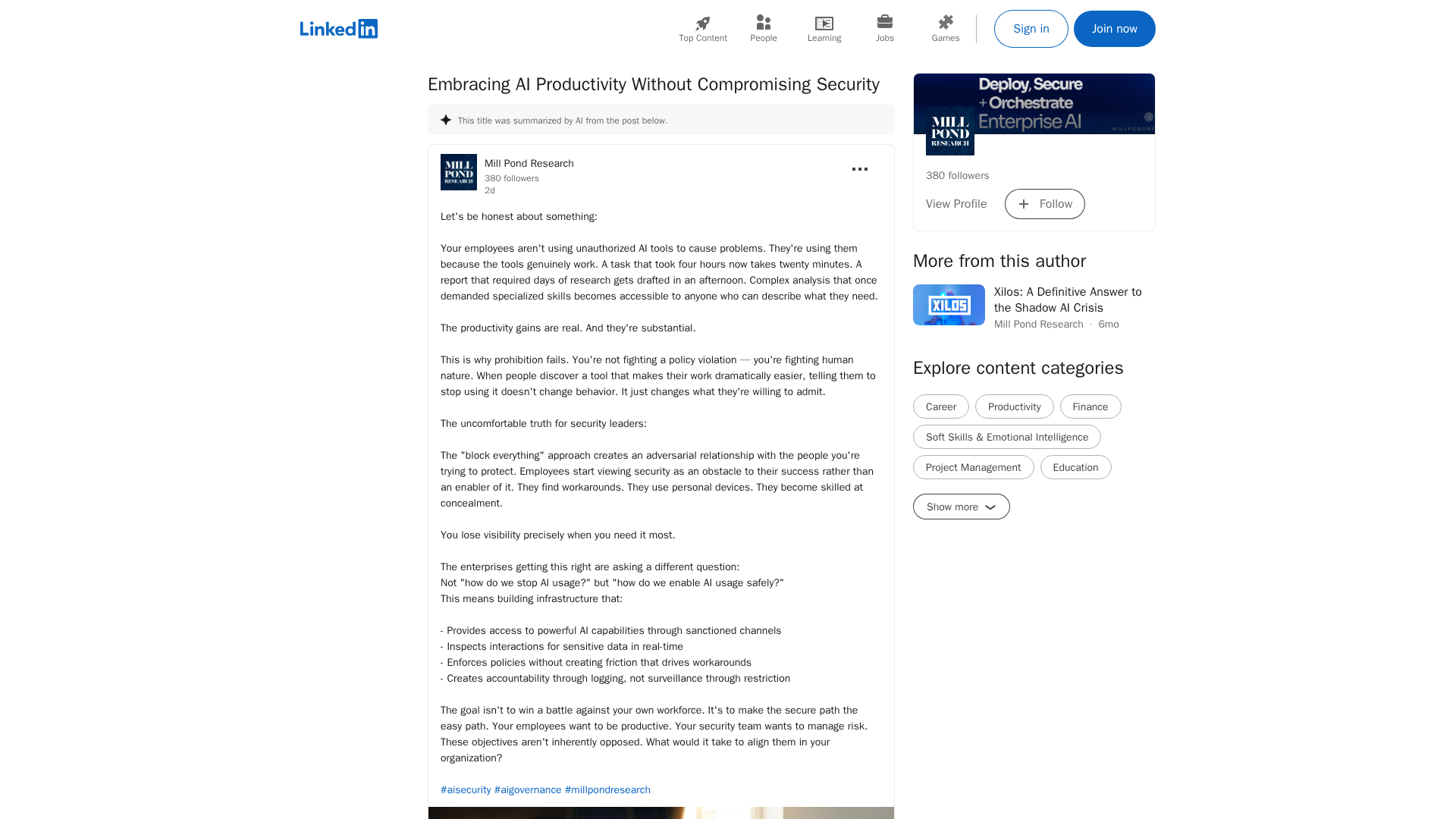
A call to enable safe AI use at work via sanctioned access, real-time data protections, and frictionless governance.
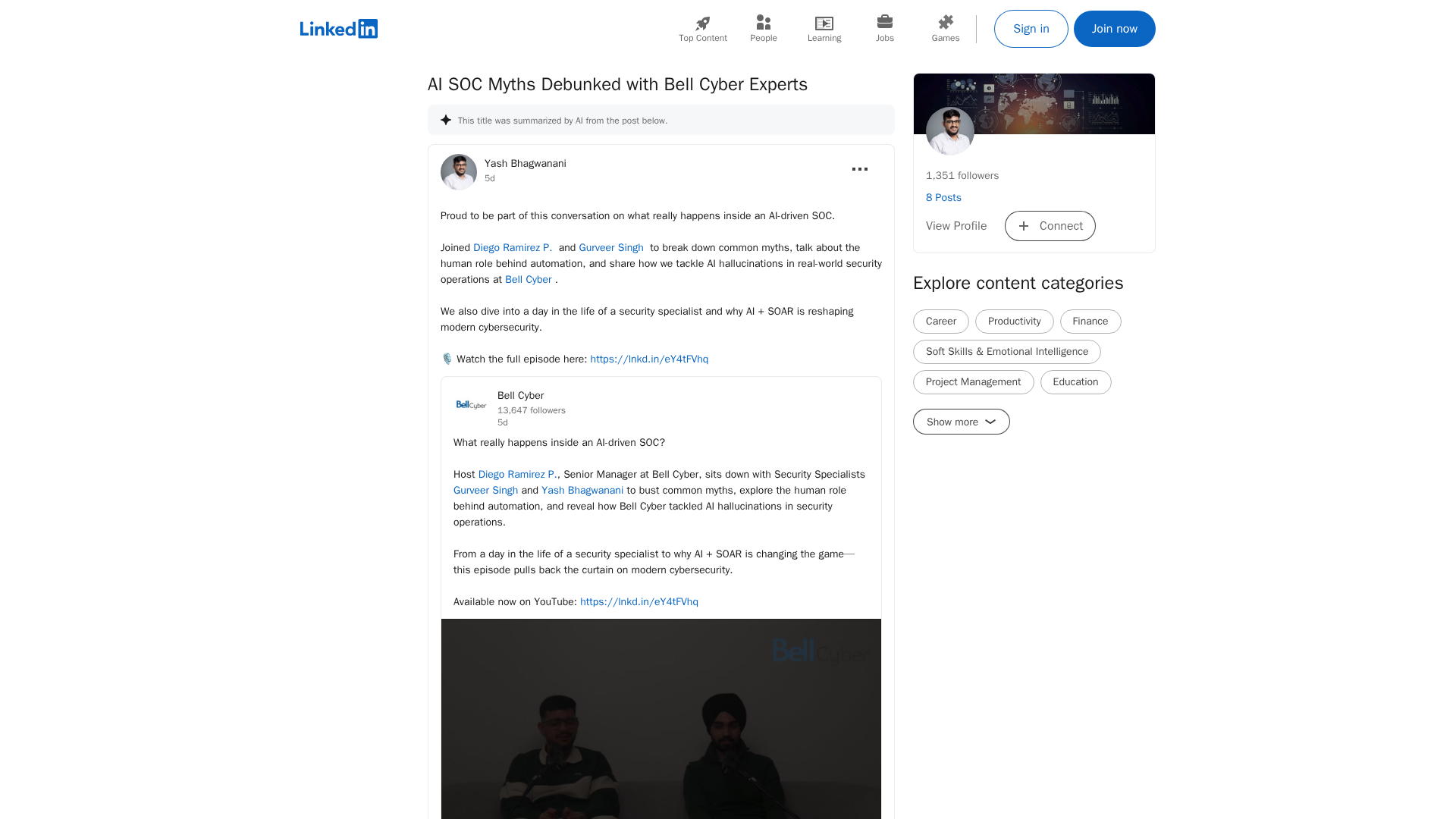
A real-world look at AI in SOCs, debunking myths and highlighting the human role behind automation with Bell Cyber experts.
Explores the human role behind AI automation and how Bell Cyber tackles AI hallucinations in security operations.