Topic Overview
Secure frontier‑model access programs and trusted‑AI gateways are the architectures, policies, and products organizations use to give classified or regulated workloads controlled, auditable access to top-tier models and autonomous agents. This topic covers the intersection of AI security governance, regulatory compliance, and operational AI governance: how enterprises enforce least‑privilege access, provenance, and telemetry for conversation and agent runtimes while meeting audit and policy requirements. The need is timely: by 2026 enterprises face wider operational use of agentic systems and stricter expectations for model provenance, logging, and isolation. That increases the attack surface and regulatory scrutiny, so defense‑in‑depth (zero‑trust access, enclave/air‑gapped hosting, cryptographic attestation, immutable audit trails) and visibility into agent activity have become baseline controls. Key categories and representative tools described here include no‑code/low‑code agent platforms (StackAI, Lindy) that accelerate internal automation while embedding governance hooks; enterprise agent infrastructure (Xilos) that emphasizes 100% visibility and control over connected services and agent activity; and model/assistant providers (Anthropic’s Claude family, IBM watsonx Assistant) that are commonly integrated behind gateways or private deployments to provide conversational and developer assistance in compliant environments. In practice, secure programs combine platform controls (role‑based access, data filters, policy engines), infrastructure telemetry (agent orchestration logs, service call tracing), and model access controls (VPC endpoints, private model instances, usage adjudication) to meet both security and compliance needs. Evaluating solutions requires testing for isolation capabilities, comprehensive audit and forensics, demonstrable policy enforcement, and operational controls for lifecycle management of agents and model access—criteria that determine whether a gateway or access program is suitable for classified or highly regulated enterprise use.
Tool Rankings – Top 5
End-to-end no-code/low-code enterprise platform for building, deploying, and governing AI agents that automate work onun
Intelligent Agentic AI Infrastructure
Anthropic's Claude family: conversational and developer AI assistants for research, writing, code, and analysis.

Enterprise virtual agents and AI assistants built with watsonx LLMs for no-code and developer-driven automation.

No-code/low-code AI agent platform to build, deploy, and govern autonomous AI agents.
Latest Articles (51)
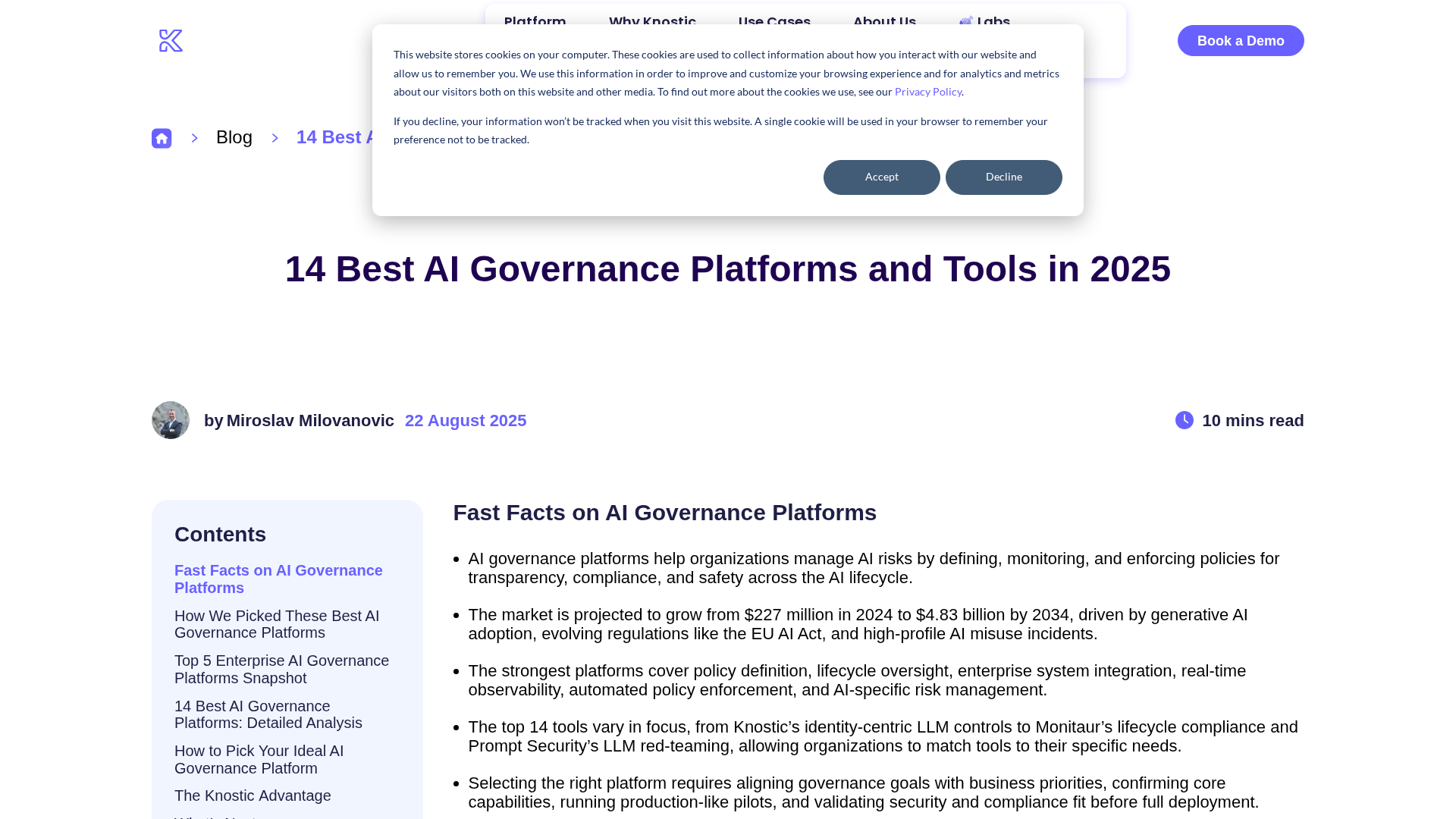
A vendor‑agnostic guide to the 14 best AI governance platforms in 2025, with criteria, comparisons, and practical buying guidance.
OpenAI’s bypass moment underscores the need for governance that survives inevitable user bypass and hardens system controls.
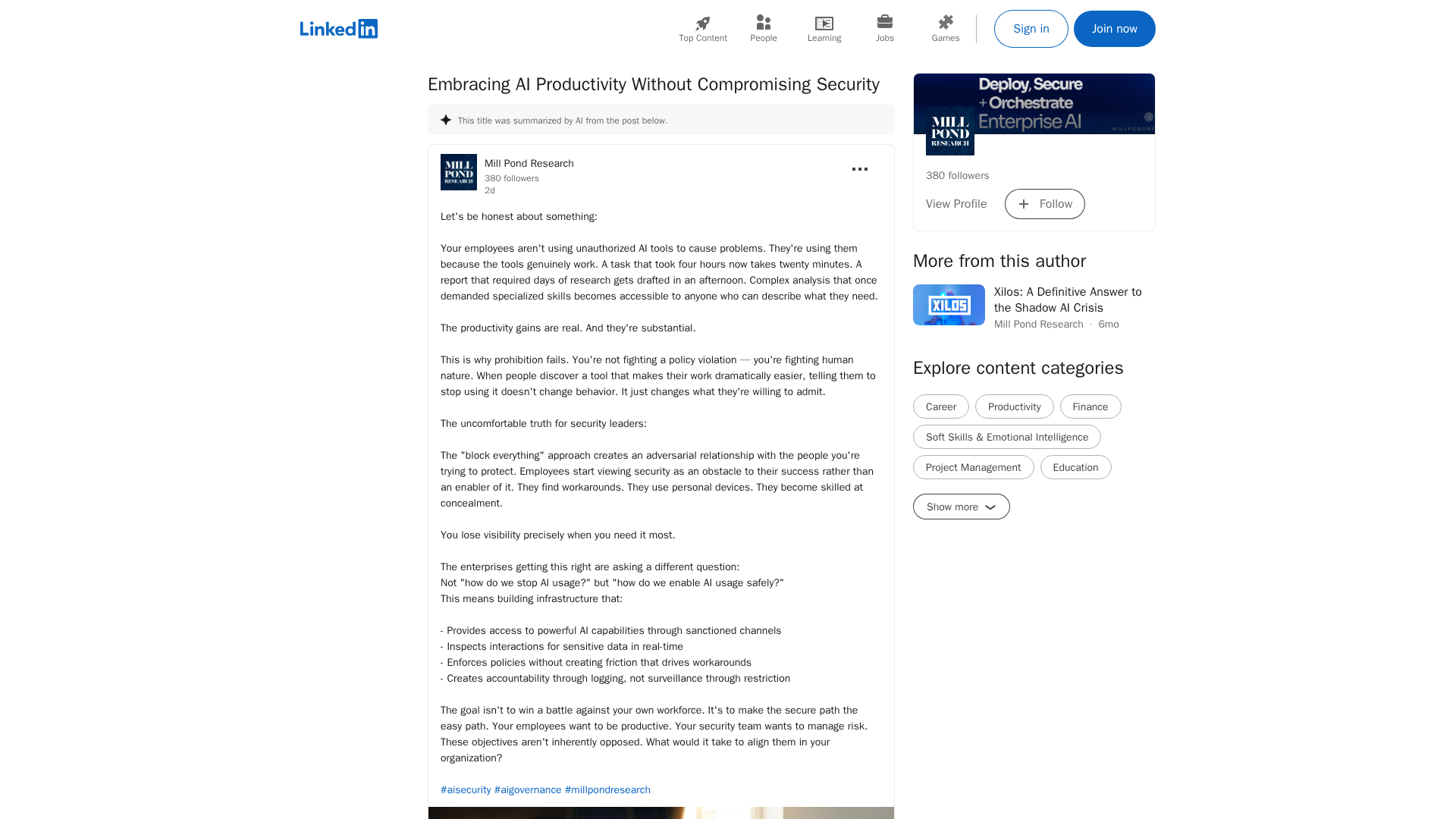
A call to enable safe AI use at work via sanctioned access, real-time data protections, and frictionless governance.
A real-world look at AI in SOCs, debunking myths and highlighting the human role behind automation with Bell Cyber experts.
Explores the human role behind AI automation and how Bell Cyber tackles AI hallucinations in security operations.