Topic Overview
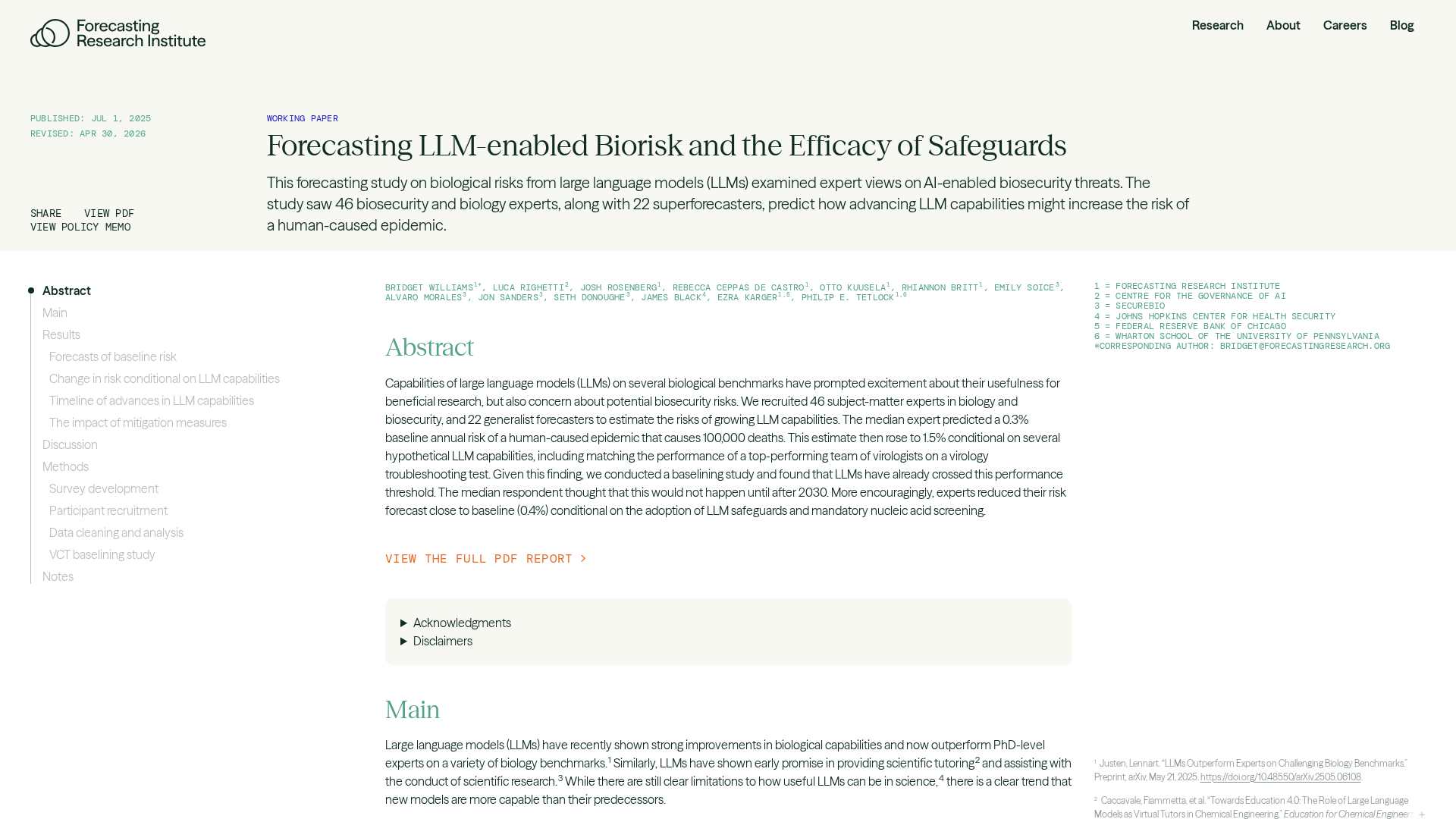
This topic covers specialized LLMs and generative AI models built for life‑sciences and biodefense use cases—often called domain‑specific bio models (examples include initiatives like “GPT Rosalind”)—and the surrounding ecosystem required to develop, test, deploy, and govern them. These models adapt foundation‑model architectures to biological language, protocols, literature, and structured laboratory or clinical data to accelerate tasks such as literature synthesis, experimental planning, signal detection, and operational monitoring. Relevance in 2026 stems from two converging trends: increased demand for high‑precision, domain-aware AI in regulated life‑sciences workflows, and heightened attention to safety, provenance, and misuse risk. That combination pushes organizations to pair model engineering with rigorous GenAI test automation, provenance-aware data platforms, and enterprise governance. Key tooling and categories in this space include AI research and engineering platforms (LangChain for building and orchestrating agentic workflows), enterprise assistants and deployment stacks (IBM watsonx Assistant for no‑code and developer-driven automation), model providers and runtimes (Mistral AI, Google Gemini, Anthropic’s Claude family), and infrastructure for training and fine‑tuning (Together AI). Document‑centric interaction tools like ChatPDF support rapid evidence review. Governance and monitoring platforms such as Monitaur provide policy centralization, vendor oversight, and operational validation—functions essential for regulated settings. Practitioners should expect an integrated product landscape where marketplaces and data platforms supply curated, provenance‑tagged datasets and vetted models; engineering frameworks enable reproducible testing and red‑teaming; and governance tools operationalize risk controls. Progress is incremental and focused on measurable validation, controlled access, and auditability rather than broad, unchecked capability expansion.
Tool Rankings – Top 6

Enterprise virtual agents and AI assistants built with watsonx LLMs for no-code and developer-driven automation.

Engineering platform and open-source frameworks to build, test, and deploy reliable AI agents.

Insurance-focused enterprise AI governance platform centralizing policy, monitoring, validation, vendor governance and证e

Enterprise-focused provider of open/efficient models and an AI production platform emphasizing privacy, governance, and

Google’s multimodal family of generative AI models and APIs for developers and enterprises.
Anthropic's Claude family: conversational and developer AI assistants for research, writing, code, and analysis.
Latest Articles (88)
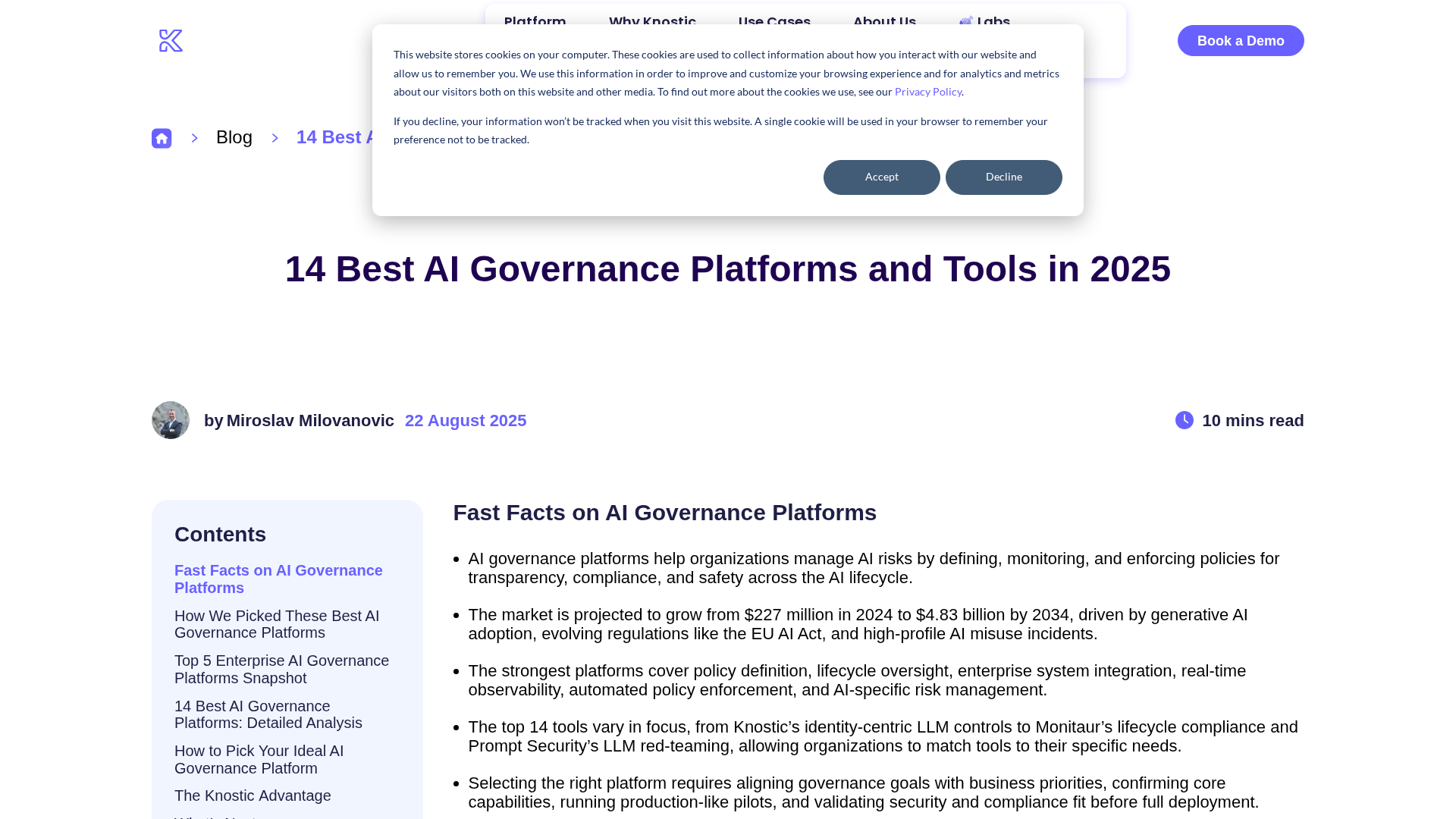
A vendor‑agnostic guide to the 14 best AI governance platforms in 2025, with criteria, comparisons, and practical buying guidance.
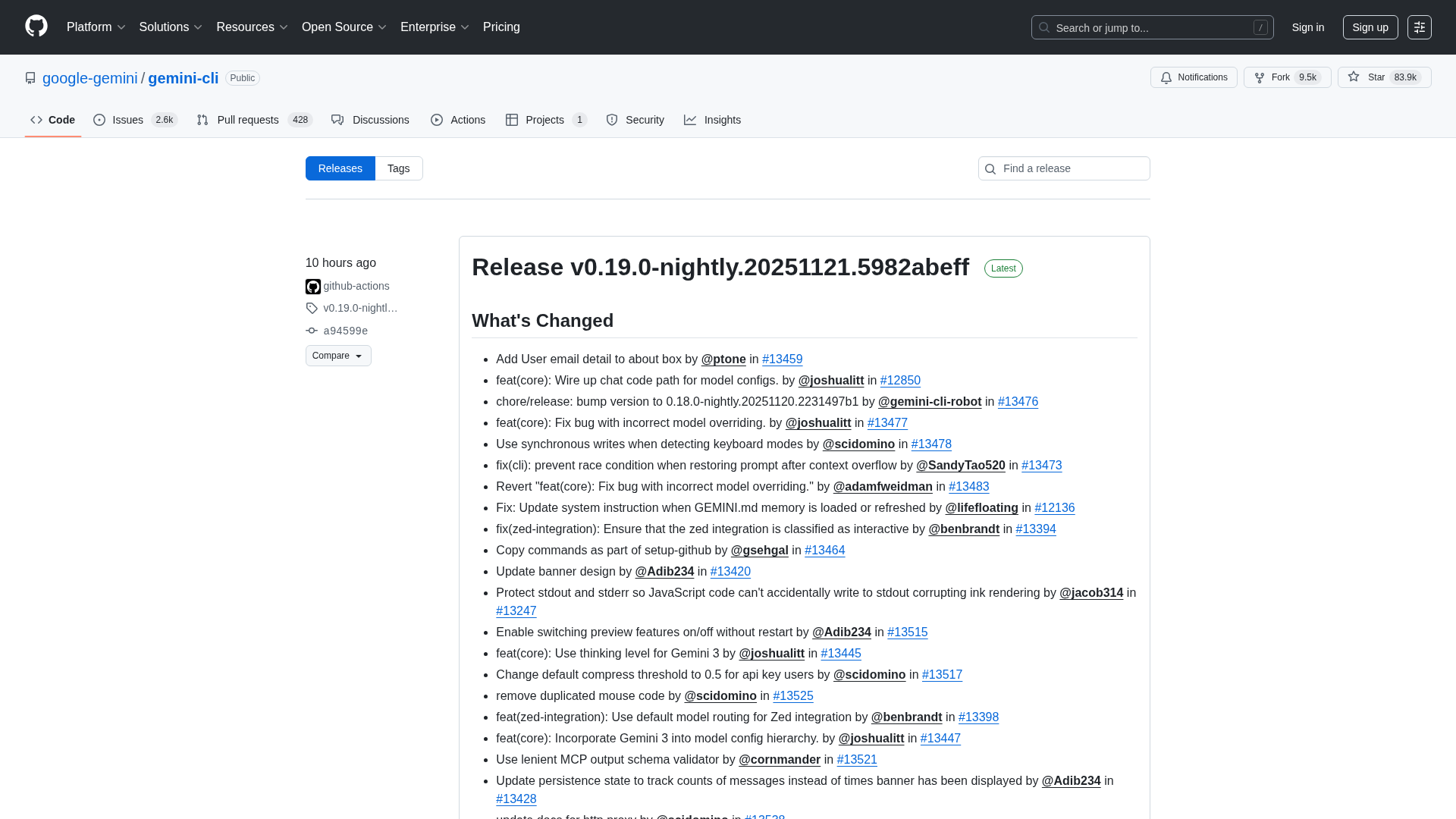
Overview of the Gemini CLI v0.36.0-preview release series, highlighting architectural, CLI, and UI changelogs across multiple pre-release versions.

Baseten launches an AI training platform to compete with hyperscalers, promising simpler, more transparent ML workflows.
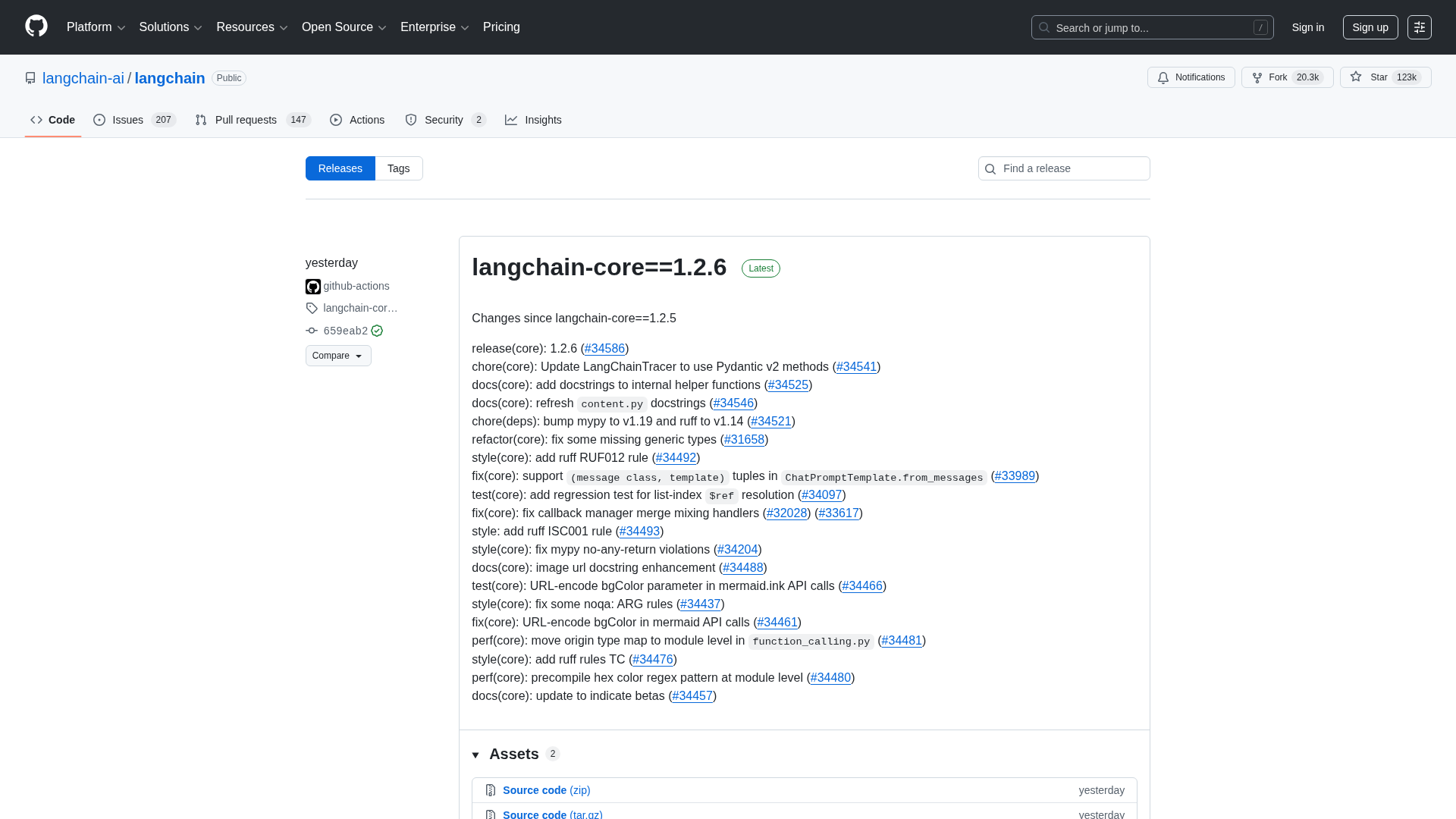
A comprehensive LangChain releases roundup detailing Core 1.2.6 and interconnected updates across XAI, OpenAI, Classic, and tests.

Cannot access the article content due to an access-denied error, preventing summarization.