
Topic Overview
Clinical AI safety, auditability, and human–AI performance evaluation address the practical controls, measurement frameworks, and infrastructure needed to deploy AI systems in care settings while meeting regulatory and clinical standards. This topic covers tools that enable visibility into agentic workflows, rigorous test automation and red‑teaming, human‑in‑the‑loop oversight, and compliance-ready audit trails. Relevance in 2026 stems from wider adoption of autonomous and multi‑agent assistants in operational workflows and contact centers, tighter regulatory scrutiny on medical and high‑risk AI, and enterprise demand for demonstrable safety and performance metrics. No‑code/low‑code agent builders accelerate deployments (and risk surface area), while agentic AI infrastructures scale complex interactions — both increasing the need for systematic evaluation and governance. Representative tools and functions: Crescendo.ai combines agentic voice/chat/email capabilities with managed human experts in a platform + per‑resolution model, useful where outcome guarantees and human escalation are operational requirements. Xilos positions itself as an enterprise agentic AI infrastructure offering 100% visibility into connected services and agent activity, addressing observability and forensic needs. Lindy and StackAI are no‑code/low‑code platforms for creating, deploying, and governing autonomous agents; they lower technical barriers but require embedded monitoring and versioned audit logs. IBM watsonx Assistant provides enterprise virtual agents and multi‑agent orchestrations for developer and no‑code workflows, often used where vendor support and integration matter. Anthropic’s Claude family supplies conversational and developer AI assistants that commonly serve as the LLM layer in evaluation pipelines. Together these tool categories — AI governance, security governance, regulatory compliance, and test automation — form an operational stack for validating safety, producing auditable evidence, and continuously measuring human–AI performance in clinical contexts.
Tool Rankings – Top 6
_logo%201.svg)
AI-native CX platform combining agentic AI with human experts in a managed service model (platform + per-resolution fees
Intelligent Agentic AI Infrastructure

No-code/low-code AI agent platform to build, deploy, and govern autonomous AI agents.

Enterprise virtual agents and AI assistants built with watsonx LLMs for no-code and developer-driven automation.
Anthropic's Claude family: conversational and developer AI assistants for research, writing, code, and analysis.

End-to-end no-code/low-code enterprise platform for building, deploying, and governing AI agents that automate work onun
Latest Articles (65)
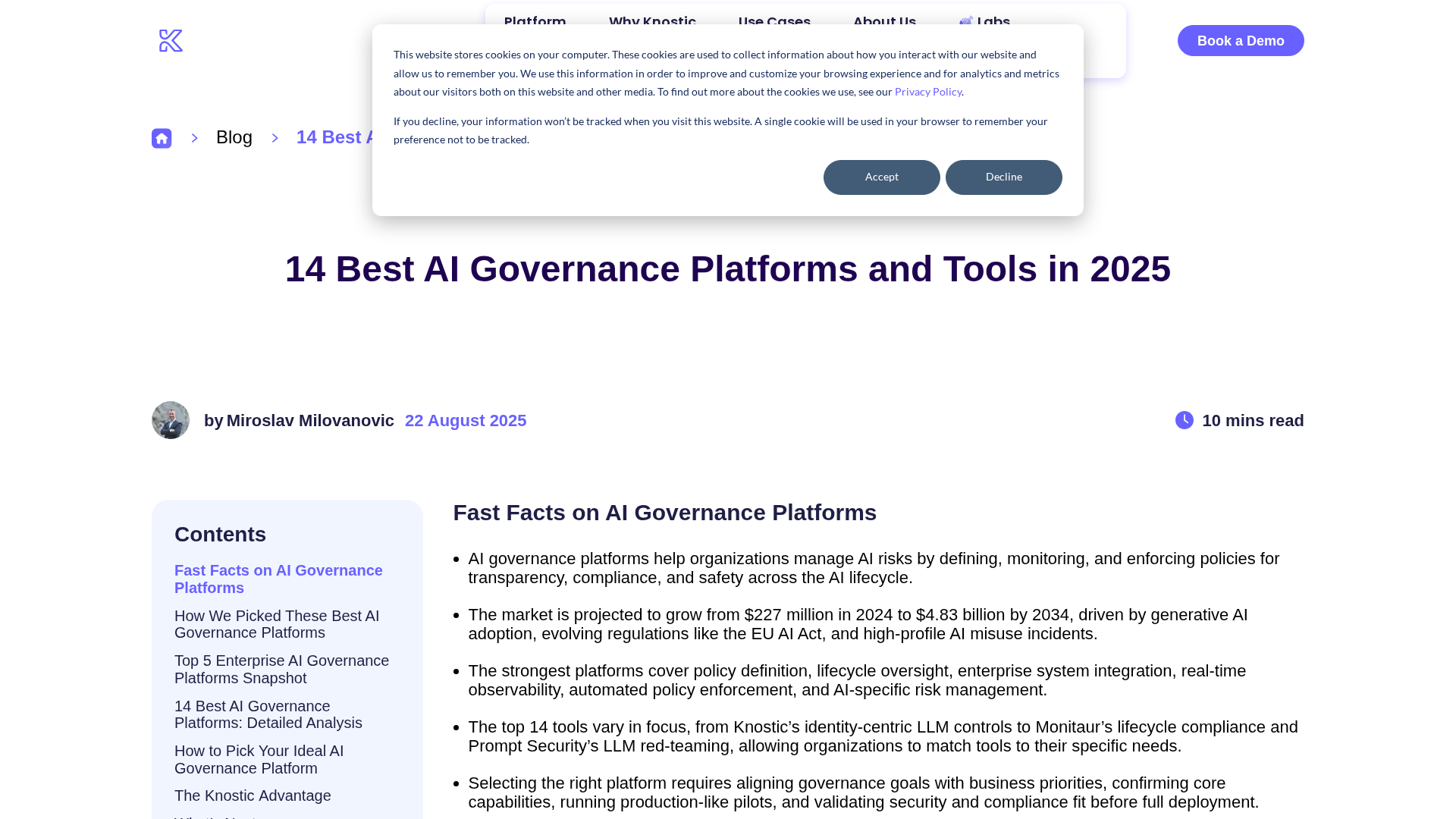
A vendor‑agnostic guide to the 14 best AI governance platforms in 2025, with criteria, comparisons, and practical buying guidance.
OpenAI’s bypass moment underscores the need for governance that survives inevitable user bypass and hardens system controls.
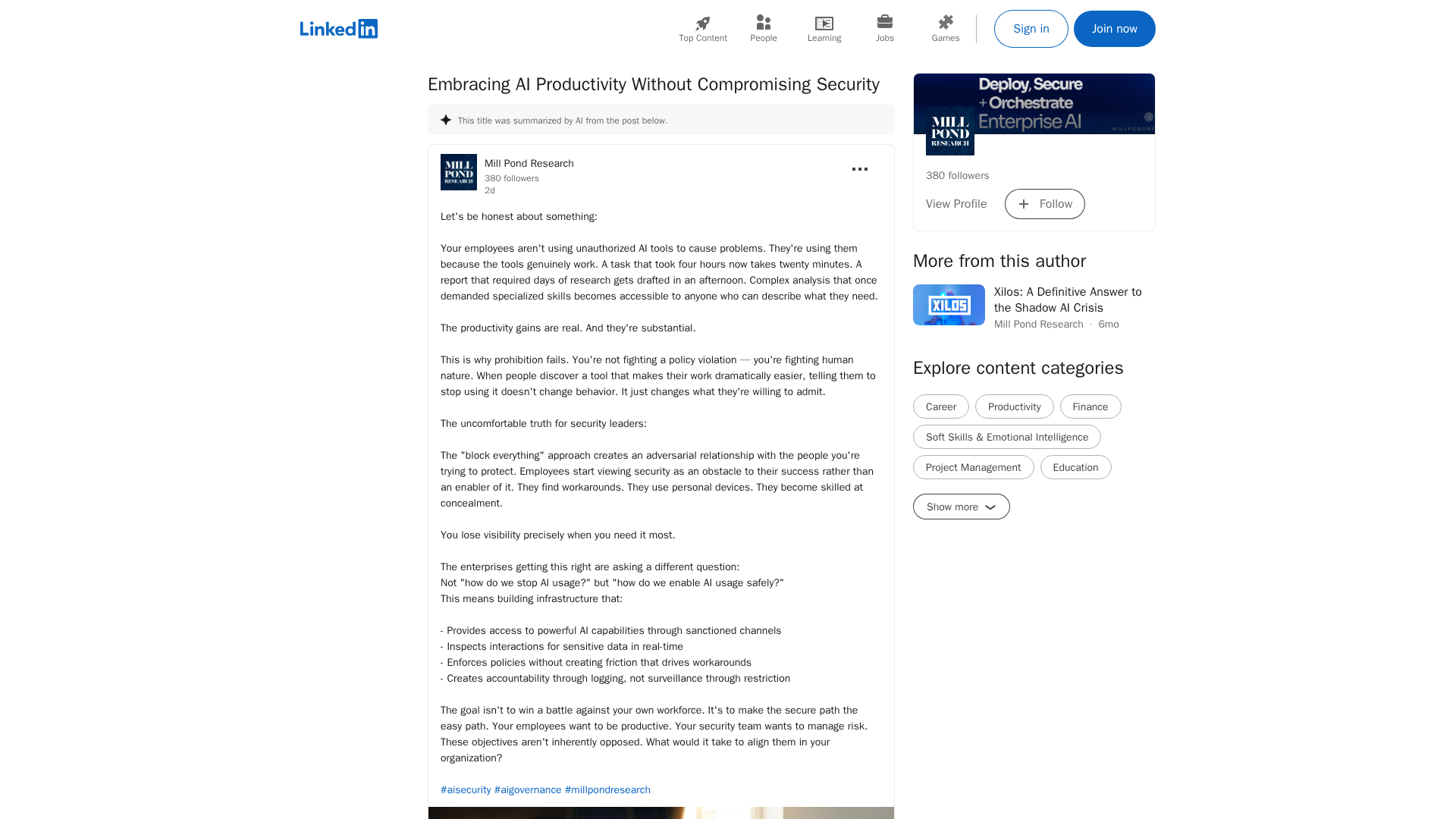
A call to enable safe AI use at work via sanctioned access, real-time data protections, and frictionless governance.
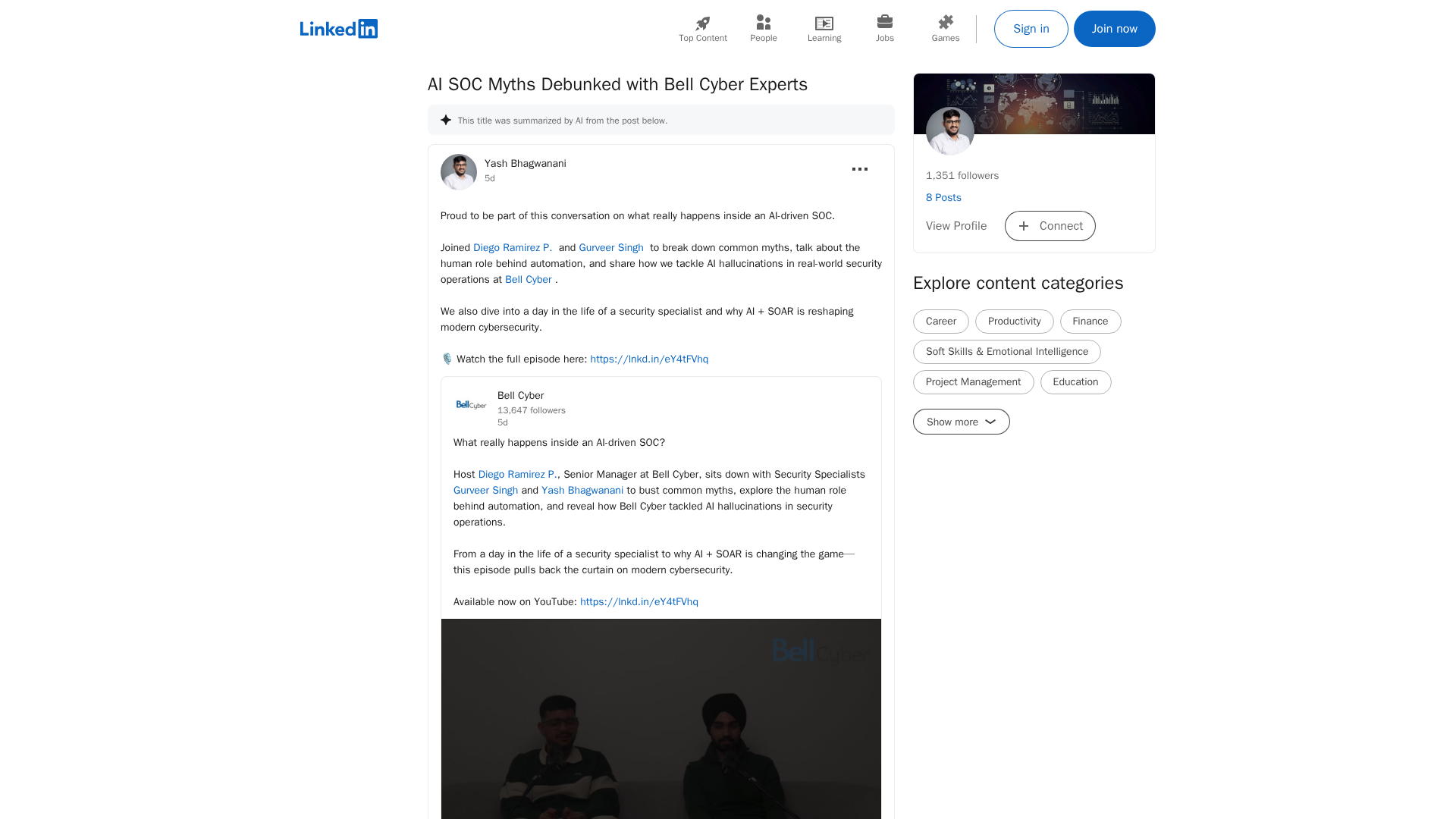
A real-world look at AI in SOCs, debunking myths and highlighting the human role behind automation with Bell Cyber experts.
Explores the human role behind AI automation and how Bell Cyber tackles AI hallucinations in security operations.