Topic Overview
Face and image recognition APIs combine computer vision models, data pipelines, and deployment infrastructure to identify, classify, and extract attributes from visual inputs. As organizations move from experimental pilots to production use, decisions about model performance (accuracy, false positive/negative rates, latency), deployment topology (edge vs. cloud), and privacy/legal risk become central. This topic examines those trade-offs and the governance tooling that supports safe adoption. Performance considerations include benchmarked accuracy across diverse demographics, hardware-accelerated inference for low-latency edge use, and end-to-end monitoring for drift and concept shift. Edge AI vision platforms (example: Gather AI’s drone and camera-based intralogistics systems) reduce data exfiltration and latency but require lifecycle management for on-device models. Cloud-first platforms such as Google’s Vertex AI provide unified model development, deployment, and monitoring pipelines that simplify evaluation, model cards, and continuous validation. Privacy and legal safeguards now demand technical and contractual controls: on-device inference, federated learning or differential privacy, consent and data minimization, documented model provenance, and DPIAs. Governance and compliance tooling (Monitaur for insurance and regulated industries) centralizes policy, monitoring, validation, and vendor governance to demonstrate controls to auditors and regulators. AI security governance and observability solutions (e.g., Xilos‑style infrastructure) help maintain visibility into agentic activities, audit trails, and third‑party integrations. Vertical vendors like Veesual show how domain-specific visual models are deployed in commerce with attention to PII handling and performance at scale. Organizations evaluating face and image recognition APIs should weigh accuracy, deployment model, privacy engineering options, vendor risk, and legal obligations — using governance platforms and security infrastructure to operationalize safeguards and evidence for compliance.
Tool Rankings – Top 5

Unified, fully-managed Google Cloud platform for building, training, deploying, and monitoring ML and GenAI models.

AI-driven intralogistics platform using autonomous drones and computer vision to digitize warehouses and provide real‑t

AI-driven visual commerce platform for fashion e-commerce delivering on-model visuals, Mix&Match outfit builders, multi‑
Intelligent Agentic AI Infrastructure

Insurance-focused enterprise AI governance platform centralizing policy, monitoring, validation, vendor governance and证e
Latest Articles (27)
OpenAI’s bypass moment underscores the need for governance that survives inevitable user bypass and hardens system controls.

A call to enable safe AI use at work via sanctioned access, real-time data protections, and frictionless governance.

A real-world look at AI in SOCs, debunking myths and highlighting the human role behind automation with Bell Cyber experts.
Explores the human role behind AI automation and how Bell Cyber tackles AI hallucinations in security operations.
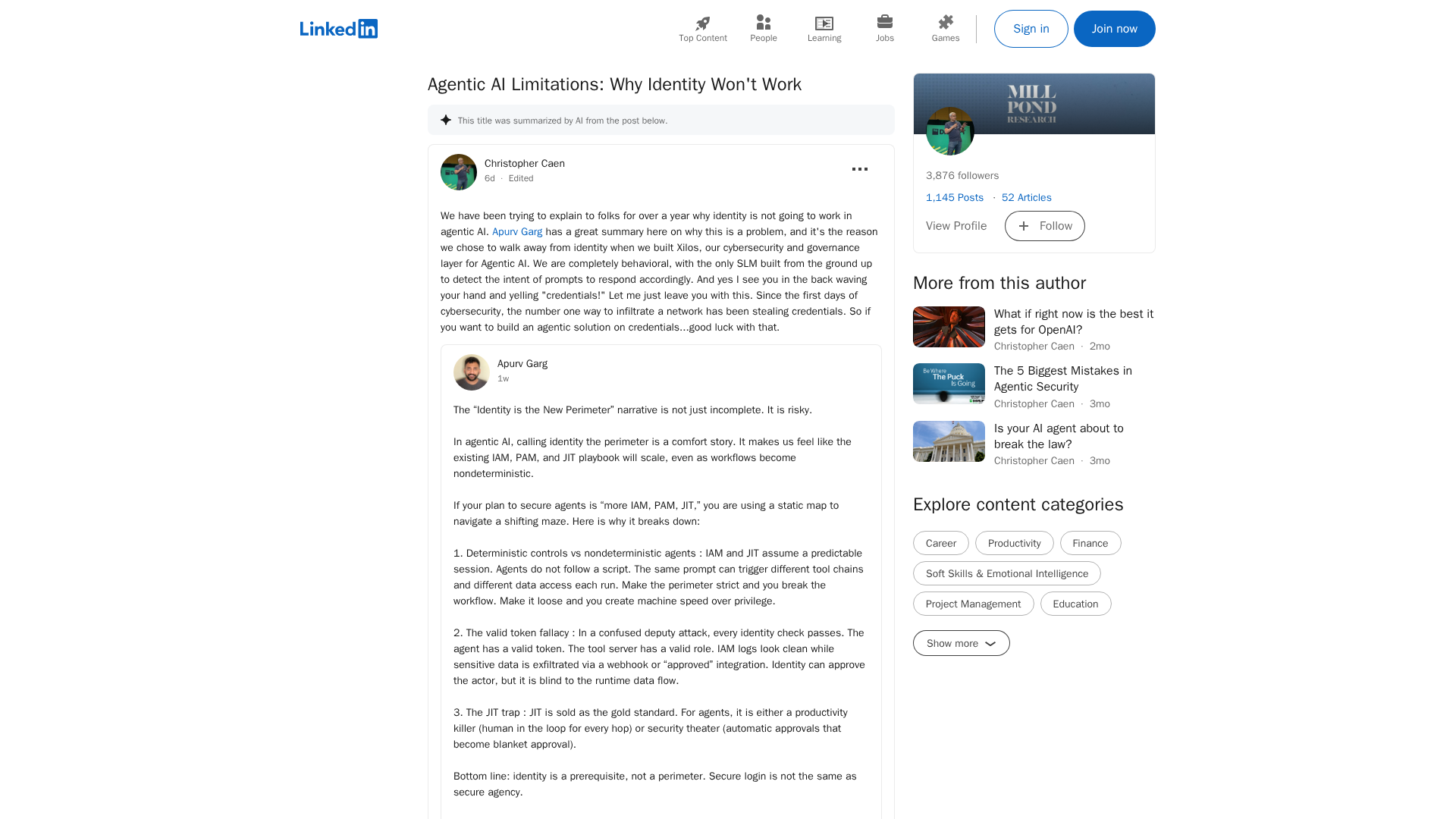
Identity won’t secure agentic AI; you need runtime visibility and action-based policy.