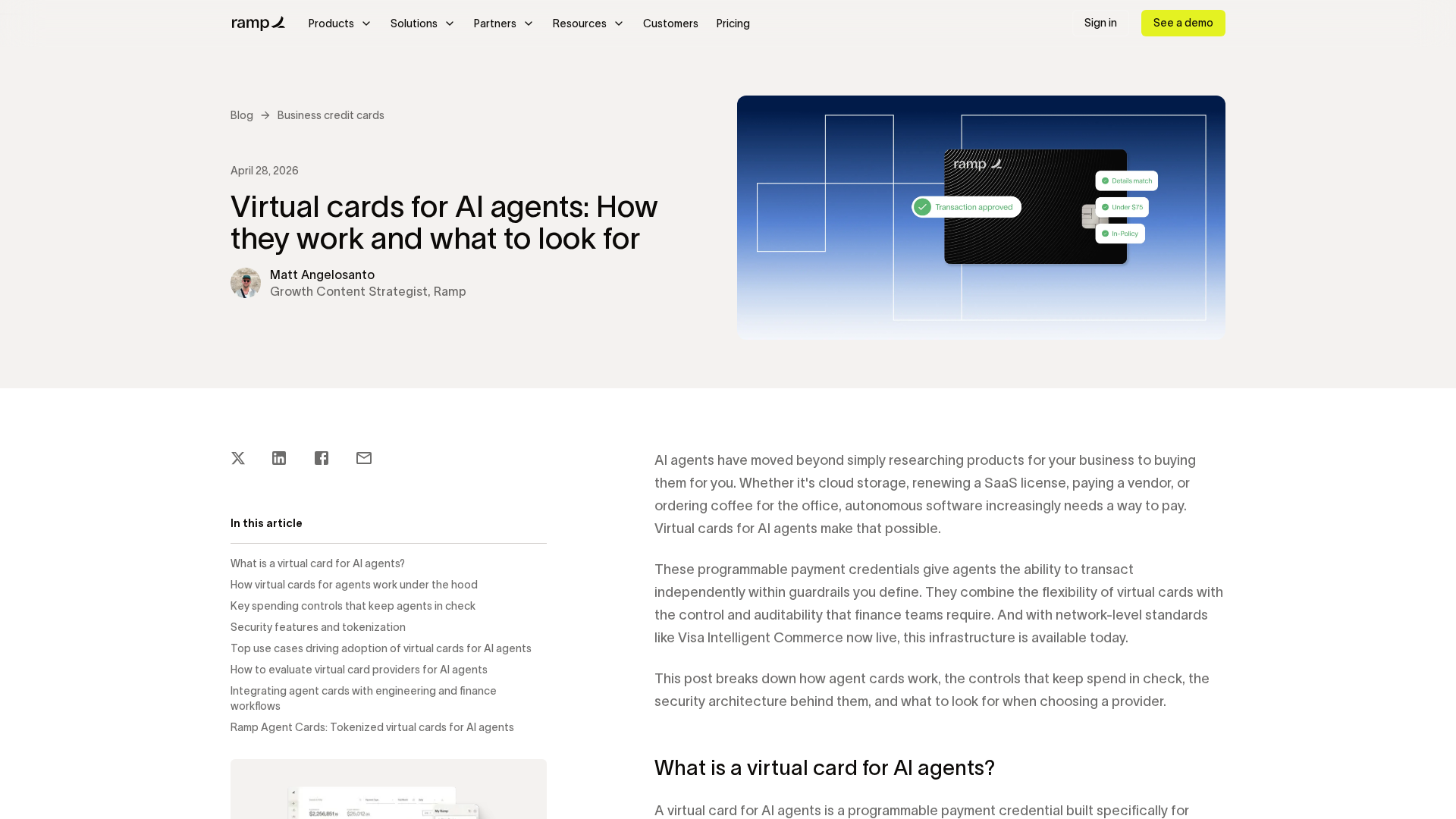
Topic Overview
This topic covers the financial infrastructure, integration patterns, and credential management practices needed to enable AI agents and autonomous systems to make and manage payments. It centers on composable payment stacks that connect cloud services, databases, orchestration platforms and blockchains through standardized interfaces such as the Model Context Protocol (MCP). That integration layer lets LLM-driven agents call payment APIs, trigger workflow engines, and update ledgers while respecting least-privilege access and auditability. Relevance (May 2026): production deployments increasingly embed AI agents in commerce, metered APIs, IoT billing, and on-chain workflows, raising demand for reliable, auditable machine-native payment rails and credential controls. Standardized MCP servers and hosted integrators reduce engineering friction for safe agent actions while enabling hybrid fiat and crypto routing, real-time reconciliation, and policy enforcement under growing operational and regulatory scrutiny. Key tools and roles: Pipedream provides event-driven connectivity to 2,500+ APIs for orchestration and external payment gateways; Supabase’s MCP server exposes database and edge-function capabilities to agents for state, receipts, and lightweight business logic; DBHub acts as a universal MCP gateway to SQL backends for transactional data; Solana Agent Kit enables agents to execute and monitor on-chain payment flows; cloud providers’ MCP servers (AWS, Azure, Cloudflare) surface cloud-native services, storage, and compute for secure execution; n8n supplies workflow automation accessible to agents for multi-step payment processes. Considerations: robust credential management (ephemeral keys, scoped tokens, secret rotation), observable audit trails, payment reconciliation, fraud controls, and clear operator governance are critical. The emerging best practice is to pair MCP-driven integrations with hardened credential vaults and policy engines so autonomous agents can transact with minimal risk and full traceability.
MCP Server Rankings – Top 8

Connect with 2,500 APIs with 8,000+ prebuilt tools.

Interact with Supabase: Create tables, query data, deploy edge functions, and more.

Universal database MCP server connecting to MySQL, MariaDB, PostgreSQL, and SQL Server.

MCP server enabling LLMs to interact with the Solana blockchain via Solana Agent Kit.
Specialized MCP servers that bring AWS best practices directly to your development workflow.

A single MCP server enabling AI agents to access Azure services via MCP.

Deploy, configure & interrogate your resources on the Cloudflare developer platform (e.g. Workers/KV/R2/D1)

MCP server enabling AI assistants to manage n8n workflows via natural language.