Topic Overview
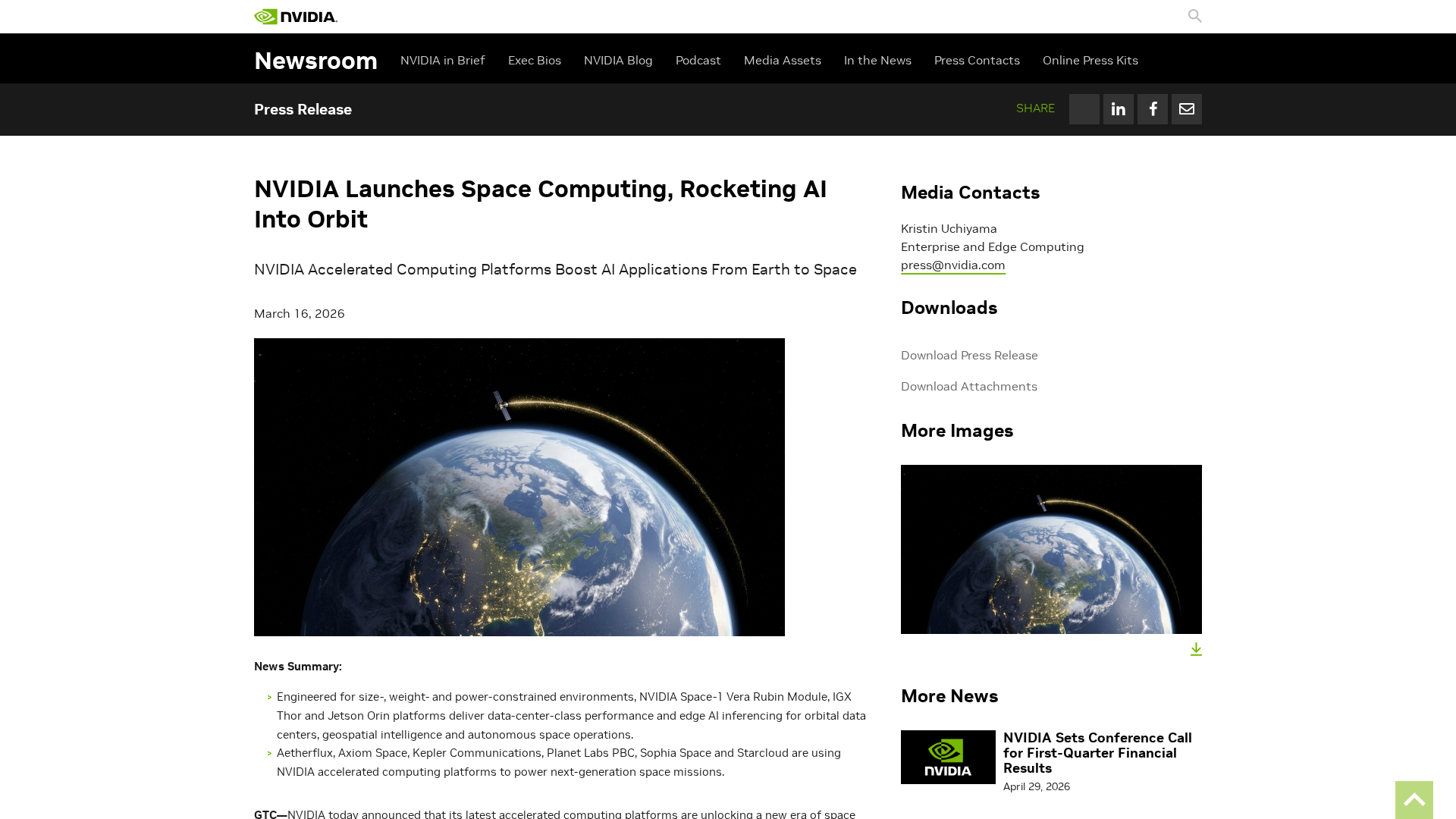
In-orbit AI data centers and space-based compute platforms refer to placing compute, storage, and AI inference close to or within orbital constellations (typically LEO) to reduce latency, process high-bandwidth sensor streams, and provide resilient global services. By 2026 this topic matters because expanding LEO constellations, partnerships between cloud providers and satellite operators, and demand for real-time telemetry and Earth-observation analytics have made space-based edge compute a practical extension of cloud architectures. Operationally, these platforms are integrated into cloud data ecosystems through standard interfaces and protocol adapters. Model Context Protocol (MCP) servers are a clear example: Fabric Real-Time Intelligence MCP connects LLM-driven agents to Microsoft Fabric RTI for streaming decisioning; Confluent MCP exposes Kafka and Confluent Cloud REST APIs for streaming ingestion and pub/sub; Trino’s Go-based MCP front-end enables distributed SQL access; Snowflake Cortex MCP provides object management, SQL execution, and semantic queries over unstructured data; and ThingsBoard MCP gives LLMs natural-language access to IoT telemetry. Together, these tools illustrate how streaming, SQL, semantic search, and IoT control can be surfaced to AI agents that coordinate with in-orbit compute. Key considerations include bandwidth and power constraints, data residency and export controls, workload placement strategies (onboard inference vs. ground processing), and orchestration across heterogeneous clouds and satellites. Use cases span real-time marketing of telemetry, disaster response, maritime and aviation tracking, and distributed ML training/inference. Practical deployments rely on hybrid integration patterns—streaming brokers (Confluent), distributed query engines (Trino), cloud data platforms (Snowflake), IoT platforms (ThingsBoard), and RTI frameworks—exposed via MCP to enable predictable, agent-driven access and control of space-based compute resources.
MCP Server Rankings – Top 5
MCP server for Microsoft Fabric RTI enabling LLM-driven access to Eventhouse, Eventstreams, and Activator.

Interact with Confluent Kafka and Confluent Cloud REST APIs.

Natural language interface for LLMs to interact with ThingsBoard IoT.

A high-performance Model Context Protocol (MCP) server for Trino implemented in Go.

Open-source MCP server for Snowflake Cortex with object management, SQL execution, and semantic view querying.