
Topic Overview
Dev security scanners for AI and code now span classic software checks and new model‑centric analyses. This topic covers tools that scan source code (SAST), open‑source components (SCA), prompts and agent chains for prompt‑injection, model artifacts and training datasets for leakage or poisoning, and runtime monitors for anomalous model behavior. Both open‑source and commercial offerings are evolving to integrate into CI/CD and MLOps pipelines and to feed enterprise governance and audit systems. Relevance (2026): increased enterprise AI deployment, regulatory scrutiny, and high‑profile model incidents have pushed organizations to adopt layered scanning—before deployment, in training pipelines, and at runtime. Scanners are now expected to produce machine‑readable evidence for compliance, integrate with policy controls, and scale across agent platforms and virtual assistants. Key categories and examples: traditional SAST/SCA tools remain important for code and dependency risks; model‑risk scanners and dataset analyzers detect data leakage, PII and licensing problems; prompt and agent scanners detect prompt injection and unsafe orchestration patterns; red‑teaming and fuzzing frameworks exercise models under adversarial inputs; runtime anomaly detection provides continuous monitoring. Commercial products—illustrated by recent vendor offerings such as Perplexity’s Bumblebee—emphasize integrated developer workflows, vendor support and compliance reporting. Open‑source projects offer transparency and customization for research and internal validation. How this fits with governance platforms: enterprise governance platforms (e.g., Monitaur) and model providers/platforms (e.g., Mistral AI, IBM watsonx Assistant, StackAI, Lindy) are where scanners must plug in—providing policy enforcement, monitoring, and evidence capture. Choosing between open and commercial scanners is a tradeoff among transparency, integration, scale, and regulatory support; realistic programs combine both types across the SDLC and MLOps lifecycle.
Tool Rankings – Top 5

Insurance-focused enterprise AI governance platform centralizing policy, monitoring, validation, vendor governance and证e

Enterprise-focused provider of open/efficient models and an AI production platform emphasizing privacy, governance, and

Enterprise virtual agents and AI assistants built with watsonx LLMs for no-code and developer-driven automation.
End-to-end no-code/low-code enterprise platform for building, deploying, and governing AI agents that automate work onun

No-code/low-code AI agent platform to build, deploy, and govern autonomous AI agents.
Latest Articles (41)
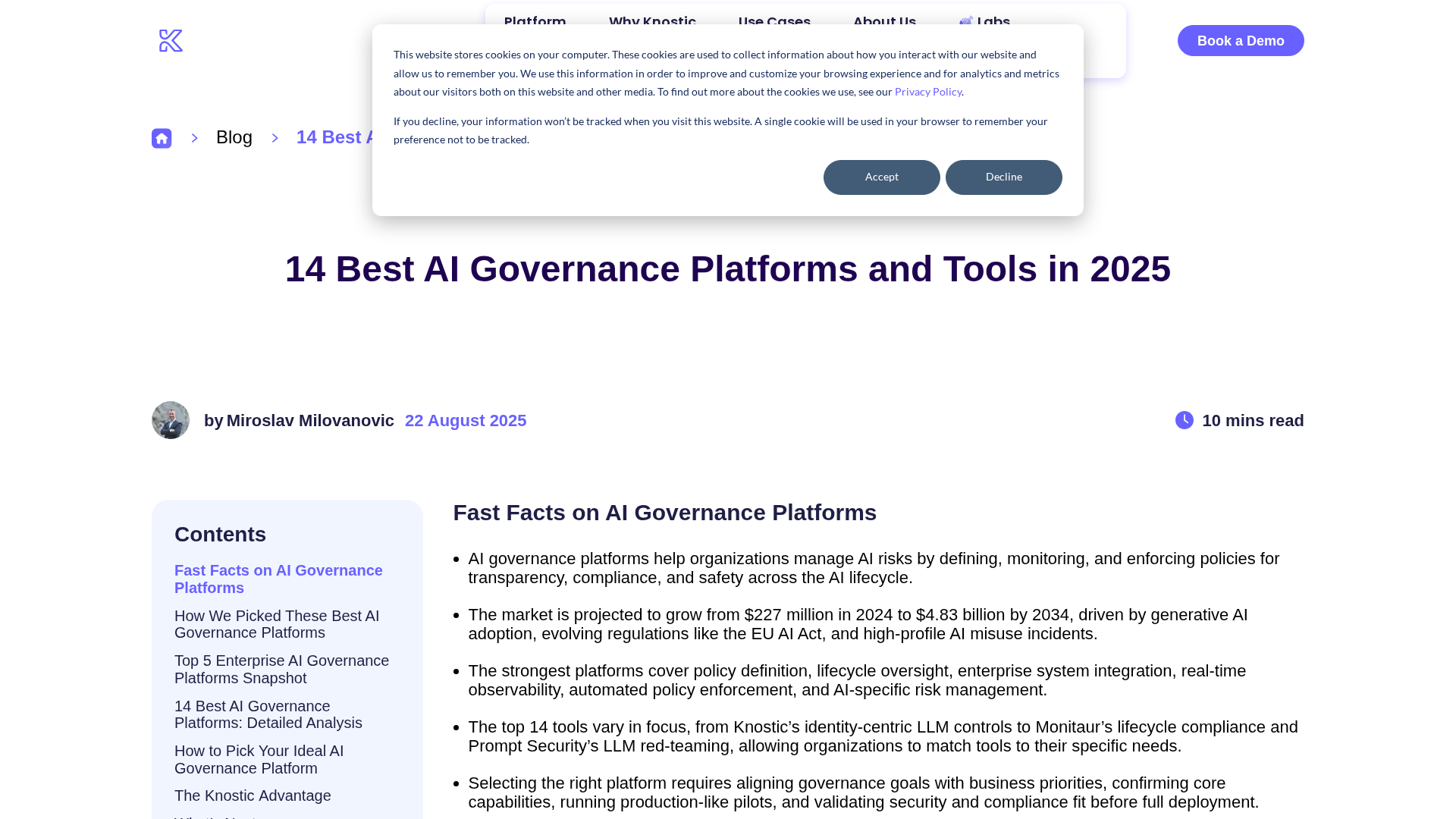
A vendor‑agnostic guide to the 14 best AI governance platforms in 2025, with criteria, comparisons, and practical buying guidance.

Adobe nears a $19 billion deal to acquire Semrush, expanding its marketing software capabilities, according to WSJ reports.
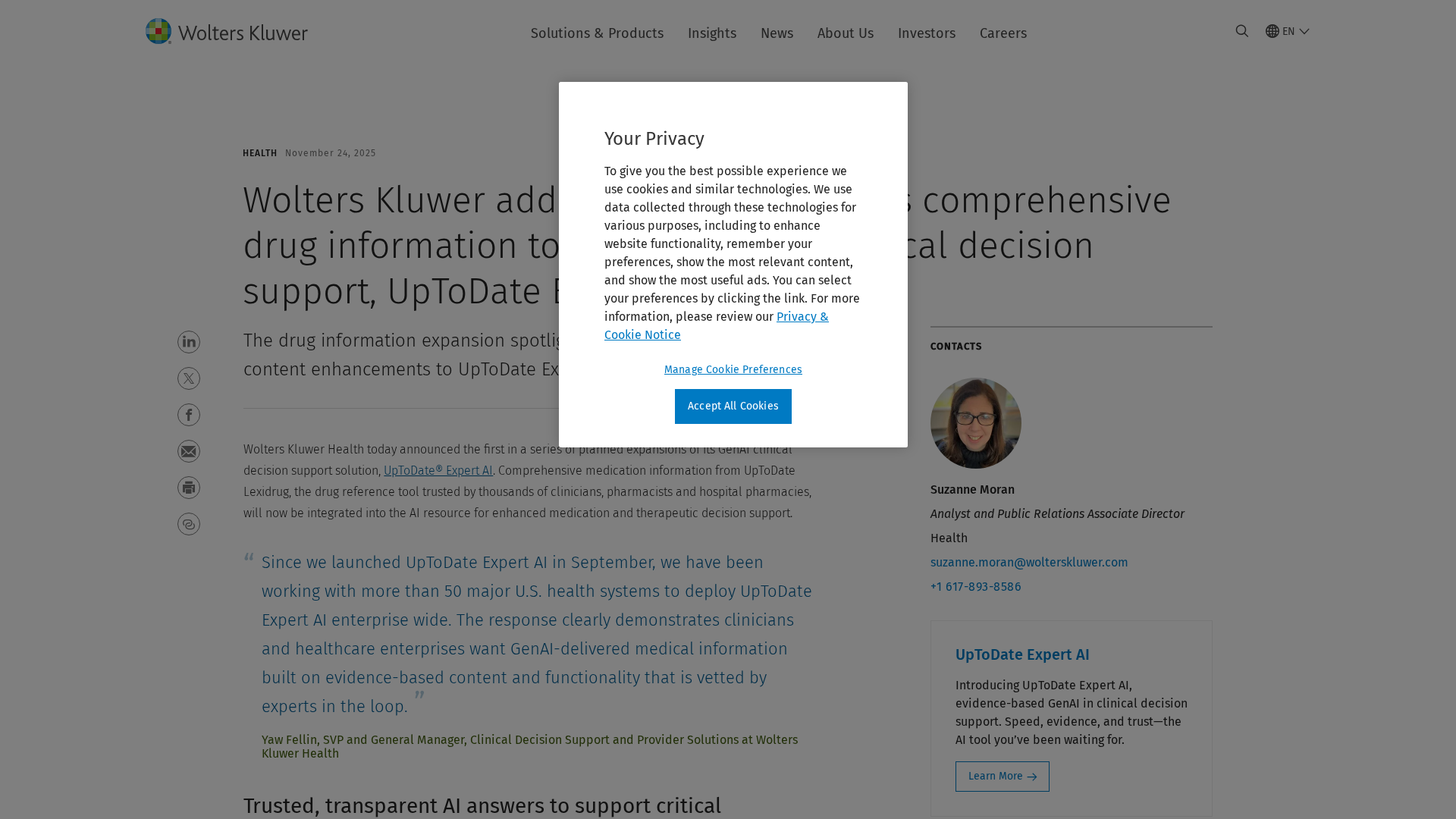
Wolters Kluwer expands UpToDate Expert AI with UpToDate Lexidrug to bolster drug information and medication decision support.
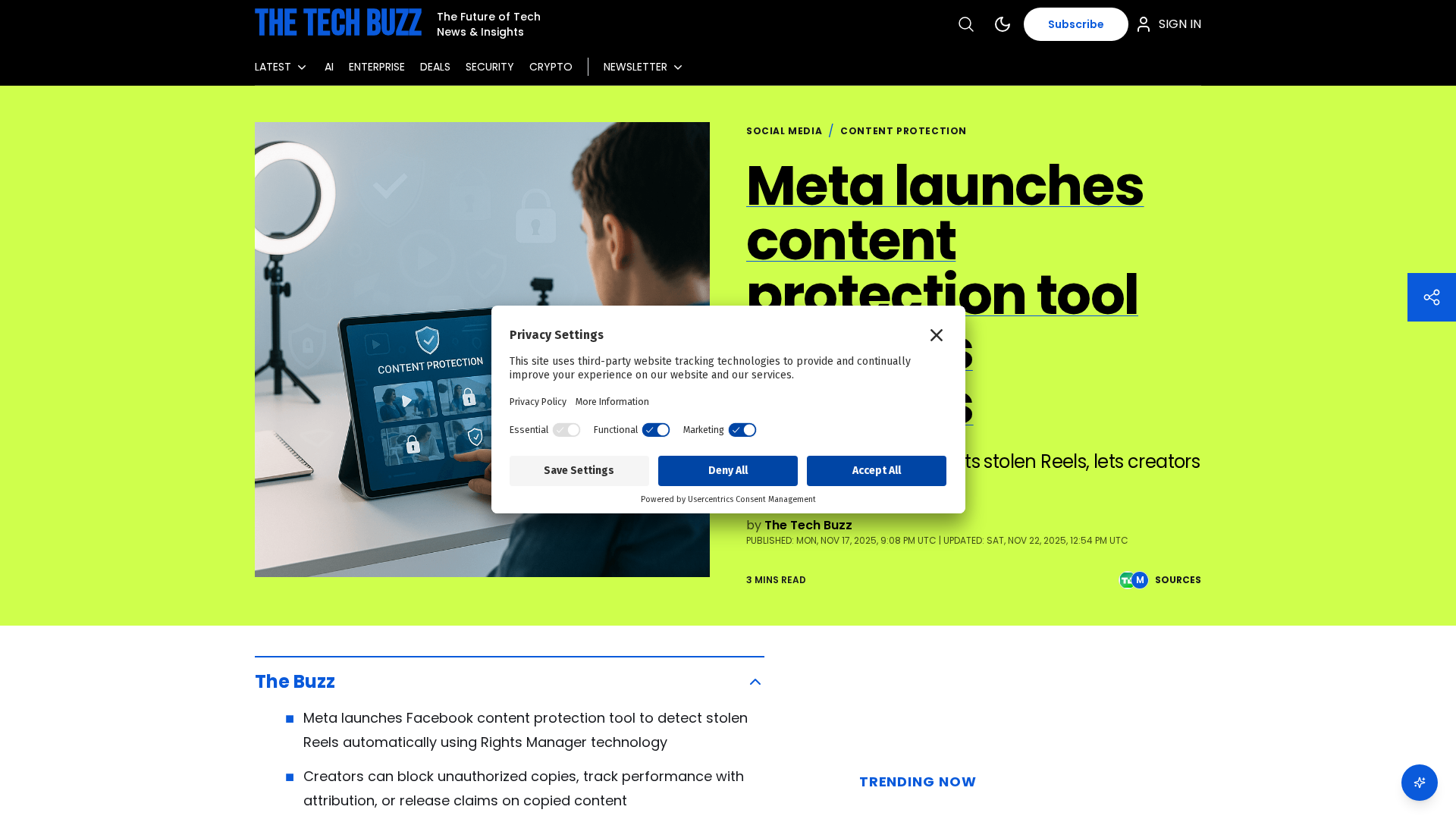
Meta rolls out Facebook Content Protection to detect stolen Reels and give creators options to block, track, or claim across Facebook and Instagram.
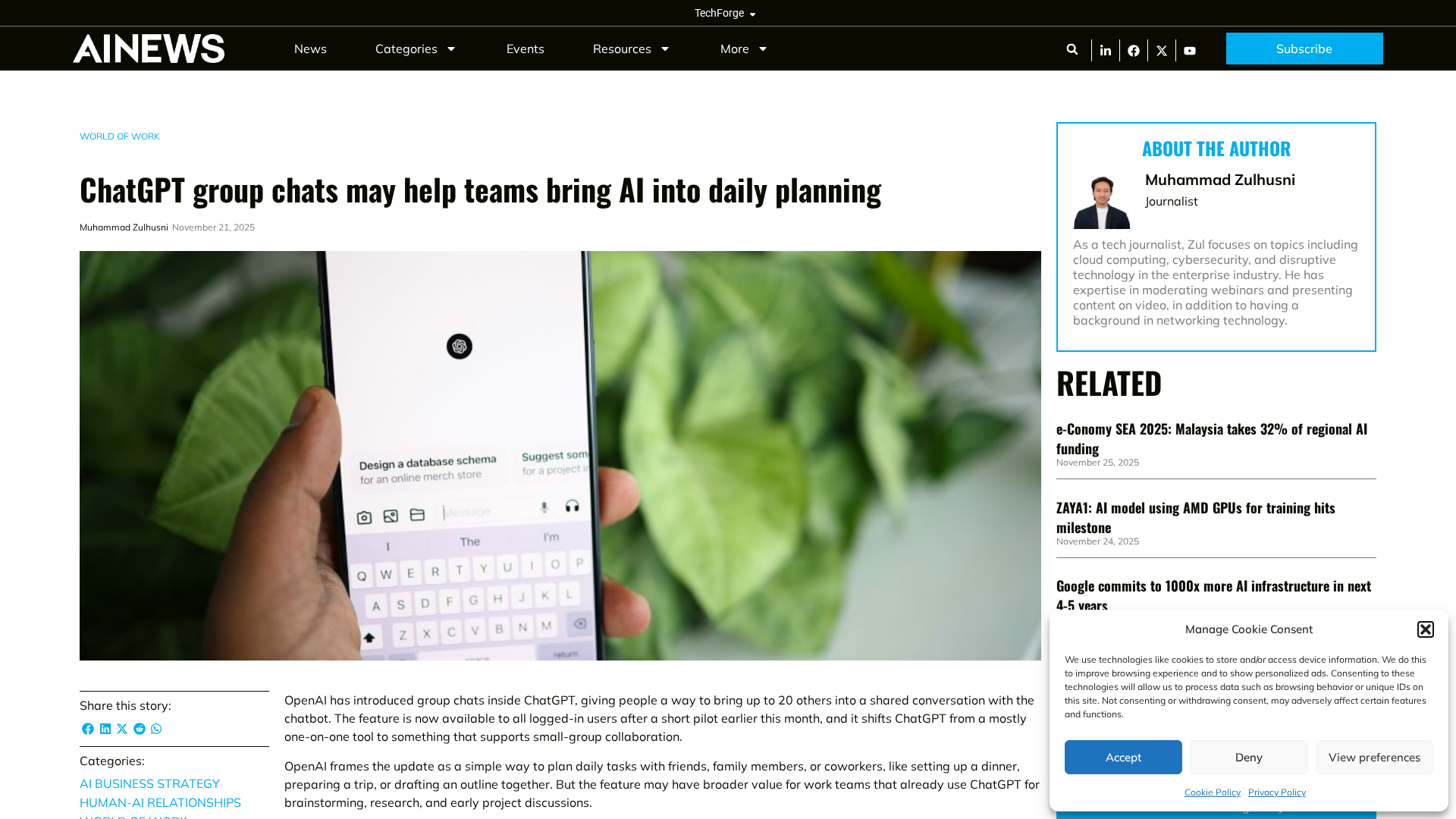
OpenAI adds group chats to ChatGPT, letting up to 20 participants collaborate with AI in a shared planning space.