Topic Overview
Industrial digital twins and AI-driven supply‑chain resilience combine simulation, live operational data, agentic automation, and autonomous logistics to reduce disruption risk and meet decarbonization targets. As of late 2025, organizations are deploying stateful agent frameworks, no‑code orchestration, and specialized data pipelines to run real‑time twins that integrate IoT telemetry, LLM reasoning, optimization models, and verified emissions data. Key categories and tools: AI Automation Platforms (IBM watsonx Assistant, MindStudio, Cimba.AI) provide enterprise-grade agent orchestration, no‑code/low‑code design, and audited multi‑agent workflows for operational playbooks and exception handling. AI Data Platforms and engineering frameworks (LangChain) enable building, testing, and deploying reliable agentic applications and stateful graphs that tie models to time‑series, simulation states, and business logic. Autonomous Logistics Tools (Gatik) deliver middle‑mile Autonomous Transportation as a Service (ATaaS), integrating deterministic route automation with fleet telemetry that digital twins consume. Sustainability/Scope 3 tooling (Mavarick AI) automates supplier data collection, validation, and carbon reporting so twin simulations reflect realistic emissions and compliance constraints. Practical impact: combining these layers lets teams run what‑if scenarios, route optimization, emissions-aware sourcing, and automated incident response inside living digital twins. Trends influencing adoption include increased expectation for auditable agent behavior, demand for no‑code governance to scale domain experts’ workflows, and tighter coupling of logistics telemetry with carbon accounting. Selecting platforms depends on priorities—autonomy and hardware integration for logistics, robust data lineage and emissions modeling for sustainability, and flexible agent engineering for decision automation—while ensuring enterprise controls, traceability, and real‑time interoperability.
Tool Rankings – Top 6

Gatik Driver combines software and hardware to power scalable autonomous middle-mile trucking on known, repeatable roads

Enterprise virtual agents and AI assistants built with watsonx LLMs for no-code and developer-driven automation.

Engineering platform and open-source frameworks to build, test, and deploy reliable AI agents.

No-code/low-code visual platform to design, test, deploy, and operate AI agents rapidly, with enterprise controls and a
AI-driven platform automates Scope 3 data collection, validation, reporting, and decarbonisation for complex supply-chai

No-code enterprise AI agents that turn analysts into AI-powered operators with rapid accuracy and auditable governance.
Latest Articles (55)
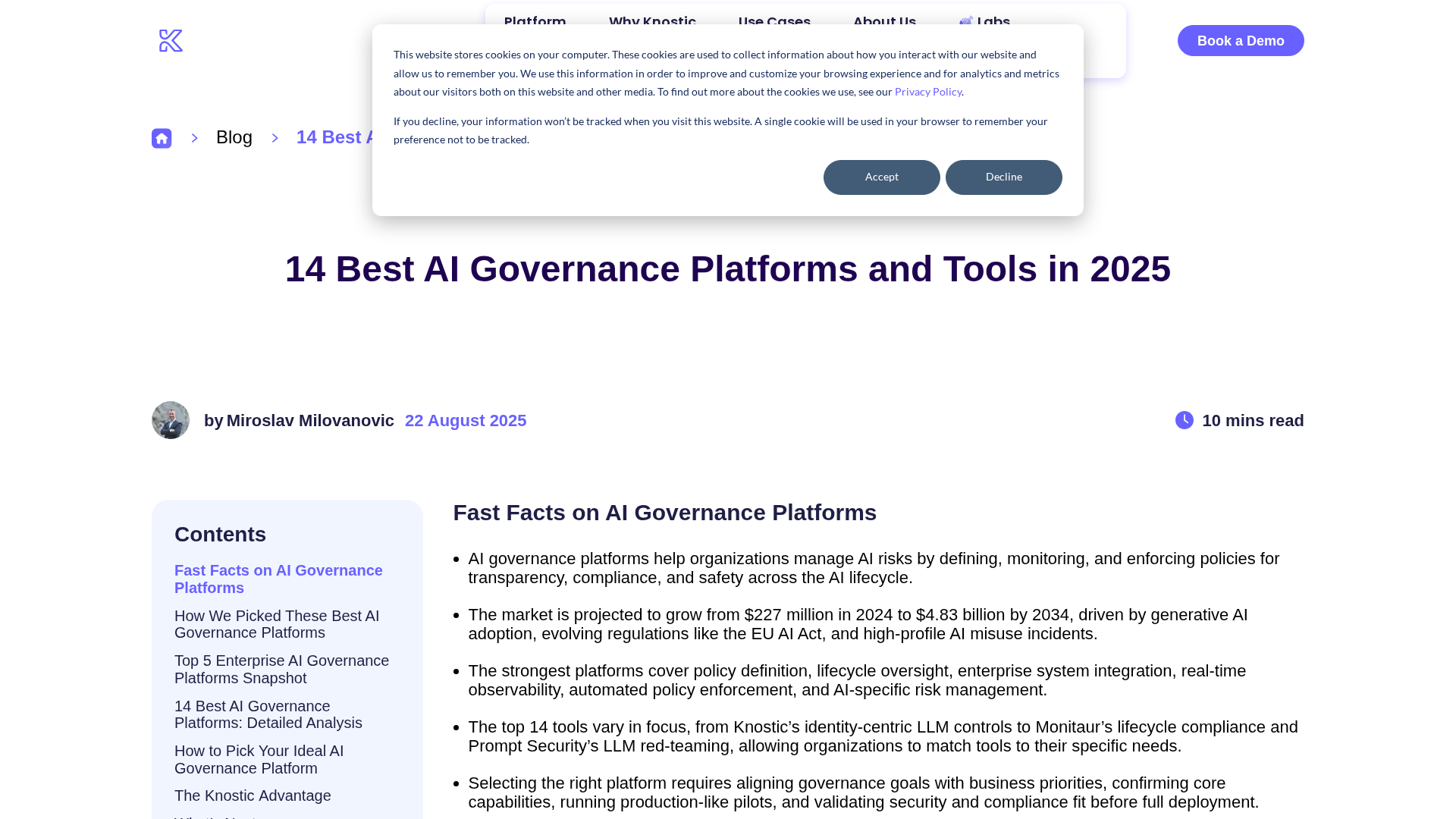
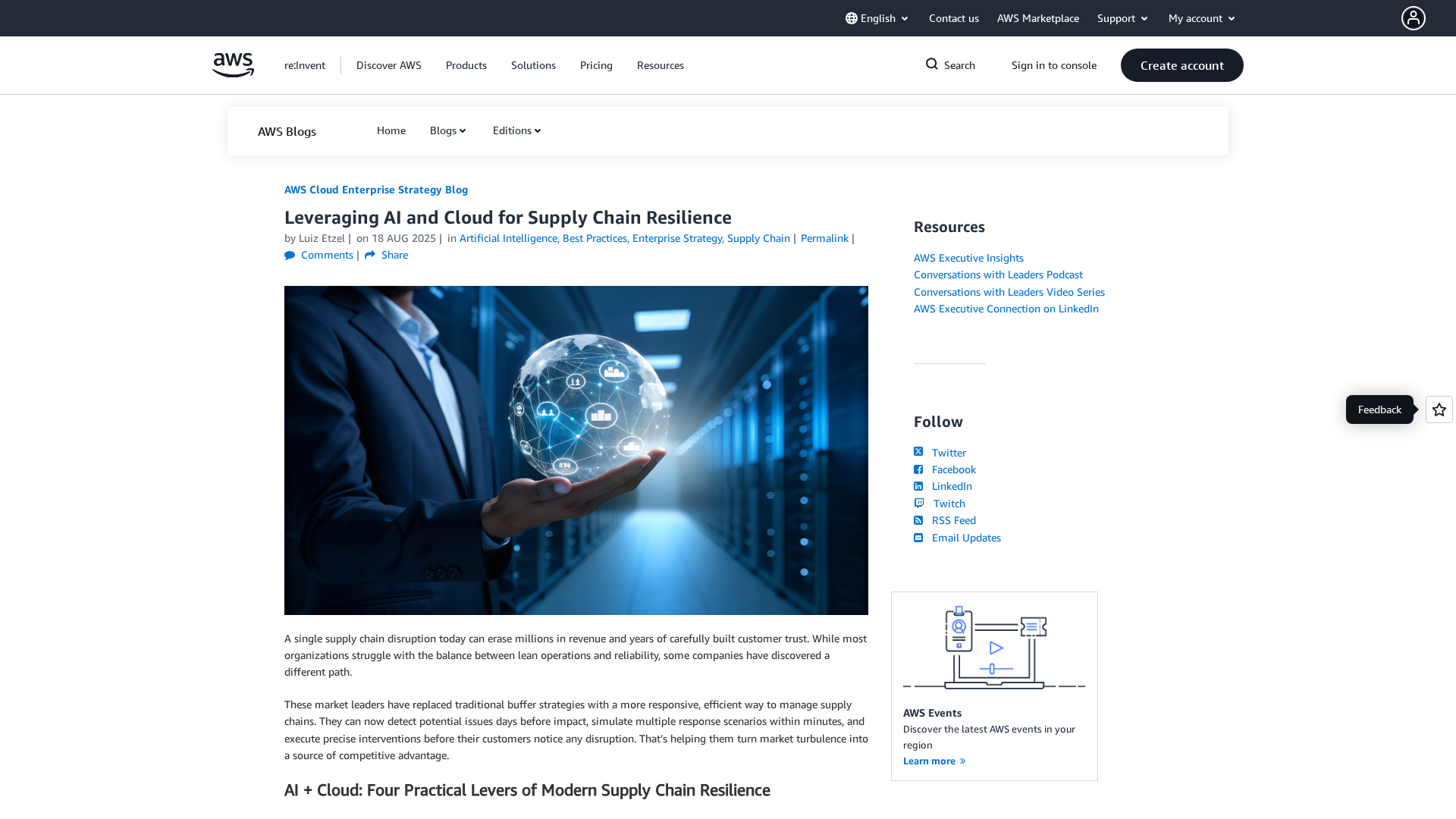
A vendor‑agnostic guide to the 14 best AI governance platforms in 2025, with criteria, comparisons, and practical buying guidance.
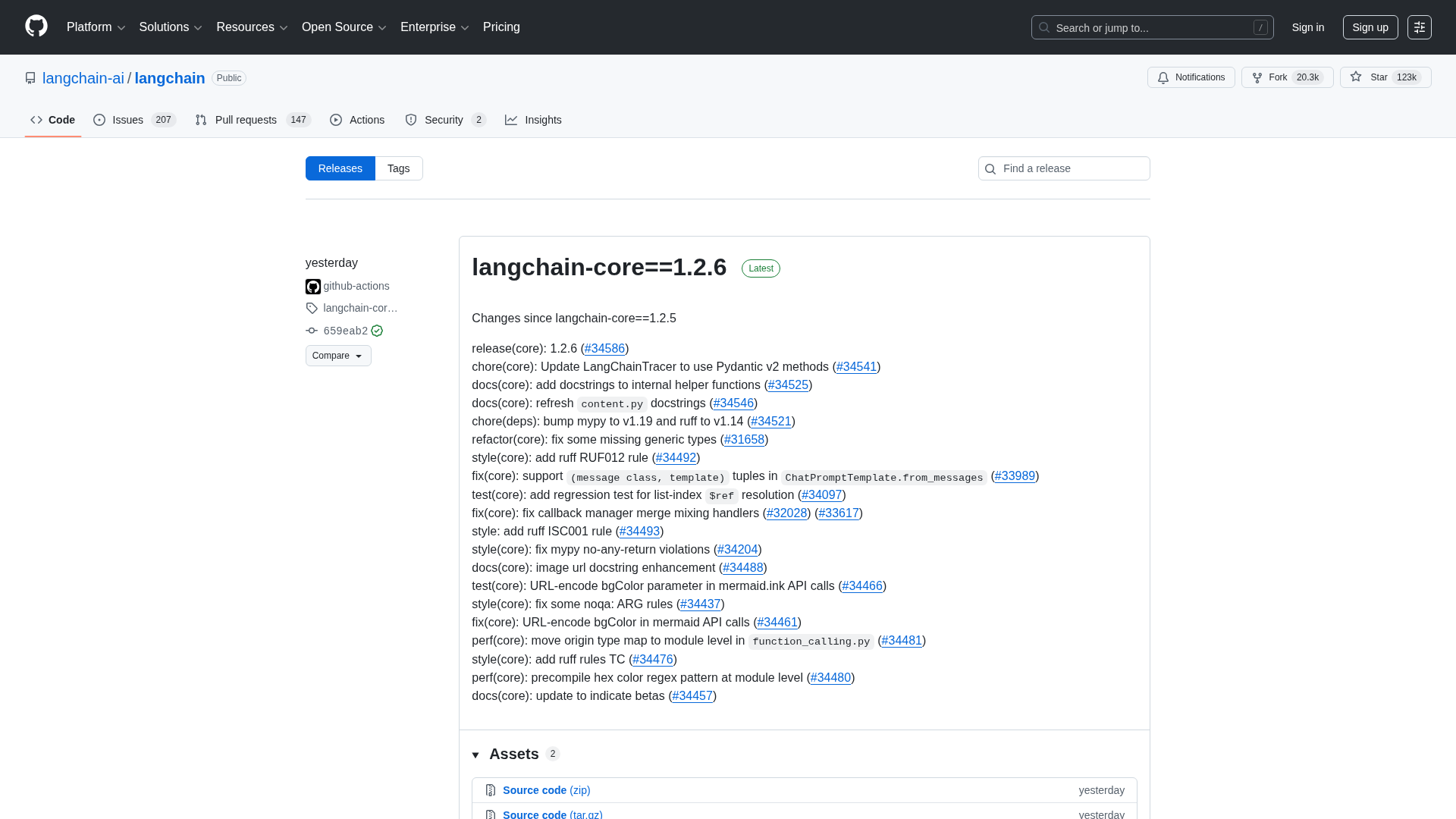
A comprehensive LangChain releases roundup detailing Core 1.2.6 and interconnected updates across XAI, OpenAI, Classic, and tests.

Cannot access the article content due to an access-denied error, preventing summarization.
Adobe nears a $19 billion deal to acquire Semrush, expanding its marketing software capabilities, according to WSJ reports.
Wolters Kluwer expands UpToDate Expert AI with UpToDate Lexidrug to bolster drug information and medication decision support.