
Overview
Source: public information extracted from https://www.archetypeai.io and linked blog posts/whitepaper. Summary: Archetype AI markets Newton as a “Large Behavior Model” (LBM) / foundation model for the physical world that performs real-time multimodal sensor fusion and reasoning across cameras, microphones, radars, time-series sensors, wearables, and similar inputs. Publicly called-out capabilities and features: Newton LBM (a universal embedding space for sensor signals that interprets, summarizes, predicts, and monitors signals), Lenses (continuously running AI apps that transform sensor streams into actionable insights), a referenced Developer API (blog posts reference integration APIs), edge / on‑prem deployment options (claims Newton can run locally including on a single GPU such as an NVIDIA L4; mentions support for hot‑swapping GPUs and fleets of edge GPUs; one-line install and microservices for streams/APIs), privacy/ownership options (customers can “own your data”, use Archetype infrastructure or their own, private fine-tuning with proprietary data, air-gapped/on‑prem options), plug‑and‑play sensor support, and cross-sensor/fleet learning and generalization. Example use cases highlighted publicly: construction safety and project optimization (Kajima), manufacturing anomaly detection and predictive maintenance, smart homes (presence-aware automation / natural language control), roads/traffic safety (Soarchain), renewable energy, robotics, and wellbeing from wearables. Business pitch in public materials: target the “trillion‑dollar sensor economy” by unlocking unused sensor data with rapid ROI claims (whitepaper/blog claims measurable ROI in weeks; whitepaper cites 35–45% downtime reduction and 25–30% maintenance cost reduction for industrial scenarios). What is publicly available: homepage, about page, multiple blog posts (on-prem blog, Lenses blog, client case blogs, collaborations), and an industrial whitepaper link. Gaps in public materials: no public pricing or pricing plans on the site; no public developer/API documentation pages or SDK downloads exposed; contact page returned 404 in the extraction and there is no clearly published direct email/phone or standard contact form visible in the extracted pages (site uses an Insider / request early access CTA instead); no publicly listed SLAs, security/compliance certifications, detailed hardware sizing requirements beyond examples (single GPU mention), or turnkey pricing for edge/on‑prem deployment. Recommended next steps (as collected from the source material): request demo/contact via the Insider / Request Early Access CTA; ask targeted sales and technical questions (pricing models, POC terms, deployment models, hardware requirements, supported sensors & integrations, API & SDK access, data & privacy practices, scaling & fleet management, security & compliance, support & SLAs); request technical materials (architecture docs, full whitepaper/slide deck, hardware sizing guide, reference deployments); if pursuing a pilot, request a short POC on representative data/sensors and a bill of materials for on‑prem setup; if procurement requires contact page, use Insider sign-up or company LinkedIn/founders listed on About page to reach sales/leadership. Notes on accuracy and limits: all content is limited to publicly available materials extracted from the site and linked blogs/whitepaper. No private, internal, or non-public claims were added. Any fields or details not found on public pages were explicitly noted as not publicly available.
Key Features
Real-time multimodal sensor fusion and reasoning
Processes inputs from cameras, microphones, radars, time-series sensors, wearables, and more to produce natural-language, visual, and programmatic outputs.
Newton LBM
A Large Behavior Model and universal embedding space for sensor signals that interprets, summarizes, predicts, and monitors sensor data streams.
Lenses
Continuously running AI applications that transform live sensor streams into actionable insights.
Developer API (referenced)
Blog posts reference a developer API to integrate Newton into applications; no public API docs were found in extracted pages.
Edge / on-prem deployment
Public materials state Newton can run locally (example: single GPU such as NVIDIA L4), support for hot-swapping GPUs and fleets of edge GPUs, one-line install, and microservices to manage streams and APIs.
Privacy and data ownership options
Public claims include 'own your data' options, private fine-tuning with proprietary data, and air-gapped/on-prem deployment to preserve data control.

Who Can Use This Tool?
- Industrial operators:Use Newton to monitor equipment, detect anomalies, and reduce downtime with on‑prem or edge deployments.
- Developers/Integrators:Integrate Newton via the referenced developer API to build applications that interpret sensor streams and deploy Lenses.
- Enterprises:Deploy pilots and scale Newton across sites to unlock sensor data value and pursue ROI claims for maintenance and operations.
Pricing Plans
Pricing information is not available yet.
Pros & Cons
✓ Pros
- ✓Real-time multimodal sensor fusion and reasoning across diverse sensors (cameras, microphones, radars, time-series sensors, wearables).
- ✓Newton LBM and Lenses concepts enable continuous analysis and actionable insights from streams.
- ✓Edge / on‑prem deployment options and example single‑GPU capability (NVIDIA L4) are publicly mentioned.
- ✓Privacy and data ownership options are stated publicly (on-prem, air-gapped, private fine-tuning).
- ✓Public use cases and a whitepaper describe industrial ROI and customer examples (e.g., Kajima, Soarchain).
✗ Cons
- ✗No public pricing or pricing models listed on the site or extracted pages.
- ✗No public developer/API documentation or SDK downloads were found in extracted pages despite API references in blogs.
- ✗Contact mechanisms appear incomplete in extracted pages (contact page returned 404; site uses Insider/request early access CTA rather than direct contact email/phone).
- ✗No publicly available SLAs, security/compliance certifications, detailed hardware sizing guide, or turnkey edge pricing were found.
Compare with Alternatives
| Feature | Archetype AI — Newton | Deltia.ai | Ocular AI |
|---|---|---|---|
| Pricing | N/A | N/A | N/A |
| Rating | 8.4/10 | 8.3/10 | 8.0/10 |
| Multimodal Fusion | Yes | No | Yes |
| Sensor Integration | Yes | Yes | Partial |
| Real-time Latency | Yes | Yes | No |
| Edge & On-Prem | Yes | Yes | No |
| Model Training Stack | Partial | No | Yes |
| Human-in-Loop | Partial | Partial | Yes |
| Developer API | Yes | No | Yes |
| Privacy Controls | Yes | Yes | Partial |
Related Articles (7)
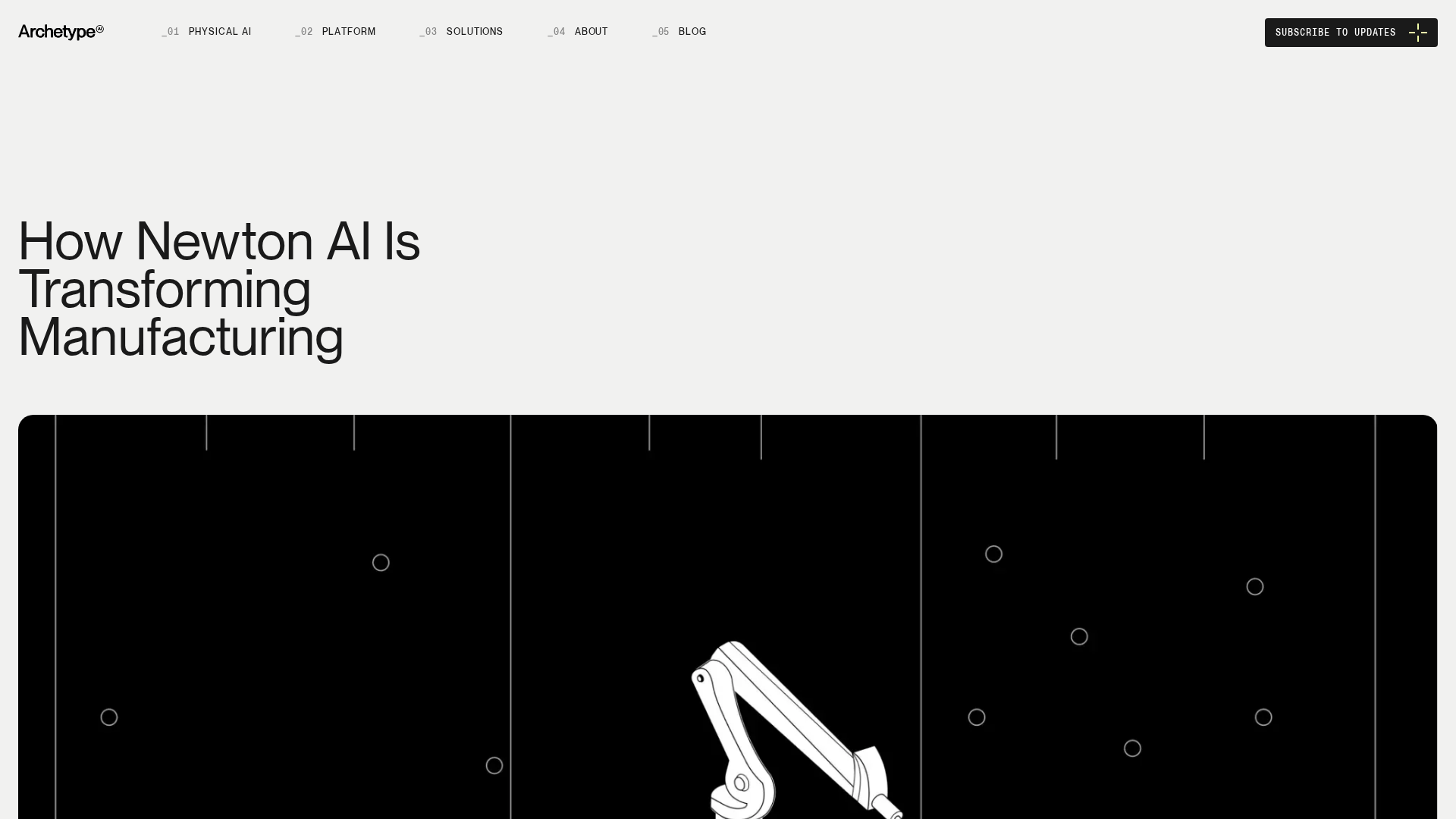
Newton AI offers a physical AI platform for sensor fusion in manufacturing, enabling real-time safety, workplan validation, and predictive maintenance at the edge.
Newton is a real-time physical AI platform that fuses multimodal sensor data to perceive, reason, and act in the physical world.
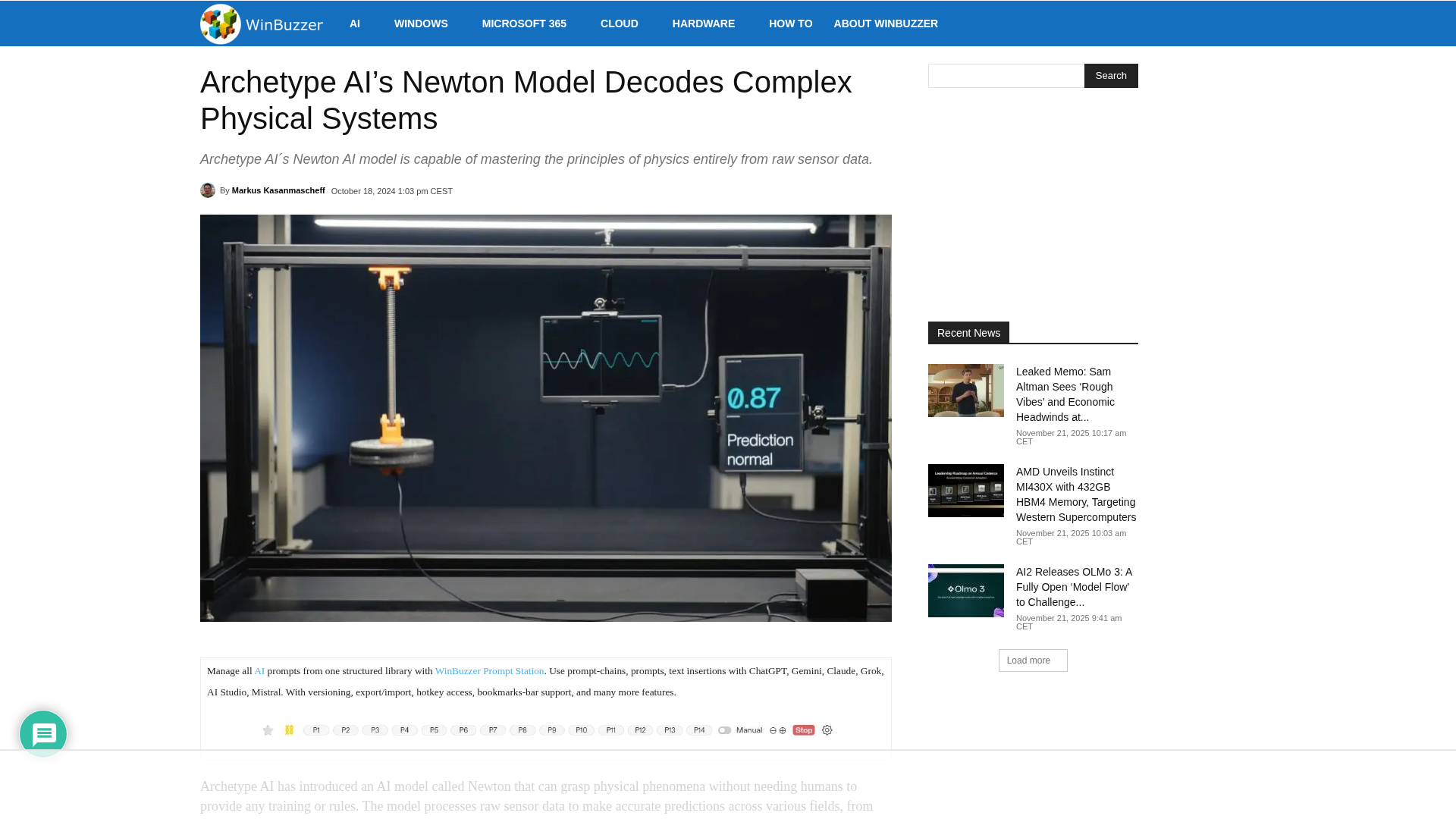
Archetype AI's Newton learns physics from raw sensor data and predicts complex systems without task-specific training.
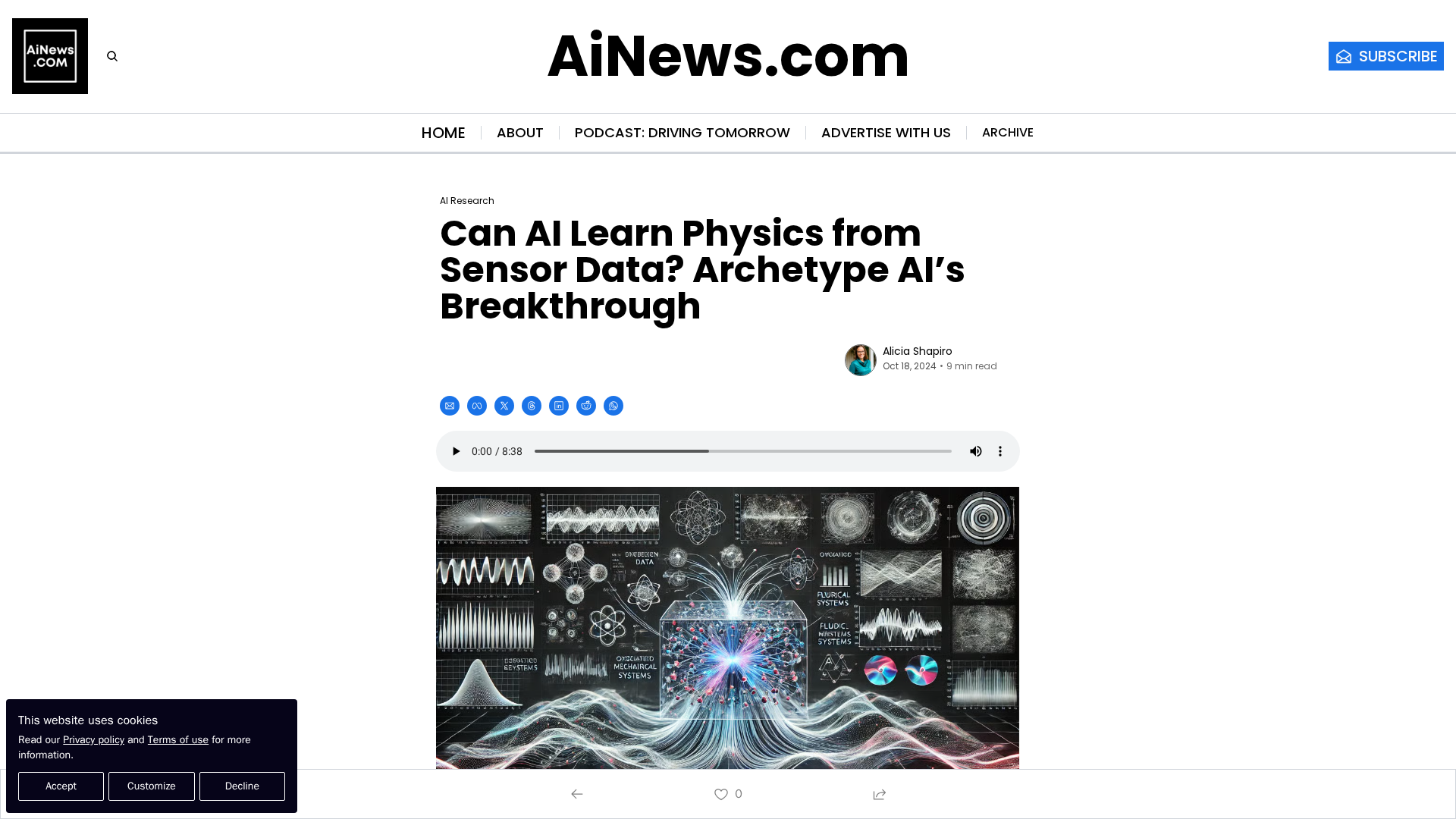
Archetype AI unveils Newton, a pre-trained AI that discovers physical laws from sensor data and generalizes to unseen systems.
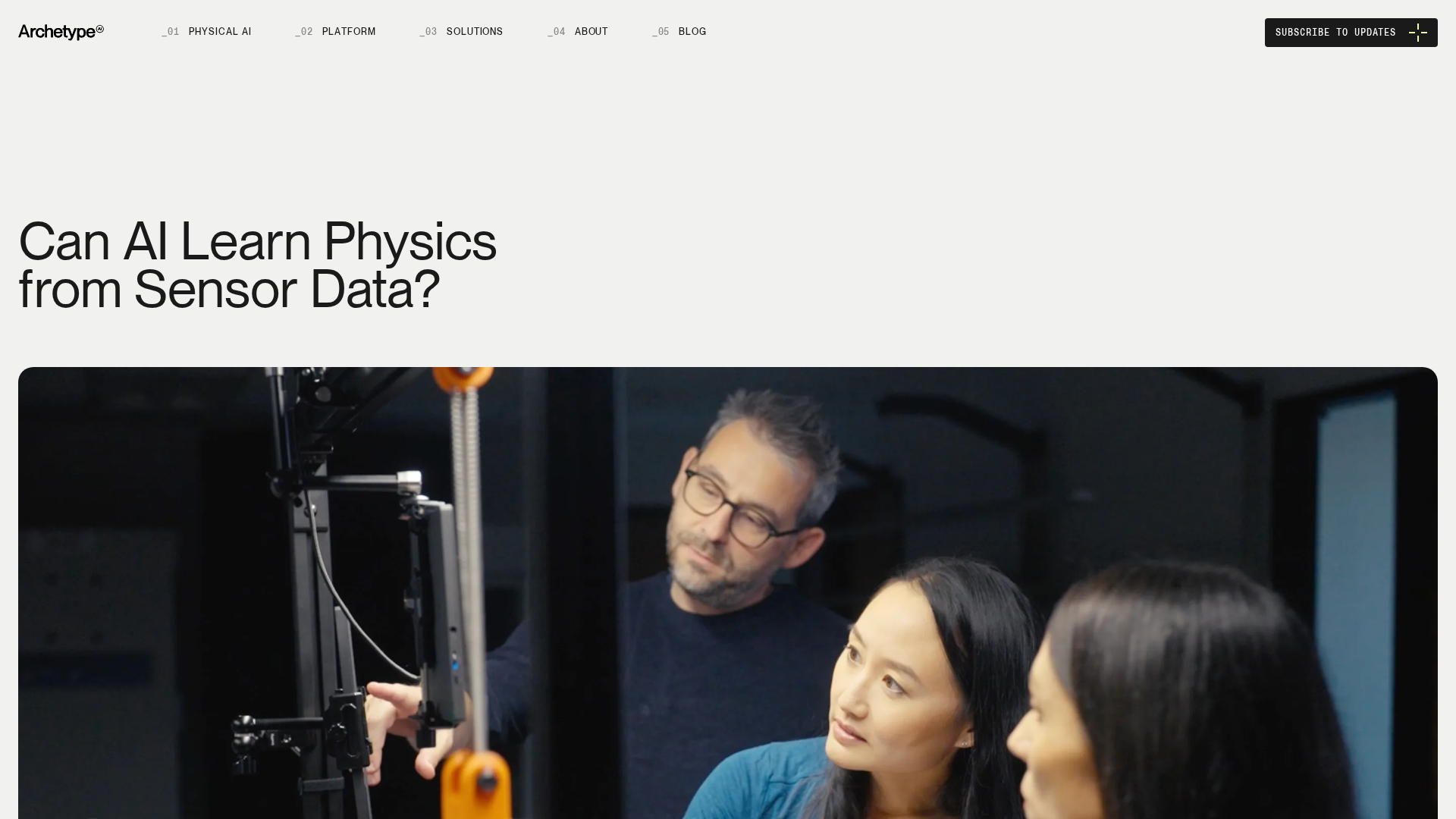
A pre-trained AI foundation model, Newton, learns physical behaviors from raw sensor data to forecast unseen systems with zero-shot generalization.