
Overview
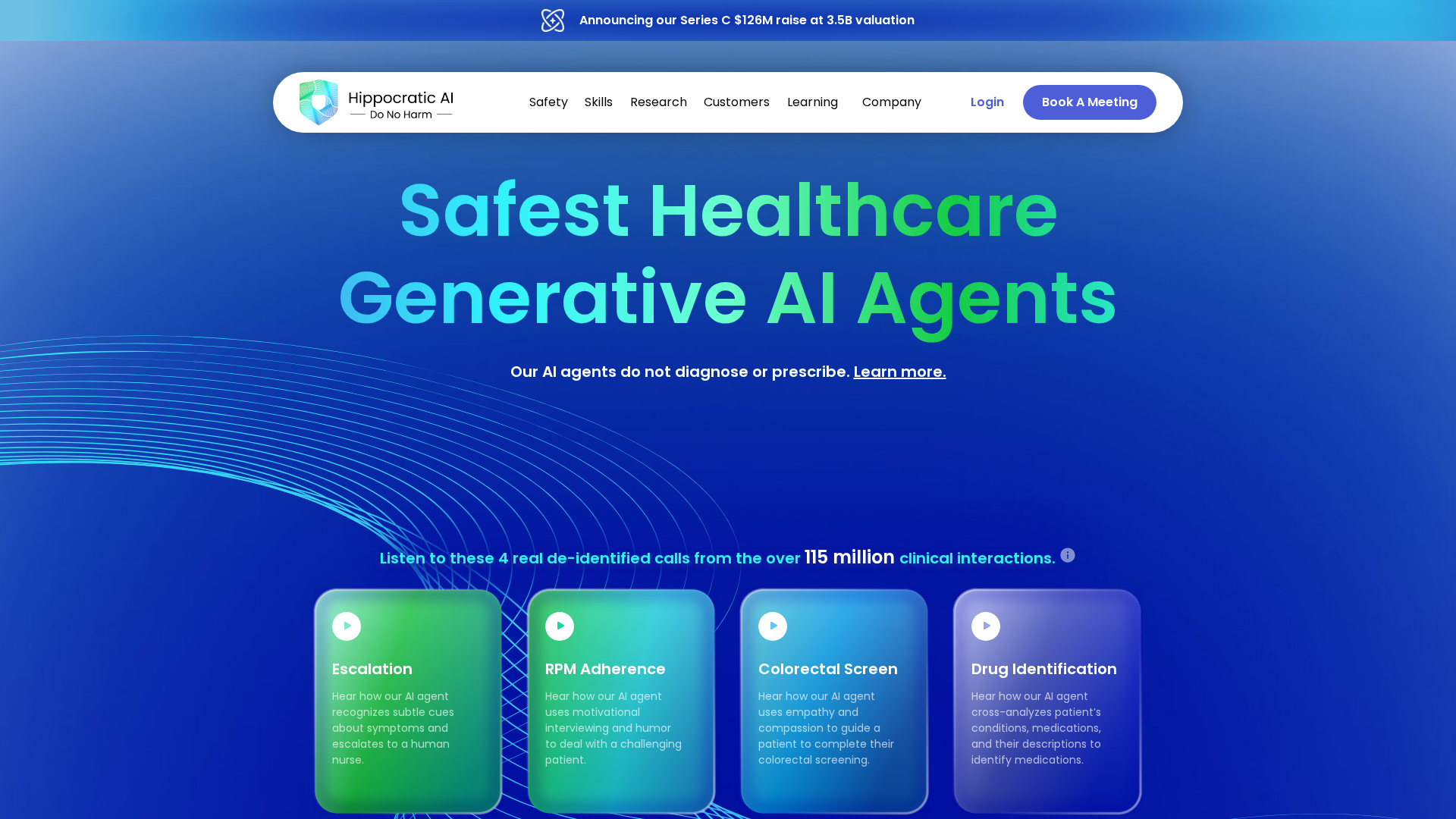
Hippocratic AI provides clinically-oriented, safety-first generative AI healthcare agents and an EHR-integrated Co‑Pilot designed to augment clinicians (especially nurses) and improve patient engagement, adherence, and operational outcomes. The site describes a multi-step safety framework (Polaris constellation architecture, clinical supervision, nurse escalation, and output testing) and reports clinical validation using thousands of US-licensed clinicians (site cites ~7,000) and output-testing scale reported as ~500k test calls and 1.8M patient calls completed across deployments. The company describes its core model/architecture as the Polaris constellation system: a large primary model orchestrated with many specialized support models, with different pages referencing Polaris 2.0 (~3 trillion parameters, multilingual) and other pages referencing multi-trillion/"4.1T+ constellation" claims. The architecture emphasizes parallelized inference, specialist support models, memory/personalization, and selective invocation to reduce latency. Product capabilities described on the site include a catalogue of 1,000+ healthcare agents organized by organizational goals (Quality Improvement, Care Management, Readmission Prevention, Health Equity, Compliance, etc.), multiple skills/supervisor model families (escalation, medication recognition, vital sign clarification, medication stoppage, motivational interviewing, empathy/bedside-manner skills, SDOH/caregiver skills, multi-call memory/continuity of care, scheduling/telemed, IVR/provider match, AE & PC for pharma workflows, and others), and the Hippocratic AI Co‑Pilot: an EHR-integrated assistant for inpatient/outpatient workflows with a workflow of selecting an agent, scheduling calls, generating post-call summaries, and integrating outputs into EHRs. EHR integrations referenced on the site include Epic, MEDITECH, and Oracle (and likely others per site language). Real-world outcomes and customer references on the site include partner/testimonial references (Burjeel Holdings, University Hospitals, Sheba Medical Center, Belong Medical Group, ICP) and reported metrics such as a 20% increase in pre-take completeness for intake, 2.6x higher engagement with Spanish-speaking patients, 30% reduction in readmission rates, higher survey return rates, and improved outreach response rates. The site references partnerships and deployments, including mentions of collaboration with KPMG. Team and funding: leadership listed includes Munjal Shah (CEO, co-founder), Dr. Meenesh Bhimani (CMO, co‑founder), Amy McCarthy (CNO), Dr. Harpreet Mangat, Dr. Chris Fang, Dr. Shubhra Jain, Vishal Parikh, and Subho Mukherjee; the site cites board/investor representation including Hemant Taneja and Julie Yoo. The site references a Series C round ($126M) at a $3.5B valuation. Research and resources on the site include a Polaris white paper, benchmarking/clinical study materials, case studies, and de-identified call excerpts. Subscription options include a newsletter/subscribe page for updates on clinical outcomes, case studies, and LLM updates. Privacy and contact details listed on the site include a detailed privacy policy with state-specific disclosures, privacy contact [email protected], press contact [email protected], and a contact form at https://hippocraticai.com/contact-us/ (site notes submitting signs you up for marketing messages). Notable gaps and inconsistencies identified on the site: no public pricing or published plans (pricing page returned no plans or free trial), differing parameter/size claims across pages (e.g., ~3T vs "4.1T+ constellation" claims), some press/agent pages use the funding announcement as current content limiting agent-specific details, and no public API or developer/integration documentation for EHR integrations or technical integration details. The site appears oriented toward enterprise/health-system sales and indicates procurement/pricing will require contacting sales. Suggested next steps on the site include requesting a sales demo and pricing, asking for technical documents (Polaris white paper, safety validation protocols, benchmarking methodology, EHR/HL7/FHIR integration docs), requesting clinical evidence and detailed output-testing results and nurse-evaluation protocols, verifying model and safety claims with an engineering brief (parameter counts, specialist model counts, latency guarantees, deployment options), and requesting contract/legal/privacy details (DPA, security whitepaper, SOC/ISO compliance evidence).
Key Features
Safety & validation
Multi-step safety framework with Polaris constellation architecture, clinical supervision, nurse escalation, and extensive output testing; site cites ~7,000 US-licensed clinicians and ~500k test calls / 1.8M patient calls across deployments.
Polaris architecture
Described as a constellation system with a large primary model orchestrating many specialized support models; site pages reference Polaris 2.0 (~3T) and other multi-trillion/4.1T+ constellation claims.
Healthcare agent catalog
Catalogue of 1,000+ healthcare agents organized by organizational goals (Quality Improvement, Care Management, Readmission Prevention, Health Equity, Compliance, etc.).
Skills & supervisor models
Families of skills/supervisor models including escalation, medication recognition, vital sign clarification, motivational interviewing, empathy/bedside manner, SDOH/caregiver skills, memory/continuity, scheduling/telemed, IVR/provider match, and pharma workflows.
Hippocratic AI Co‑Pilot
EHR-integrated assistant for inpatient/outpatient workflows: select agent → schedule calls → post-call summaries → integrate into EHRs; EHR integrations referenced: Epic, MEDITECH, Oracle.
Real-world outcomes & customers
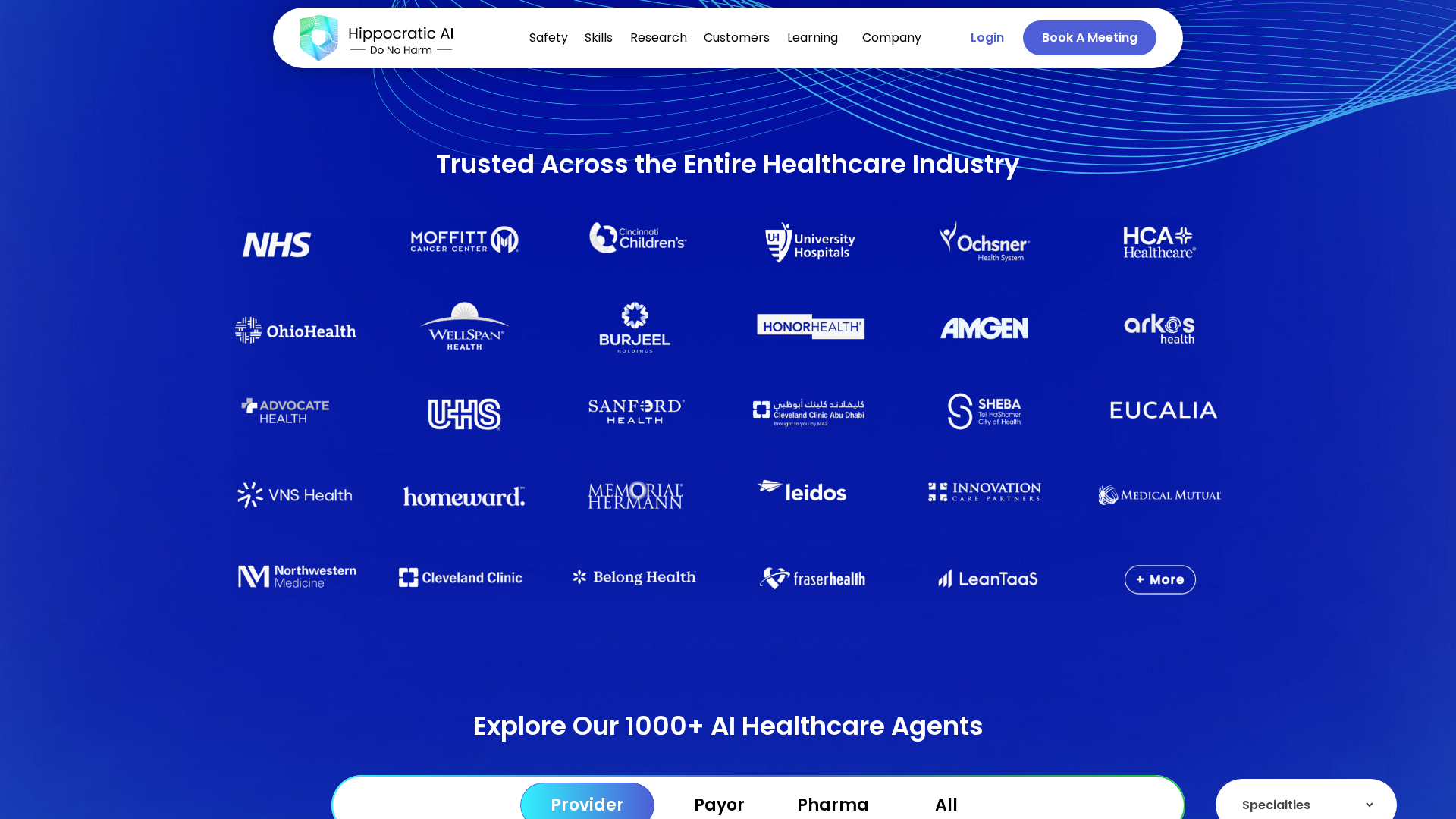
Customer/partner references and reported metrics (e.g., 20% increase in pre-take completeness, 2.6x engagement for Spanish speakers, 30% reduction in readmissions) and partner mentions including Burjeel Holdings, University Hospitals, Sheba Medical Center, Belong Medical Group, ICP, and collaborations such as with KPMG.
Who Can Use This Tool?
- Health systems:Evaluate enterprise deployments for patient outreach, readmission prevention, and operational improvement.
- Clinicians (nurses):Augment nursing workflows with agent automation, call handling, escalation, and documentation support.
- Enterprise purchasers:Procurement teams seeking vendor pricing, DPA, security evidence, and integration/implementation details.
Pricing Plans
Pricing information is not available yet.
Pros & Cons
✓ Pros
- ✓Safety-first framework with clinical supervision, nurse escalation, and output testing reported at scale.
- ✓Large catalog of 1,000+ healthcare agents tailored to organizational goals.
- ✓EHR-integrated Co‑Pilot workflow and referenced integrations with major EHRs (Epic, MEDITECH, Oracle).
- ✓Reported real-world customer metrics and partner references supporting claimed outcomes.
- ✓Visible research materials (Polaris white paper, case studies) and clinical benchmarking references.
✗ Cons
- ✗No public pricing or published plans; procurement appears to require contacting sales.
- ✗Inconsistent public claims about model parameter counts across site pages (e.g., ~3T vs 4.1T+).
- ✗No public API or developer/integration documentation found for EHR technical integration details.
- ✗Some agent or press pages prioritize funding/news content over detailed agent implementation information.
Compare with Alternatives
| Feature | Hippocratic AI | Infinitus Systems | Sully AI |
|---|---|---|---|
| Pricing | N/A | N/A | N/A |
| Rating | 8.3/10 | 8.4/10 | 8.1/10 |
| Clinical Validation | Yes | Partial | Partial |
| EHR Integration | Yes | Yes | Yes |
| Modalities Supported | Web agents and text | Voice-first with web and API | Web, mobile, API, voice |
| Decision Support | Yes | No | Yes |
| Guardrail Architecture | Yes | Yes | Yes |
| Patient Personalization | Yes | Partial | Yes |
| Enterprise Ops | Enterprise-ready deployment and integrations | Enterprise voice AI with integrations and analytics | APIs and deep workflow EHR integrations |
Related Articles (3)
CTG and Hippocratic AI partner to deliver safe, patient-focused agentic AI solutions for U.S. healthcare providers.
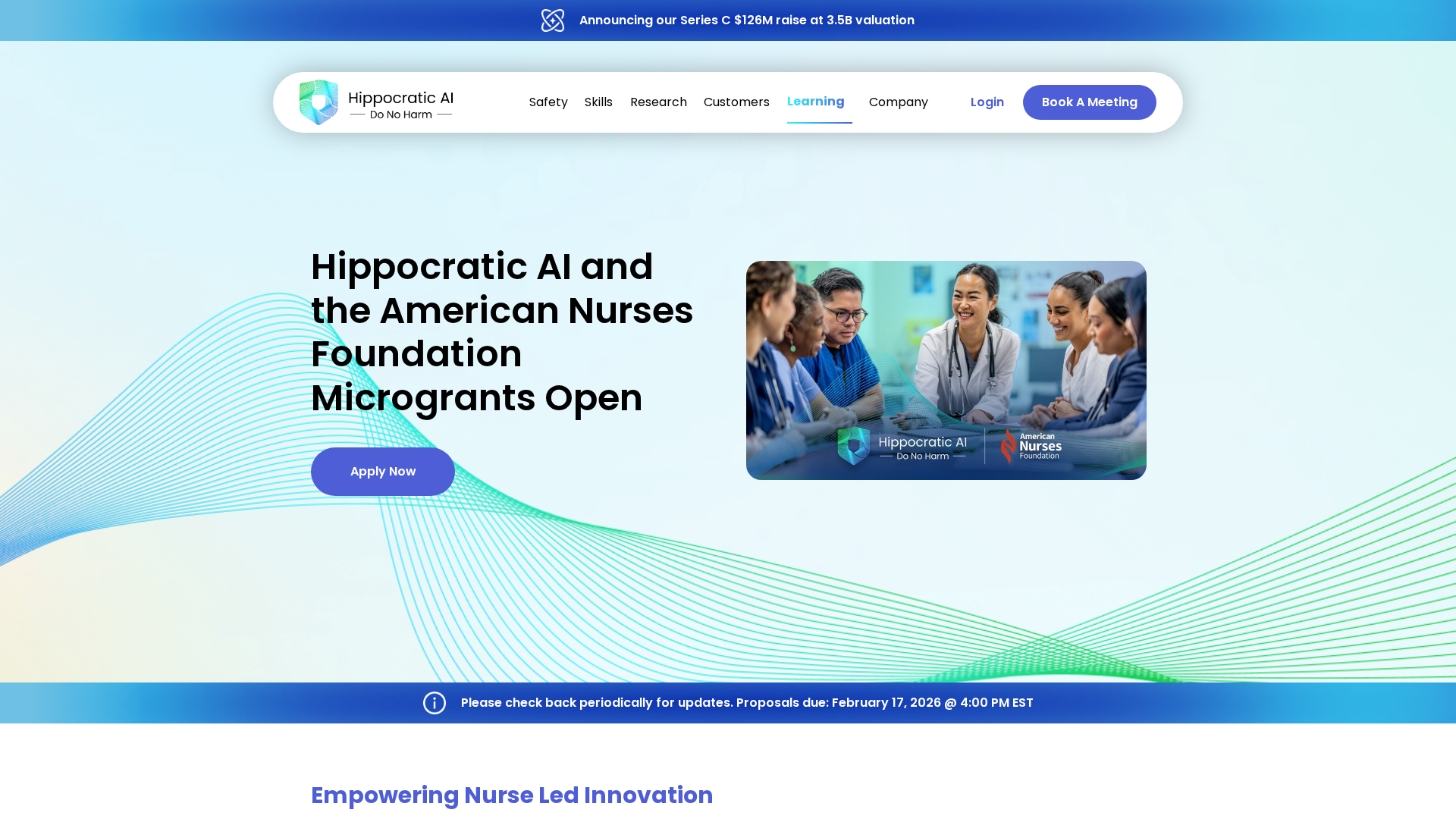
Up to three $10,000 microgrants from Hippocratic AI and ANF to fund nurse-led AI innovation and leadership.
ANF and Hippocratic AI launch three $10K microgrants to fund nurse-led AI innovation and leadership development.