Overview
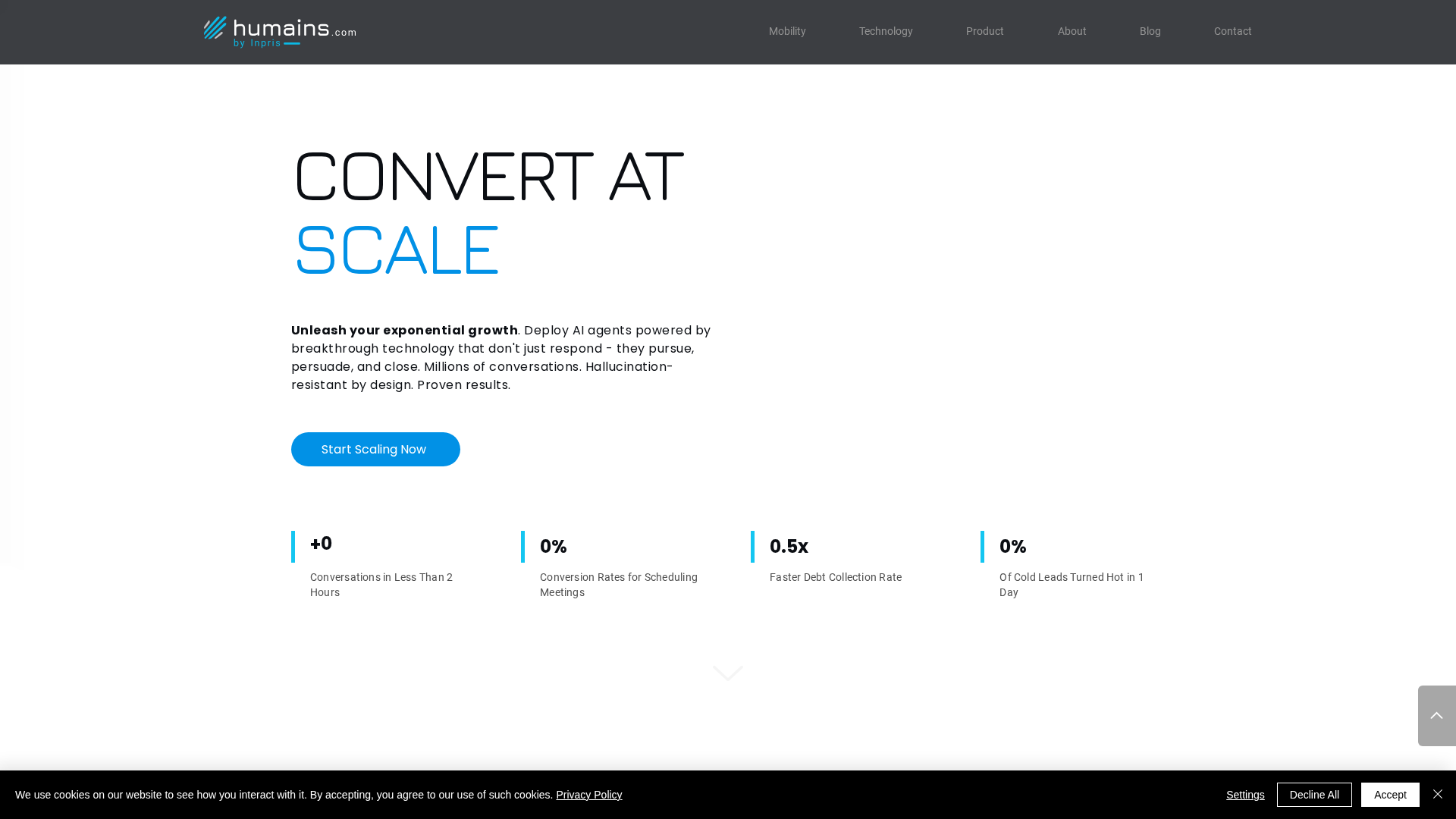
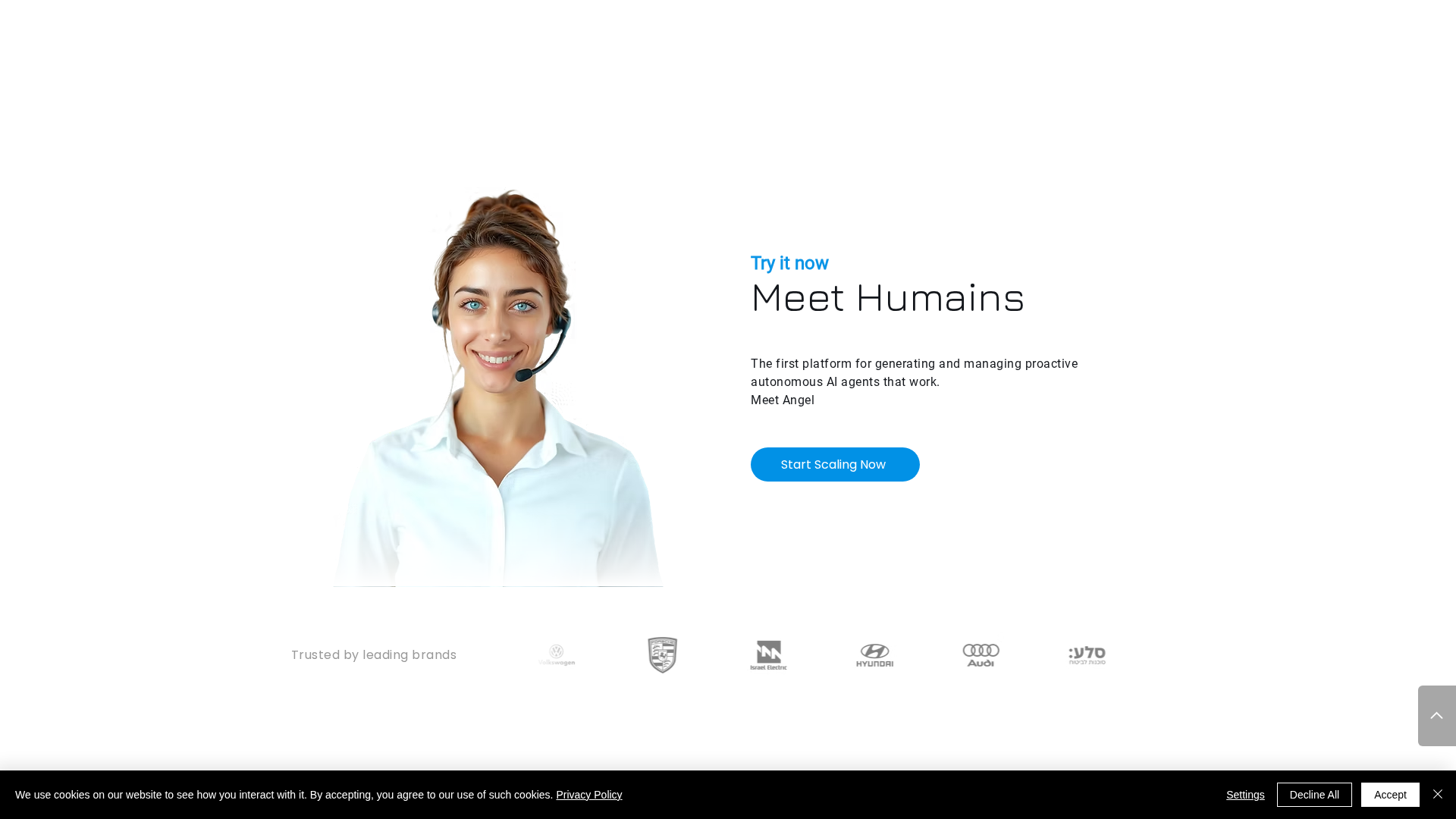
This entry summarizes a site review of HumAIns (by Inpris). HumAIns is presented as an enterprise platform that generates and runs autonomous AI agents (called HumAIns) for proactive customer engagement use cases (sales/SDR, meeting coordination, debt collection, in‑car assistants, etc.). Core technology is described as a "Cognitive OS" that combines hybrid deterministic and nondeterministic state machines to decompose tasks (analyze, plan, reflect, converse), federated directive intelligence (FDIF), RAG-style data access to company DBs, LLM orchestration and switching, real-time prompt updates, an Emotion Engine (voice/facial expression/mood sensing), TTS/STT, multilingual & multi-channel deployment, and safety layers including an internal "inner voice" and supervised models with RLHF retraining. Positioning and claims on the site emphasize enterprise-grade, API-triggered autonomous agents capable of large-scale deployment, transparency and monitoring (control center, transcripts), and continuous optimization (A/B testing). Pages reviewed: homepage, Cognitive OS, About, Blog, Contact, and Pricing (which returned 404). Key public claims include multi-channel deployment (WhatsApp, web, SMS, telephone), API-based initiation and integration with company DBs, examples of agent personas (Angel, Maya, Sofia), and leadership/team callouts. Publicly unavailable items discovered during the review: no public pricing plans or models (pricing page is 404), no free trial or self-serve plan advertised, no downloadable developer documentation/API reference/SDKs, no explicit SLA or compliance/certification pages (e.g., SOC2/GDPR/ISO attestations not found), and no public sales email or phone number on the contact page (contact page is a lead form/CTA). Recommended next steps for vendor evaluation include contacting sales to request pricing tiers and licensing model, technical docs and API specs, security and compliance documentation, SLA/support/onboarding details, example integrations and demo/sandbox access, and published case studies or references. Additional suggested focus areas for product demos: agent authoring, control center (monitoring/transcripts), A/B testing workflows, retraining cadence, and rollback/stop controls for autonomous agents.
Key Features
Autonomous AI agents
Generates and runs autonomous agents (HumAIns) for proactive customer engagement across use cases such as sales/SDR, meeting coordination, and debt collection.
Cognitive OS
Hybrid deterministic + nondeterministic state machines with task decomposition (analyze, plan, reflect, converse) and federated directive intelligence.
Multi-channel deployment
Supports deployment and outreach across channels including web, WhatsApp, SMS, and telephone with TTS/STT and multilingual capabilities.
LLM orchestration & dynamic prompts
LLM switching, real-time prompt updates, and RAG-style data access to company databases for grounding and context.
Emotion Engine
Tone/avatars and voice/facial expression/mood sensing to convey empathy and adjust agent behavior.
Safety & governance
Claims of supervised safety layers, an internal "inner voice" enforcement mechanism, and RLHF retraining for continuous improvement.

Who Can Use This Tool?
- enterprise:Large organizations needing autonomous agents for proactive customer engagement and automation.
- contact_centers:Contact centers seeking multi-channel automated outreach, voice empathy, and analytics for operations.
- automotive_oem:Automotive OEMs or in‑car solution teams evaluating LLM-based in-car companions and integrations.
Pricing Plans
Pricing information is not available yet.
Pros & Cons
✓ Pros
- ✓Enterprise-grade autonomous agent positioning with emphasis on scalability and monitoring.
- ✓Comprehensive technology narrative (Cognitive OS, hybrid state machines, FDIF, LLM orchestration).
- ✓Multi-channel support (WhatsApp, SMS, telephone, web) and voice empathy features (TTS/STT, Emotion Engine).
- ✓Claims of safety mechanisms and RLHF retraining for continuous improvement.
- ✓Control/monitoring features and A/B testing capabilities for optimization.
✗ Cons
- ✗No public pricing or pricing models; /pricing returns 404.
- ✗No publicly accessible developer documentation, API reference, or SDKs found.
- ✗No explicit public security/compliance pages or attestations (e.g., SOC2/GDPR details).
- ✗Contact page is a lead form; no direct sales email or phone number surfaced in captured content.
- ✗Limited publicly available case studies, partner list, or detailed deployment references.