Overview
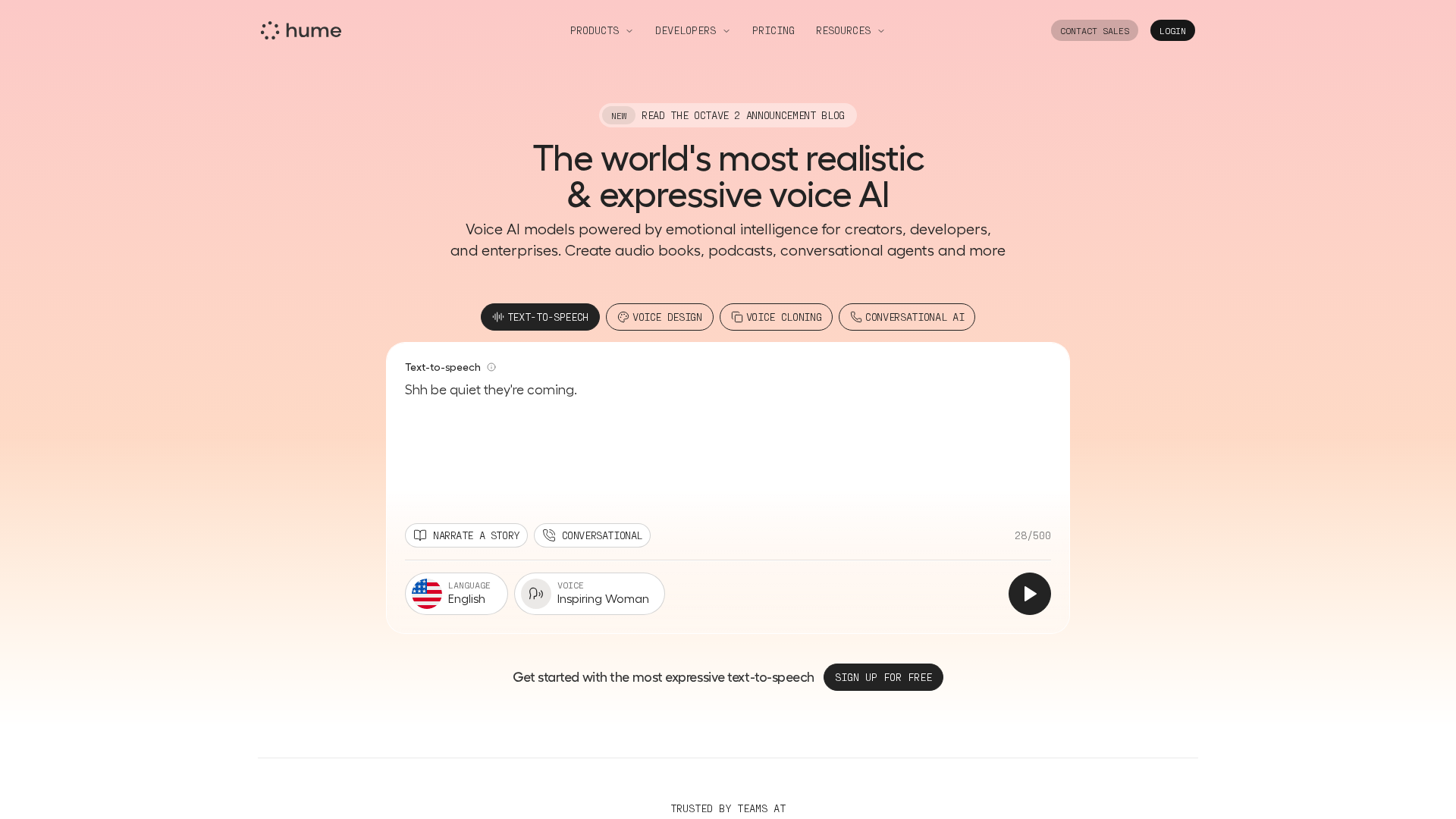
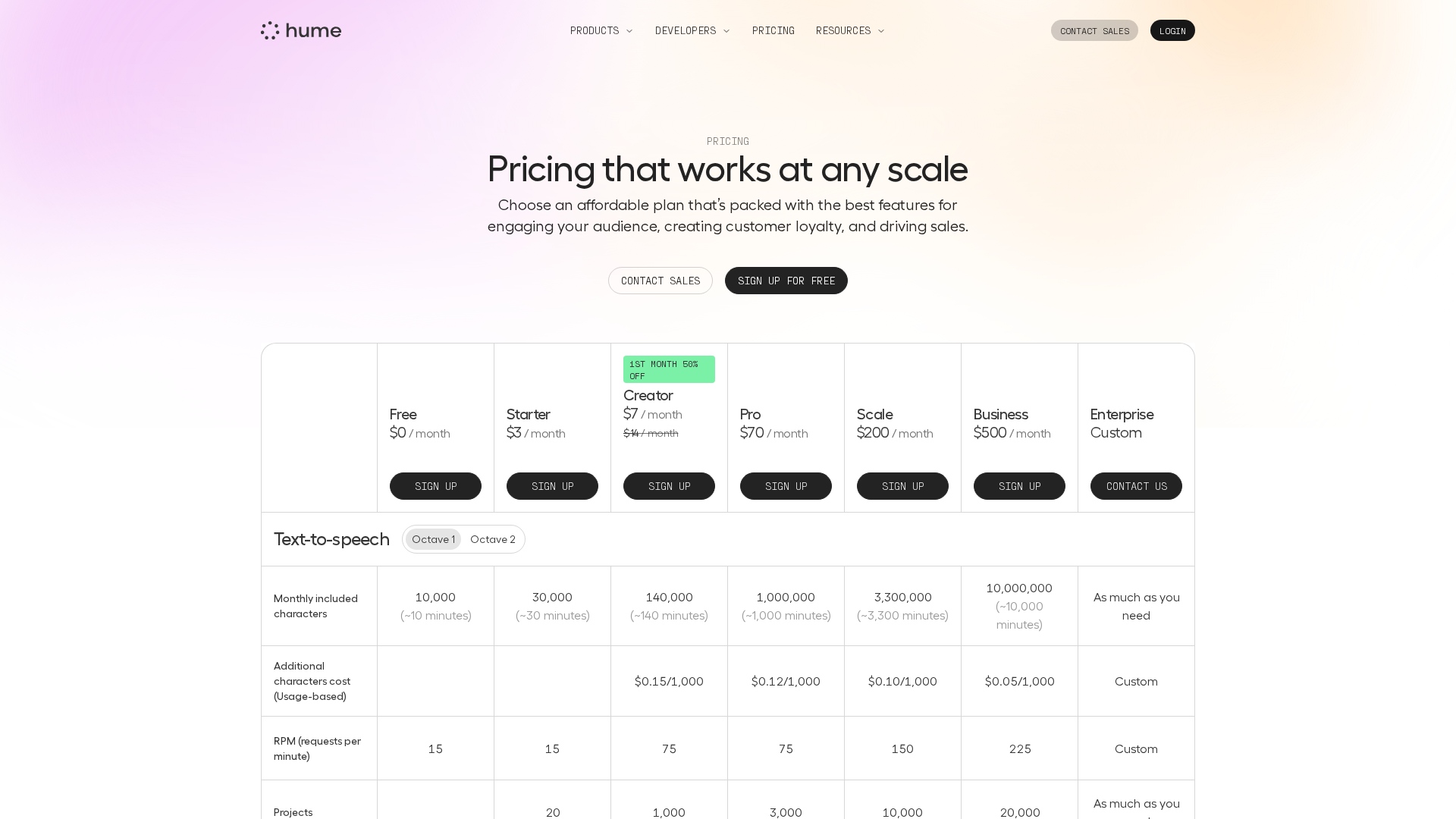
Summary: Hume AI is a research lab and technology company focused on emotionally intelligent AI — described on its site as building “AI that serves human goals and emotional well‑being.” Primary products and developer offerings described across hume.ai and dev.hume.ai include Octave (an expressive TTS / speech‑language voice model), EVI (Empathic Voice Interface for real‑time, emotion‑aware voice interaction), and Expression Measurement (multimodal measurement of voice, face, and language). The site emphasizes research and an evidence base and references publications and research work. Key capabilities: Octave is described as a voice‑based LLM that uses context to produce humanlike emotion, cadence, and nuance; it supports natural‑language acting instructions (e.g., “sound sarcastic”), voice cloning and voice design from prompts or short recordings, an Instant Mode/streaming low‑latency option (time‑to‑first‑token around ~200 ms reported for Octave 2 in the sources referenced), and multi‑speaker/multi‑character workflows suitable for audiobooks and studio‑quality podcasts. EVI (Empathic Voice Interface) is described as a real‑time voice interaction system that measures user prosody and other signals and responds with expressive speech, end‑of‑turn detection, interruptibility, and improved conversational EQ; use cases include coaching, interviewing, digital companions, and real‑time agents. Expression Measurement offers models that capture dimensions of expression across voice, face, and language (facial expressions, prosody, transcription, semantic/emotional metrics), available as streaming and batch endpoints with pay‑as‑you‑go billing for minutes/images. Developer experience: multi‑language support reported for 11+ languages (examples listed on the site include English, Japanese, Korean, Spanish, French, Portuguese, Italian, German, Russian, Hindi, Arabic). SDKs and quickstarts are provided for Python, TypeScript, Swift, React, and .NET, plus CLI and Node/Python quickstarts; developer ergonomics include playground(s) / no‑code testing for TTS, EVI, and Expression Measurement, documentation and guides (acting instructions, continuation across utterances, voice library), and examples for streaming vs non‑streaming endpoints and how to save voices. Pricing: tiered plan structure (Free → Starter → Creator → Pro → Scale → Business/Enterprise) plus pay‑as‑you‑go Expression Measurement billing; plans scale by monthly character/TTS minute quotas, RPM (requests per minute), number of projects, team seats, and availability of features such as voice cloning permissions, commercial licenses, concurrent connections, and external LLM support. The Pricing page and blog posts are referenced for specific numeric examples (the user-provided notes include a Starter example shown as $3/month and mentions example per‑minute EVI pricing shown in blog posts as low as $0.02/min at higher volumes; the sources also note Octave 2 as materially cheaper than Octave 1). Enterprise: higher tiers / custom contracts mention SOC 2 Type II, GDPR, and HIPAA compliance options. Timeline and launches (as referenced on the site/blog): Octave introduced in late 2024/2025 blog series; Octave 2 launch noted on Oct 1, 2025 (reported as lower latency and cost improvements); ongoing EVI releases/iterations (EVI 2 / EVI 3 / EVI 4‑mini referenced); a blog entry noted Nov 7, 2025 describing expanded persona/voice generation and limited early access for safety evaluation. Sources visited (primary): Home (https://hume.ai/), Pricing (https://www.hume.ai/pricing), Text‑to‑speech (https://www.hume.ai/text-to-speech), Developer intro/docs (https://dev.hume.ai/intro and TTS docs), About (https://www.hume.ai/about), and blog posts including Introducing OCTAVE (https://www.hume.ai/blog/introducing-octave) and Octave 2 launch (https://www.hume.ai/blog/octave-2-launch). Notes on accuracy and provenance: this entry is compiled from the pages and blog posts listed in external_links. Where the original notes reported examples or approximations (e.g., Starter example shown as $3/month, reported per‑minute EVI pricing examples), those values are preserved as reported from the referenced pages/posts; for exact, current numeric limits or promotional offers, consult the Pricing page or contact sales as recommended by the source material.
Key Features
Octave expressive TTS (speech‑language model)
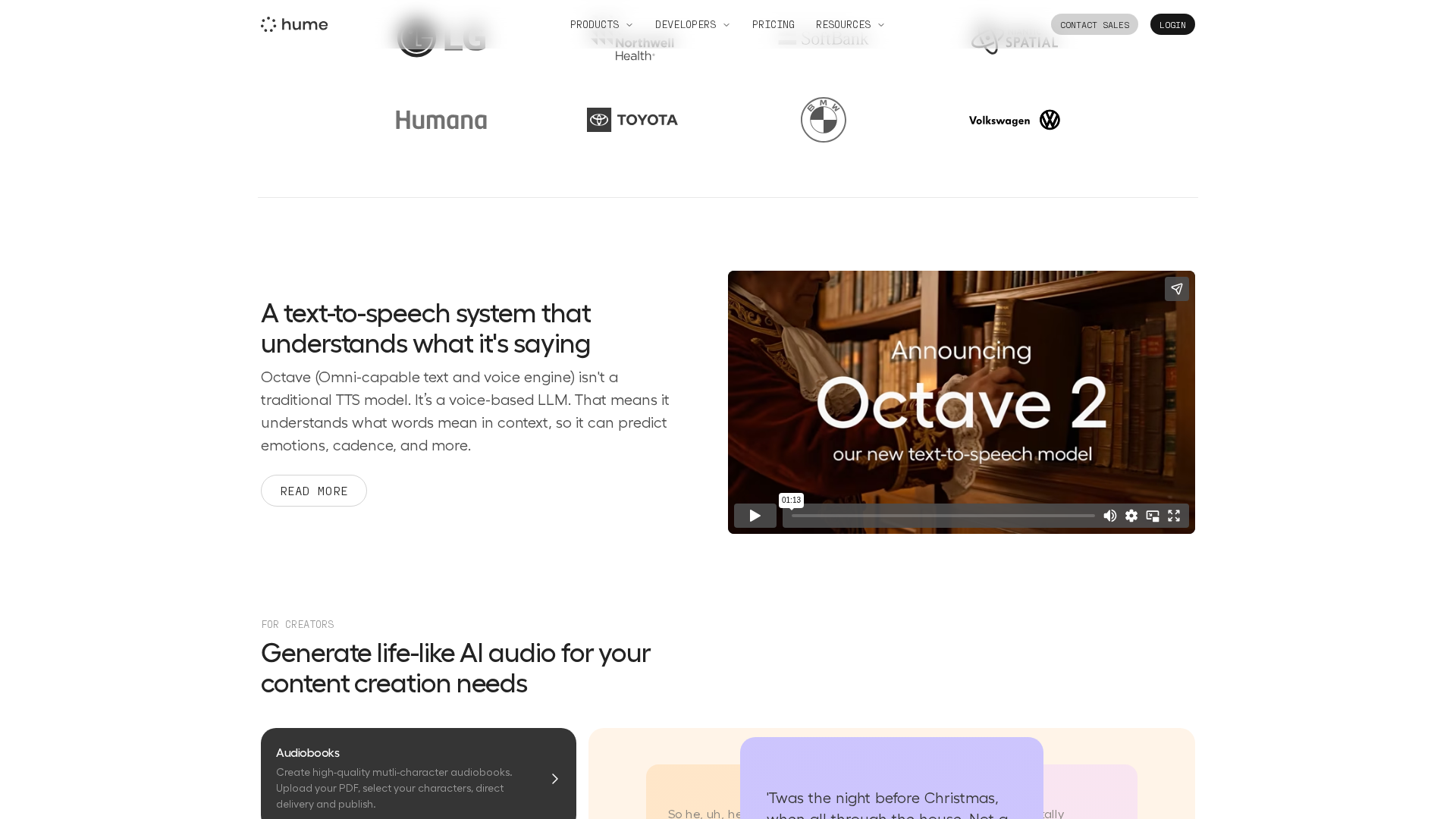
Voice‑based LLM that uses context to generate humanlike emotion, cadence, and nuance; supports acting instructions, voice cloning, multi‑speaker workflows, and low‑latency Instant Mode (Octave 2 reported ~200 ms time‑to‑first‑token).
EVI (Empathic Voice Interface)
Real‑time, emotion‑aware voice interaction that measures user prosody and responds with expressive speech, end‑of‑turn detection, interruptibility, and improved conversational EQ for coaching, companions, and agents.
Expression Measurement (multimodal)
Models for measuring expression across voice, face, and language (facial expressions, prosody, transcription, semantic/emotional metrics); available as streaming and batch endpoints with pay‑as‑you‑go billing.
Natural‑language control & acting instructions
TTS controlled via natural language acting instructions (e.g., 'sound sarcastic', 'whisper fearfully') and supports voice design via prompts or short recordings.
Multi‑language & SDK support
Reported support for 11+ languages (examples: English, Japanese, Korean, Spanish, French, Portuguese, Italian, German, Russian, Hindi, Arabic) and SDKs/quickstarts for Python, TypeScript, Swift, React, .NET, plus CLI and Node/Python examples.
Developer ergonomics & playgrounds
Playgrounds/no‑code testing for TTS, EVI, and Expression Measurement; documentation includes acting instruction guides, voice library, API reference, and streaming vs non‑streaming examples.
Who Can Use This Tool?
- Creators:Audiobooks, podcasts, voiceovers, and other media using expressive multi‑character or multi‑speaker workflows.
- Developers:Build integrations and prototypes using APIs/SDKs (Python/TS/Swift/.NET), playgrounds, and streaming vs non‑streaming endpoints.
- Enterprise:Games, conversational agents, CX, and compliant deployments requiring SOC2/HIPAA/GDPR and negotiated enterprise contracts.
Pricing Plans
Entry level free tier for testing and prototyping (free quotas available).
- ✓Entry monthly quota for characters / TTS minutes
- ✓Access to playgrounds and basic SDK/quickstarts
- ✓Limited projects and RPM
Low‑cost starter plan (example shown on pricing page: $3/month).
- ✓Higher monthly character / TTS minute quota than Free
- ✓Increased RPM and projects
- ✓Access to voice design features (subject to plan permissions)
Tier aimed at creators (audiobooks, podcasts, voiceovers) with larger quotas and commercial licensing options.
- ✓Higher monthly character / TTS minute quotas
- ✓Commercial license options
- ✓Voice cloning permissions (per plan rules)
- ✓More projects and team seats than Starter
Professional tier for advanced usage, developer teams, or small studios.
- ✓Higher quotas and RPM limits
- ✓Concurrent connections and streaming support
- ✓Priority support and additional developer features
Scale plan for high volume customers with larger quotas and additional enterprise capabilities.
- ✓Large monthly quotas and volume discounts
- ✓Higher concurrent connections and external LLM support
- ✓Enhanced support and integration assistance
Custom enterprise plans with negotiated pricing, contracts, and compliance commitments.
- ✓Custom quotas and volume pricing
- ✓SOC 2 Type II, GDPR, HIPAA compliance options (per contract)
- ✓Enterprise SLAs, dedicated support, and sales engagement
Pros & Cons
✓ Pros
- ✓Expressive, context‑aware TTS (Octave) with natural‑language acting controls
- ✓Real‑time empathic voice interaction (EVI) suitable for conversational agents and companions
- ✓Multimodal expression measurement across voice, face, and language with streaming and batch options
- ✓Developer SDKs, playgrounds, and quickstarts for rapid prototyping
- ✓Enterprise compliance options (SOC 2, GDPR, HIPAA) available via custom contracts
✗ Cons
- ✗Precise current numeric limits/prices and promotional offers require consulting the Pricing page or sales (many enterprise details are custom)
- ✗Voice cloning and commercial deployment require reviewing Terms of Use and voice/cloning policy (legal/safety constraints)
- ✗Some advanced real‑time pricing examples are shown in blog posts as illustrative; exact per‑minute pricing depends on volume and contract
Compare with Alternatives
| Feature | Hume AI | Inworld AI | Vogent |
|---|---|---|---|
| Pricing | $3/month | N/A | $20/month |
| Rating | 8.2/10 | 8.3/10 | 8.4/10 |
| Expressive Synthesis | Yes | Yes | Partial |
| Real-time Latency | Yes | Yes | Yes |
| Emotion Measurement | Yes | Partial | No |
| Voice Clone Fidelity | High-fidelity cloning | Realistic instant cloning | Ultra-realistic cloning |
| Multimodal Integration | Yes | Yes | No |
| Developer Ergonomics | SDKs and developer playgrounds | Game-focused SDKs and runtime tools | No-code flow builder and APIs |
| Customization Controls | Yes | Yes | Yes |
| Enterprise Governance | Yes | Yes | Yes |
Related Articles (5)

A comprehensive overview of Hume's Octave TTS: real-time expressive voices with instant-mode streaming and voice cloning.
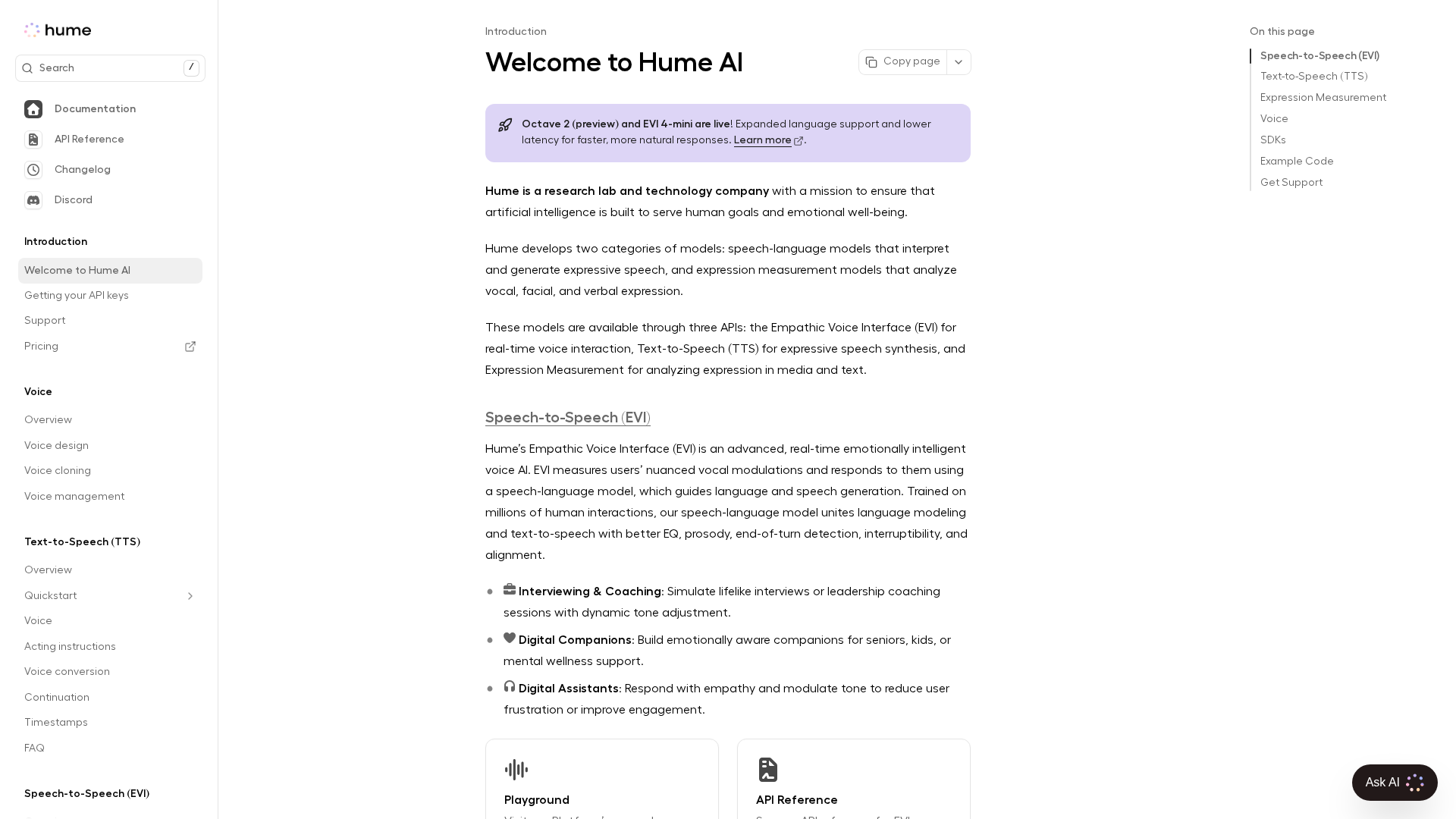
Overview of Hume AI's Octave-powered EVI, TTS, and Expression Measurement APIs with no-code playgrounds and SDKs.

Guide to requesting and streaming word- and phoneme-level TTS timestamps in Hume API across HTTP and WebSocket.
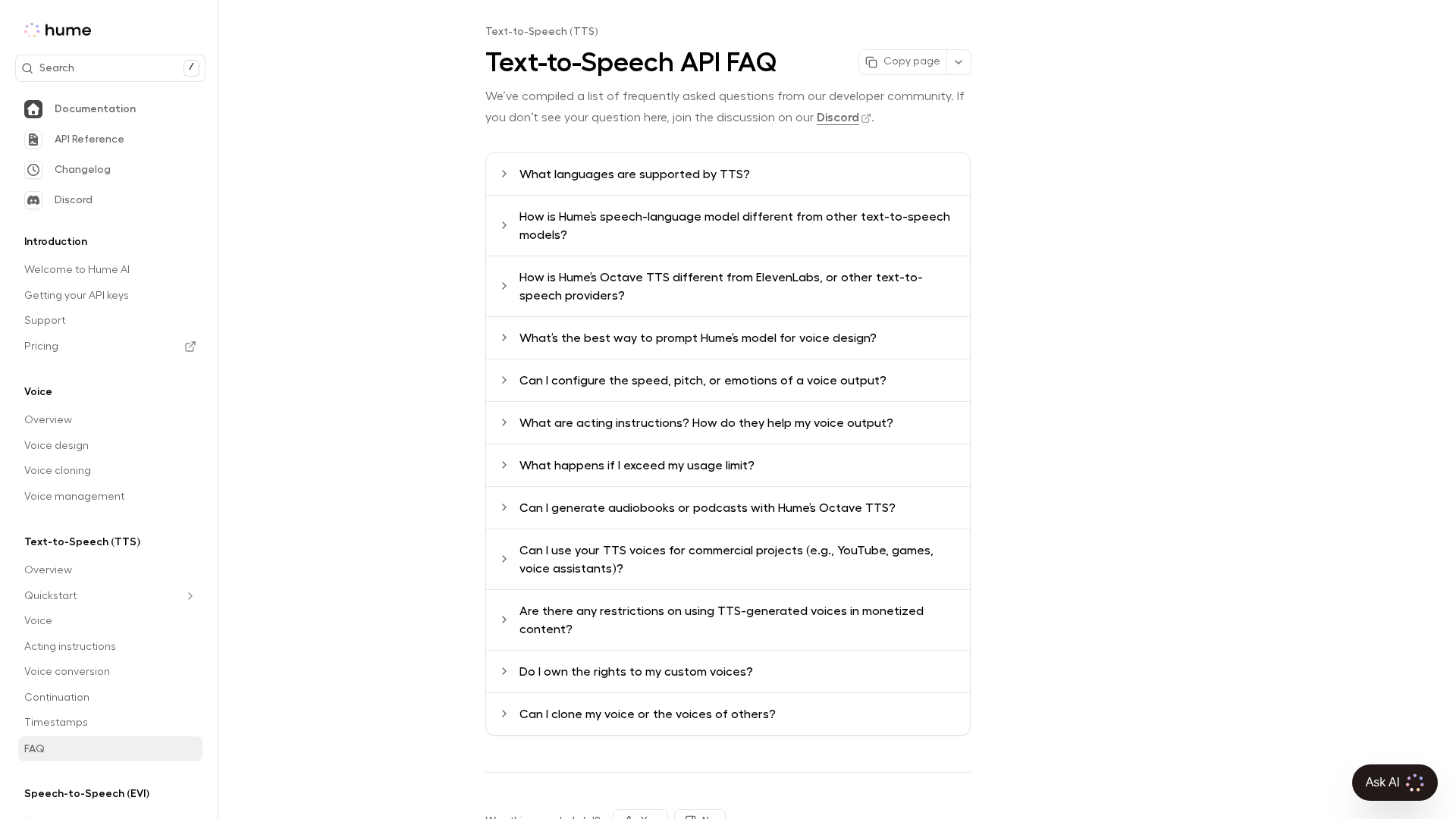
A concise guide to Hume's Octave TTS: languages, prompting, usage, and voice ownership.
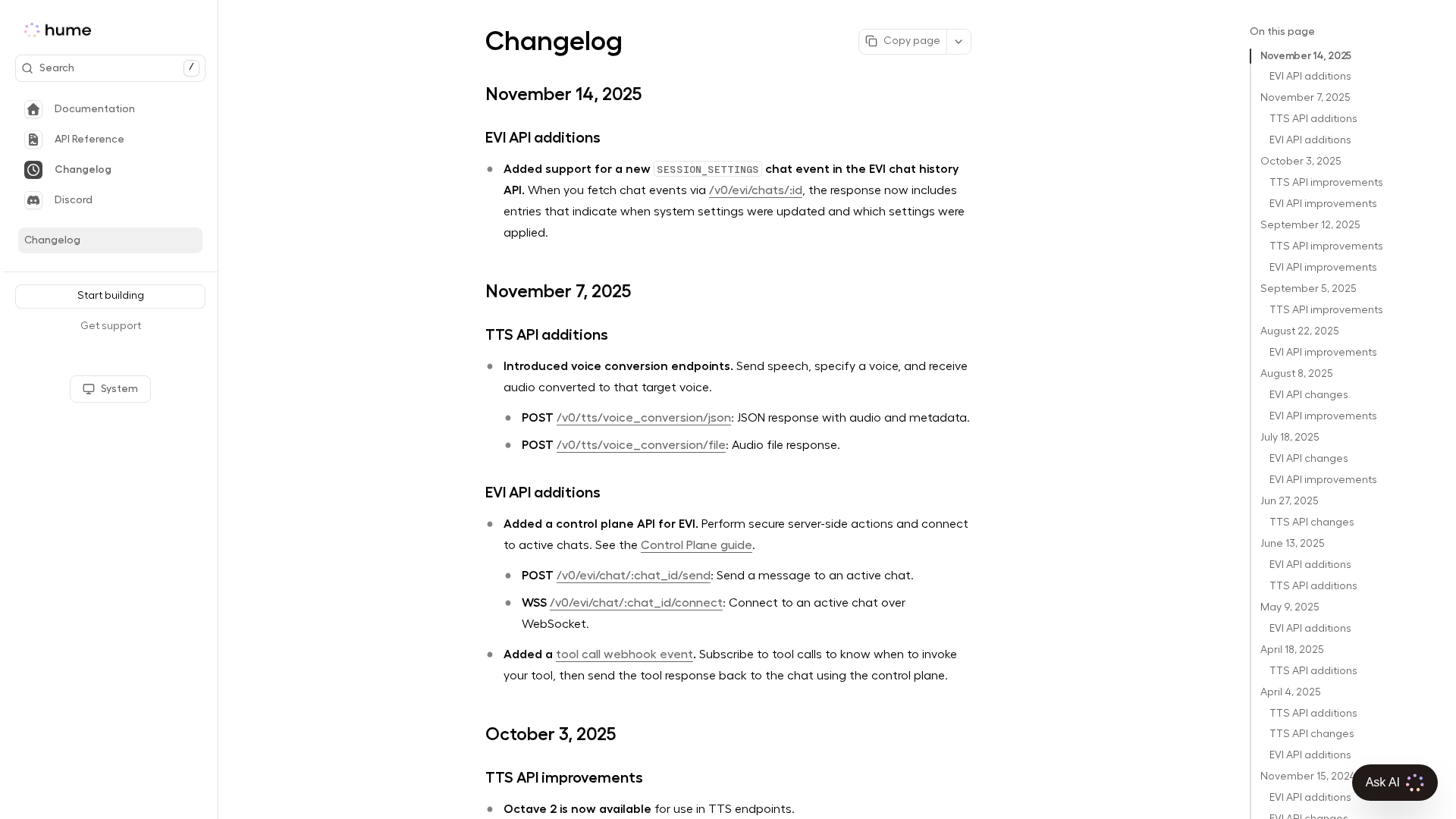
Changelog highlights new voice conversion, EVI control plane, Octave 2 support, and streaming enhancements across 2025 updates.