
Overview
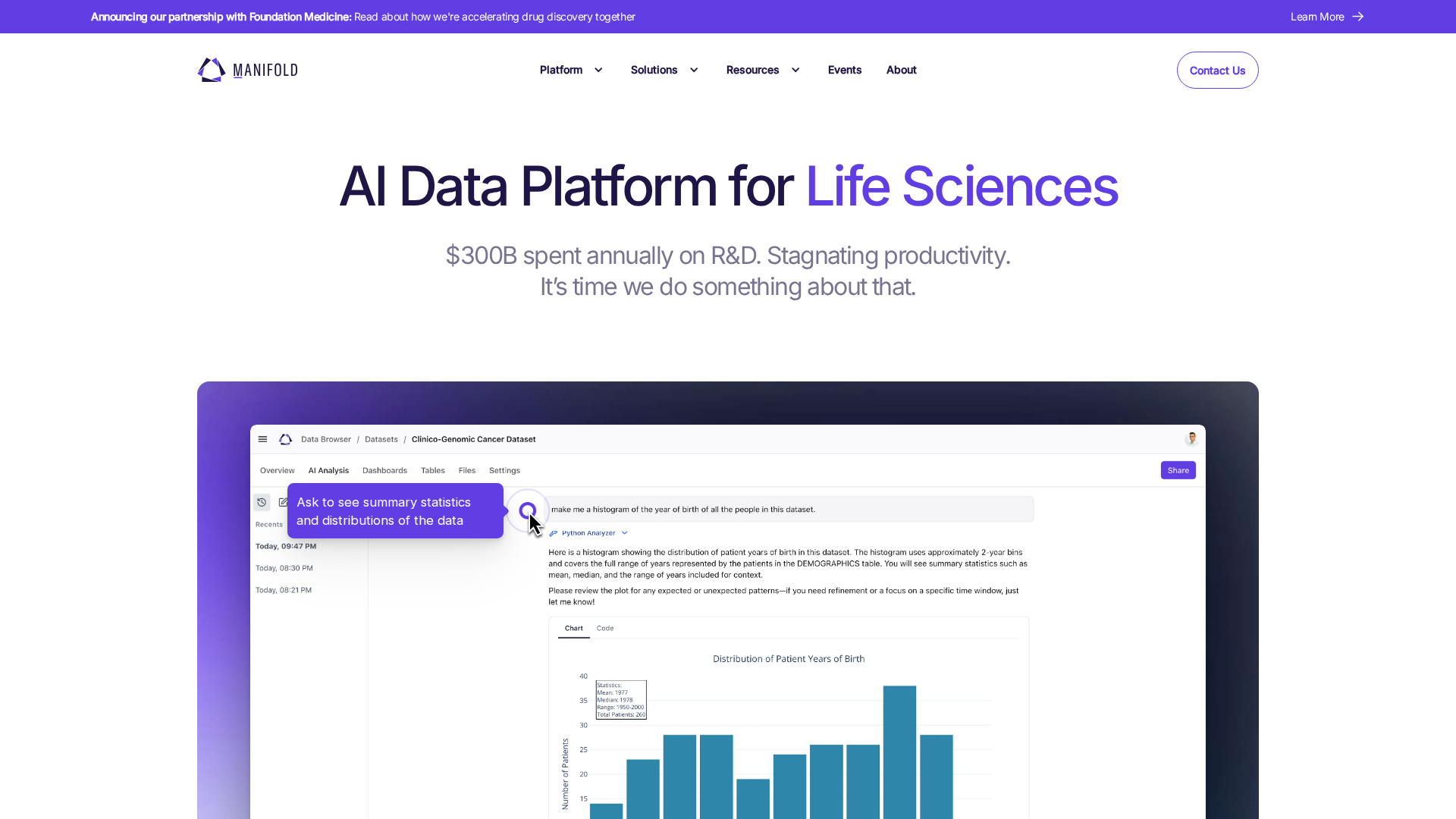
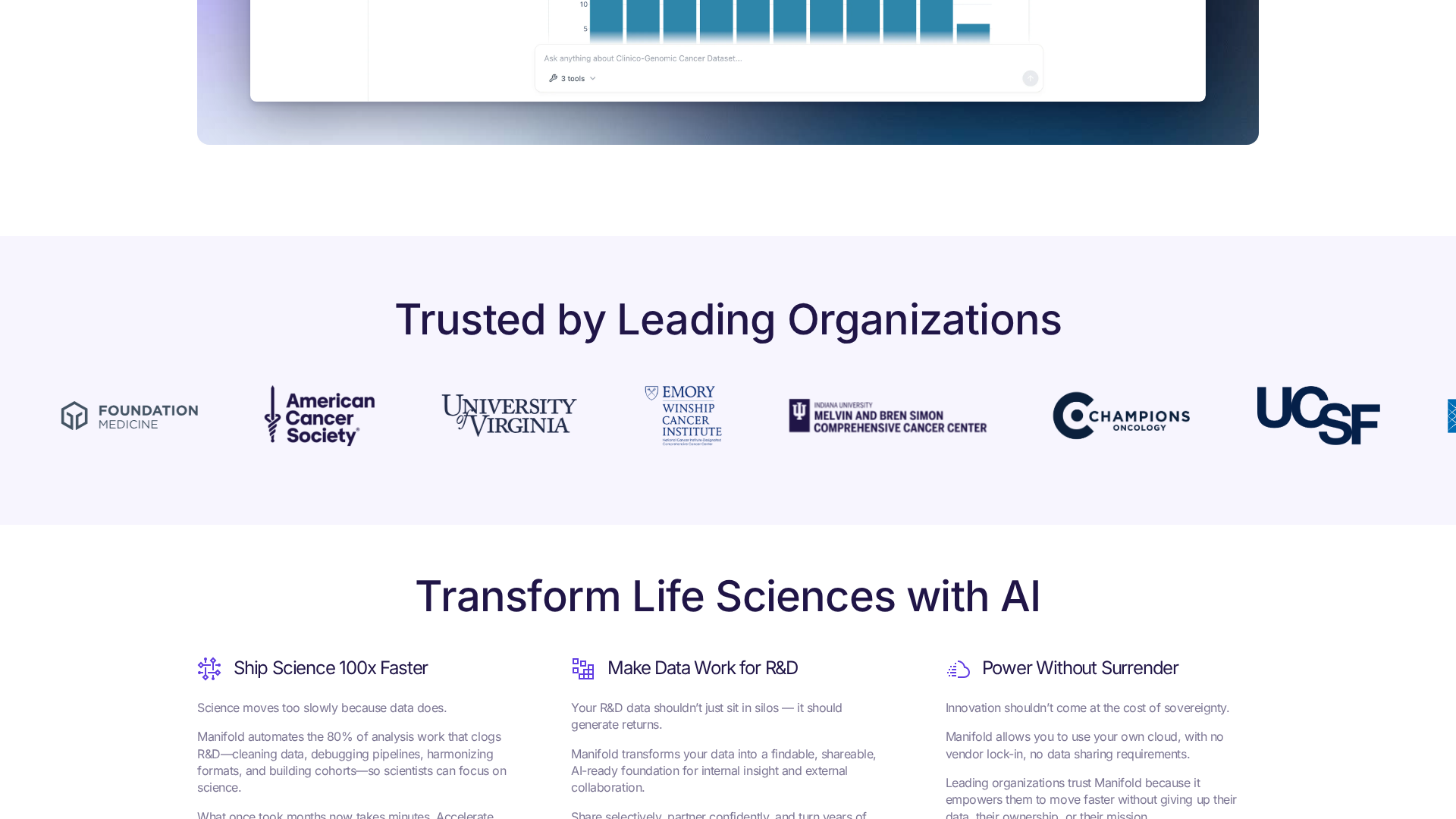
Manifold is an AI-driven data platform built for life sciences R&D that centralizes and harmonizes clinical, biospecimen, and multimodal research data to make it AI-ready. The platform offers an integrated stack (Agents, Tools, Data, Governance, Infrastructure) that includes an AI-powered data catalog, a collaborative workbench for reproducible research, batch bioinformatics execution, and AI agents to accelerate analysis. Emphasis is placed on data sovereignty (deploy to your cloud), enterprise-grade security and compliance (SOC 2, HIPAA, NIST, GDPR, TX-RAMP, 21 CFR Part 11), reproducibility, and collaboration across research teams and institutions. Manifold is designed primarily for clinical researchers, data scientists, and enterprise life sciences organizations seeking to reduce manual data wrangling and accelerate time-to-insight.
Key Features
Collaborative Workbench
A secure, reproducible workspace that unifies study data, notebooks, dashboards, analyses, and collaborators with fine-grained access controls and audit trails.
AI-Powered Data Catalog
Centralized discovery and curation with rich metadata, lineage, AI-assisted metadata generation, natural language search, and dataset mounting for Python/R/Jupyter.
AI Agents and Tool Layer
AI-powered agents and ready-to-use, life-sciences-tailored apps that automate analysis tasks and provide decision-support within workflows.
Batch Bioinformatics and Pipeline Support
Run batch bioinformatics pipelines (Nextflow, WDL) and large-scale jobs on demand from within the platform.
Governance & Security
Enterprise-grade controls (Five Safes-based access), auditing, compliance attestations, and policies to meet regulatory requirements for clinical data.
Scalable Infrastructure & Data Sovereignty
Cloud infrastructure optimized for life sciences with options to deploy in your own cloud account so data stays under customer control.

Who Can Use This Tool?
- Researchers:Clinical and biomedical researchers use Manifold to unify study data and accelerate analyses with reproducible workbenches.
- Data Scientists:Data scientists build, run, and scale bioinformatics pipelines and ML workflows using harmonized, AI-ready datasets.
- Enterprises:Life sciences organizations adopt Manifold for secure, compliant data platforms and managed deployments in customer cloud environments.
Pricing Plans
Pricing information is not available yet.
Pros & Cons
✓ Pros
- ✓End-to-end AI data platform tailored for life sciences R&D.
- ✓AI-powered data catalog and metadata generation speeds dataset discovery and curation.
- ✓Collaborative Workbench consolidates data, analyses, notebooks, and pipelines for reproducibility.
- ✓Strong security & compliance posture (SOC 2 Type II, HIPAA, NIST 800-171, GDPR, 21 CFR Part 11, TX-RAMP noted).
- ✓Flexible deployment: can operate in customer cloud to preserve data sovereignty.
- ✓Built-in support for batch bioinformatics (Nextflow, WDL) and scalable on-demand compute.
✗ Cons
- ✗No public pricing or documented self-serve plans; pricing requires contacting sales.
- ✗Public documentation and pricing URLs (/docs, /pricing, /features) returned 404 or were not directly available during this review.
- ✗Enterprise orientation may make it less suitable for small teams seeking inexpensive, self-serve options.
- ✗Limited publicly accessible developer/API docs found during scraping.
Compare with Alternatives
| Feature | Manifold | Sema4.ai | StackAI |
|---|---|---|---|
| Pricing | N/A | N/A | N/A |
| Rating | 8.1/10 | 8.1/10 | 8.4/10 |
| Data Harmonization | Yes | Partial | Partial |
| Bioinformatics Pipelines | Yes | No | No |
| AI Agent Ecosystem | Yes | Yes | Yes |
| Governance & Compliance | Yes | Yes | Yes |
| Deployment Flexibility | Partial | Yes | Yes |
| Collaboration Workbench | Yes | Yes | Partial |
| Explainability & Observability | Partial | Yes | Yes |
Related Articles (4)
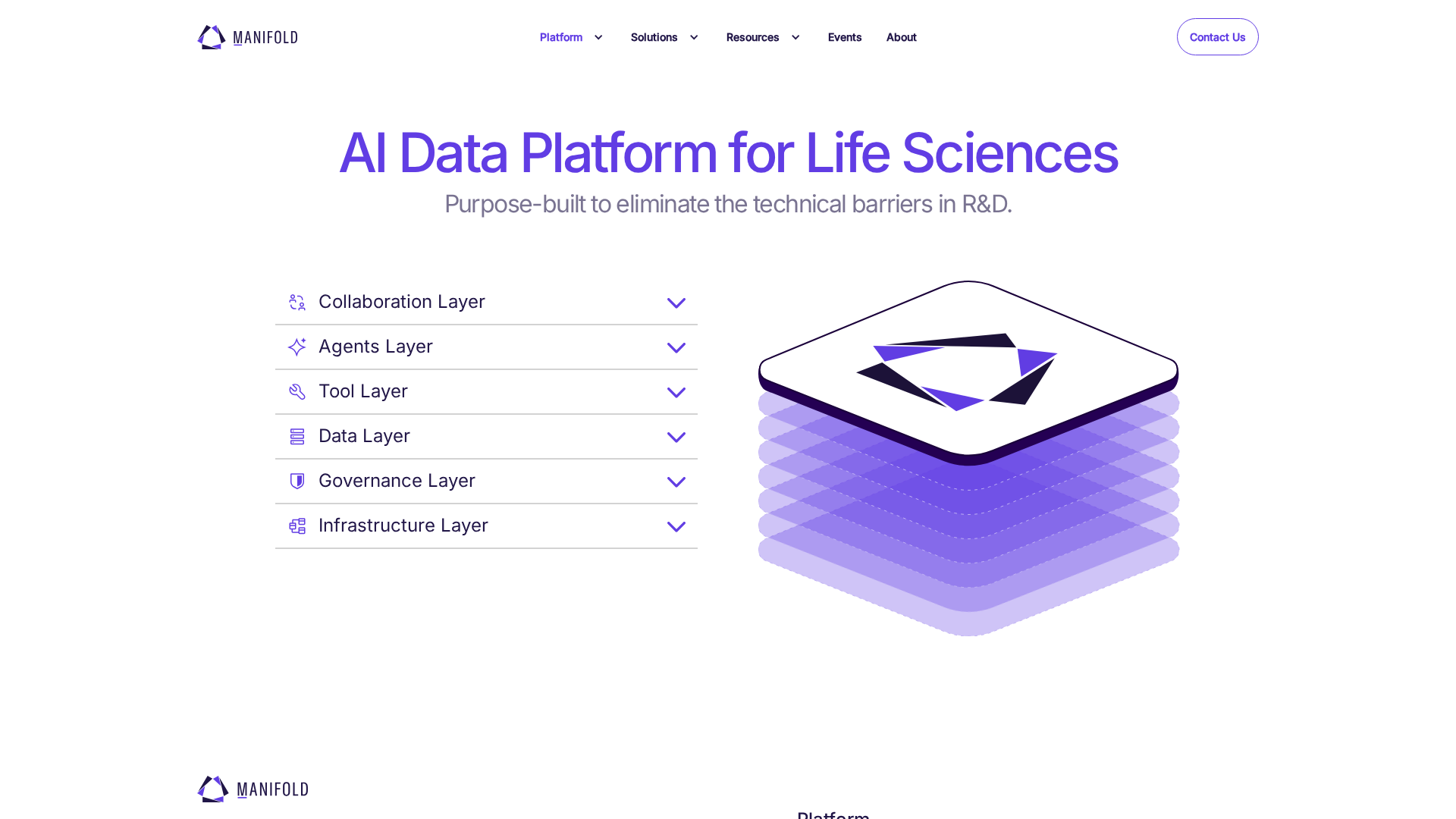
A multi-layer AI data platform for life sciences, spanning intelligent agents, AI-ready apps, unified data, governance, and cloud infrastructure.
Manifold and Anthropic bring Claude to life sciences data inside secure environments to accelerate AI-enabled discovery.
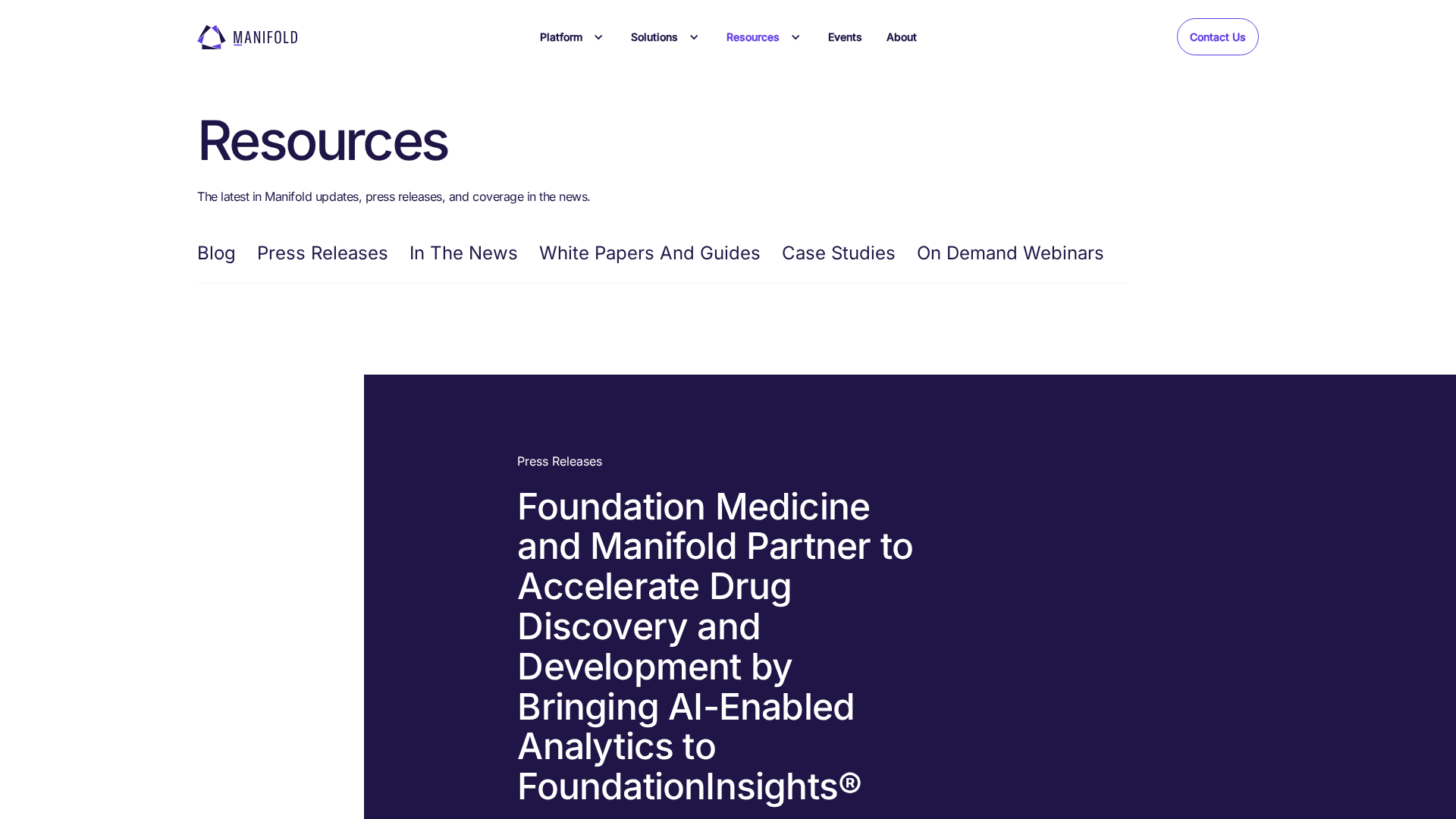
A central hub of Manifold AI updates—press releases, webinars, blogs, and news on AI-powered life sciences data platforms.
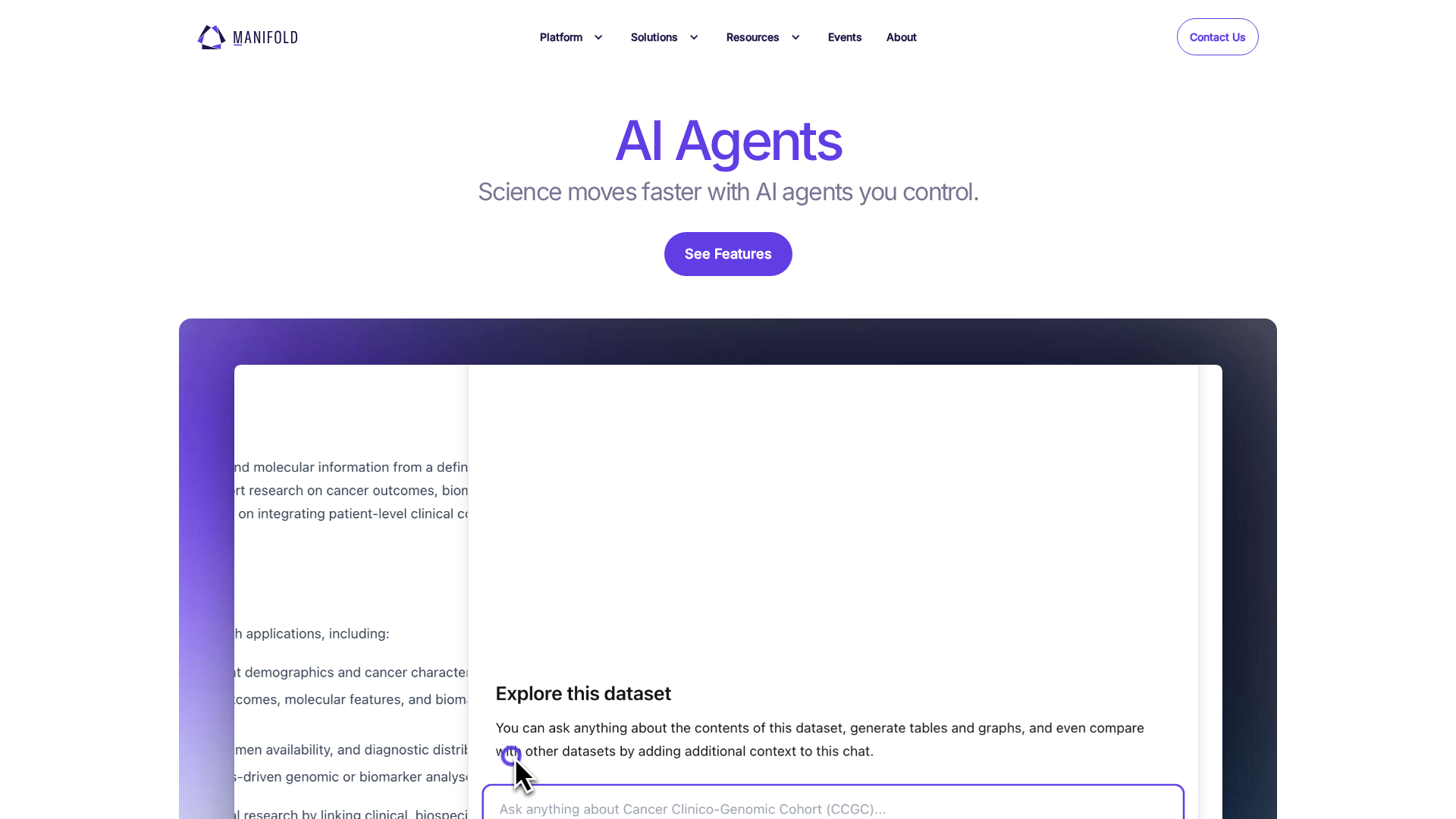
Talk to domain-specific AI agents to explore multimodal data, generate outputs, and move to code with full traceability.