Topic Overview
AI‑Driven Web3 Security & Real‑Time Defense covers emerging platforms and practices that apply large language models, autonomous AI agents, and unified observability to protect smart contracts, DeFi protocols, NFT marketplaces and cross‑chain infrastructure. This area focuses on continuous, low‑latency detection and automated or semi‑automated response across on‑chain telemetry and off‑chain signals to close the gap between reconnaissance and remediation. Relevance (2025): escalating numbers of on‑chain exploits, faster attack automation, and wider regulatory scrutiny have made real‑time, explainable defenses a priority. At the same time, enterprise‑grade LLMs and agent frameworks have matured enough to support contextual reasoning, retrieval‑augmented analysis, and policy‑aware action workflows that were previously impractical at scale. Key components and examples: autonomous SecOps agents and a Context Lake (Simbian) ingest and correlate alerts and transaction traces to reduce missed signals and enable automated triage; enterprise virtual assistants and multi‑agent orchestrations (IBM watsonx Assistant) provide policy‑driven automation and human‑in‑the‑loop controls; LLM platforms (Cohere, Mistral, Claude, Google Gemini) supply private, customizable models, embeddings, and retrieval capabilities for threat understanding and pattern matching; infrastructure platforms (Vertex AI) manage training, deployment, and monitoring of models in production. Operational and governance emphasis: solutions in this space balance speed with explainability, model governance, and data privacy—using private models, provenance for alerts, and fine‑grained policy controls. Products such as Kerberus Sentinel3 and its peers aim to integrate these capabilities into pipelines that detect anomalous transactions, recommend or enact mitigations, and generate audit‑ready justification for actions.
Tool Rankings – Top 6

Autonomous AI security agents plus a unified Context Lake to accelerate SecOps and eliminate missed alerts.

Enterprise virtual agents and AI assistants built with watsonx LLMs for no-code and developer-driven automation.

Enterprise-focused LLM platform offering private, customizable models, embeddings, retrieval, and search.

Google’s multimodal family of generative AI models and APIs for developers and enterprises.

Enterprise-focused provider of open/efficient models and an AI production platform emphasizing privacy, governance, and

Unified, fully-managed Google Cloud platform for building, training, deploying, and monitoring ML and GenAI models.
Latest Articles (75)
A vendor‑agnostic guide to the 14 best AI governance platforms in 2025, with criteria, comparisons, and practical buying guidance.
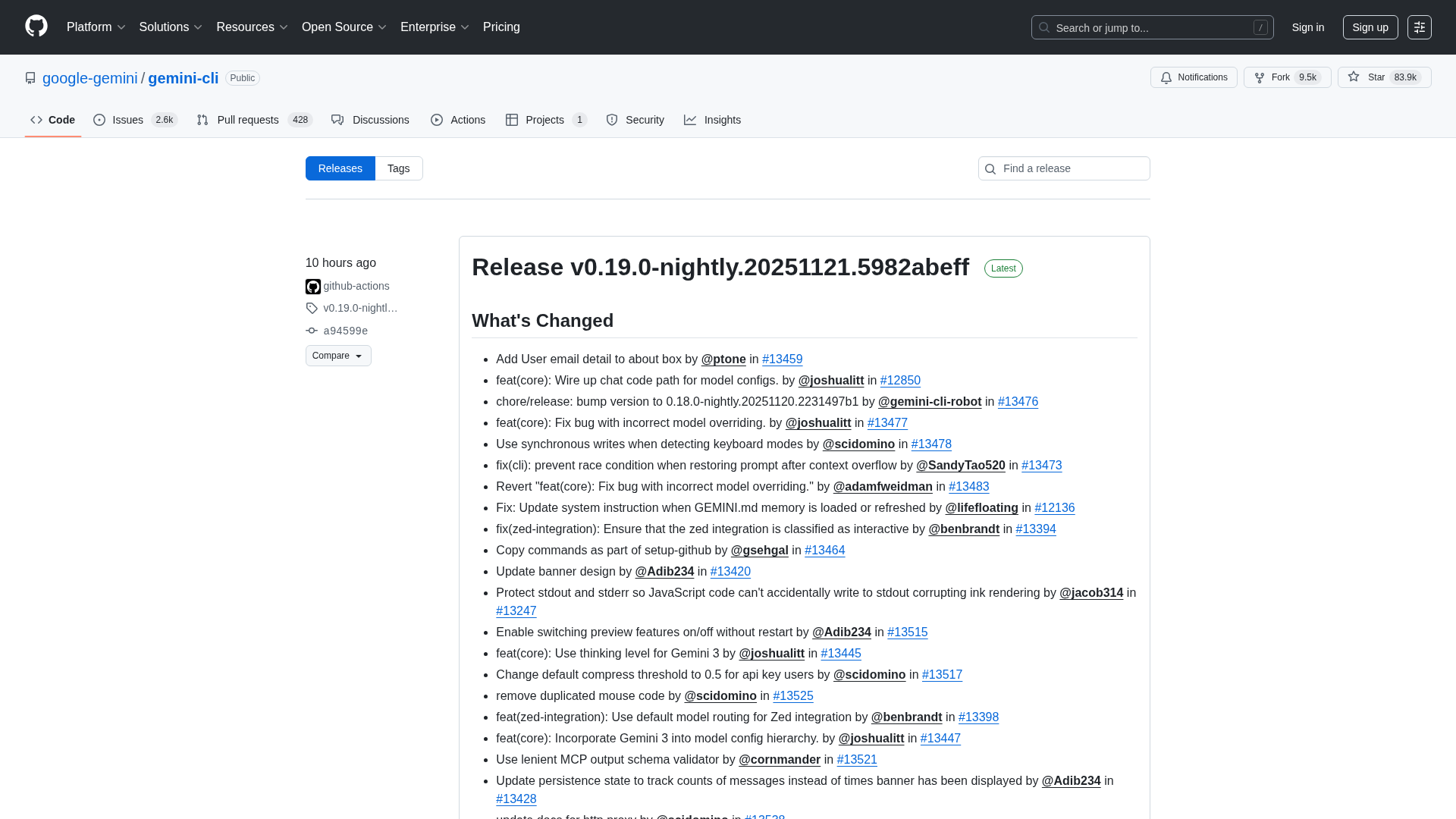
Overview of the Gemini CLI v0.36.0-preview release series, highlighting architectural, CLI, and UI changelogs across multiple pre-release versions.
Adobe nears a $19 billion deal to acquire Semrush, expanding its marketing software capabilities, according to WSJ reports.
Wolters Kluwer expands UpToDate Expert AI with UpToDate Lexidrug to bolster drug information and medication decision support.
A practical, step-by-step guide to fine-tuning large language models with open-source NLP tools.