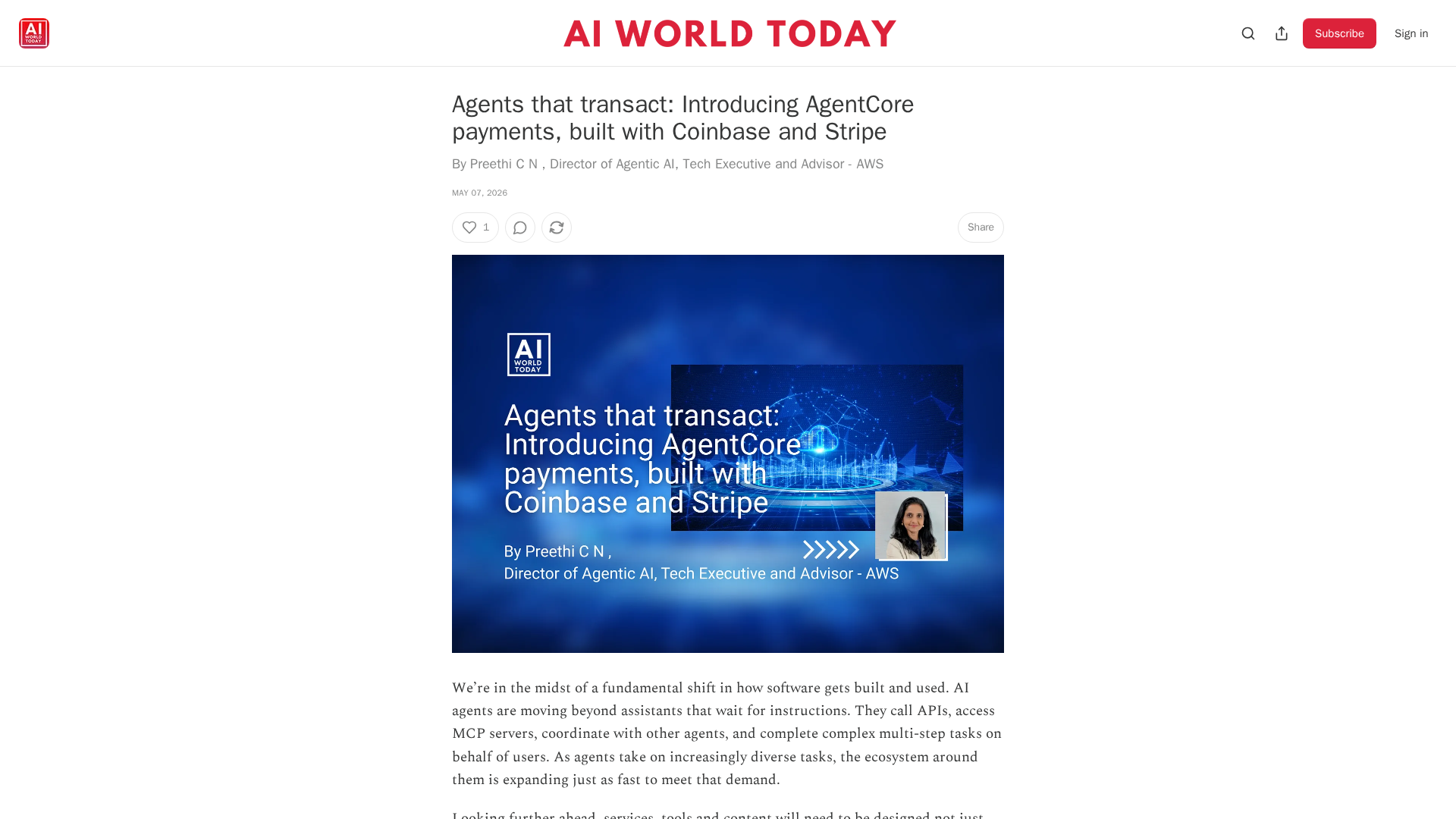
Topic Overview
Autonomous paying AI agents are systems that combine agent orchestration, LLM-driven reasoning, stateful memory and integrated payment rails so agents can take goal-directed actions that include initiating, authorizing and settling financial transactions. This topic covers the infrastructure and commercial layers—agent frameworks, AI automation platforms and marketplaces—that make transaction-capable agents feasible and auditable. Relevance: by mid‑2026 the maturity of LLMs, vector retrieval, event chaining and developer SDKs—alongside initiatives from cloud, payments and crypto platforms—has pushed transactional capabilities from prototypes to production pilots. Organizations are exploring agent monetization, pay‑per‑action business models, embedded payments, and the compliance, identity and fraud controls those models require. Key tools and roles: developer-first frameworks like LangChain provide standard SDKs and deployment patterns for building reliable agents; GPTConsole offers SDK/API/CLI tooling, lifecycle management, event chaining and data infra for production agents; AgentGPT and no‑code platforms (e.g., Anakin.ai) accelerate experimentation and templated agent workflows; enterprise orchestration platforms such as Kore.ai emphasize governance, observability and multi‑agent choreography; LLM providers like Cohere and Google Gemini supply private or multimodal models and retrieval primitives needed for secure, accurate decisioning. Trends and considerations: practical deployments emphasize composability (modular skills, payments, identity), observability for audit trails, attestation and tokenized credentials for authorization, and engineered prompts+memory for deterministic behavior. Marketplaces are emerging to discover, license and monetize agents while platform-level controls and privacy-capable models address enterprise risk. The result is an ecosystem balancing developer velocity with operational controls necessary for agents that pay, trade or transact on behalf of users.
Tool Rankings – Top 6

An open-source framework and platform to build, observe, and deploy reliable AI agents.

Developer-focused platform (SDK, API, CLI, web) to create, share and monetize production-ready AI agents.

A browser-based platform to create and deploy autonomous AI agents with simple goals.

Enterprise AI agent platform for building, deploying and orchestrating multi-agent workflows with governance, observabil

Enterprise-focused LLM platform offering private, customizable models, embeddings, retrieval, and search.

Google’s multimodal family of generative AI models and APIs for developers and enterprises.
Latest Articles (56)
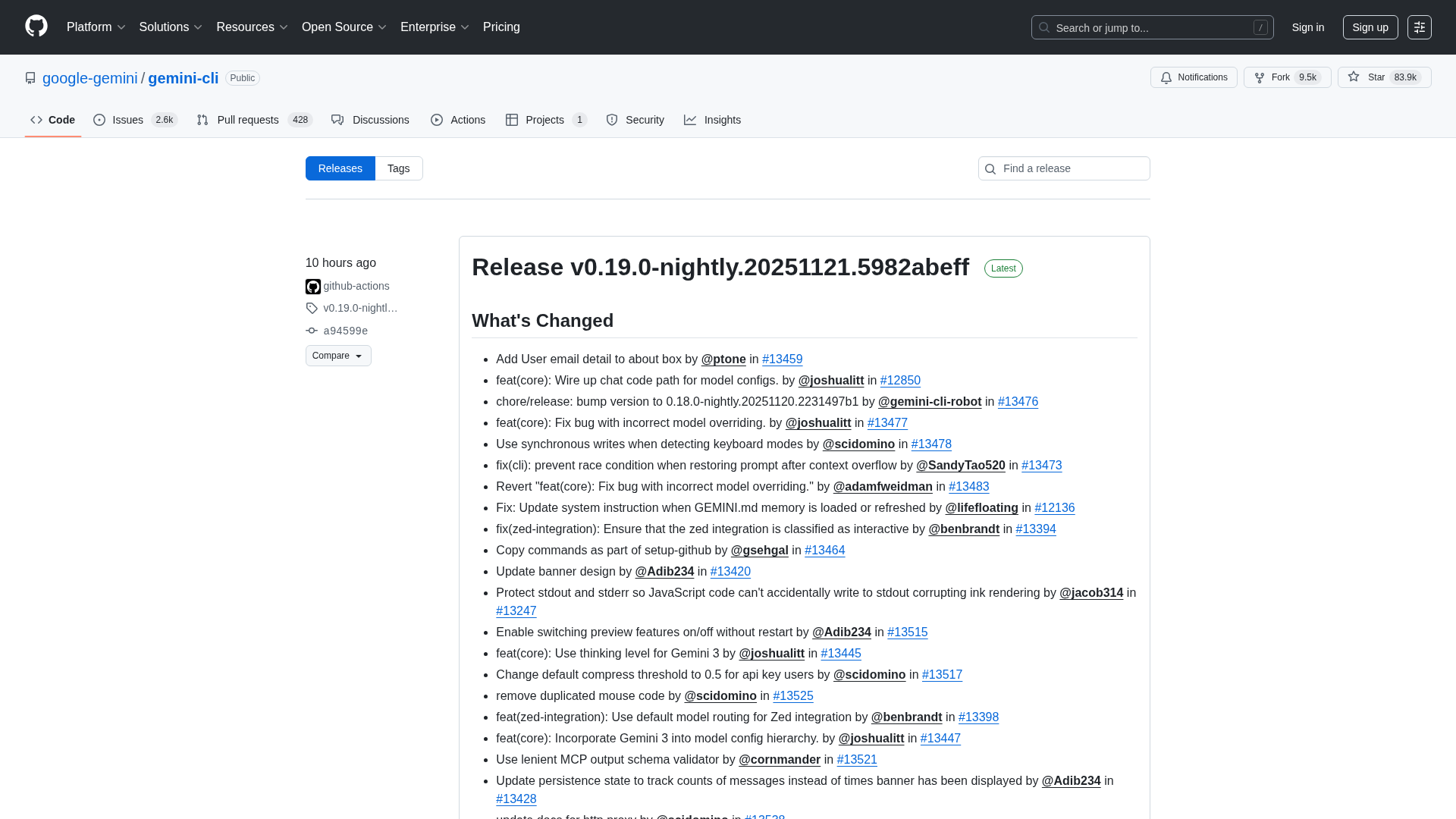
Overview of the Gemini CLI v0.36.0-preview release series, highlighting architectural, CLI, and UI changelogs across multiple pre-release versions.
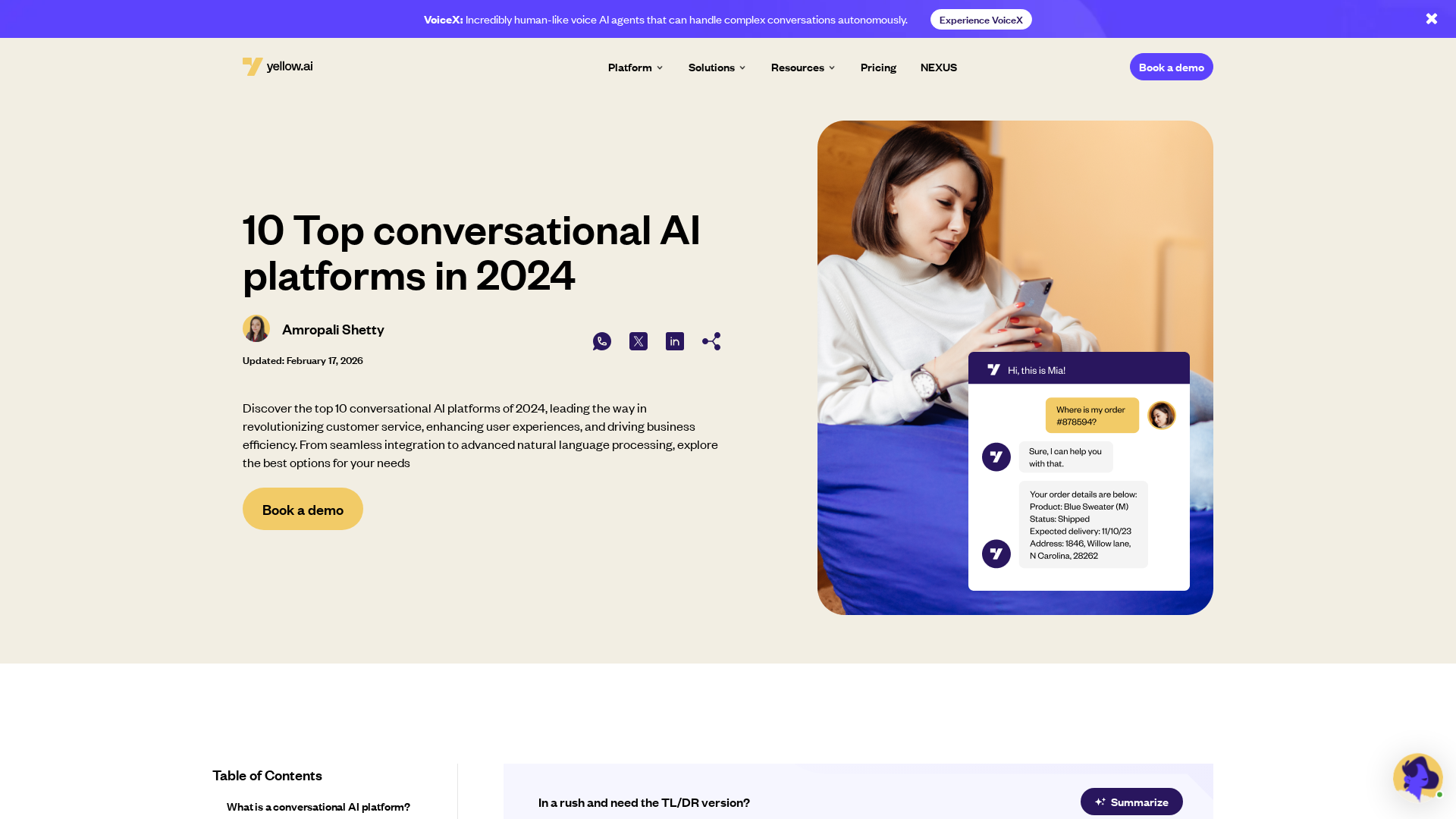
A concise guide to the top 10 conversational AI platforms in 2024, with features, benefits, and use cases.
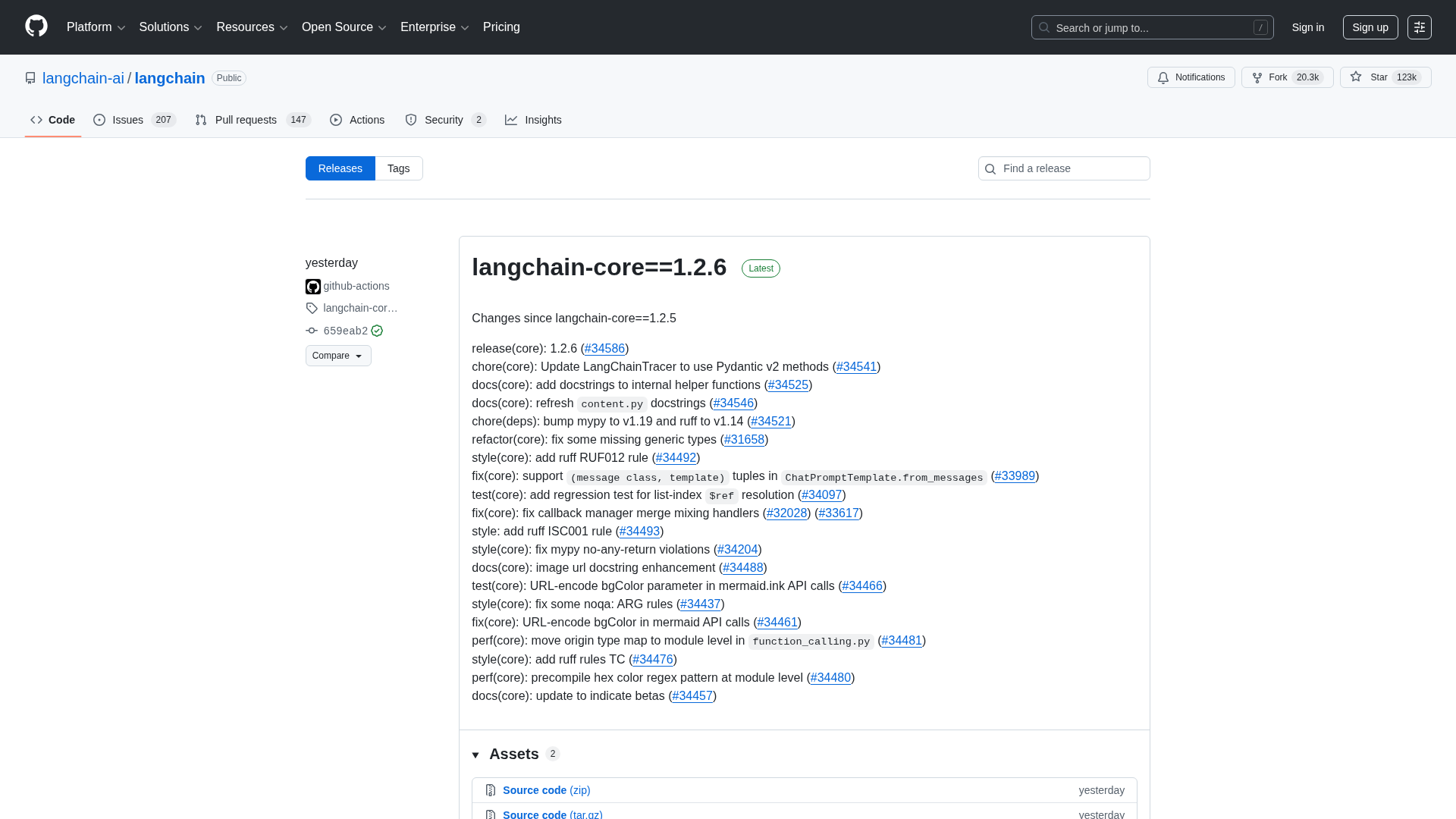
A comprehensive LangChain releases roundup detailing Core 1.2.6 and interconnected updates across XAI, OpenAI, Classic, and tests.
A reproducible bug where LangGraph with Gemini ignores tool results when a PDF is provided, even though the tool call succeeds.
A CLI tool to pull LangSmith traces and threads directly into your terminal for fast debugging and automation.