
Topic Overview
This topic examines how modern large language models (LLMs) — notably Anthropic’s Claude Opus 4.5, OpenAI’s GPT variants, and Google’s Gemini — are being used to generate code and power agentic automation, and how that capability maps onto today’s developer platforms and agent frameworks. It’s timely in late 2025 because model improvements, longer context windows, tool APIs, and stateful agent infrastructure have shifted focus from single-call completion to multi-step, tool-enabled automation across IDEs, CI pipelines and web services. Key categories include AI code generation tools and assistants (Code Llama, Salesforce CodeT5, WizardLM/WizardCoder, Tabnine), AI-native IDEs and agentic coding platforms (Windsurf, Replit, GitHub Copilot), and agent frameworks and marketplaces for composing and deploying agents (LangChain with LangGraph, GPTConsole, Cline, Flowpoint). Claude Opus 4.5, GPT variants and Gemini differ in safety and instruction-following tradeoffs, multi-/multi-modal strengths, ecosystem integrations, and enterprise deployment options — factors that matter for choosing a runtime for code-heavy agents. Practical trends: multimodel orchestration and hybrid stacks (combining specialized code models with generalist agents), stateful agent runtimes and memory for long-running workflows, live previews and inline execution in IDEs, and a growing demand for self-hosted/private deployments and governance. Tooling now emphasizes lifecycle management (testing, monitoring, memory/RETRIEVAL), event chaining, and observability. Selecting the right stack depends on priorities — integration with existing CI/CD and cloud, offline/private inference, latency and cost, or best-in-class code synthesis and safety — rather than a single “best” model.
Tool Rankings – Top 6

Engineering platform and open-source frameworks to build, test, and deploy reliable AI agents.

Developer-focused platform (SDK, API, CLI, web) to create, share and monetize production-ready AI agents.

AI-native IDE and agentic coding platform (Windsurf Editor) with Cascade agents, live previews, and multi-model support.

Agentic AI builder that automates website analytics and marketing workflows using AI agents and GA integration.

An AI pair programmer that gives code completions, chat help, and autonomous agent workflows across editors, theterminal
Code-specialized Llama family from Meta optimized for code generation, completion, and code-aware natural-language tasks
Latest Articles (69)
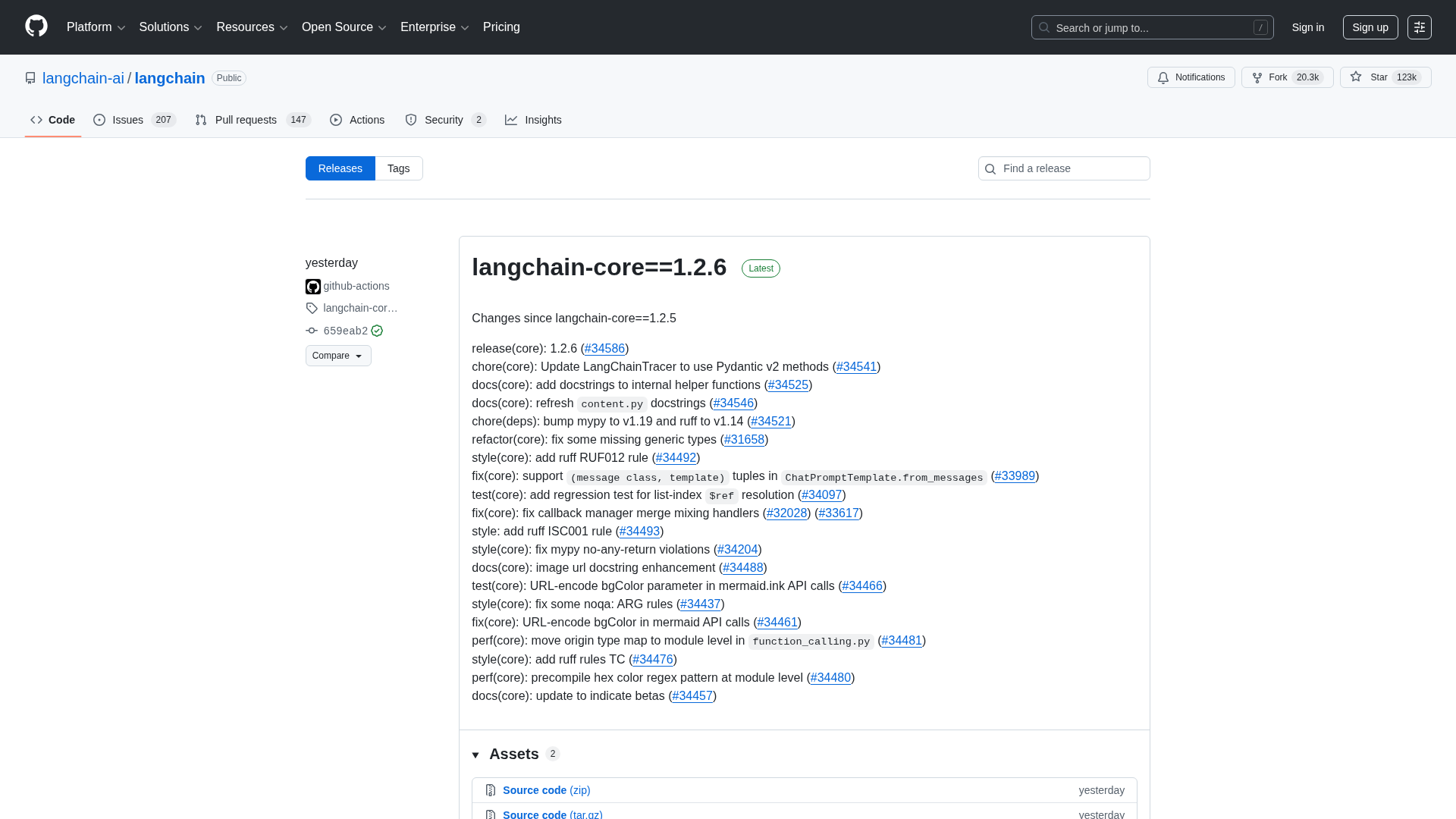
A comprehensive LangChain releases roundup detailing Core 1.2.6 and interconnected updates across XAI, OpenAI, Classic, and tests.

Cannot access the article content due to an access-denied error, preventing summarization.
Adobe nears a $19 billion deal to acquire Semrush, expanding its marketing software capabilities, according to WSJ reports.
A quick preview of POE-POE's pros and cons as seen in G2 reviews.
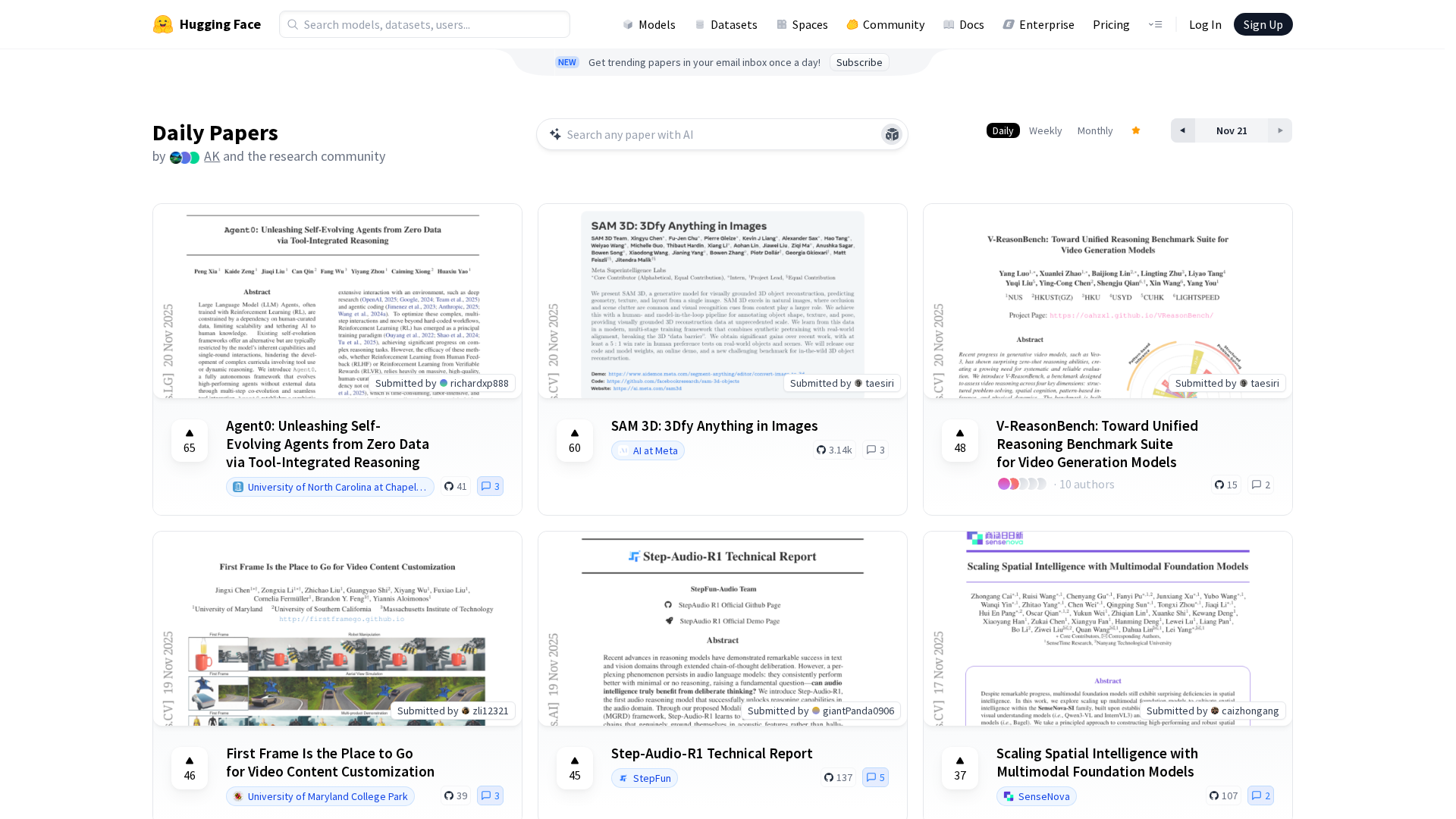
Get daily, curated trending ML papers delivered straight to your inbox.