Topic Overview
Enterprise GenAI platforms bring foundational models, model lifecycle tooling and deployment fabrics together to support production AI across business domains. This topic covers major platform vendors (Anthropic, OpenAI, Google Gemini, Red Hat AI on AWS) and the supporting ecosystem for AI Automation, Data Platforms, Governance and Security. By 2026 organizations are balancing model capability (multimodal, instruction‑tuned models) with operational needs: data residency, cost-efficient inference, explainability, and continuous monitoring. Core platform capabilities include hosted APIs and private fine‑tuning, model discovery and evaluation, deployment and monitoring (e.g., Vertex AI’s end‑to‑end stack), and enterprise model offerings from Cohere and Mistral AI for private/custom models. Engineering frameworks such as LangChain enable agentic workflows and RAG pipelines; tools like ChatPDF and embedding/search services accelerate document-centric use cases. GPU orchestration and resource optimization (Run:ai/NVIDIA Run:ai) are critical for hybrid and multi‑cloud inference and training. Developer-facing coding agents (GitHub Copilot, Cline) and code models (StarCoder) illustrate how GenAI is integrated into software engineering flows. The enterprise imperative is governance and security: policy enforcement, provenance, model cards, monitoring and threat detection. AI Governance and Security Governance tools must integrate with data platforms and MLOps to ensure compliance and reduce risk. Trends to watch include platform consolidation vs. best‑of‑breed stacks, rising adoption of open efficient models, tighter cost and latency controls for inference, and stronger regulatory scrutiny. Evaluators should compare vendor model capabilities, data controls, deployment topology (cloud, on‑prem, hybrid), MLOps tooling, and governance features to align platform choice with risk, performance and operational requirements.
Tool Rankings – Top 6

Unified, fully-managed Google Cloud platform for building, training, deploying, and monitoring ML and GenAI models.

Enterprise-focused LLM platform offering private, customizable models, embeddings, retrieval, and search.

Engineering platform and open-source frameworks to build, test, and deploy reliable AI agents.

Enterprise-focused provider of open/efficient models and an AI production platform emphasizing privacy, governance, and

Kubernetes-native GPU orchestration and optimization platform that pools GPUs across on‑prem, cloud and multi‑cloud to提高
Open-source, client-side AI coding agent that plans, executes and audits multi-step coding tasks.
Latest Articles (67)
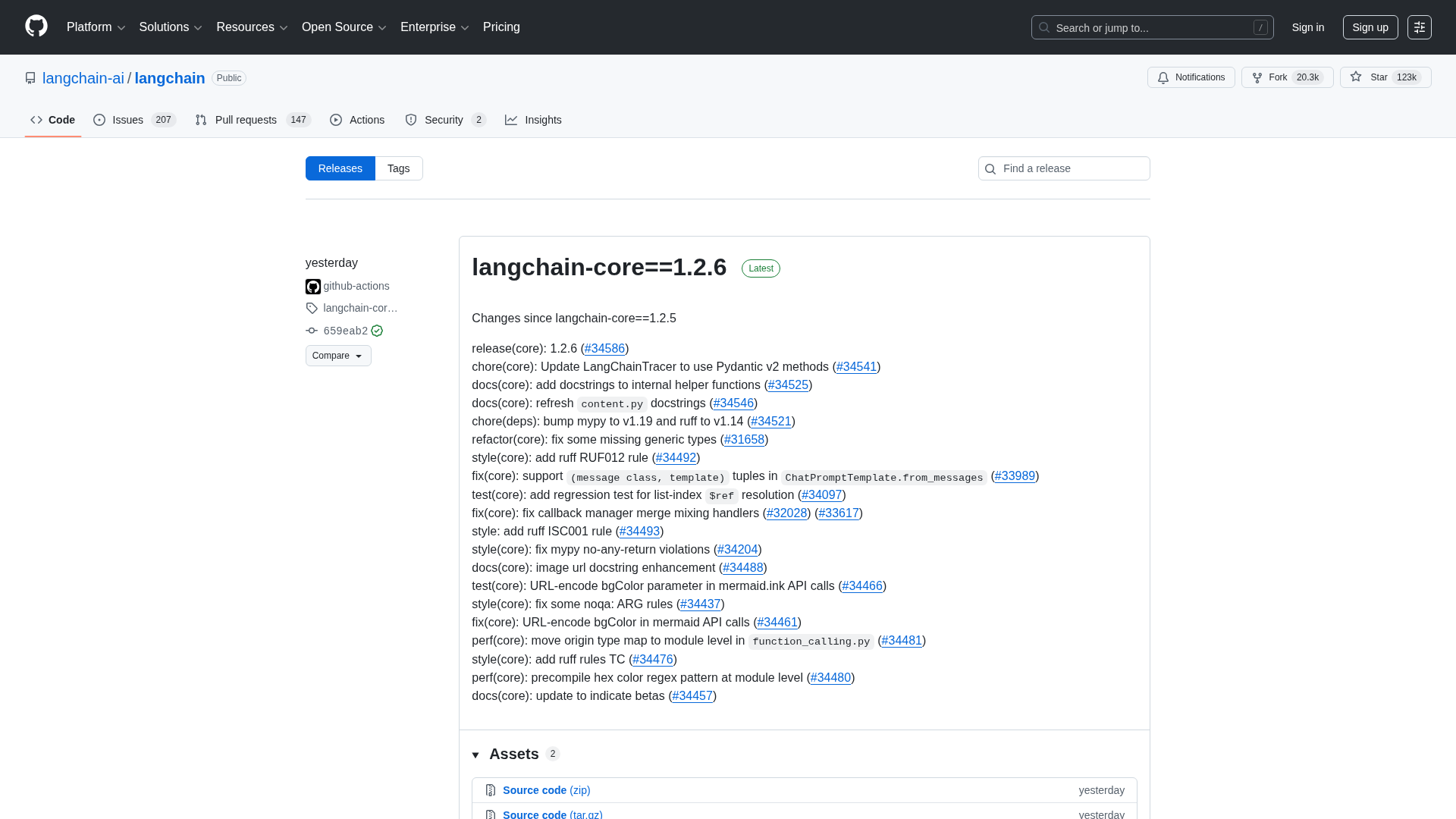
A comprehensive LangChain releases roundup detailing Core 1.2.6 and interconnected updates across XAI, OpenAI, Classic, and tests.

Cannot access the article content due to an access-denied error, preventing summarization.

A quick preview of POE-POE's pros and cons as seen in G2 reviews.

How the largest health systems are deploying AI to improve care and efficiency.
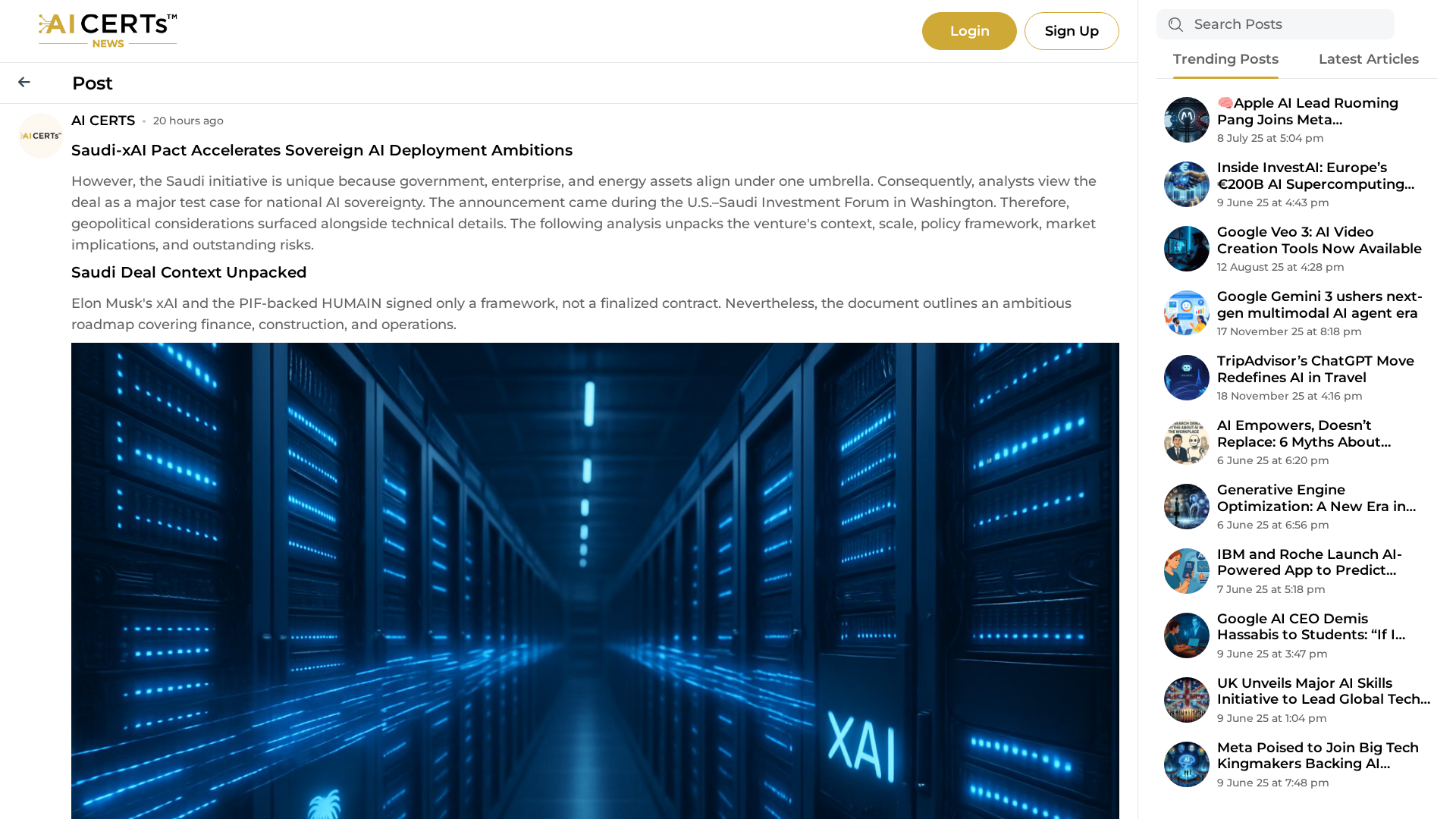
Saudi xAI-HUMAIN launches a government-enterprise AI layer with large-scale GPU deployment and multi-year sovereignty milestones.