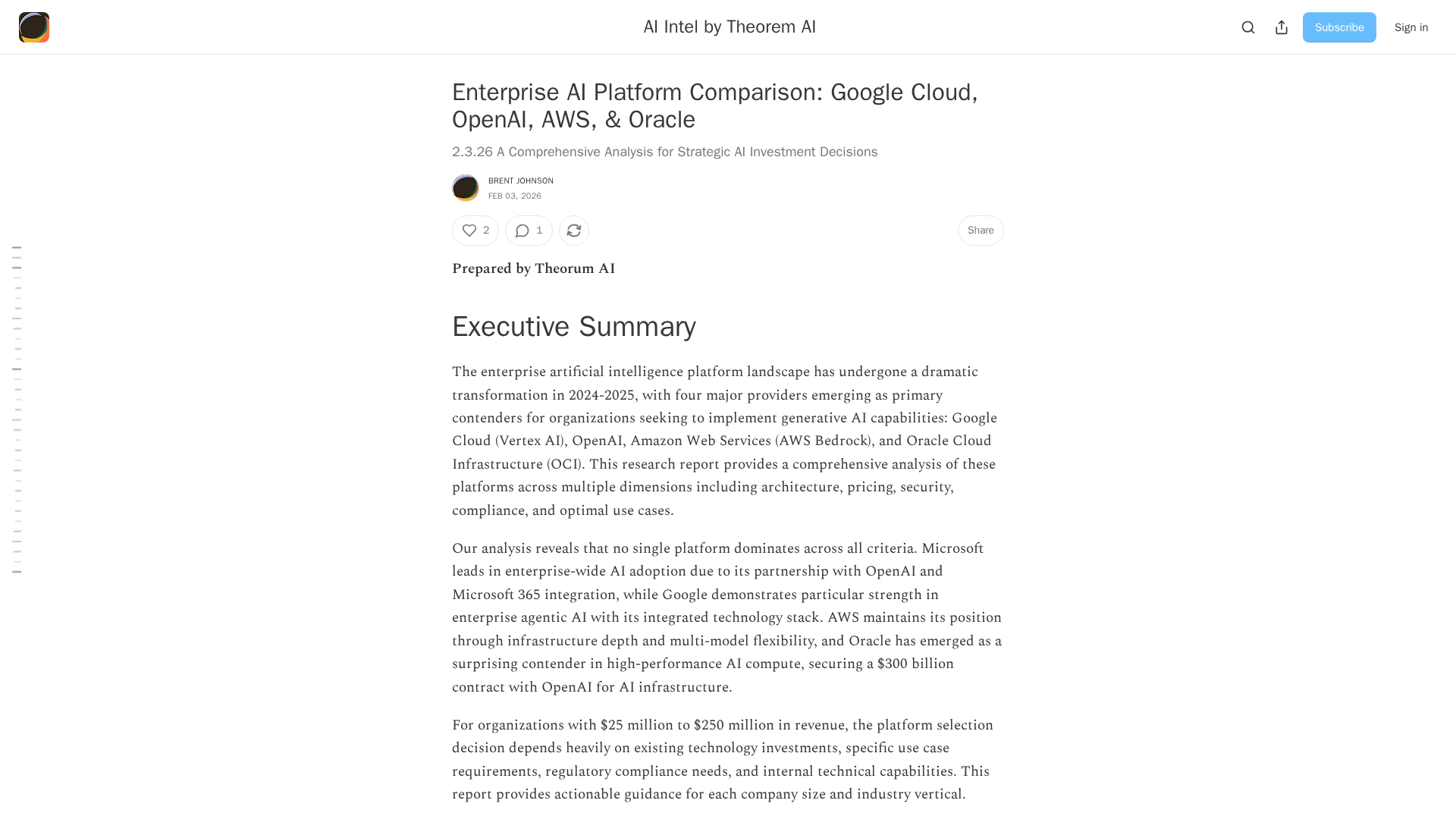
Topic Overview
Enterprise GenAI platforms with large-context windows focus on processing and reasoning over long documents, multi-document contexts, or entire knowledge bases without aggressive chunking. Through 2026 this capability matters for use cases such as legal and technical review, multi-document synthesis, prolonged conversational agents, and codebase reasoning. Vendors are converging on two approaches: platform-integrated offerings that tie models into productivity suites and cloud governance (e.g., Google’s Gemini family surfaced via Google Workspace, Google AI Studio, and Vertex AI) and modular/enterprise-first alternatives that emphasize private models, embeddings, and orchestration (e.g., Cohere for private embeddings and customizable LLMs; LangChain for developer-focused RAG and agent orchestration; Kore.ai for governed multi-agent workflows; Stable Code for edge/enterprise code completion). Key trade-offs are integration versus control: Google’s stack offers deep integration with Docs, Drive, Gmail, and GCP security/compliance tooling which simplifies deployment inside Google Workspace environments, while alternatives prioritize model customization, on-prem or private-cloud deployment, and specialized embeddings/search pipelines. Large-context capabilities reduce dependence on brittle chunking but place new demands on vector stores, retrieval strategies, and observability. Typical platform components now include long-context or multimodal models, vector search/embedding layers, RAG pipelines, agent frameworks, and governance/observability layers. When evaluating options, teams should map needs — native workspace integration, data residency and compliance, latency and cost, developer extensibility, and support for code or multimodal data — and plan for hybrid architectures combining Google Workspace/GCP strengths with specialist tools (Cohere, LangChain, Kore.ai, Stable Code) where needed. This pragmatic composition is becoming the dominant enterprise pattern as long-context GenAI shifts from novel demos to production workflows.
Tool Rankings – Top 5

Google’s multimodal family of generative AI models and APIs for developers and enterprises.

Enterprise AI agent platform for building, deploying and orchestrating multi-agent workflows with governance, observabil

Enterprise-focused LLM platform offering private, customizable models, embeddings, retrieval, and search.

An open-source framework and platform to build, observe, and deploy reliable AI agents.

Edge-ready code language models for fast, private, and instruction‑tuned code completion.
Latest Articles (53)
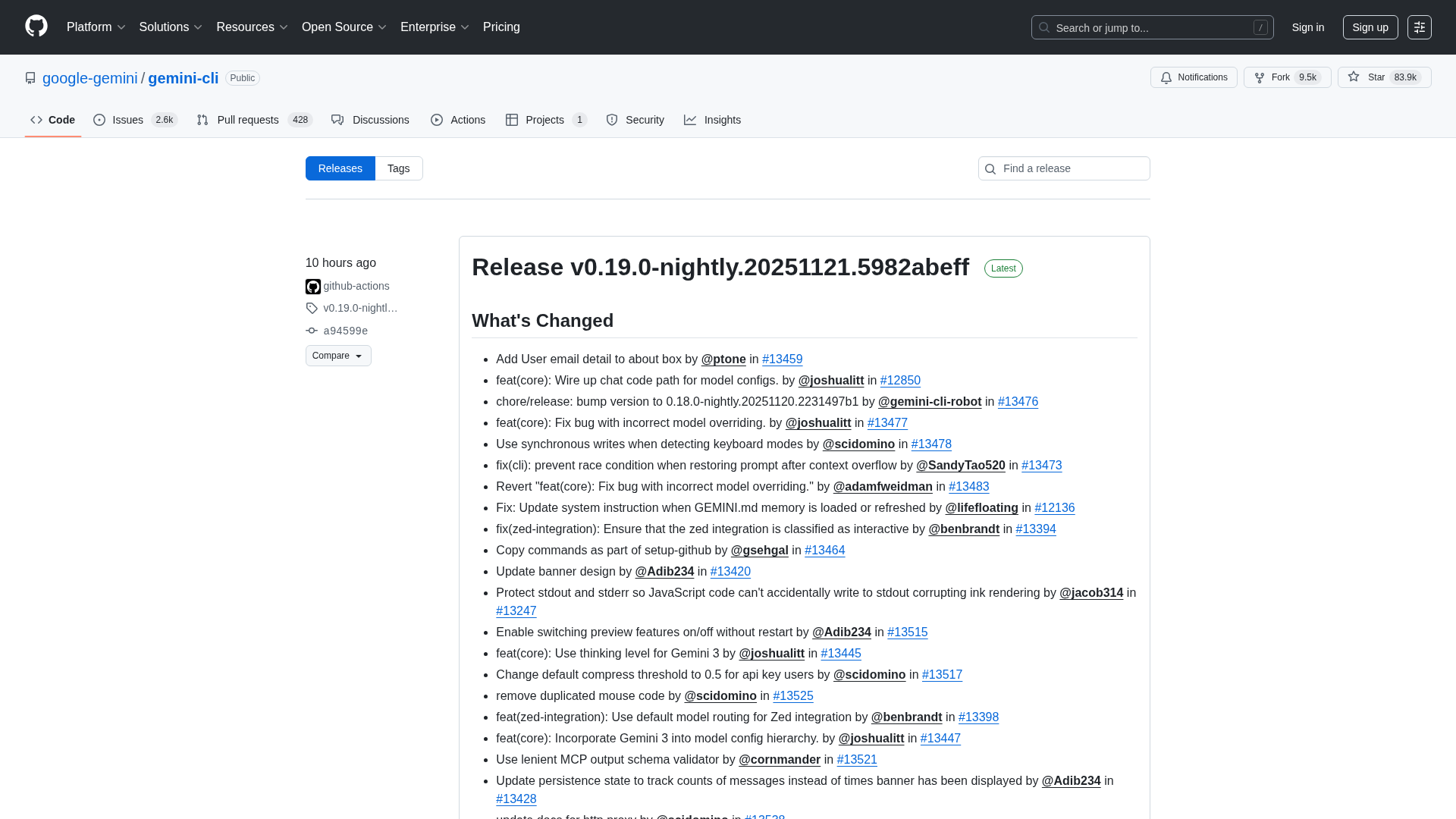
Overview of the Gemini CLI v0.36.0-preview release series, highlighting architectural, CLI, and UI changelogs across multiple pre-release versions.
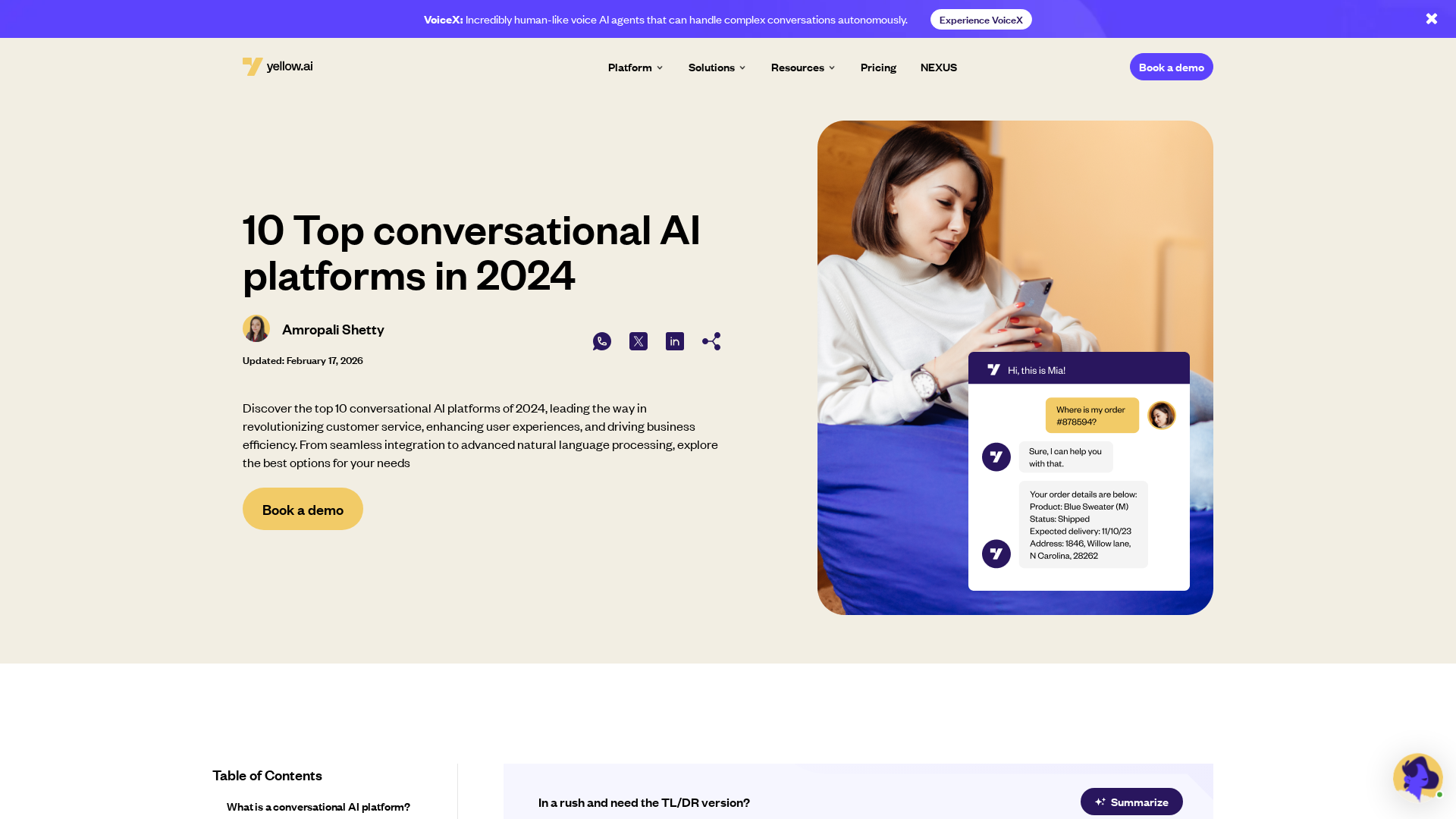
A concise guide to the top 10 conversational AI platforms in 2024, with features, benefits, and use cases.
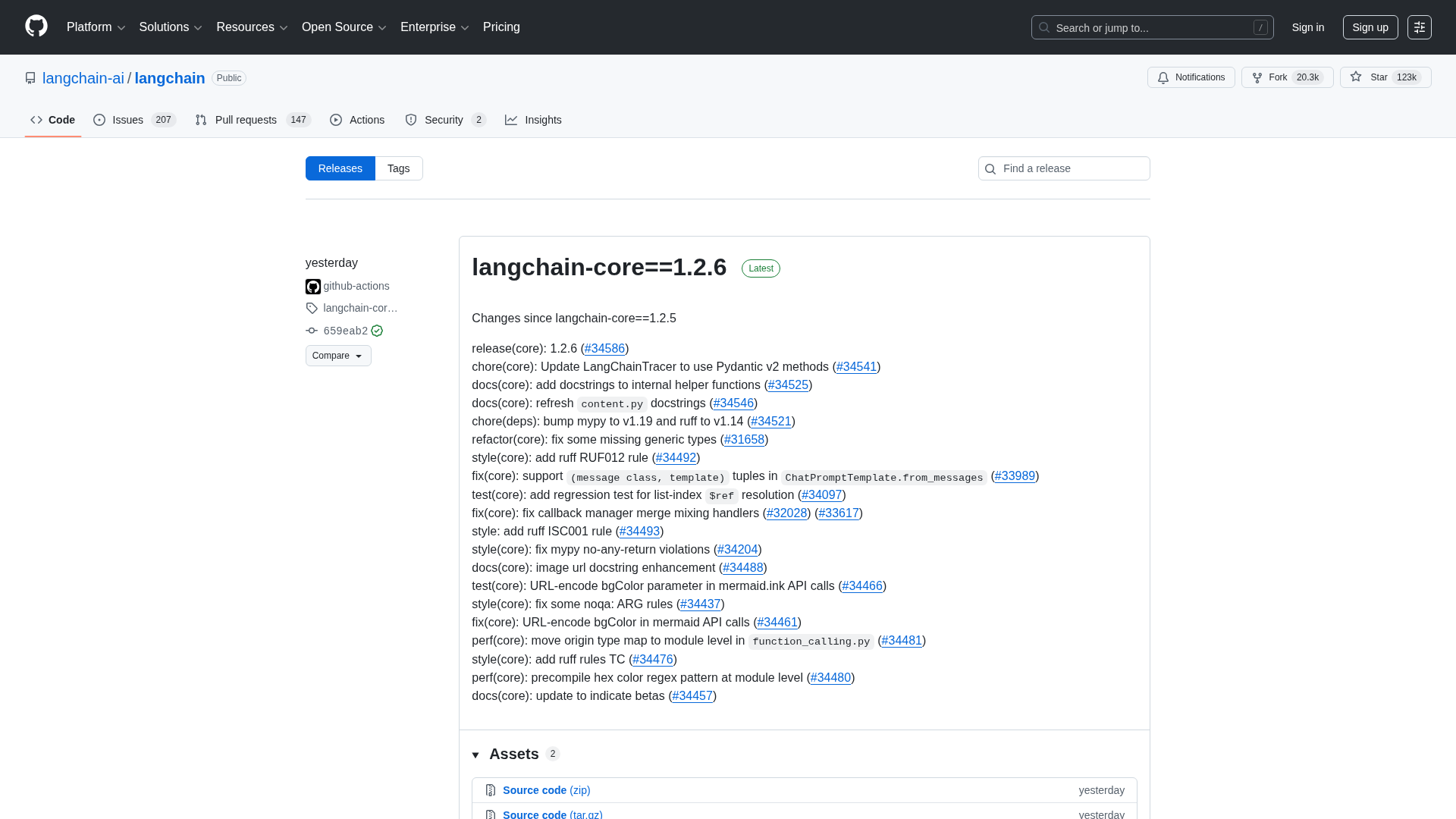
A comprehensive LangChain releases roundup detailing Core 1.2.6 and interconnected updates across XAI, OpenAI, Classic, and tests.
A reproducible bug where LangGraph with Gemini ignores tool results when a PDF is provided, even though the tool call succeeds.
A practical guide to debugging deep agents with LangSmith using tracing, Polly AI analysis, and the LangSmith Fetch CLI.