Topic Overview
In‑car chatbot and voice assistant SDKs enable developers to bring conversational AI into vehicles while meeting the safety, latency, and privacy constraints of driving environments. This topic covers agent frameworks, speech transcription and synthesis, customer service chatbots, and personal assistant integrations for CarPlay and similar in‑vehicle platforms. As of 2026, OEMs and platform vendors continue to open controlled extension points for third‑party assistants, driving demand for modular SDKs that support wake words, low-latency speech-to-text, natural-sounding text-to-speech, and seamless handoff between cloud and on‑device processing. Key tools illustrate common approaches: IBM watsonx Assistant provides enterprise-grade agent orchestration and no‑code/developer workflows for multi-agent automations; ZenCall.ai focuses on real‑time phone agents that combine STT, LLMs, and TTS to answer and route calls; Bocca emphasizes on‑device, offline transcription and prompt generation to reduce latency and preserve privacy; AI Phone offers real‑time translation and captioning across voice and video; Mistral AI supplies efficient foundation models and production tooling designed for privacy and governance; CRM Messaging ties conversational flows into multi‑channel customer records (WhatsApp, SMS, email, voice). Practical design considerations include driver distraction limits, regulatory compliance, microphone array and echo cancellation, telematics data use, and certification by platform/OEM stores. Architecturally, effective in‑car assistants combine local STT/TTS for responsiveness, selective cloud LLM inference for complex reasoning, and CRM/telephony integrations for transactional tasks. For automotive developers and product managers, the current landscape favors hybrid stacks that balance latency, safety, and data governance while leveraging enterprise orchestration and specialized real‑time voice services.
Tool Rankings – Top 6

Enterprise virtual agents and AI assistants built with watsonx LLMs for no-code and developer-driven automation.

AI-powered phone agents that answer, route, and manage calls in real time (speech-to-text + LLM + text-to-speech).

Enterprise-focused provider of open/efficient models and an AI production platform emphasizing privacy, governance, and
A push-to-talk tool that transforms your audio into text

Real-time AI translation for phone, video, and in-person conversations with OCR, captions, and second-number features.

Connect with customers on —WhatsApp, SMS, Email, Calls, Chat
Latest Articles (40)
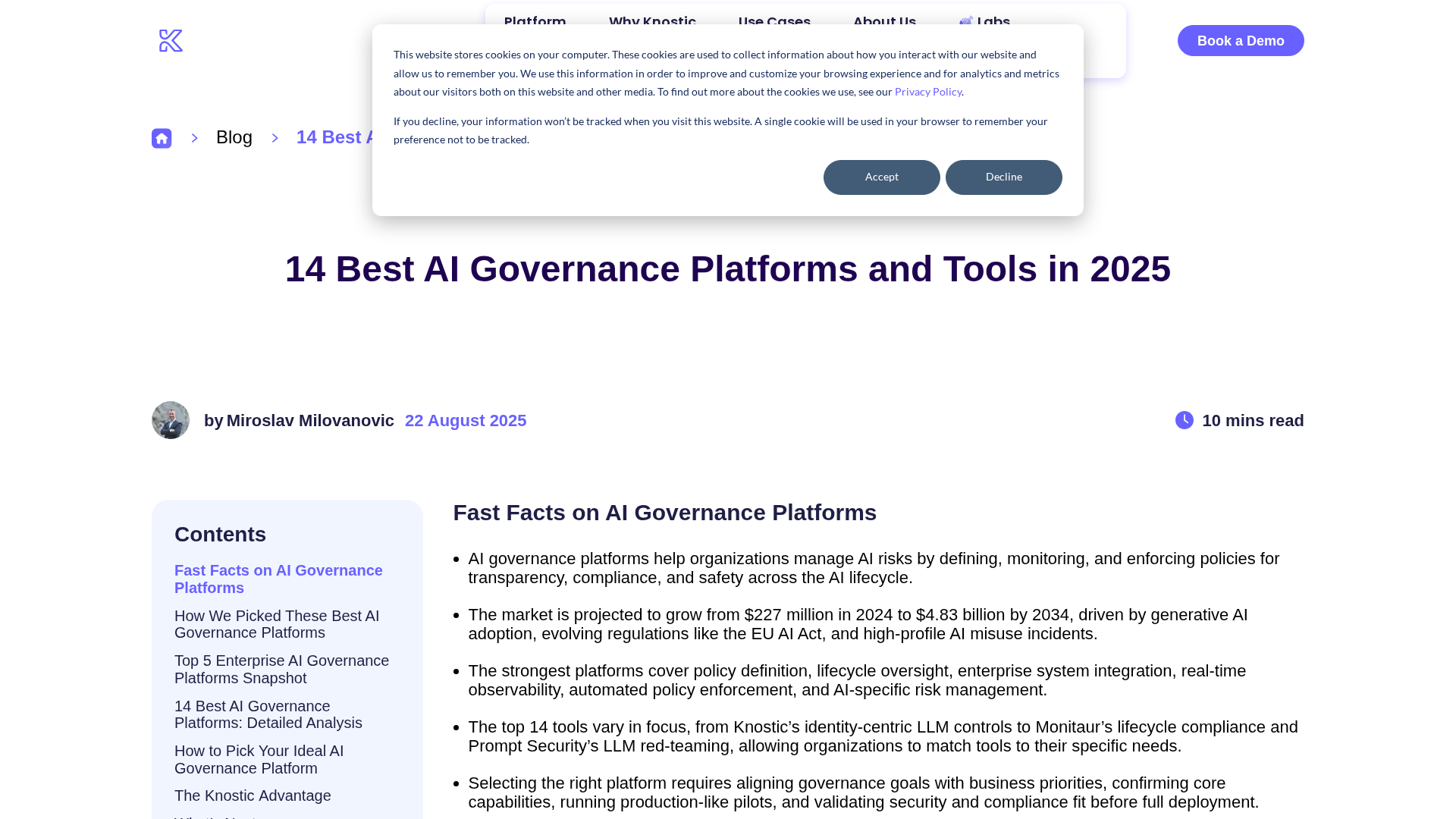
A vendor‑agnostic guide to the 14 best AI governance platforms in 2025, with criteria, comparisons, and practical buying guidance.
Bocca is an offline, on-device AI transcription and content tool that speeds prompts, transcripts, and multilingual tasks without internet access.
A cross-CRM messaging platform delivering SMS, RCS, WhatsApp, AI chat, and seamless integrations with leading CRMs.
A hub of CRM Messaging feature updates, detailing SMS, WhatsApp, AI chat, and cross-CRM integrations.
A multi-channel CRM Messaging platform now supports SMS, RCS, WhatsApp, and AI-driven cross‑CRM integrations.