Topic Overview
This topic covers the emerging class of multi‑AI agent platforms that let organizations compose, orchestrate and run coordinated agent workflows for supply‑chain and broader enterprise automation. Demand for resilient, observable automation—covering procurement, order routing, exception handling, forecasting and cross‑system workflows—has driven vendors and open projects to combine agent frameworks, enterprise automation suites and marketplaces into integrated stacks. Key categories include agent frameworks for engineers (LangChain’s engineering libraries and LangGraph state management), enterprise automation platforms and assistants (IBM watsonx Assistant for no‑code and developer‑driven multi‑agent orchestration; Microsoft 365 Copilot for embedded productivity and data access), agent marketplaces and deployment platforms (Agentverse’s cloud marketplace and AgentGPT’s browser templates), plus developer‑centric IDE/agent platforms (Windsurf, formerly Codeium) and developer assistants (GitHub Copilot). Each piece addresses different needs: frameworks provide programmability, IDEs and Copilots accelerate developer workflows, enterprise assistants embed agents into business apps, and marketplaces simplify reuse and scaling. As of 2026‑01‑09, the practical focus is on integration, observability, safety and multi‑model support: enterprises care less about single‑agent demos and more about orchestrating stateful agents across ERP, planning and execution systems with clear audit trails and human‑in‑the‑loop controls. Choosing between solutions depends on whether teams need low‑code deployment, engineering flexibility, cataloged agents for rapid roll‑out, or tight application integrations. In practice many organizations combine frameworks (for custom logic), enterprise assistants (for governance and integration) and marketplaces (for reusable agent workflows) to operationalize supply‑chain automation at scale.
Tool Rankings – Top 6

Engineering platform and open-source frameworks to build, test, and deploy reliable AI agents.

Enterprise virtual agents and AI assistants built with watsonx LLMs for no-code and developer-driven automation.
AI assistant integrated across Microsoft 365 apps to boost productivity, creativity, and data insights.
Cloud platform and marketplace for building, deploying, listing and monitoring autonomous AI agents.

An AI pair programmer that gives code completions, chat help, and autonomous agent workflows across editors, theterminal

AI-native IDE and agentic coding platform (Windsurf Editor) with Cascade agents, live previews, and multi-model support.
Latest Articles (73)
A vendor‑agnostic guide to the 14 best AI governance platforms in 2025, with criteria, comparisons, and practical buying guidance.
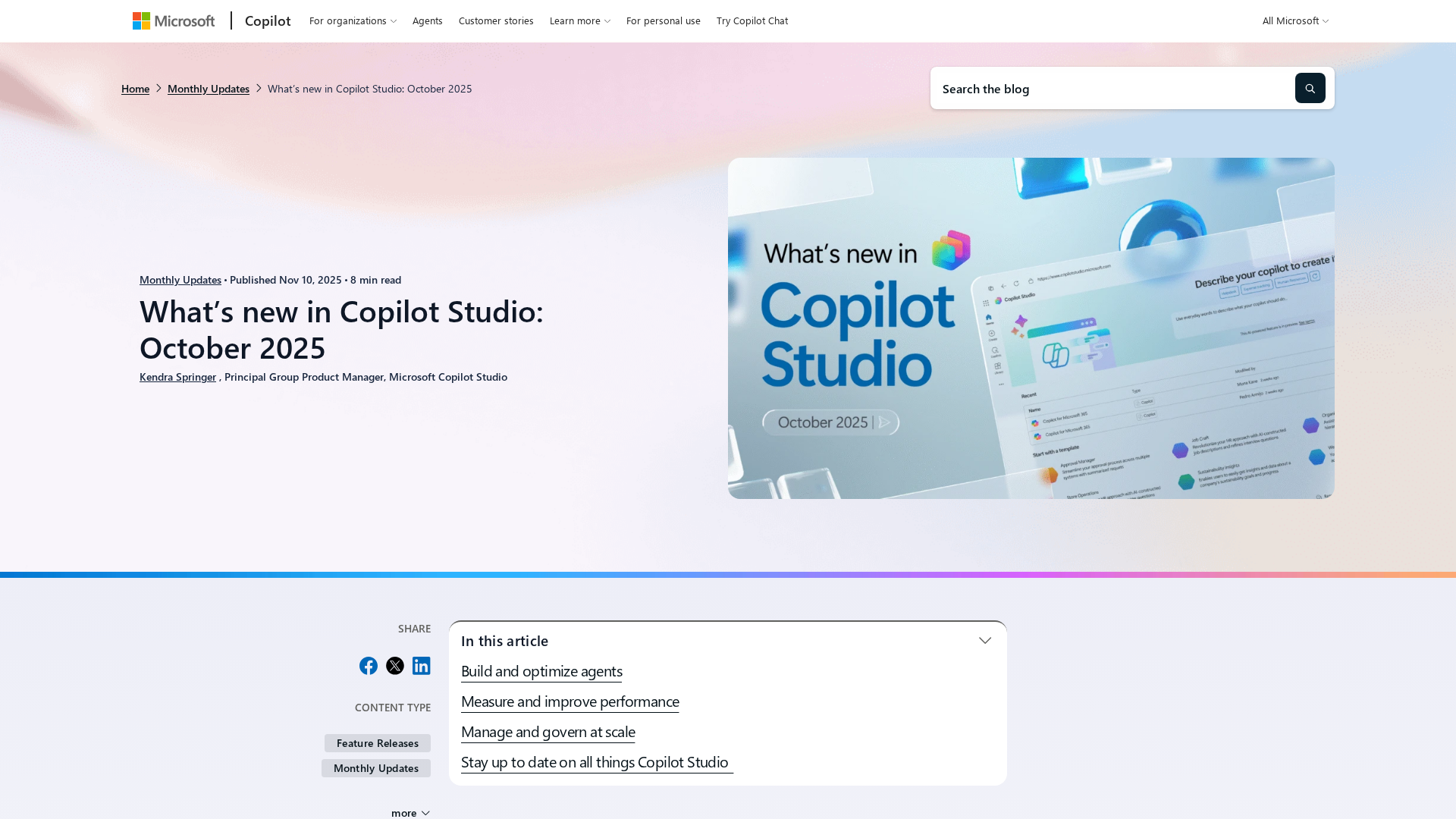
A comprehensive October 2025 roundup of Copilot Studio’s new testing, model, and governance features.
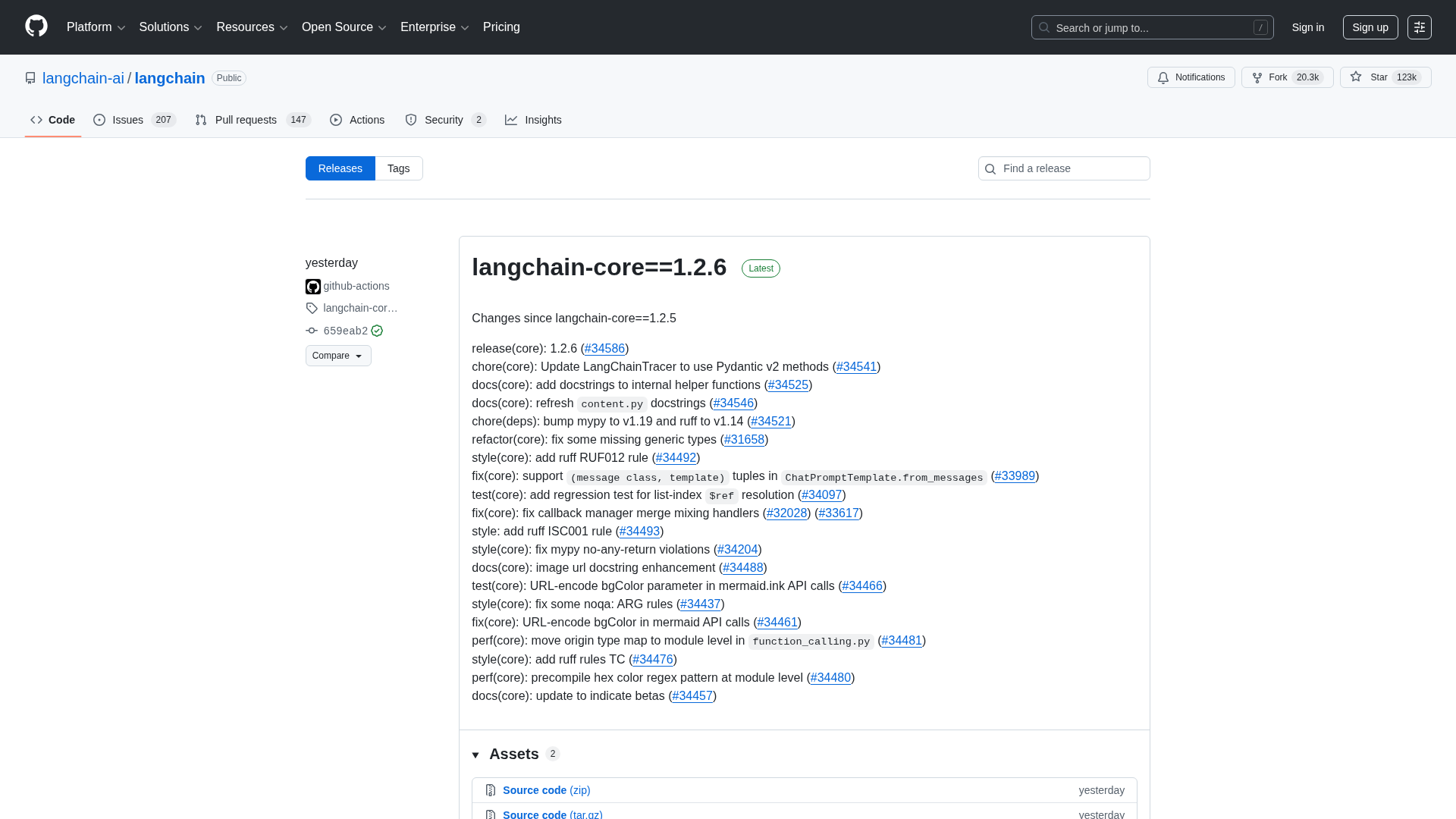
A comprehensive LangChain releases roundup detailing Core 1.2.6 and interconnected updates across XAI, OpenAI, Classic, and tests.

Cannot access the article content due to an access-denied error, preventing summarization.
Adobe nears a $19 billion deal to acquire Semrush, expanding its marketing software capabilities, according to WSJ reports.