Topic Overview
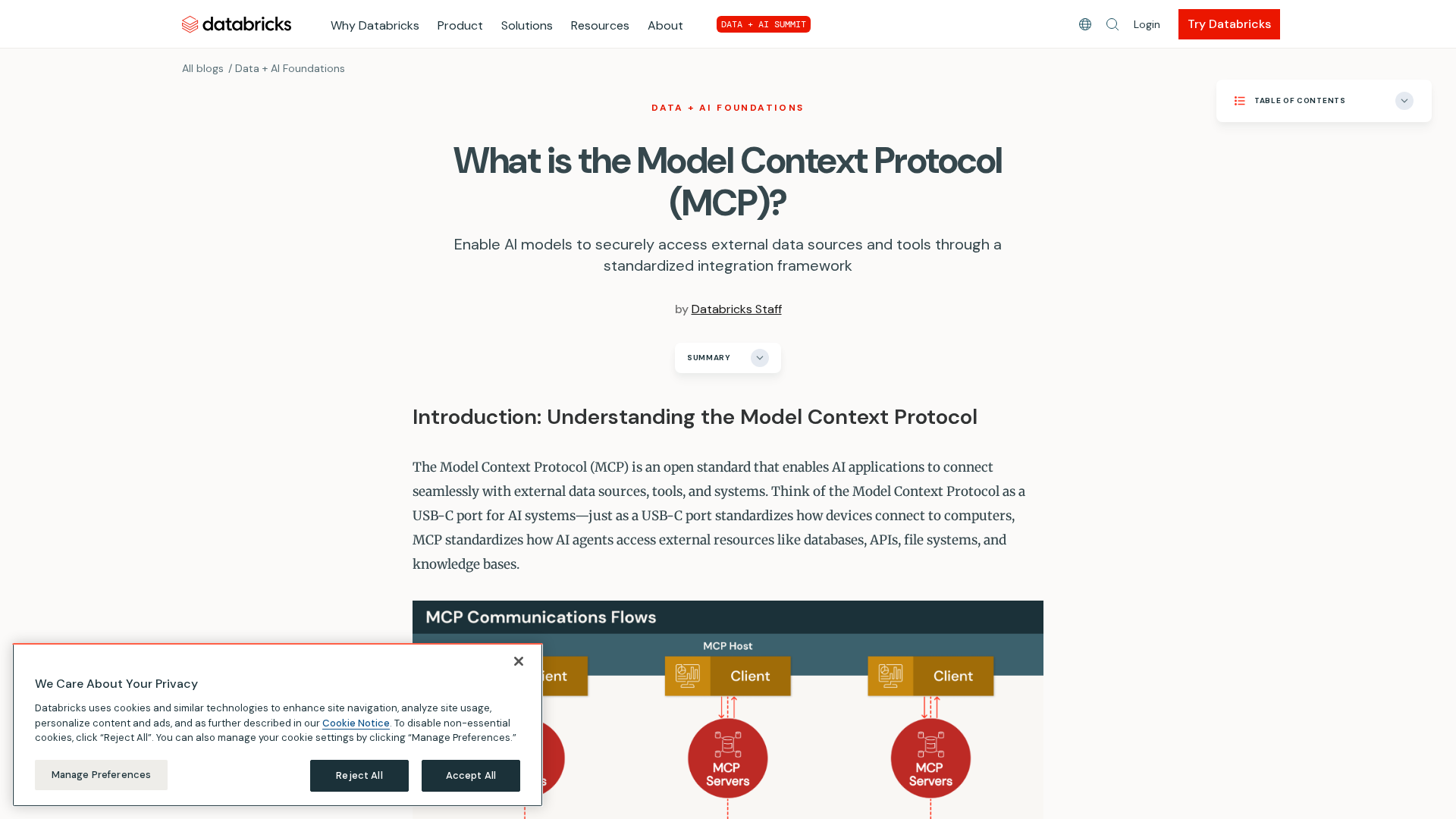
Model Coordination & Integration Protocol (MCP)–style frameworks define a lightweight, standardized way for language models and agents to discover, call, and coordinate external tools and data sources. This topic covers MCP servers, deployment patterns, and connector categories that make tool integrations reliable, auditable, and composable across pipelines, cloud platforms, databases, and knowledge bases. By 2026 MCP-style APIs have become a practical middleware layer: orchestration tools like Dagster expose MCP endpoints to build reproducible data pipelines; GitHub’s official MCP Server and GitMCP connect agents directly to repository contents, issues, and docs; and Arize Phoenix’s MCP implementation provides unified access to tracing, evaluation, and experiment data for model observability. Secure runtime patterns are emerging too—pydantic’s mcp-run-python (using Deno/Pyodide) illustrates sandboxed code execution over MCP with Agent2Agent (A2A) interoperability. Browser MCP and agent kernels such as Agent TARS demonstrate how MCP servers can be mounted to enable multimodal agents to operate across terminals, desktops, and web contexts. Key deployment and integration categories include MCP Deployment Tools (servers and hosting patterns), Tool Integrations (code hosts, CI, observability), Data Pipeline Orchestration (Dagster-style pipelines surfaced via MCP), Cloud Platform Integrations, Database Connectors, and Knowledge Base Connectors for up-to-date context retrieval. The result is a modular stack where agents use a common protocol to access sandboxes, Git data, telemetry, and docs while preserving security, reproducibility, and observability. Practical adoption focuses on connector hygiene, access controls, and standardized schemas to reduce brittle one-off integrations and enable agent interoperability across teams and environments.
MCP Server Rankings – Top 6

An MCP server to easily build data pipelines using Dagster.

GitHub's official MCP Server.

Run Python code in a secure sandbox via MCP tool calls, powered by Deno and Pyodide

MCP server implementation for Arize Phoenix providing unified interface to Phoenix's capabilities

gitmcp.io is a generic remote MCP server to connect to ANY GitHub repository or project documentation effortlessly

MCP-enabled multimodal AI agent kernel that mounts MCP servers to connect to real-world tools.