
Topic Overview
This topic examines the class of multimodal, reasoning‑optimized foundation models—represented here by Nano Banana 2, Mercury 2 and FDM‑1—and how enterprises choose, integrate, test and govern them as of 2026‑02‑27. These models combine text, image and other modality inputs with architectures and training techniques intended to improve systematic reasoning, tool use and retrieval‑augmented workflows. Evaluation must go beyond raw accuracy to include latency, cost, fine‑tuning/adapter support, embedding quality for search, hallucination rates, observability and compliance controls. Practical adoption spans several tool categories. Cloud and infrastructure platforms (Vertex AI, Together AI) provide managed training, fine‑tuning, deployment and serverless inference for large and specialized models. Developer frameworks and agent platforms (LangChain, AutoGPT, Xilos) enable building, testing and orchestrating agentic workflows that combine model reasoning with external tools and data. Enterprise LLM providers (Cohere) and productivity integrations (Microsoft 365 Copilot) supply private models, embeddings and retrieval layers that tie models into business apps. Search and answer services (Perplexity AI) demonstrate web‑grounded, citation‑aware responses that enterprises often emulate via retrieval‑augmented generation. Key trends shaping comparisons in 2026 include modular model stacks (separable reasoning and retrieval components), tighter MLOps for GenAI test automation, increased emphasis on AI security governance (observability, provenance, policy enforcement), and inference acceleration to manage cost/performance tradeoffs. A practical comparative evaluation therefore covers model capabilities, integration points with data and agent infrastructure, testing tooling for adversarial and safety scenarios, and enterprise search/retrieval performance—so organizations can align technical choices with security, compliance and business workflow requirements.
Tool Rankings – Top 6

Unified, fully-managed Google Cloud platform for building, training, deploying, and monitoring ML and GenAI models.

A full-stack AI acceleration cloud for fast inference, fine-tuning, and scalable GPU training.

An open-source framework and platform to build, observe, and deploy reliable AI agents.

Enterprise-focused LLM platform offering private, customizable models, embeddings, retrieval, and search.
AI assistant integrated across Microsoft 365 apps to boost productivity, creativity, and data insights.
Intelligent Agentic AI Infrastructure
Latest Articles (79)
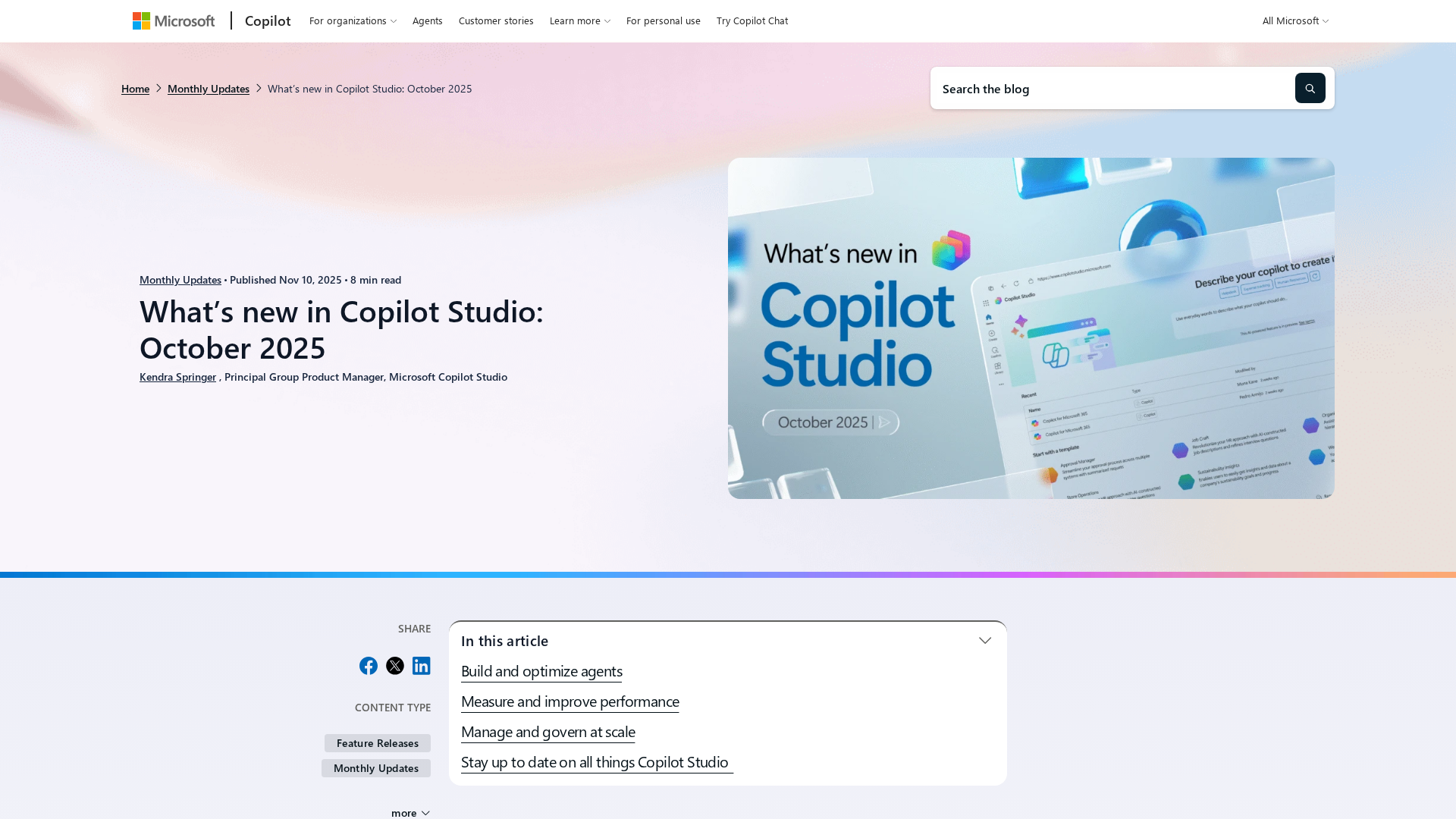
A comprehensive October 2025 roundup of Copilot Studio’s new testing, model, and governance features.
OpenAI’s bypass moment underscores the need for governance that survives inevitable user bypass and hardens system controls.
A call to enable safe AI use at work via sanctioned access, real-time data protections, and frictionless governance.

Baseten launches an AI training platform to compete with hyperscalers, promising simpler, more transparent ML workflows.
A real-world look at AI in SOCs, debunking myths and highlighting the human role behind automation with Bell Cyber experts.