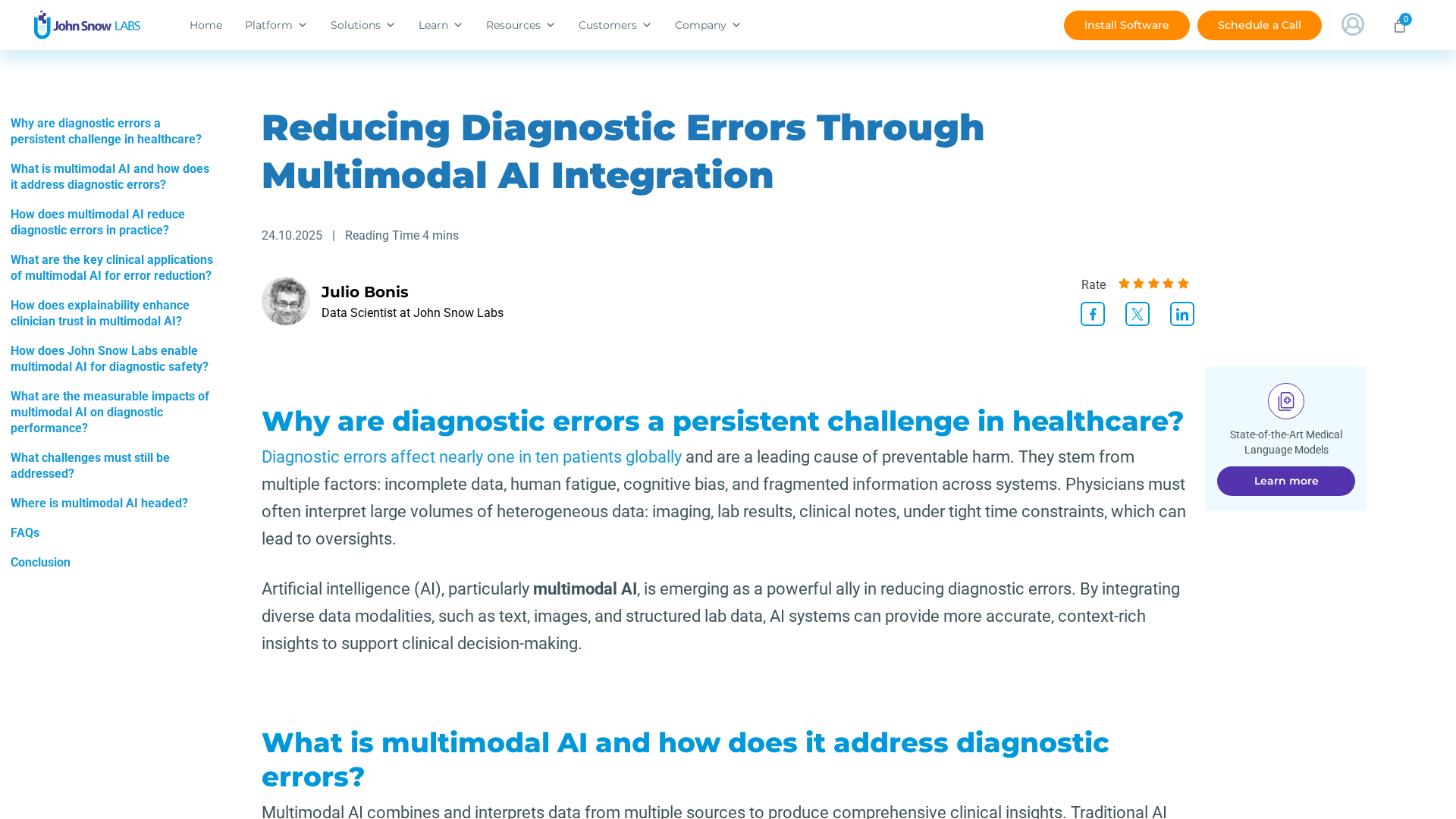
Topic Overview
Multimodal clinical AI assistants—often framed as “co‑clinician” platforms—are systems that combine language, imaging, waveform and structured data to support diagnosis, documentation, triage and knowledge retrieval while preserving human oversight. As of 2026, advances in multimodal models and agent orchestration have made practical deployments possible, shifting focus from proof‑of‑concept to operational safety, auditability and regulatory compliance. These platforms intersect clinical documentation, AI governance, regulatory compliance, knowledge management and AI data platforms: they must capture provenance, generate cited recommendations, and integrate with EHRs and clinical workflows. Key vendor capabilities reflect the stack needed for safe co‑clinician deployments. Google Gemini provides multimodal LLMs and APIs for model‑driven interpretation of images and text. IBM watsonx Assistant targets enterprise virtual agents and multi‑agent orchestrations for no‑code and developer workflows, useful for building clinician‑facing assistants and scripted handoffs. Together AI offers infrastructure for fine‑tuning and scalable inference of open and specialized models on clinical data. Lindy enables no‑/low‑code agent creation and governance for domain‑specific autonomous tasks. Xilos focuses on visibility and control of agentic activity across services, supporting auditing and operational safety. Perplexity AI supplies real‑time, source‑grounded answers that can improve traceability of external evidence. Trends to watch include hybrid human‑AI decision loops, stronger requirements for explainability and provenance, model lifecycle management on secure AI data platforms, and integrated governance tooling to meet evolving regulatory expectations. Successful deployments prioritize validated clinical performance, clear escalation paths, and built‑in compliance and monitoring rather than standalone predictive accuracy.
Tool Rankings – Top 6

Enterprise virtual agents and AI assistants built with watsonx LLMs for no-code and developer-driven automation.

Google’s multimodal family of generative AI models and APIs for developers and enterprises.

A full-stack AI acceleration cloud for fast inference, fine-tuning, and scalable GPU training.

No-code/low-code AI agent platform to build, deploy, and govern autonomous AI agents.
Intelligent Agentic AI Infrastructure
AI-powered answer engine delivering real-time, sourced answers and developer APIs.
Latest Articles (75)
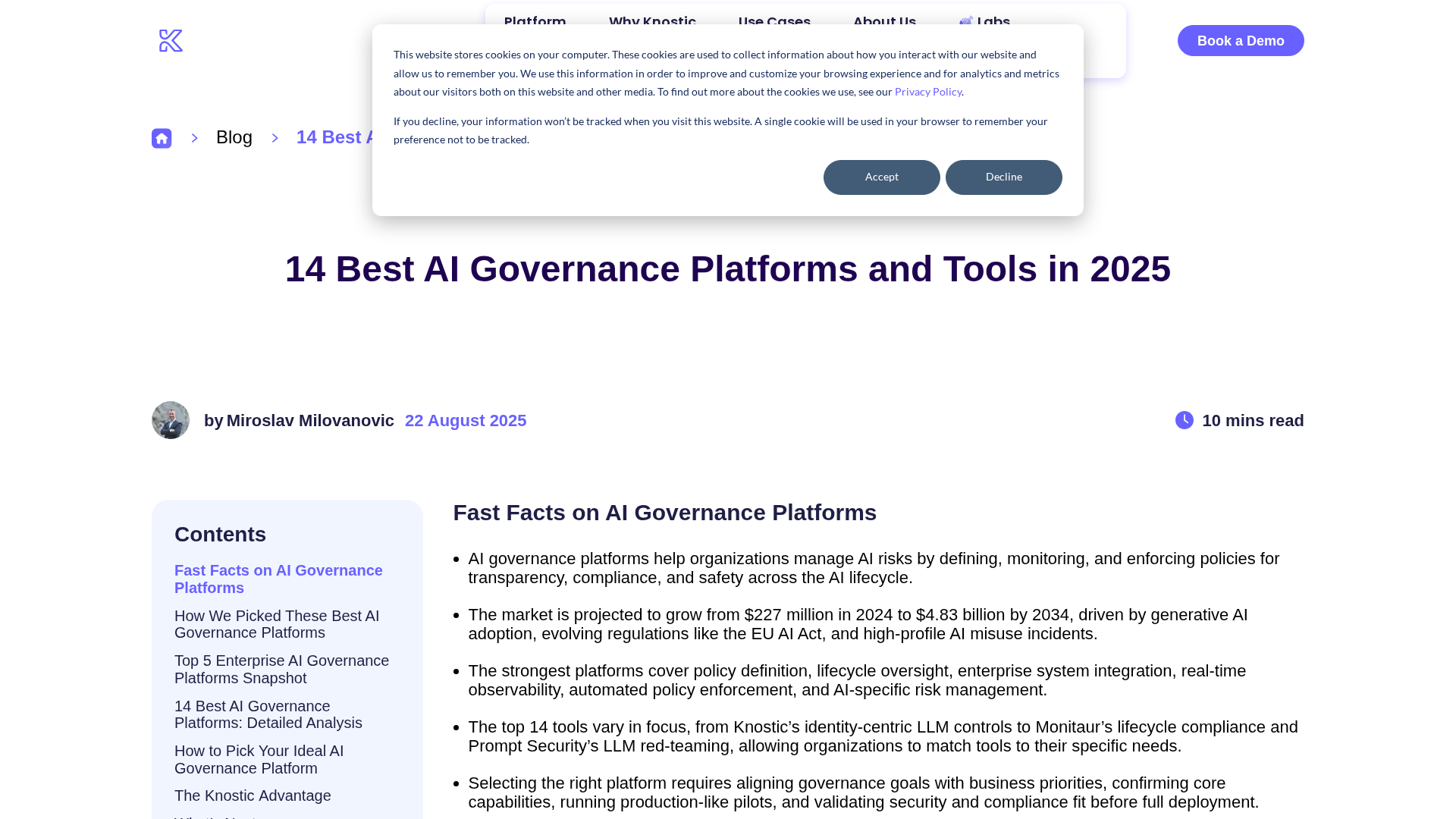
A vendor‑agnostic guide to the 14 best AI governance platforms in 2025, with criteria, comparisons, and practical buying guidance.
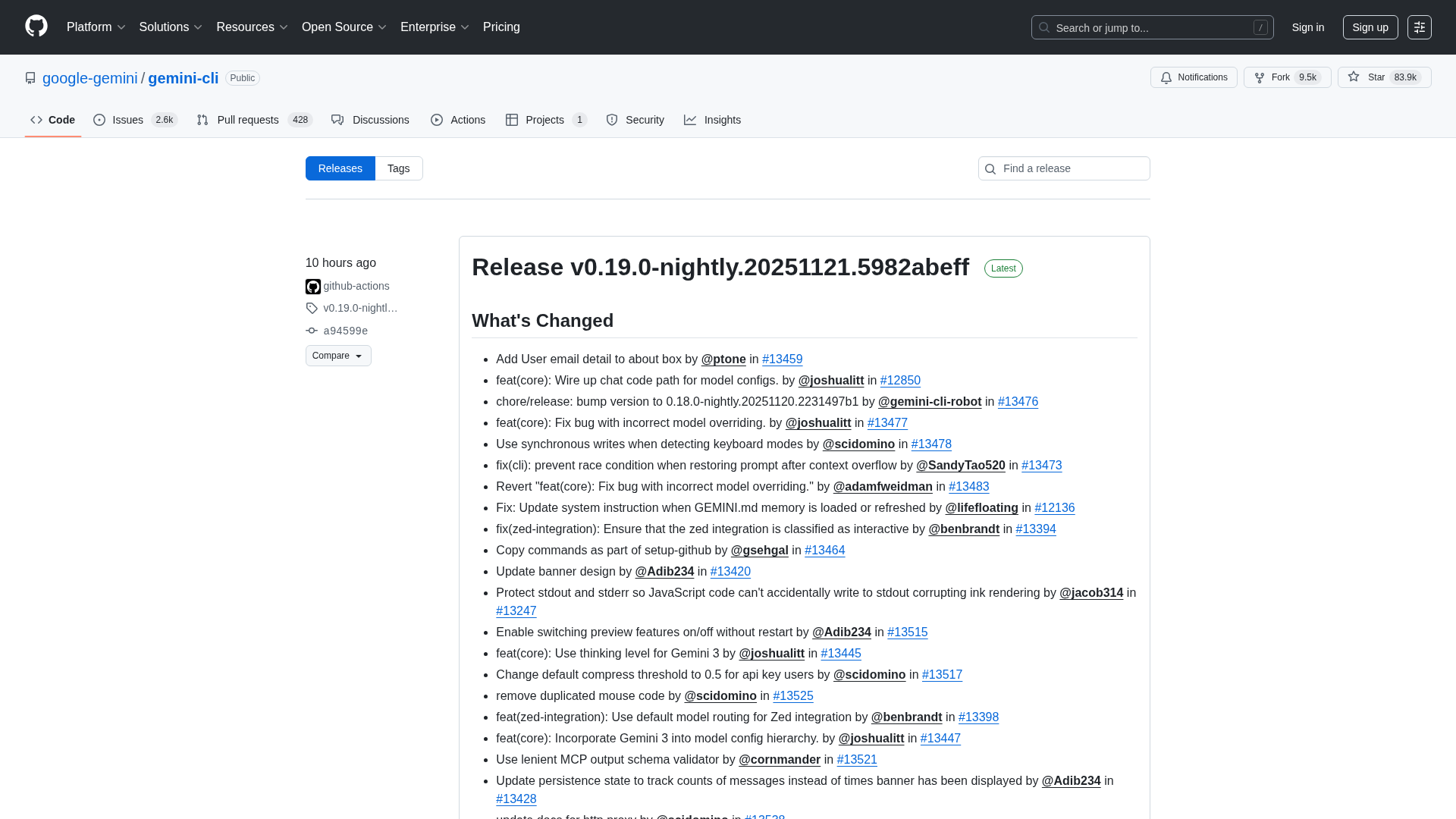
Overview of the Gemini CLI v0.36.0-preview release series, highlighting architectural, CLI, and UI changelogs across multiple pre-release versions.
OpenAI’s bypass moment underscores the need for governance that survives inevitable user bypass and hardens system controls.
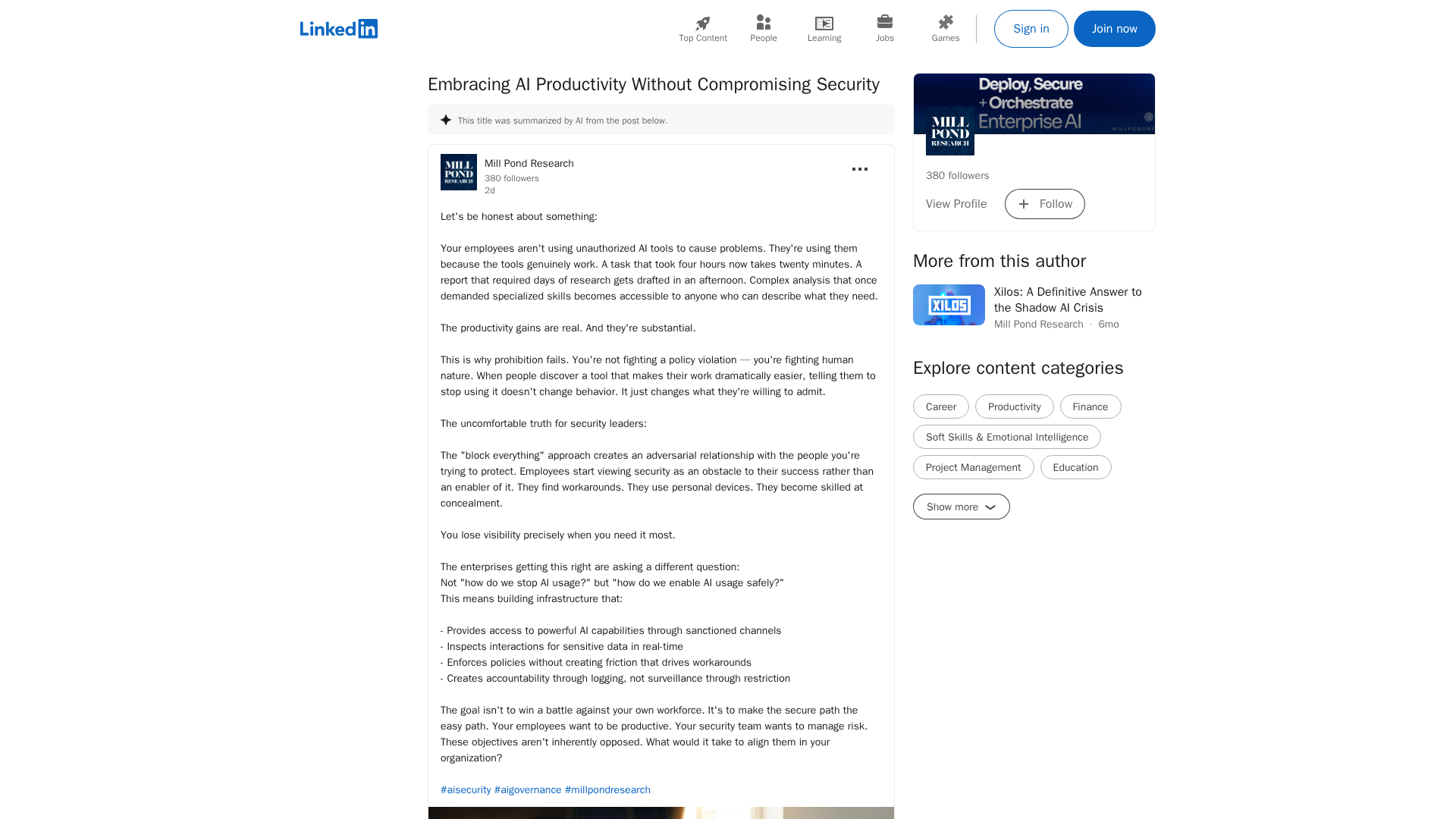
A call to enable safe AI use at work via sanctioned access, real-time data protections, and frictionless governance.

Baseten launches an AI training platform to compete with hyperscalers, promising simpler, more transparent ML workflows.