Topic Overview
This topic surveys the landscape of vision‑language and multimodal models as they are applied to coding and multimodal AI workflows in 2026. It covers how modern generative models are embedded in developer tooling (AI code assistants and code‑generation services), deployed for low‑latency vision tasks at the edge, and used for image and multimodal content creation. Relevance: multimodal capabilities are now a core requirement for developer workflows—from converting screenshots or UI images into working code to contextual code completions informed by diagrams and documentation. At the same time, operational constraints (latency, cost, privacy) have accelerated demand for edge AI vision platforms and efficient inference stacks. Key tools and roles: Google Gemini provides a family of multimodal generative models and APIs via Google AI Studio and Vertex AI for building multimodal apps; Together AI offers an acceleration cloud for training, fine‑tuning, and serverless inference of open and specialized models; Pollinations.AI supplies an accessible open‑source API for image, text, and audio generation; MindStudio enables no‑/low‑code design, testing, and deployment of AI agents with enterprise controls. In developer workflows, Replit, GitHub Copilot, and JetBrains AI Assistant integrate code generation, chat, and agent workflows directly into IDEs and hosting platforms, while LangChain is commonly used to orchestrate multimodal and LLM‑based agents and pipelines. Trends: the field emphasizes modular stacks (model + acceleration + orchestration), reproducible fine‑tuning, privacy‑conscious edge deployments, and tooling that bridges visual inputs and executable code. Comparing tools by model capability, deployment options, latency, and integration surfaces remains essential for selecting the right solution for production multimodal developer workflows.
Tool Rankings – Top 6
Google’s multimodal family of generative AI models and APIs for developers and enterprises.

A full-stack AI acceleration cloud for fast inference, fine-tuning, and scalable GPU training.

Free, open-source generative AI API for images, text, and audio.

No-code/low-code visual platform to design, test, deploy, and operate AI agents rapidly, with enterprise controls and a

AI-powered online IDE and platform to build, host, and ship apps quickly.

An AI pair programmer that gives code completions, chat help, and autonomous agent workflows across editors, theterminal
Latest Articles (62)
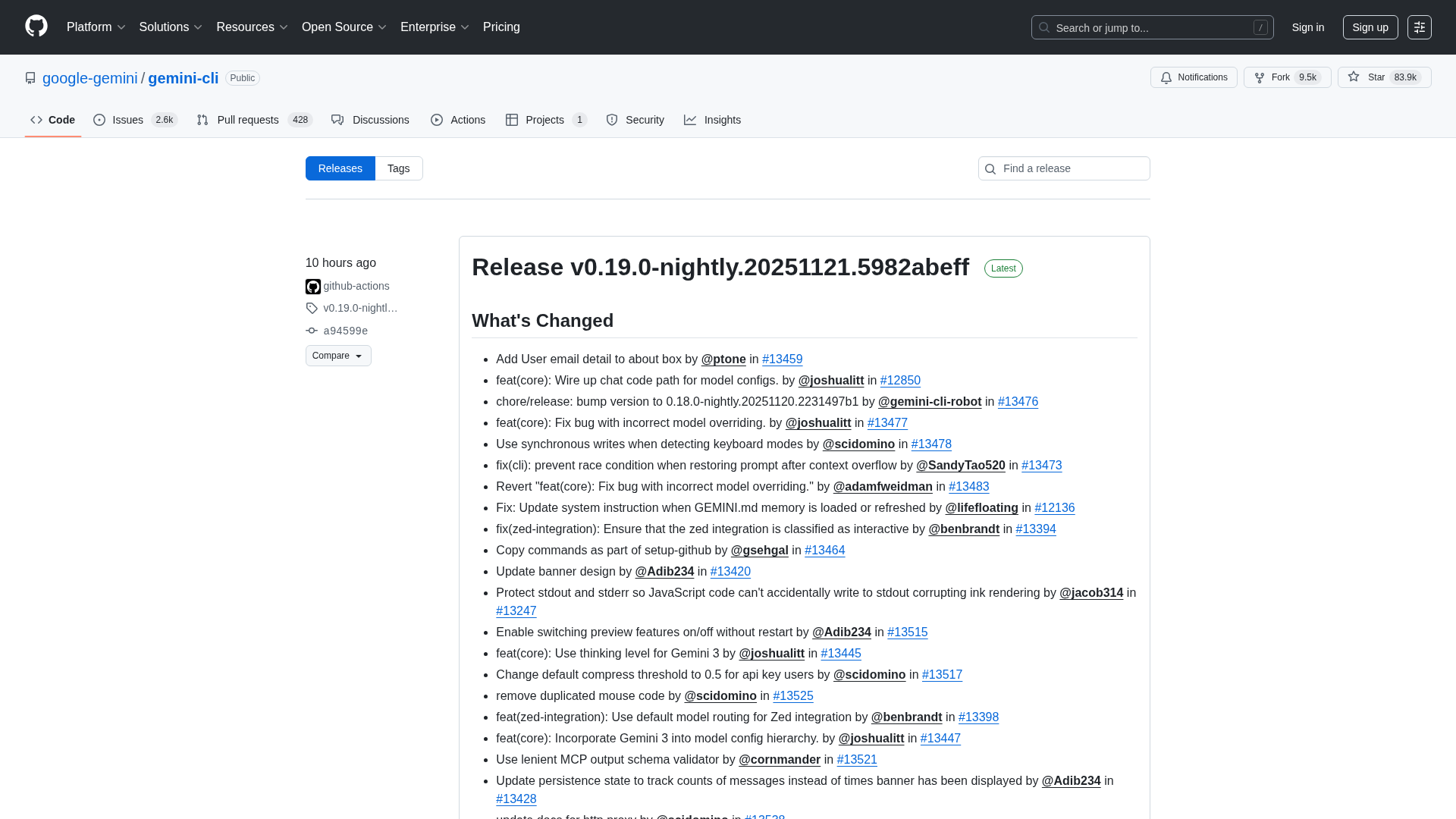
Overview of the Gemini CLI v0.36.0-preview release series, highlighting architectural, CLI, and UI changelogs across multiple pre-release versions.

Baseten launches an AI training platform to compete with hyperscalers, promising simpler, more transparent ML workflows.
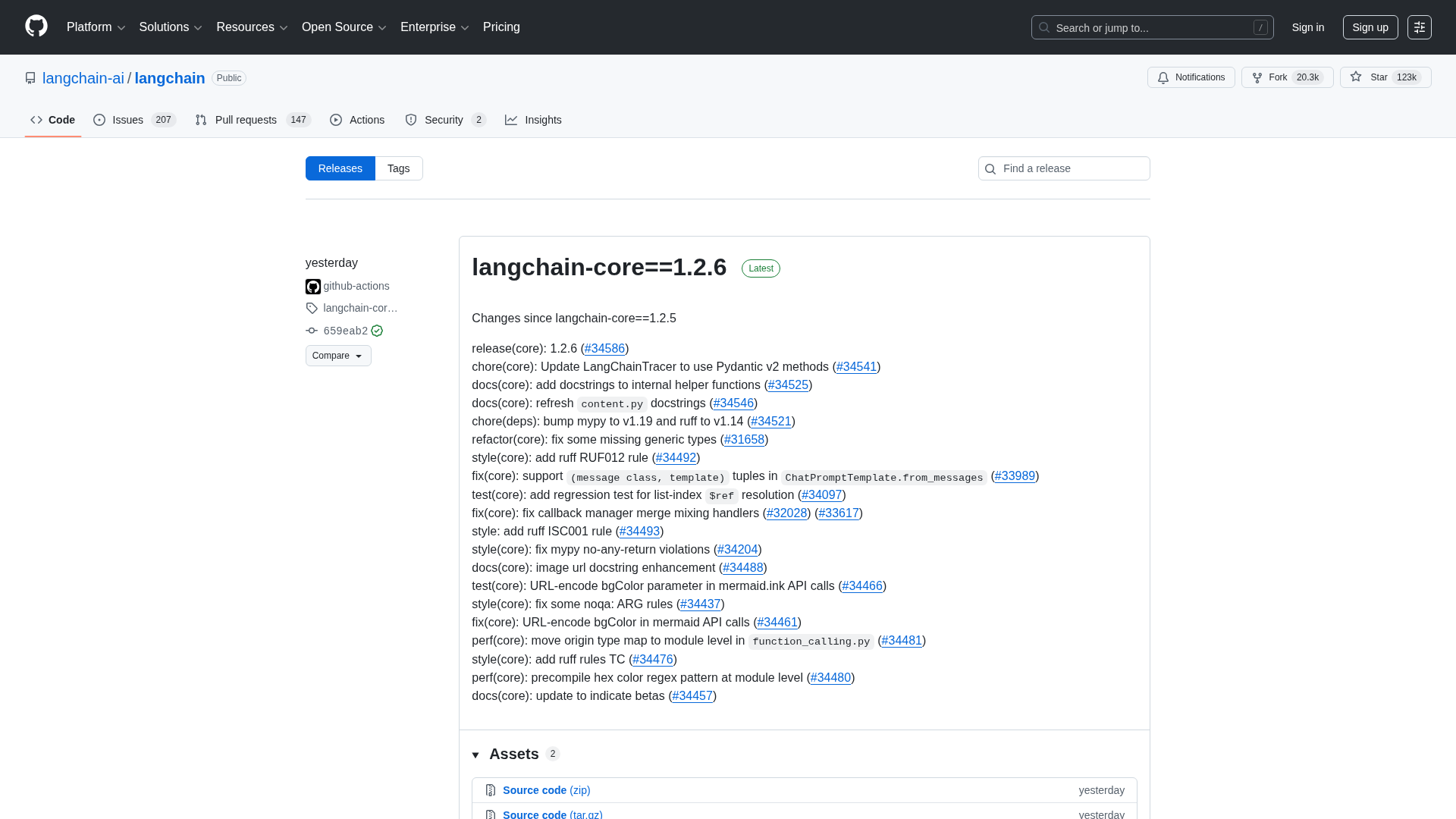
A comprehensive LangChain releases roundup detailing Core 1.2.6 and interconnected updates across XAI, OpenAI, Classic, and tests.
A reproducible bug where LangGraph with Gemini ignores tool results when a PDF is provided, even though the tool call succeeds.
A practical guide to debugging deep agents with LangSmith using tracing, Polly AI analysis, and the LangSmith Fetch CLI.