Topic Overview
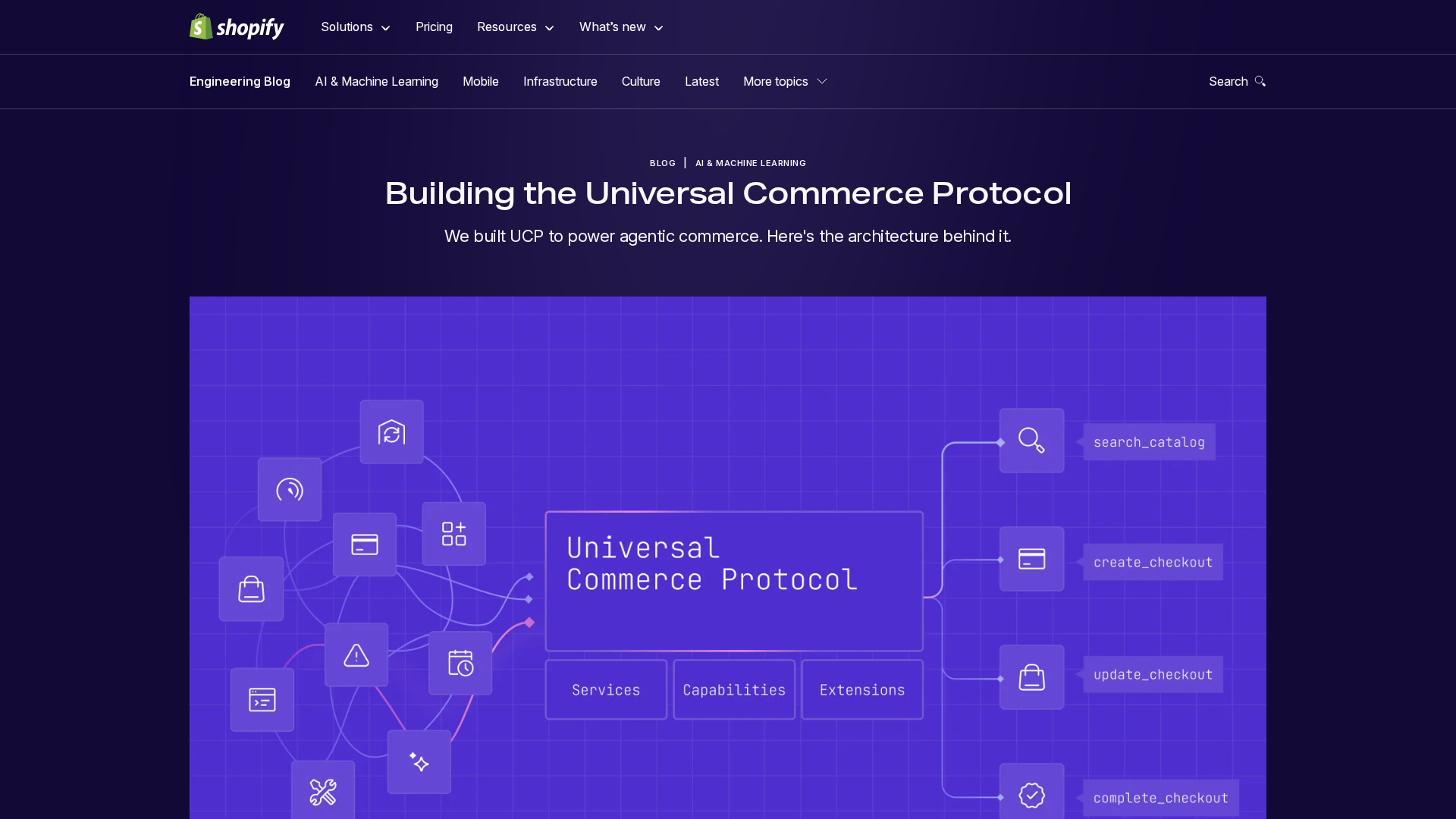
This topic covers protocols, connector patterns, and orchestration stacks that let AI models and agents interact reliably with retail systems—inventory, checkout, personalization, pricing, and analytics. Universal Commerce Protocol (UCP) is an emerging design goal: a consistent API/semantic layer for commerce actions and events so LLM-based assistants and services can perform transactions, query state, and trigger workflows without bespoke integrations. Alternatives and complementary approaches include the Model Context Protocol (MCP), event-driven integration platforms, gateway APIs, and custom connector fleets. Relevance (as of 2026-01-13): adoption of agentic LLMs in customer support, dynamic pricing, and automated merchandising has accelerated demand for standardized, auditable interfaces. Retail systems require transactional guarantees, permissioned data access, and low-latency sync—pressing needs that drive protocol consolidation and richer connector tooling. Key components and tool roles: Pipedream provides a hosted event-driven integration layer and rapid access to thousands of APIs for wiring commerce services; Supabase’s MCP server lets LLMs call into databases and edge functions for safe, auditable data access; Dagster offers pipeline orchestration and MCP hosting to formalize data flows and retries; Firecrawl supplies large-scale web extraction for price and catalog discovery; Playwright-based MCP servers expose browser automation for sites lacking APIs. Together these tools map to the listed categories: Tool Integrations, Cloud Platform Integrations, Database Connectors, and Data Pipeline Orchestration. Practical considerations: choose protocols that support authentication scopes, idempotent operations, observability, and sandboxing. Mix UCP-style schema standardization where possible with robust MCP/connectors and orchestration for real-world heterogeneity across retail systems.
MCP Server Rankings – Top 5

Connect with 2,500 APIs with 8,000+ prebuilt tools.

Interact with Supabase: Create tables, query data, deploy edge functions, and more.

An MCP server to easily build data pipelines using Dagster.

Extract web data with Firecrawl

This MCP Server will help you run browser automation and webscraping using Playwright