
Overview
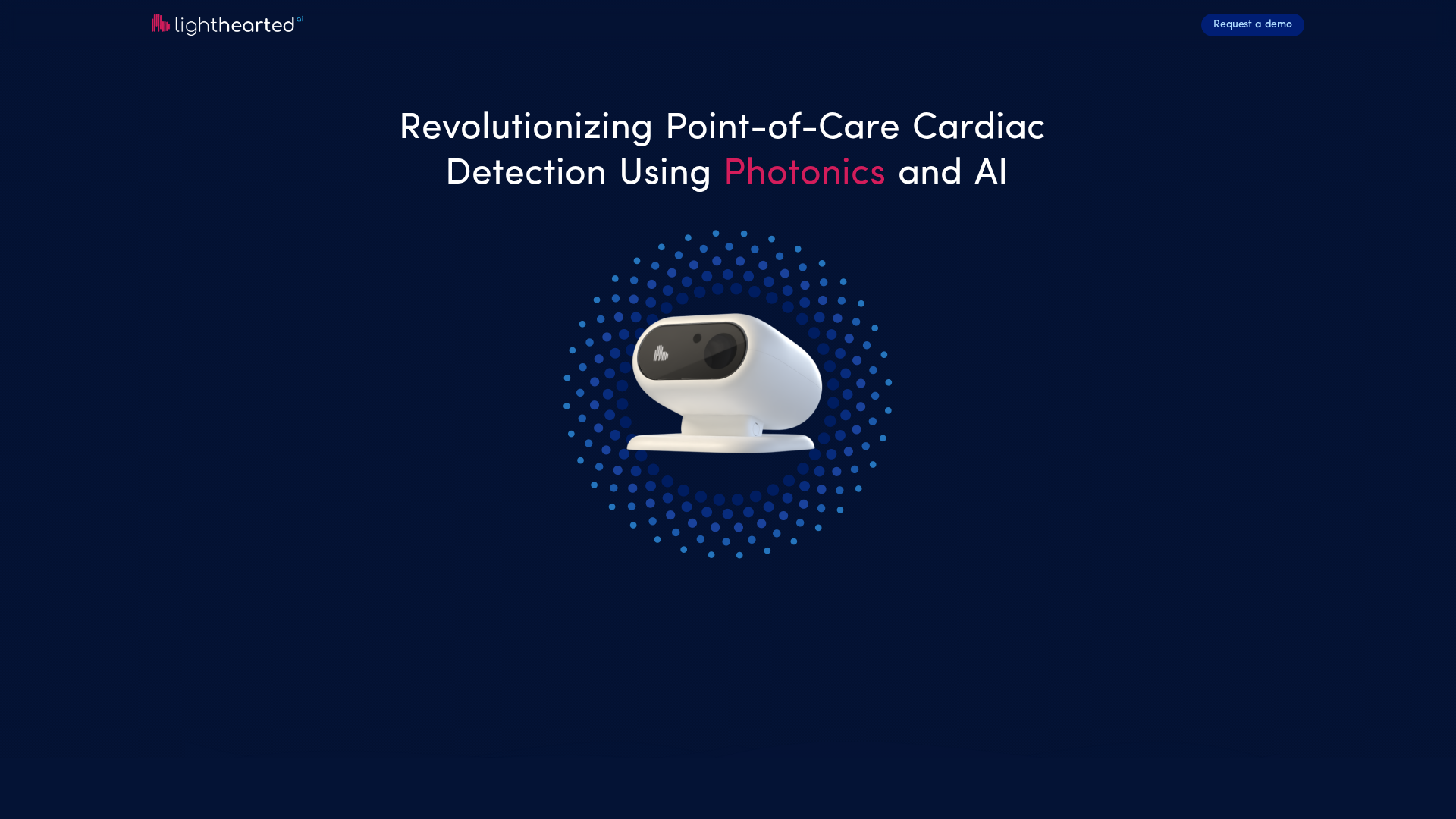
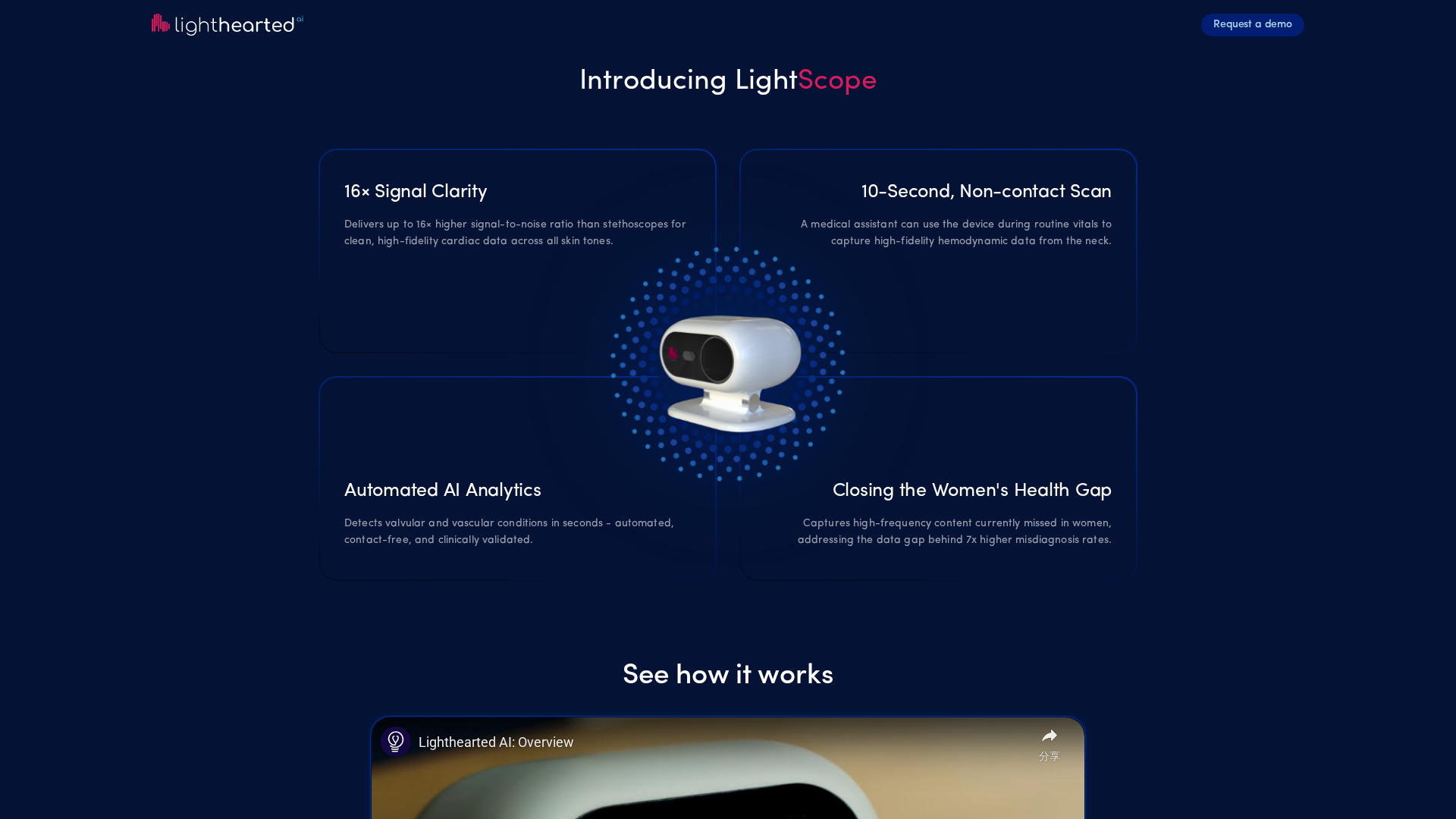
LightHearted AI develops photonics-enabled sensing combined with artificial intelligence to accelerate timely cardiac care. The company describes a technology stack of ultra-fast optical sensors (wearable or portable), edge and cloud analytics, and AI models that analyze optical biomarkers (e.g., blood oxygenation, perfusion, pulse) to detect ischemia, arrhythmias, and other cardiac events in real time. The platform aims to enable pre-hospital and in-hospital triage, continuous remote monitoring, and integration with clinical workflows to shorten decision-to-treatment times. The site emphasizes challenges such as validation, interoperability, privacy, and equitable deployment. (Not found: explicit product packaging, SDK/APIs, or platform-specific technical details.)
Key Features
Photonics-based sensing
Uses optical sensors and photonics techniques (near-infrared spectroscopy, diffuse optical tomography, PPG) to capture high-frequency cardiac-related signals non-invasively.
AI-driven analytics
Machine learning models analyze optical and multimodal signals to detect ischemia, arrhythmias, and early indicators of cardiac distress.
Real-time triage and alerts
System designed to provide rapid, actionable risk scores and alerts for pre-hospital and in-hospital decision support.
Edge and cloud deployment
Supports on-device (edge) processing for low-latency triage and cloud analytics for longitudinal tracking and population health insights.
Wearable and portable device focus
Emphasis on ambulatory and pre-hospital wearables or portable sensors for continuous monitoring beyond hospital walls.
Interoperability and workflow integration
Marketing mentions integration with EHRs and clinical workflows to transmit alerts to EMS and hospital teams.

Who Can Use This Tool?
- Clinicians:Use real-time photonics and AI analytics to triage cardiac patients faster
- Hospitals & EMS:Deploy portable monitoring to reduce door-to-treatment times and improve triage
- Device Manufacturers:Integrate photonics sensing modules and analytics into medical devices
- Researchers:Study optical biomarkers and validate AI models for cardiac detection
Pricing Plans
Pricing information is not available yet.
Pros & Cons
✓ Pros
- ✓Clear clinical focus: aims to reduce time-to-treatment for cardiac events.
- ✓Novel combination of photonics sensors and AI analytics for non-invasive monitoring.
- ✓Emphasis on real-time edge/cloud analytics and pre-hospital workflows (ambulance, remote clinics).
- ✓Discusses practical considerations: interoperability, regulatory validation, privacy.
✗ Cons
- ✗No public pricing or clear commercial plans available on the website.
- ✗Limited technical and product detail visible (no developer docs, APIs, or SDKs found).
- ✗No launch year, clinical validation data, or regulatory status explicitly shown.
- ✗No clear platform availability or supported integrations listed.
Compare with Alternatives
| Feature | LightHearted AI | Hippocratic AI | EnCharge AI |
|---|---|---|---|
| Pricing | N/A | N/A | N/A |
| Rating | 8.1/10 | 8.3/10 | 8.1/10 |
| Sensing Modality | Photonics-based sensing | No sensing modality | No sensing modality |
| Clinical Validation | Yes | Yes | No |
| Edge Inference Efficiency | Edge-optimized inference | Not edge-optimized | High-efficiency edge inference |
| EHR Integration | Yes | Yes | No |
| Real-time Triage | Yes | Partial | No |
| Deployment Flexibility | Wearable portable edge and cloud deployments | Web-first deployment | Edge-to-cloud multiple form factors |
| Explainability & Safety | Partial | Yes | Partial |
Related Articles (2)
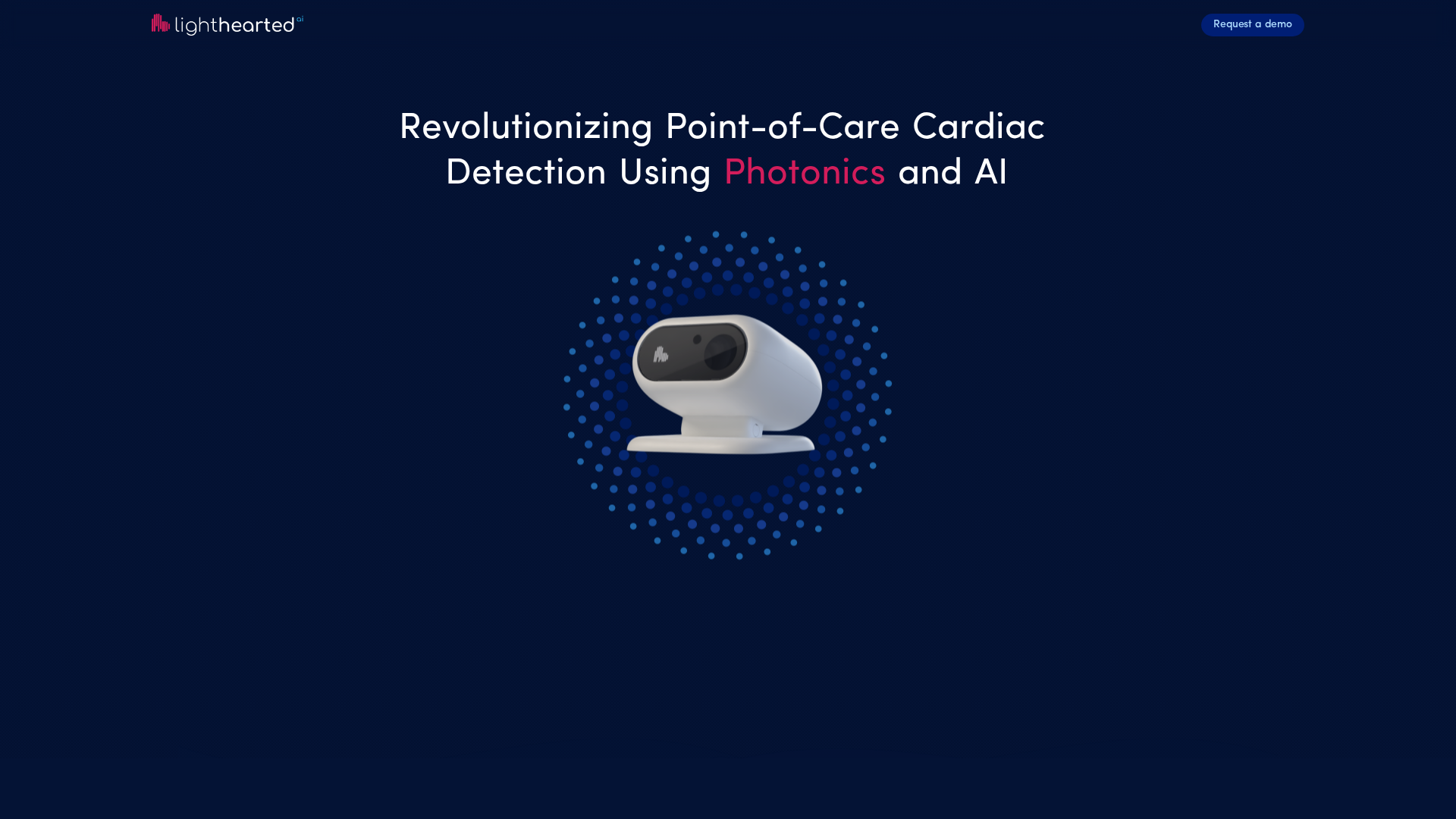
AI-powered photonics enabling rapid, non-invasive cardiac diagnosis and real-time triage.
How photonics-enabled AI accelerates cardiac diagnostics to save lives.