Topic Overview
This topic covers the intersection of agentic AI that perceives and acts (often described as “Lumana-style” agentic vision) and the growing class of edge agent platforms that host, orchestrate, and commercialize those capabilities. Lumana-style systems pair visual perception (camera, sensor fusion, multimodal encoders) with action policies or interface manipulators so agents can observe environments or UIs and carry out multistep tasks. Edge agent platforms bring that capability on-device or near-device to reduce latency, protect data, and lower cloud costs. As of 2026-02-03 this area is timely because deployment needs (privacy, deterministic latency, bandwidth limits) and enterprise requirements (governance, observability, auditability) are driving hybrid architectures: specialized on-device perception models for real-time sensing plus cloud-hosted LLMs or orchestration for planning and retrieval. Key tool categories include agent frameworks (LangChain for building, testing, and deploying LLM-backed agents), AI automation platforms (Adept and Kore.ai for interface actioning and multi-agent workflows with governance), edge AI vision platforms (commercial and open toolchains for model optimization and on-device inference), and AI agent marketplaces for composable skills and pretrained agents. Developer-focused tools such as Windsurf (AI-native IDE with agentic features), Aider (open-source pair-programming copilots), and JetBrains AI Assistant accelerate building and debugging agentic flows; Cohere supplies enterprise LLMs and embeddings for private models; Crescendo.ai illustrates managed blends of agentic systems with human experts for constrained outcome guarantees. The practical trade-offs are model fidelity versus compute footprint, on-device safety controls versus centralized oversight, and reusability via marketplaces versus bespoke integrations. Understanding these trade-offs and the tooling landscape is essential for teams designing perception-to-action systems in regulated or latency-sensitive settings.
Tool Rankings – Top 6

An open-source framework and platform to build, observe, and deploy reliable AI agents.

AI-native IDE and agentic coding platform (Windsurf Editor) with Cascade agents, live previews, and multi-model support.
Open-source AI pair-programming tool that runs in your terminal and browser, pairing your codebase with LLM copilots to:

Enterprise AI agent platform for building, deploying and orchestrating multi-agent workflows with governance, observabil
Agentic AI (ACT-1) that observes and acts inside software interfaces to automate multistep workflows for enterprises.
In‑IDE AI copilot for context-aware code generation, explanations, and refactorings.
Latest Articles (72)
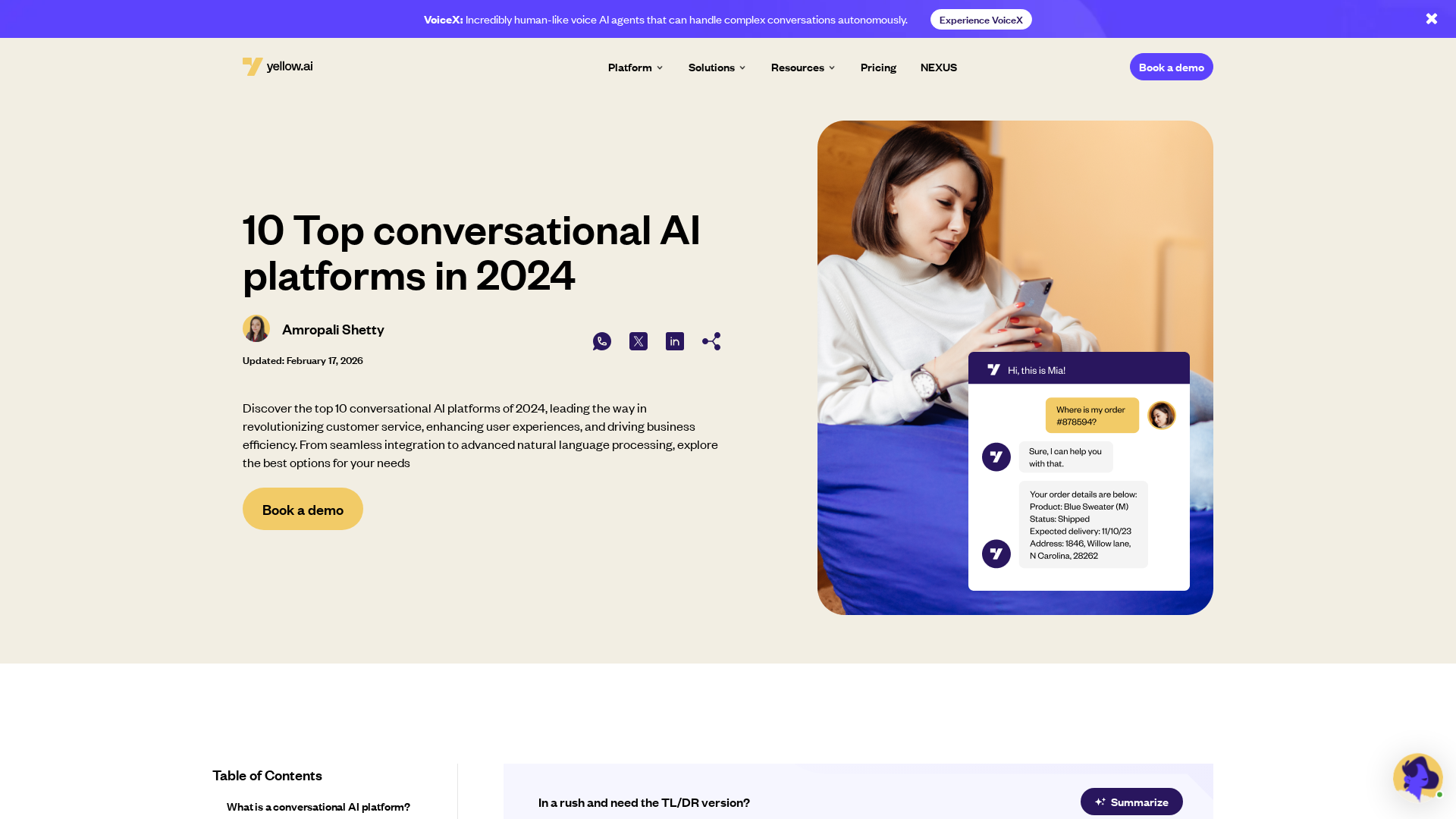
A concise guide to the top 10 conversational AI platforms in 2024, with features, benefits, and use cases.
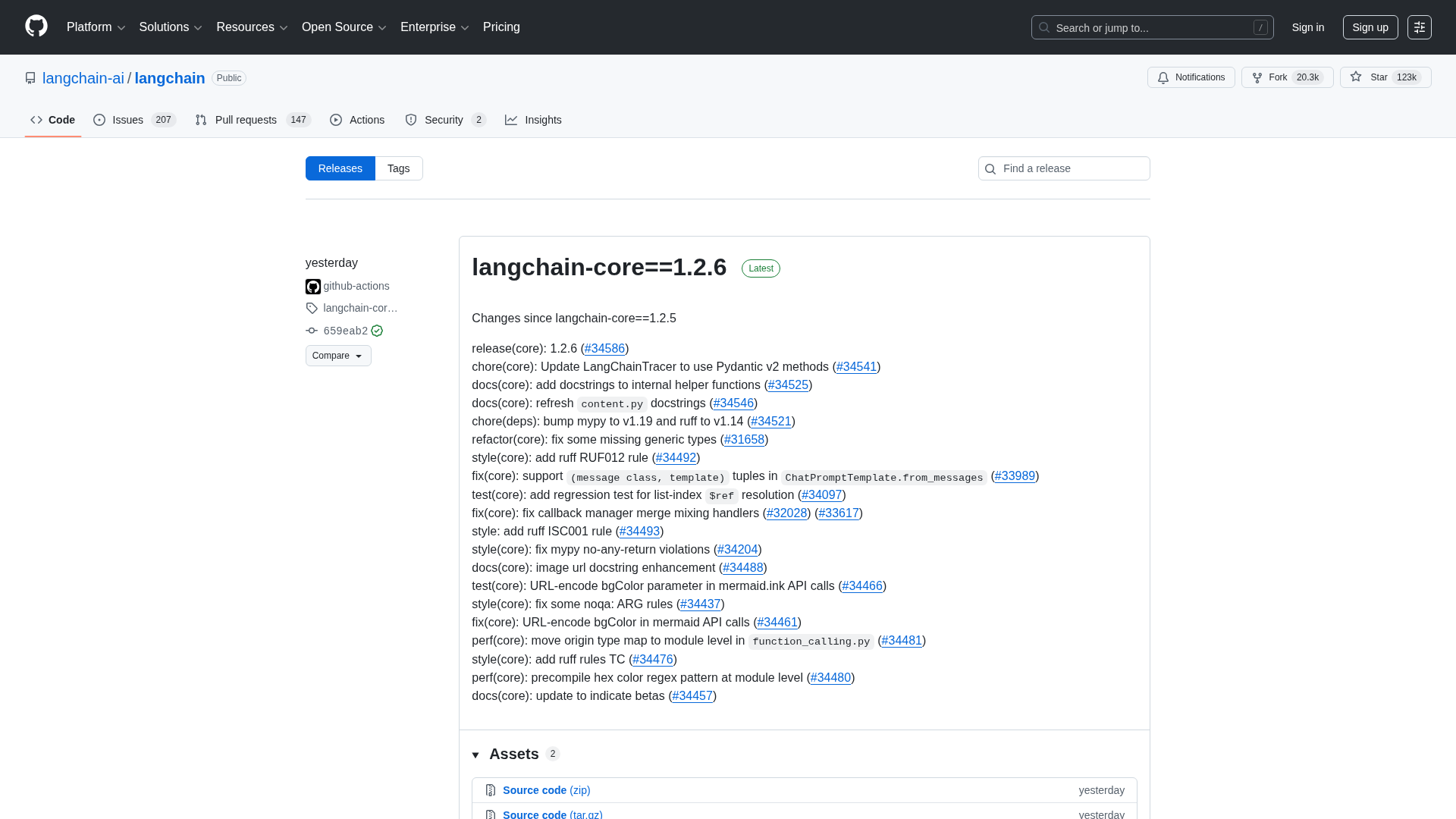
A comprehensive LangChain releases roundup detailing Core 1.2.6 and interconnected updates across XAI, OpenAI, Classic, and tests.
A reproducible bug where LangGraph with Gemini ignores tool results when a PDF is provided, even though the tool call succeeds.
A CLI tool to pull LangSmith traces and threads directly into your terminal for fast debugging and automation.
A practical guide to debugging deep agents with LangSmith using tracing, Polly AI analysis, and the LangSmith Fetch CLI.