Topic Overview
AI agent orchestration and multi‑agent frameworks cover the tools and patterns for composing, running, and governing collections of autonomous agents that collaborate to automate business work. In 2026 this space is characterized by no‑code/low‑code visual builders (StackAI, Relevance AI, MindStudio) that let product teams design agent workflows; cloud‑native platforms (Vertex AI) that provide model management, training, and deployment at scale; and integrated assistants (IBM watsonx Assistant, Microsoft 365 Copilot, JetBrains AI Assistant) that surface agent capabilities inside apps and developer environments. Key trends: enterprises favor platforms with policy, observability, and access controls to meet security and compliance requirements; marketplaces and recruitment mechanisms enable reuse and sourcing of prebuilt agents or tool connectors; and hybrid stacks mix specialist LLMs, tool‑use agents, and retrieval systems to handle domain tasks. Orchestration patterns now emphasize explicit coordinator agents, message‑based pipelines, and stateful execution with retries and human‑in‑the‑loop checkpoints to improve resilience and auditability. Practically, AI agent marketplaces and automation platforms reduce integration friction by packaging connectors, workflows, and governance primitives; agent frameworks provide the runtime abstractions and SDKs for agent behavior and communication; and tool marketplaces offer discoverability for models, prompts, and actions. For organizations, the value is operationalizing AI across collaboration apps, developer workflows, and backend processes while preserving control over models, data, and compliance. As adoption grows, teams should evaluate platforms for traceability, extensibility, and operational costs rather than feature marketing alone.
Tool Rankings – Top 6
End-to-end no-code/low-code enterprise platform for building, deploying, and governing AI agents that automate work onun

Enterprise virtual agents and AI assistants built with watsonx LLMs for no-code and developer-driven automation.

Enterprise-grade no-code/low-code platform to build, deploy, and manage autonomous AI agents and workflows.

No-code/low-code visual platform to design, test, deploy, and operate AI agents rapidly, with enterprise controls and a

Unified, fully-managed Google Cloud platform for building, training, deploying, and monitoring ML and GenAI models.
In‑IDE AI copilot for context-aware code generation, explanations, and refactorings.
Latest Articles (55)
A vendor‑agnostic guide to the 14 best AI governance platforms in 2025, with criteria, comparisons, and practical buying guidance.
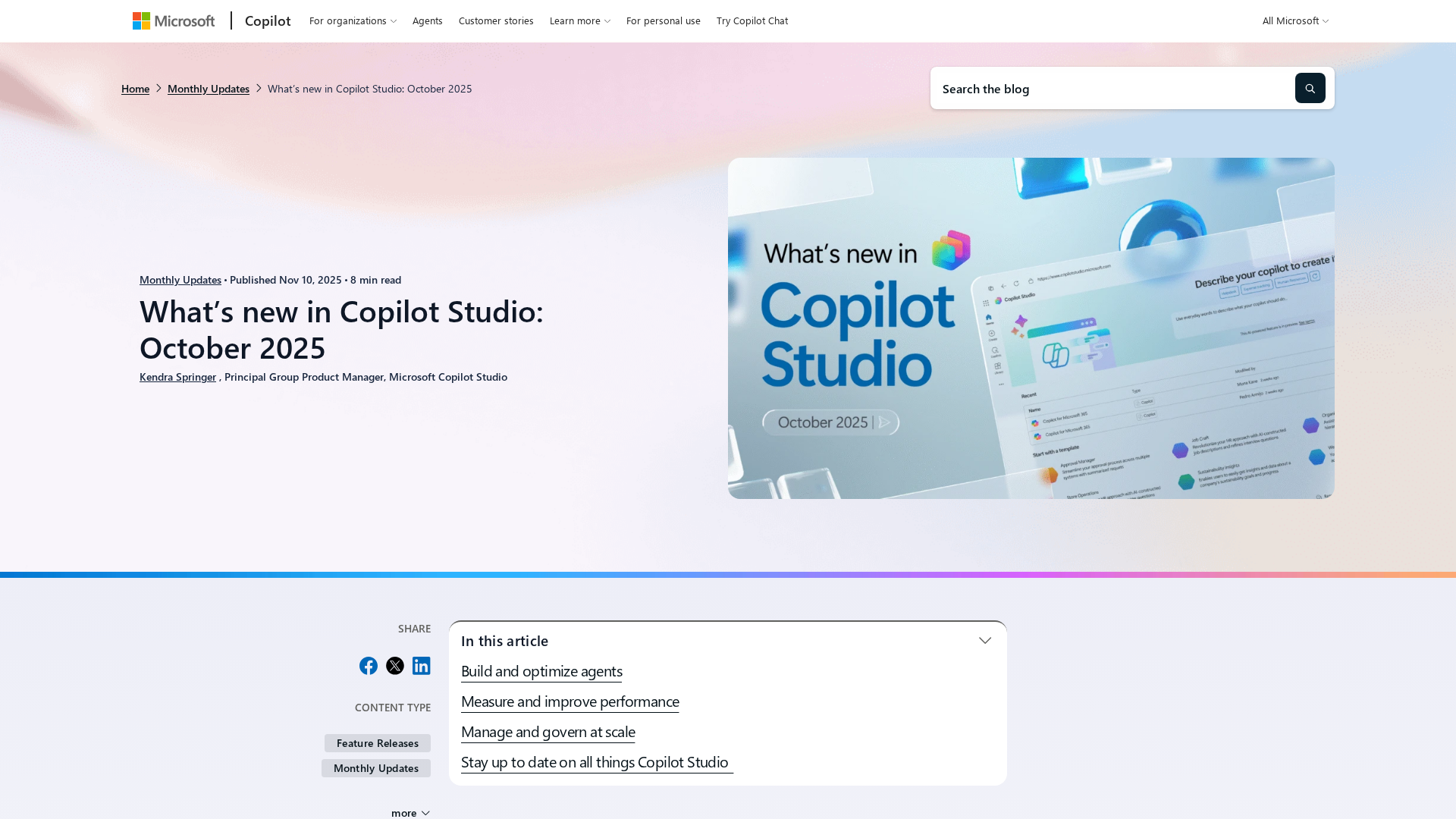
A comprehensive October 2025 roundup of Copilot Studio’s new testing, model, and governance features.

Adobe nears a $19 billion deal to acquire Semrush, expanding its marketing software capabilities, according to WSJ reports.
Wolters Kluwer expands UpToDate Expert AI with UpToDate Lexidrug to bolster drug information and medication decision support.