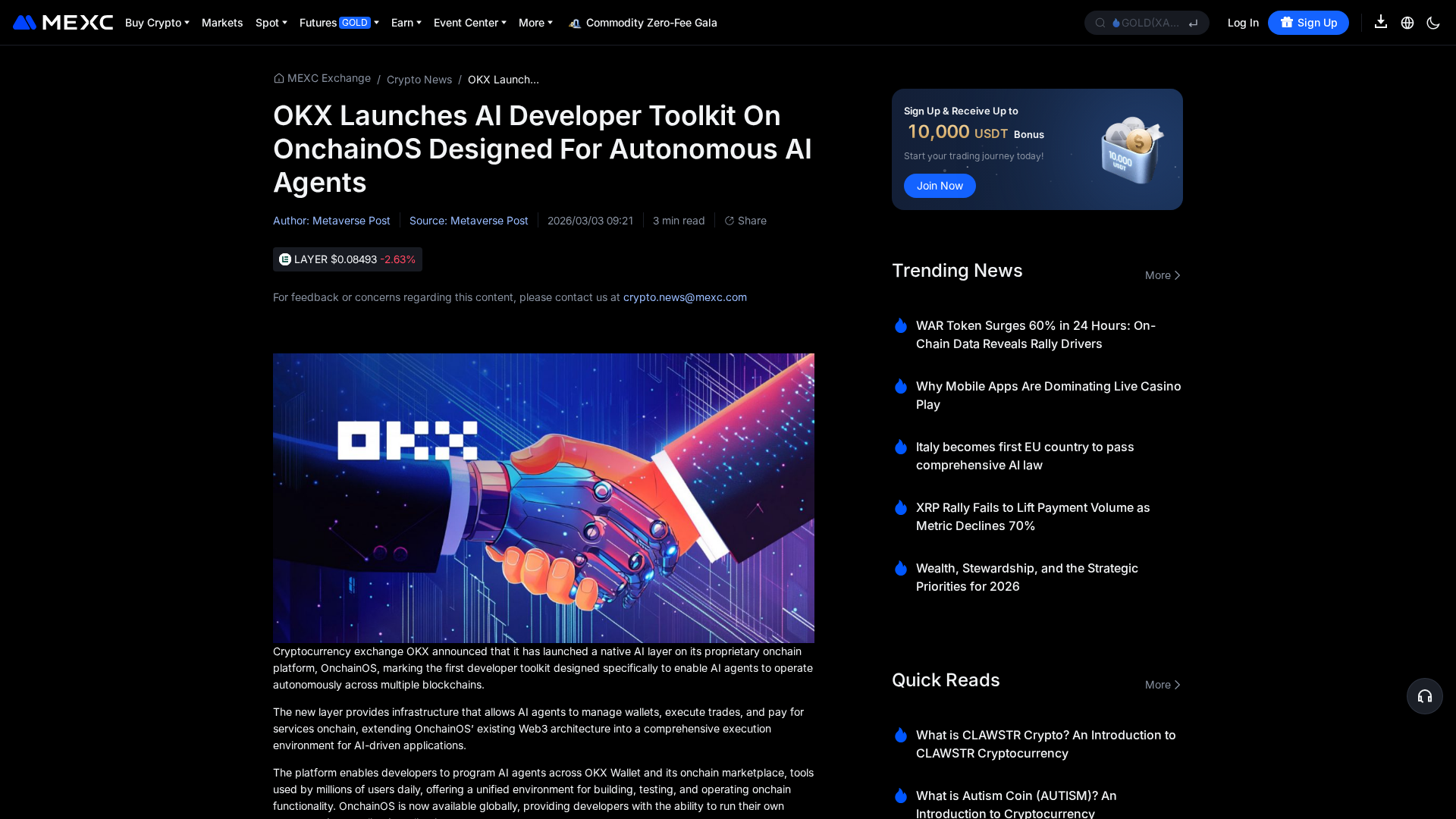
Topic Overview
This topic covers the toolkits, agent frameworks, marketplaces and security practices used to build autonomous on‑chain fund managers — AI agents that monitor markets, execute trades, rebalance portfolios, handle custody interactions and record auditable actions on blockchains such as Polygon or runtimes like OKX OnchainOS. It’s timely in 2026 because agent orchestration, private LLMs, retrieval‑augmented generation (RAG) and decentralized compute have matured enough to enable continuous, programmatic fund operation while regulators and auditors require stronger governance and traceability. Key components include agent frameworks and marketplaces where strategies and components are composed and exchanged; developer platforms that turn documents and signals into operational knowledge; and enterprise LLM and model hosting that provide private, compliant inference. Representative tools: AutoGPT for building and running autonomous agent workflows (self‑hosted or cloud), LlamaIndex for RAG and document agents, Vertex AI and Google Gemini for managed multimodal models and scale, Cohere and IBM watsonx for private/custom LLMs and embeddings, and StackAI for no‑/low‑code agent deployment and governance. AI‑integrated wallet tooling demonstrates how agents securely interface with on‑chain custody. Practical challenges and trends include verifiable execution (on‑chain logs, attestation), oracle design for trusted market inputs, multi‑party governance (multi‑sig, timelocks, human‑in‑the‑loop approvals), model risk management, and composability across decentralized infrastructure. The landscape favors modular stacks: LLMs + RAG for strategy reasoning, agent runtimes for orchestration, and blockchain smart contracts for execution and audit — all governed by security, compliance and interoperability standards increasingly demanded by institutions.
Tool Rankings – Top 6

Platform to build, deploy and run autonomous AI agents and automation workflows (self-hosted or cloud-hosted).

Developer-focused platform to build AI document agents, orchestrate workflows, and scale RAG across enterprises.

Unified, fully-managed Google Cloud platform for building, training, deploying, and monitoring ML and GenAI models.

Google’s multimodal family of generative AI models and APIs for developers and enterprises.

Enterprise-focused LLM platform offering private, customizable models, embeddings, retrieval, and search.

Enterprise virtual agents and AI assistants built with watsonx LLMs for no-code and developer-driven automation.
Latest Articles (72)
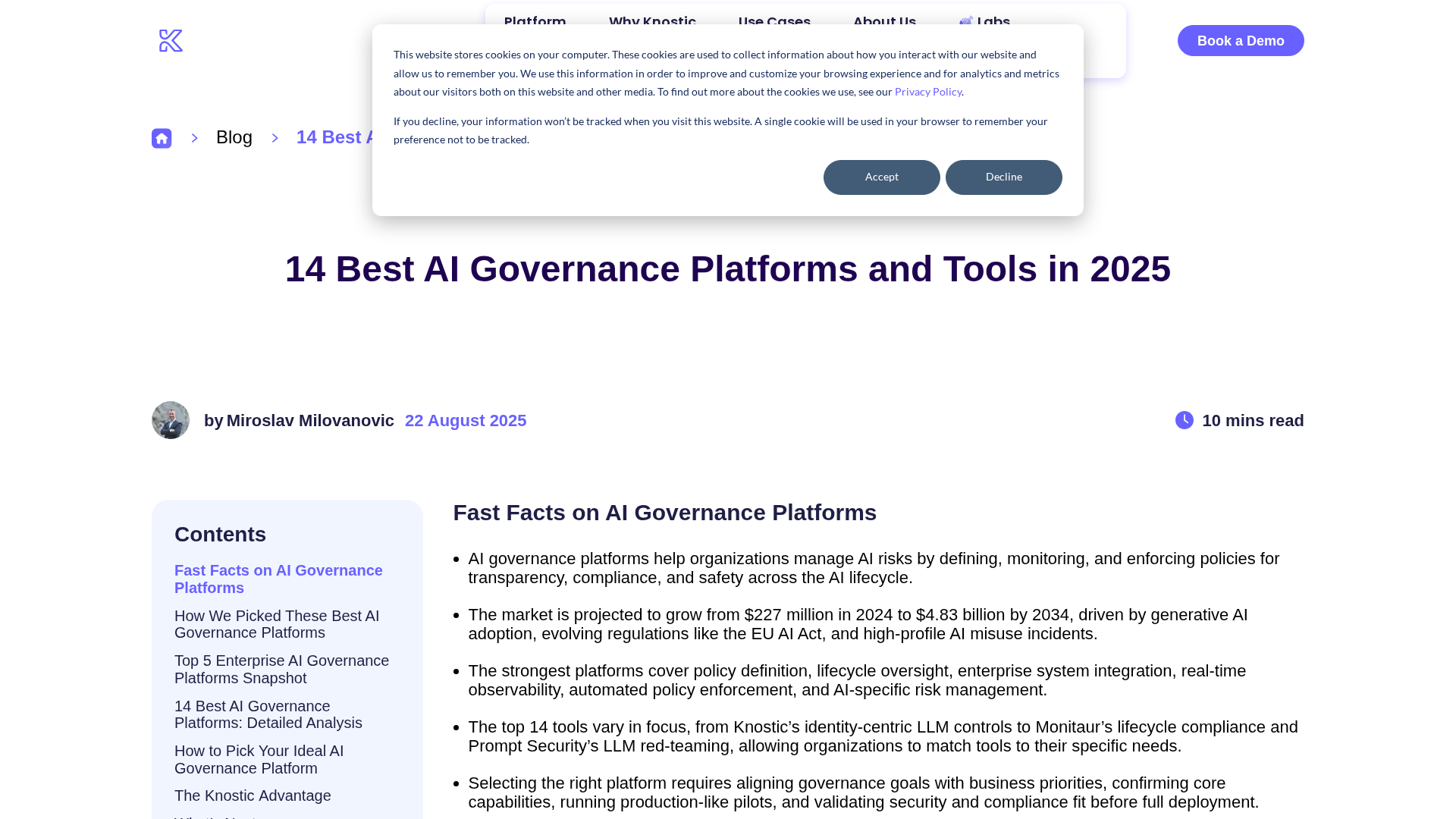
A vendor‑agnostic guide to the 14 best AI governance platforms in 2025, with criteria, comparisons, and practical buying guidance.
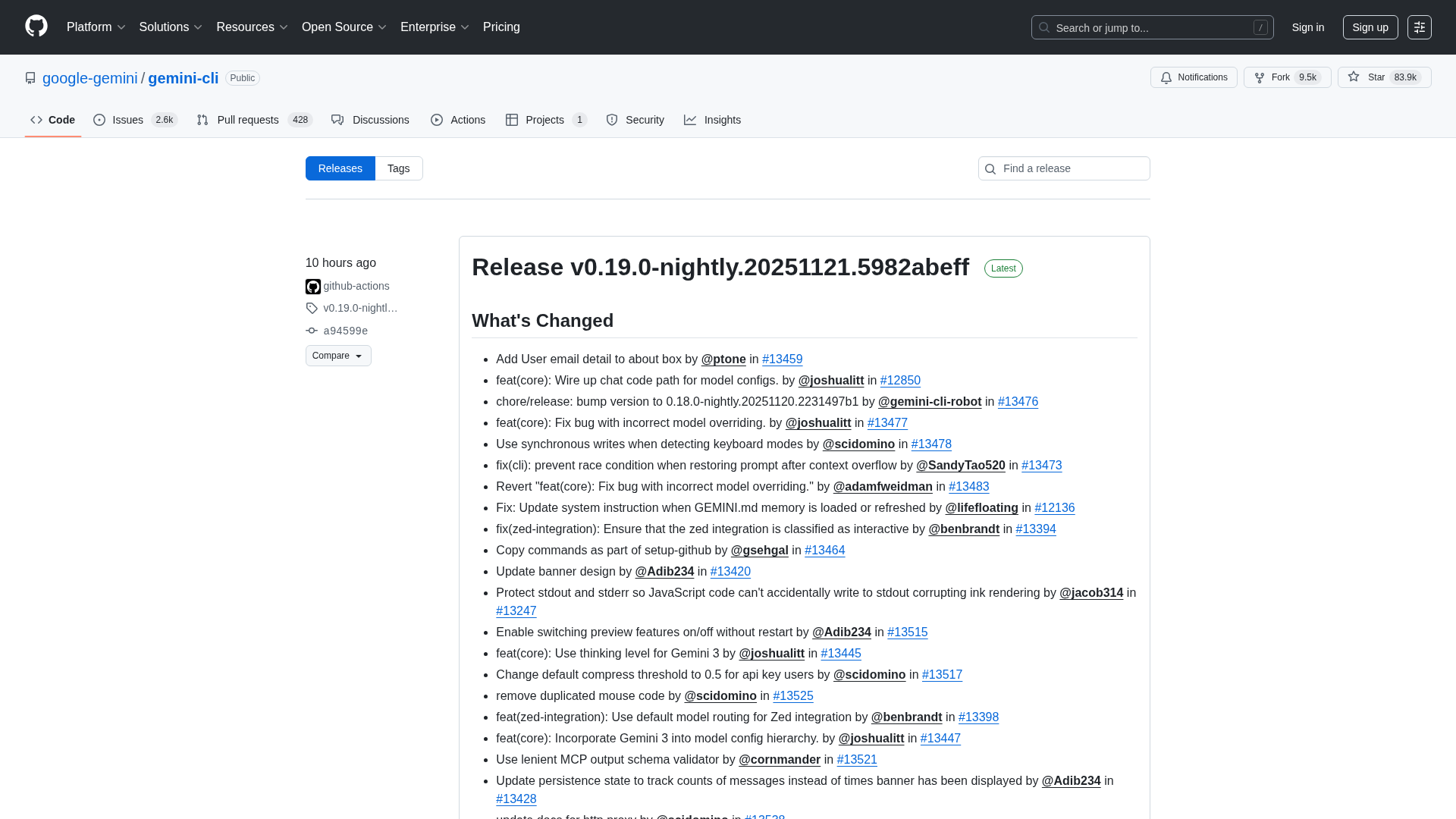
Overview of the Gemini CLI v0.36.0-preview release series, highlighting architectural, CLI, and UI changelogs across multiple pre-release versions.
AdEx unveils 2026 plan to evolve AURA into a proactive, wallet-integrated agentic AI with privacy-first design.
Explores how autonomous AI agents on blockchain enable verifiable, self-governing on-chain economies through identity, smart contracts, and cross-chain collaboration.
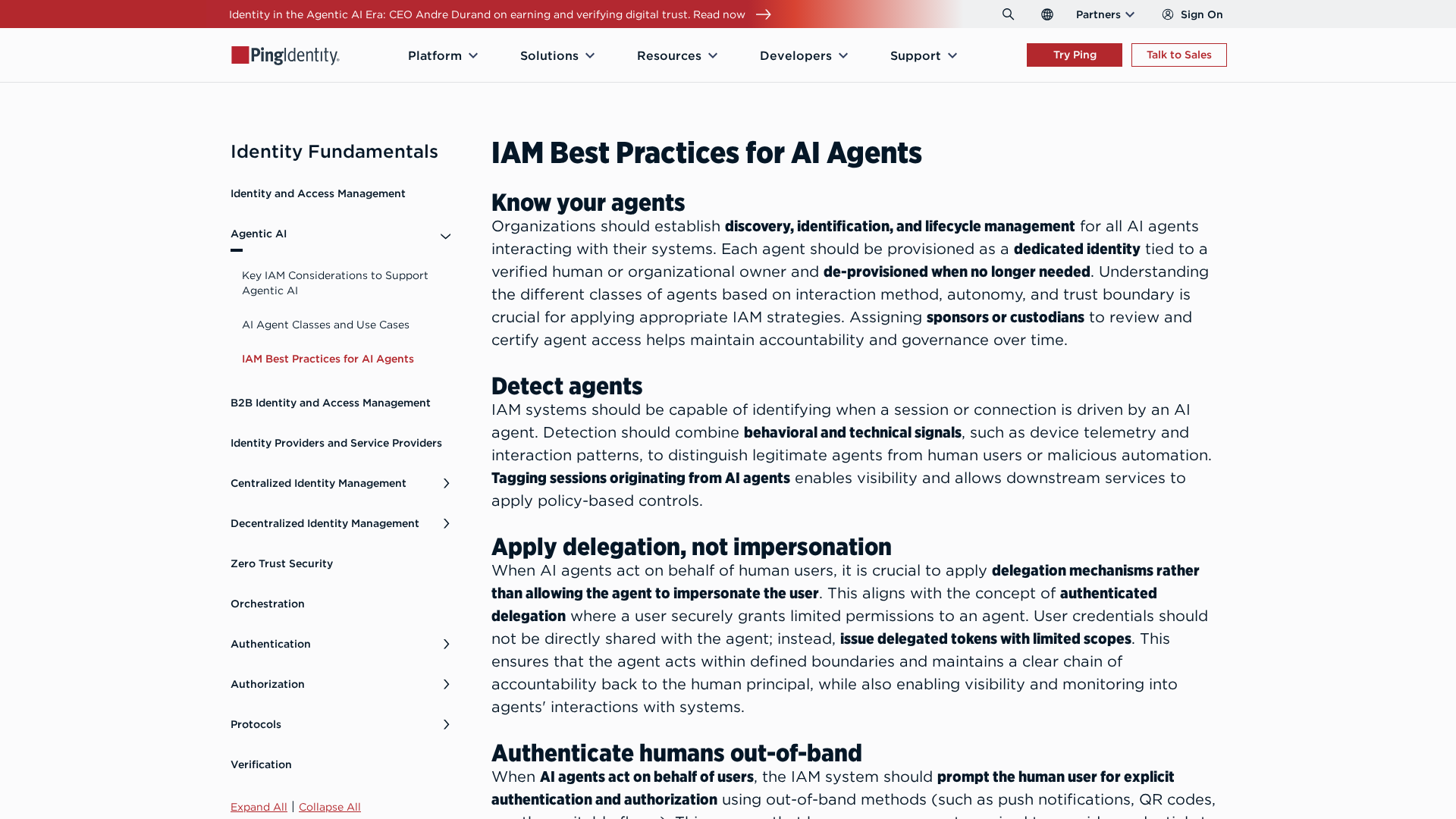
Best-practices for securing AI agents with identity management, delegated access, least privilege, and human oversight.