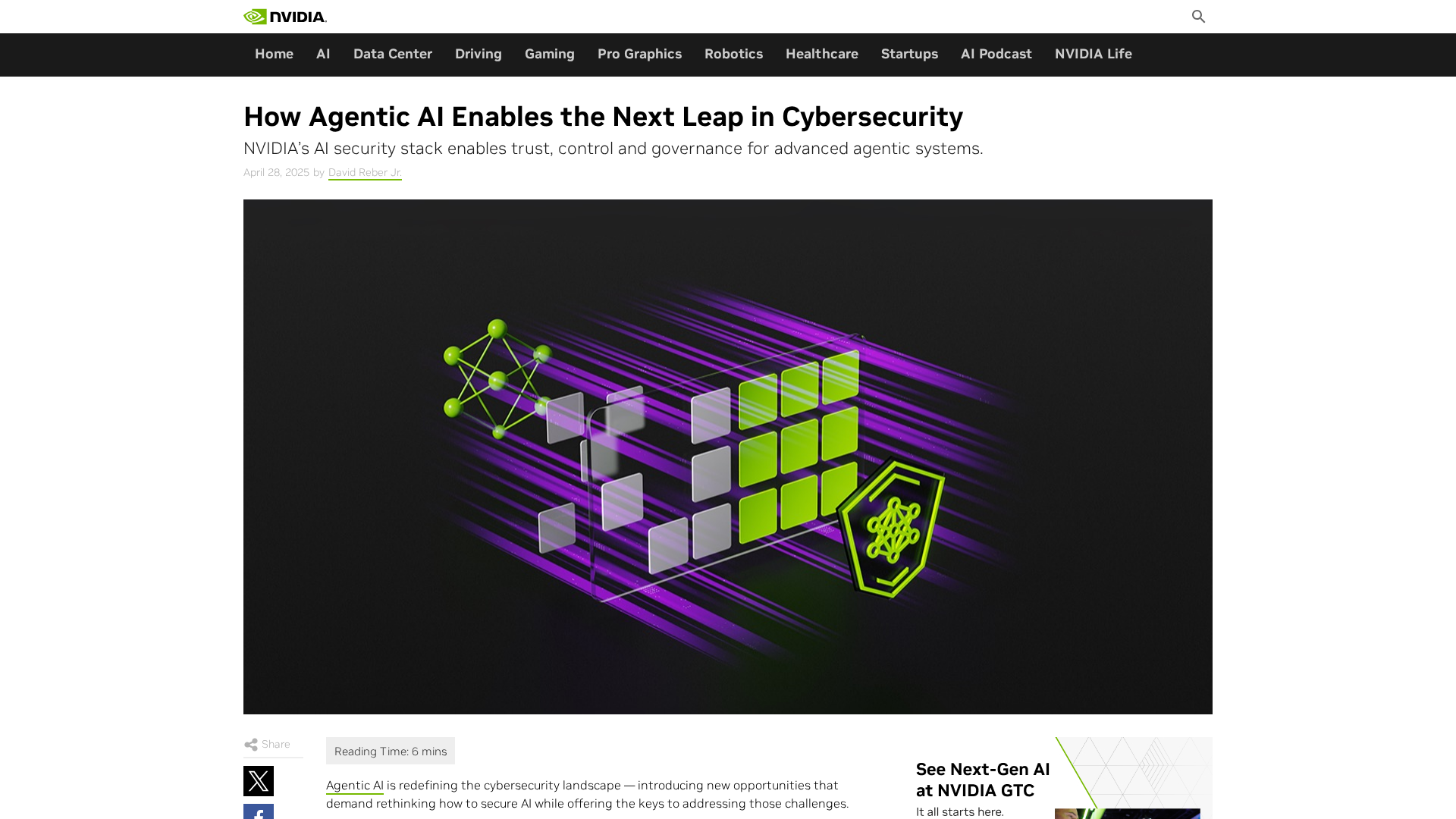
Topic Overview
This topic covers the tools and practices that harden agentic AI development — from LLM-assisted coding to deployed autonomous agents — by combining software composition analysis (SCA), static/dynamic code checks, and runtime monitoring/guardrails. As organizations move from single-query LLMs to multi-step, agentic workflows (assistants that generate, modify, and execute code), the attack surface expands: supply-chain vulnerabilities in libraries, prompt- and model-injection, unauthorized action execution, and data-exfiltration risks all require new security and governance patterns. By 2026 this is timely because production agent deployments are common in contact centers, enterprise automation, and developer tooling, increasing regulatory and operational scrutiny. Platforms such as StackAI and IBM watsonx Assistant focus on no-code/low-code agent orchestration and governance, making SCA and policy enforcement part of the delivery stack. Contact-center vendors (Observe.AI, Crescendo.ai, Yellow.ai) demonstrate how conversational and agentic services need real-time monitoring, audit trails, and human-in-the-loop escalation to contain downstream risk. Infrastructure and model providers (Together AI, Cohere) highlight the need for secure model ops — controlled fine-tuning, private models, verifiable inference — while LLM-assisted IDEs (e.g., Claude-style code assistants) emphasize the need for code-review automation and provenance tracking for generated code. Practical controls include SCA adapted for AI-generated code, code-signing and SBOMs for agent artifacts, runtime monitors that enforce policy at action-execution boundaries, behavioral guardrails at the model and orchestration layers, and integrated logging/audit for compliance. The converging trend is toward platform-level integrations that combine training/inference controls, developer tooling checks, and operational runtime enforcement to manage the unique risks of agentic development without impeding productivity.
Tool Rankings – Top 6

End-to-end no-code/low-code enterprise platform for building, deploying, and governing AI agents that automate work onun

Enterprise conversation-intelligence and GenAI platform for contact centers: voice agents, real-time assist, auto QA, &洞
_logo%201.svg)
AI-native CX platform combining agentic AI with human experts in a managed service model (platform + per-resolution fees

Enterprise agentic AI platform for CX and EX automation, building autonomous, human-like agents across channels.

Enterprise virtual agents and AI assistants built with watsonx LLMs for no-code and developer-driven automation.

A full-stack AI acceleration cloud for fast inference, fine-tuning, and scalable GPU training.
Latest Articles (98)
A vendor‑agnostic guide to the 14 best AI governance platforms in 2025, with criteria, comparisons, and practical buying guidance.
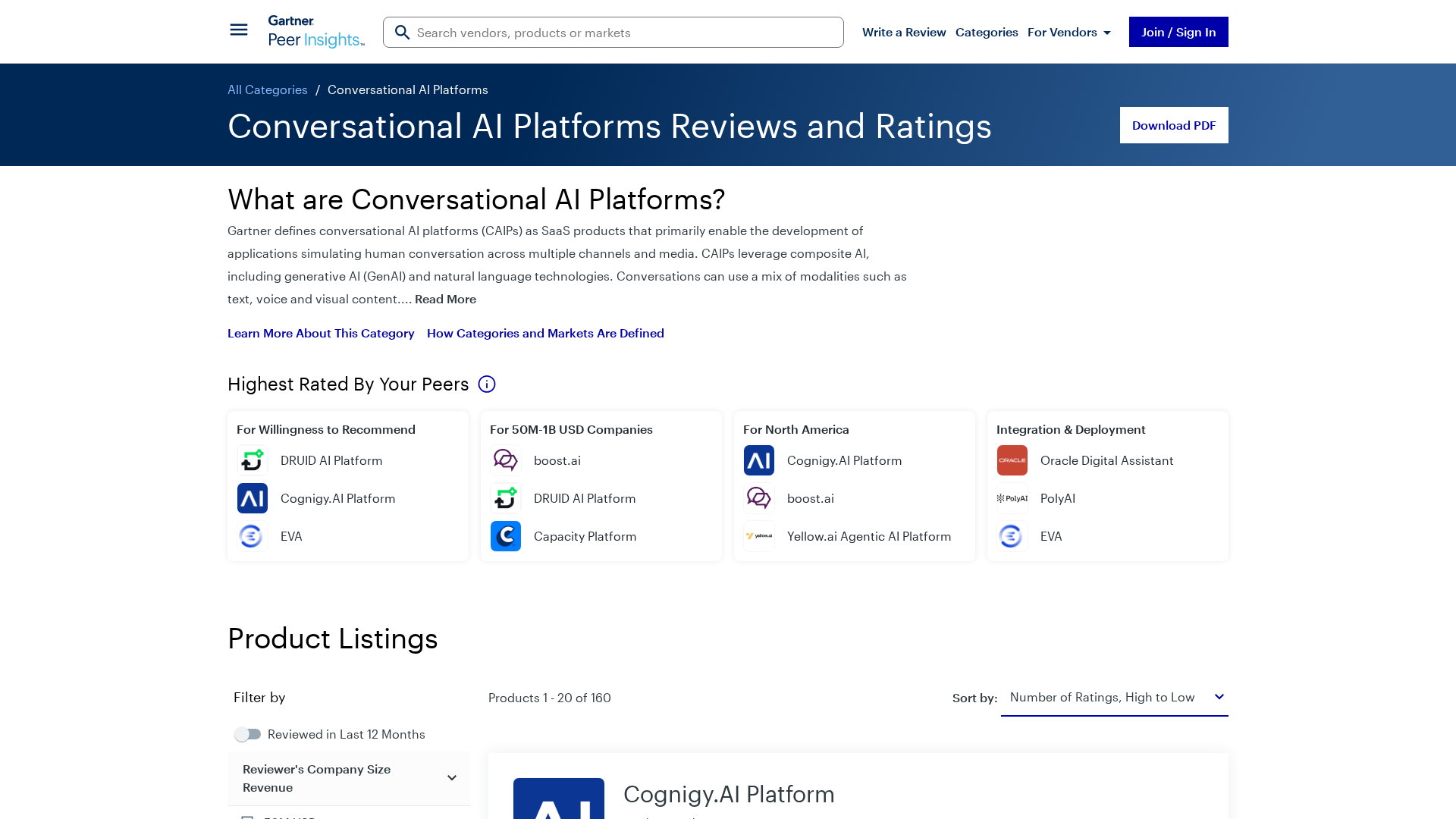
Gartner’s market view on conversational AI platforms, outlining trends, vendors, and buyer guidance.

Baseten launches an AI training platform to compete with hyperscalers, promising simpler, more transparent ML workflows.

Adobe nears a $19 billion deal to acquire Semrush, expanding its marketing software capabilities, according to WSJ reports.
Wolters Kluwer expands UpToDate Expert AI with UpToDate Lexidrug to bolster drug information and medication decision support.