Topic Overview
AI Control & Perception Stacks for Humanoid Robots covers the software and runtime layers that turn sensors and models into safe, real‑time action on bipedal platforms. The topic spans edge vision and sensor‑fusion pipelines, deterministic middleware for hard real‑time control, agent frameworks that orchestrate high‑level behaviors, and the developer/automation tools needed to test, verify and operate systems in the field. This is timely as of 2026: advances in compact multimodal models and more efficient edge inference, combined with maturing agent architectures, have moved humanoid deployments from lab demos toward constrained real‑world tasks. That transition increases emphasis on deterministic runtimes, verifiable autonomy, simulation‑to‑real validation, and human‑in‑the‑loop safety controls. Key components and tools reflected in the ecosystem include Shield AI’s Hivemind (EdgeOS deterministic middleware, Pilot behavior catalog, and Forge autonomy factory) for mission‑critical autonomy; LangChain and similar frameworks for building, testing and stateful orchestration of LLM‑driven agents; no‑code/low‑code platforms such as MindStudio and Duckie to speed agent design, knowledge integration, and channel actions; developer‑centric ADEs like Warp to iterate agent workflows inside developer tools; AutoGPT and open agent platforms for autonomous workflow execution; and hybrid automation platforms like n8n to link perception, planning and enterprise systems. Combining these layers produces modular stacks: onboard perception and inference, real‑time control and safety mediation, agentic decision layers, and orchestration/observability tooling. Practical deployments prioritize deterministic execution, sensor redundancy, rigorous simulation testing, and clear human override paths rather than purely autonomous behavior.
Tool Rankings – Top 6

Mission-driven developer of Hivemind autonomy software and autonomy-enabled platforms for defense and enterprise.

No-code/low-code visual platform to design, test, deploy, and operate AI agents rapidly, with enterprise controls and a

Engineering platform and open-source frameworks to build, test, and deploy reliable AI agents.

Agentic Development Environment (ADE) — a modern terminal + IDE with built-in AI agents to accelerate developer flows.

Platform to build, deploy and run autonomous AI agents and automation workflows (self-hosted or cloud-hosted).
Hybrid workflow automation platform with a visual editor, code support, AI nodes, and broad integrations—self-hosted,云,或
Latest Articles (40)
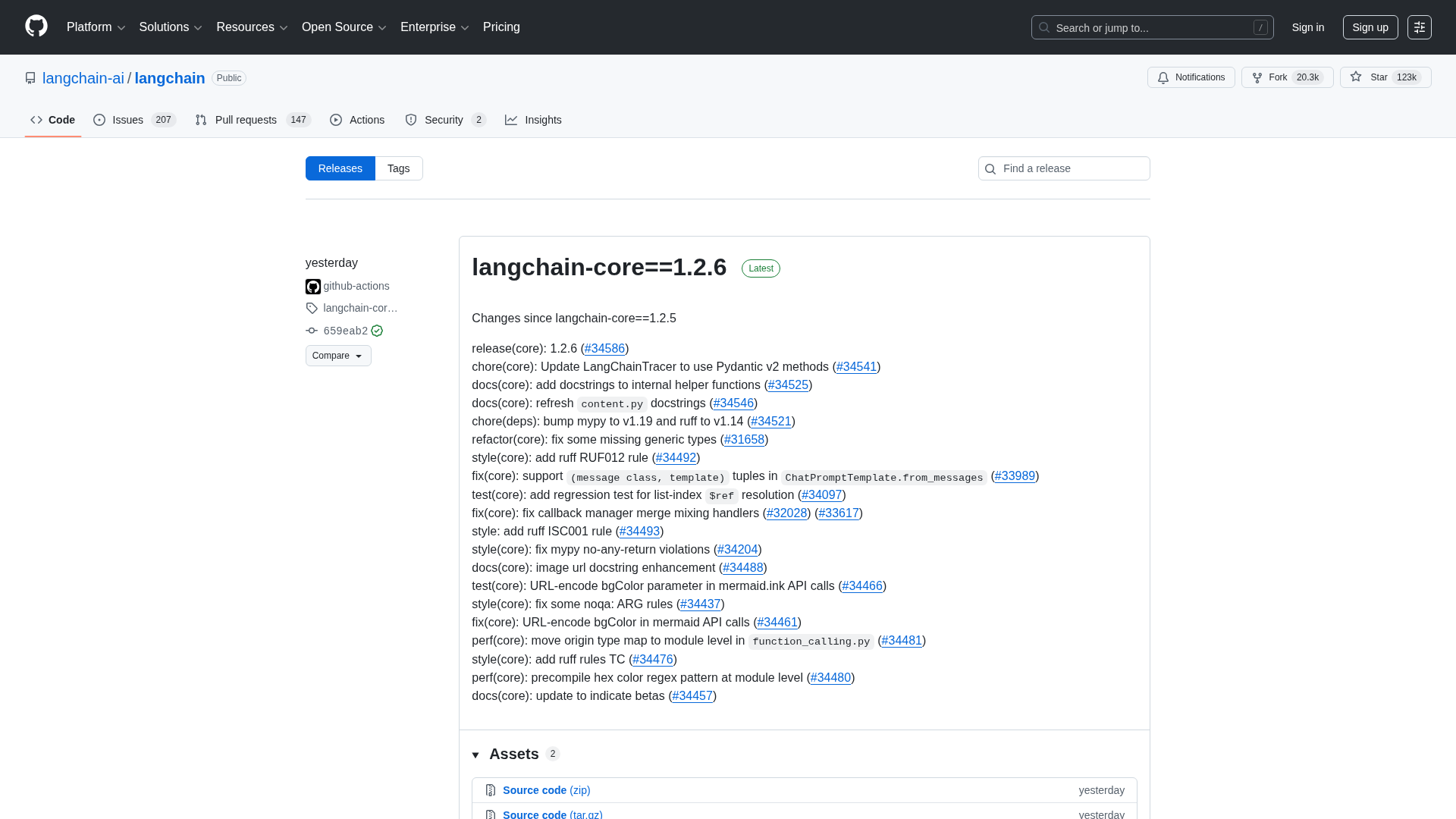
A comprehensive LangChain releases roundup detailing Core 1.2.6 and interconnected updates across XAI, OpenAI, Classic, and tests.

Cannot access the article content due to an access-denied error, preventing summarization.

A quick preview of POE-POE's pros and cons as seen in G2 reviews.

Meta may partner with Sify to lease a 500 MW Vishakhapatnam data center in a Rs 15,266 crore project linked to the Waterworth subsea cable.
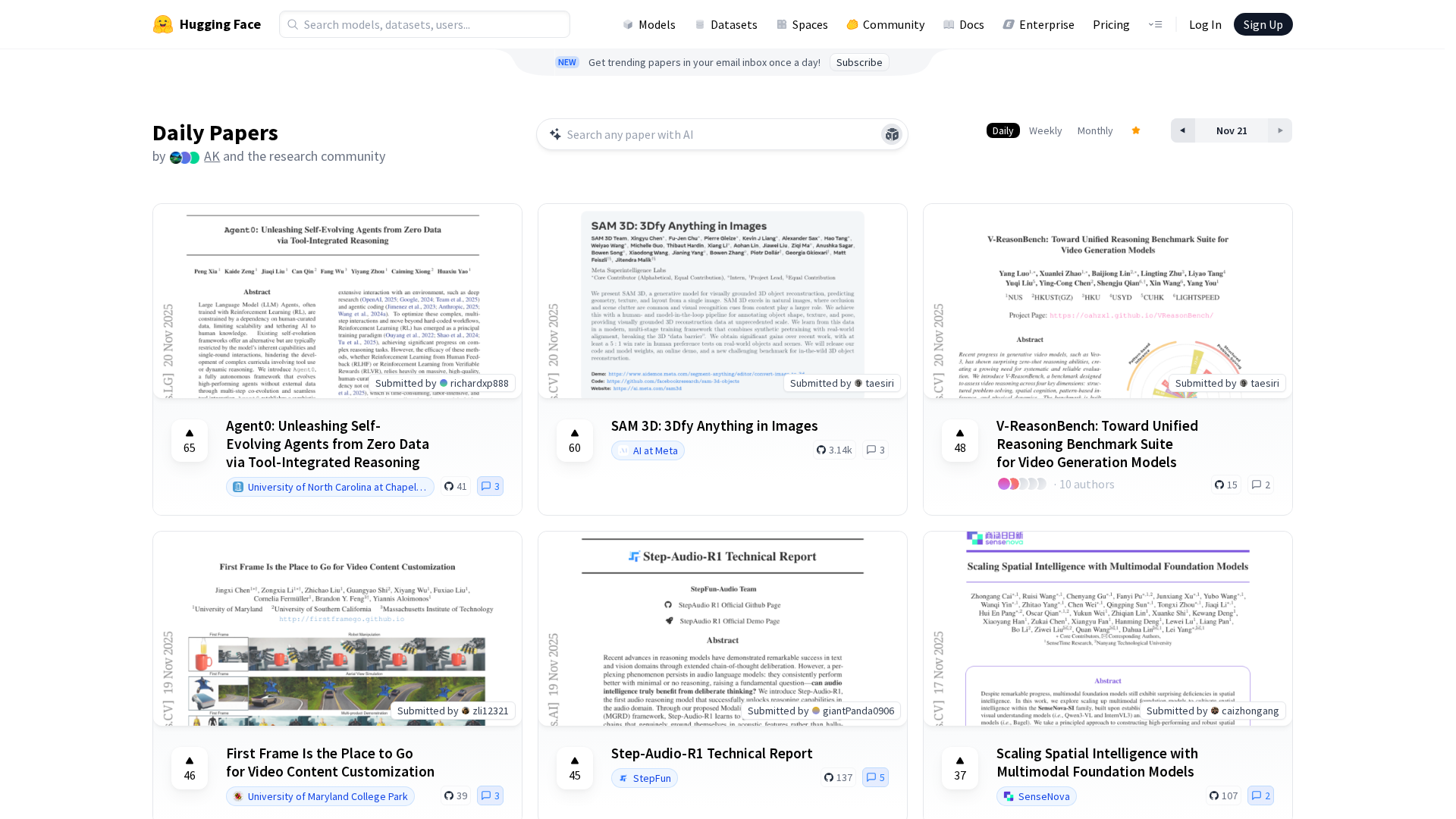
Get daily, curated trending ML papers delivered straight to your inbox.