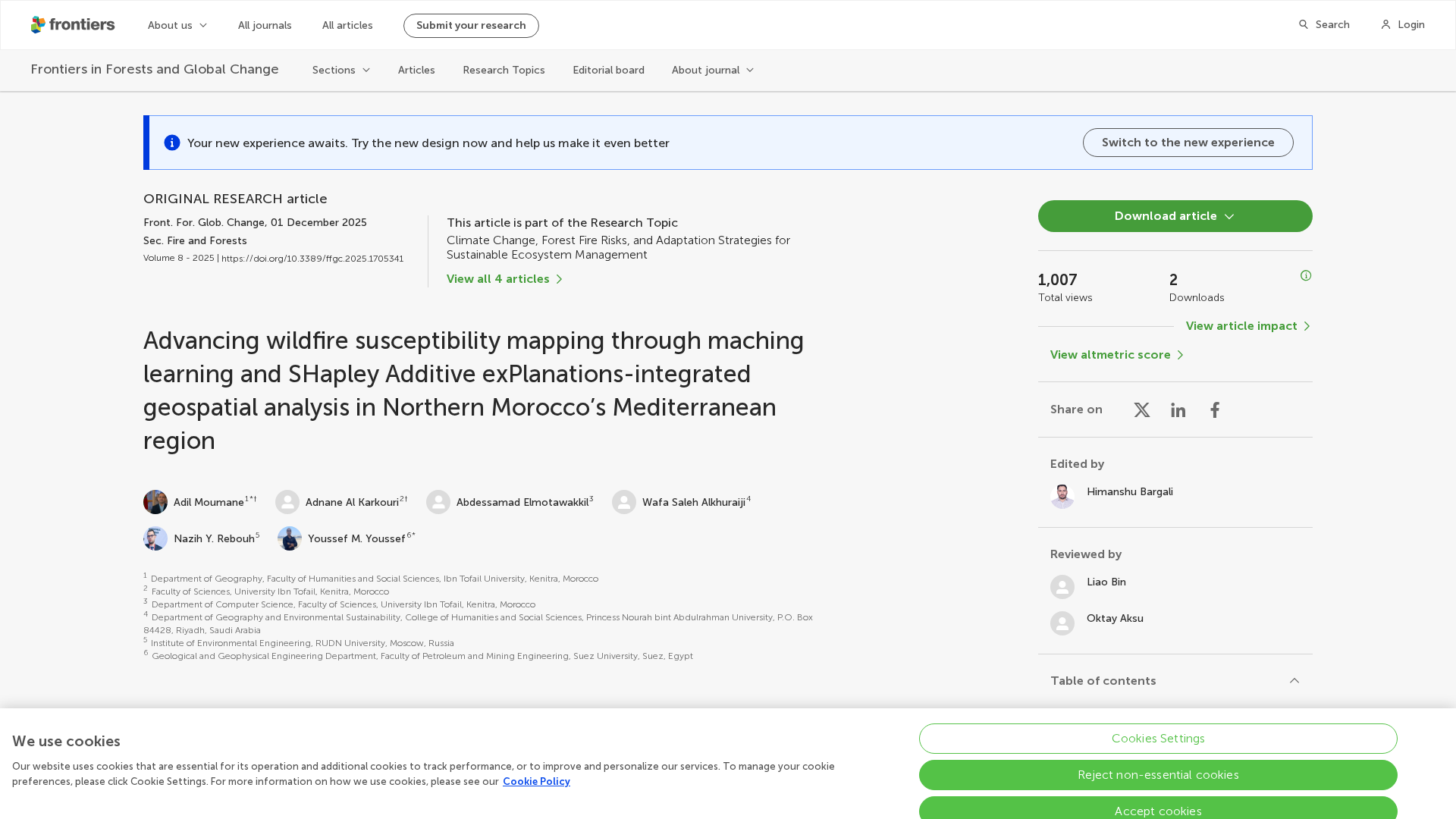
Topic Overview
This topic covers how edge vision platforms, AI data platforms, and data analytics tools are being combined to detect wildfires earlier, forecast fire behavior, and coordinate faster disaster response. Rising wildfire frequency and greater availability of satellite, drone, and sensor feeds have made low‑latency detection and rapid triage critical; the dominant approach pairs on‑device inference (thermal/optical cameras and edge GPUs) with cloud‑scale data fusion and analytics for forecasting and resource allocation. Key components include Edge AI Vision Platforms for real‑time image and video inference at source; AI Data Platforms that ingest, label, and version multispectral satellite, UAV, and sensor telemetry; and Data Analytics Tools that run short‑term forecasts, probabilistic spread models, and anomaly detection. Tooling described in the related catalog maps to these needs: LangChain provides an engineering framework for building stateful, agentic LLM applications and orchestrating retrieval and decision logic; IBM watsonx Assistant enables enterprise virtual agents and multi‑agent orchestrations for incident workflows and responder interfaces; AutoGPT, Agentverse, and Automaited represent platforms to deploy autonomous agents and automation workflows that can triage alerts, trigger data pipelines, and run response playbooks; Perplexity AI offers web‑grounded research and rapid situational summarization to support analysts. Practical challenges include sensor heterogeneity, model drift, latency tradeoffs between edge and cloud, explainability for operational use, and data governance. Current best practices emphasize edge‑cloud hybrid architectures, rigorous data pipelines, human‑in‑the‑loop validation, and agent orchestration to turn detections into actionable, auditable response steps.
Tool Rankings – Top 6

Engineering platform and open-source frameworks to build, test, and deploy reliable AI agents.

Enterprise virtual agents and AI assistants built with watsonx LLMs for no-code and developer-driven automation.

Platform to build, deploy and run autonomous AI agents and automation workflows (self-hosted or cloud-hosted).
Cloud platform and marketplace for building, deploying, listing and monitoring autonomous AI agents.
Enterprise platform of AI Agents for agentic automation: workflow automation, document processing and integrations.
AI-powered answer engine delivering real-time, sourced answers and developer APIs.
Latest Articles (60)
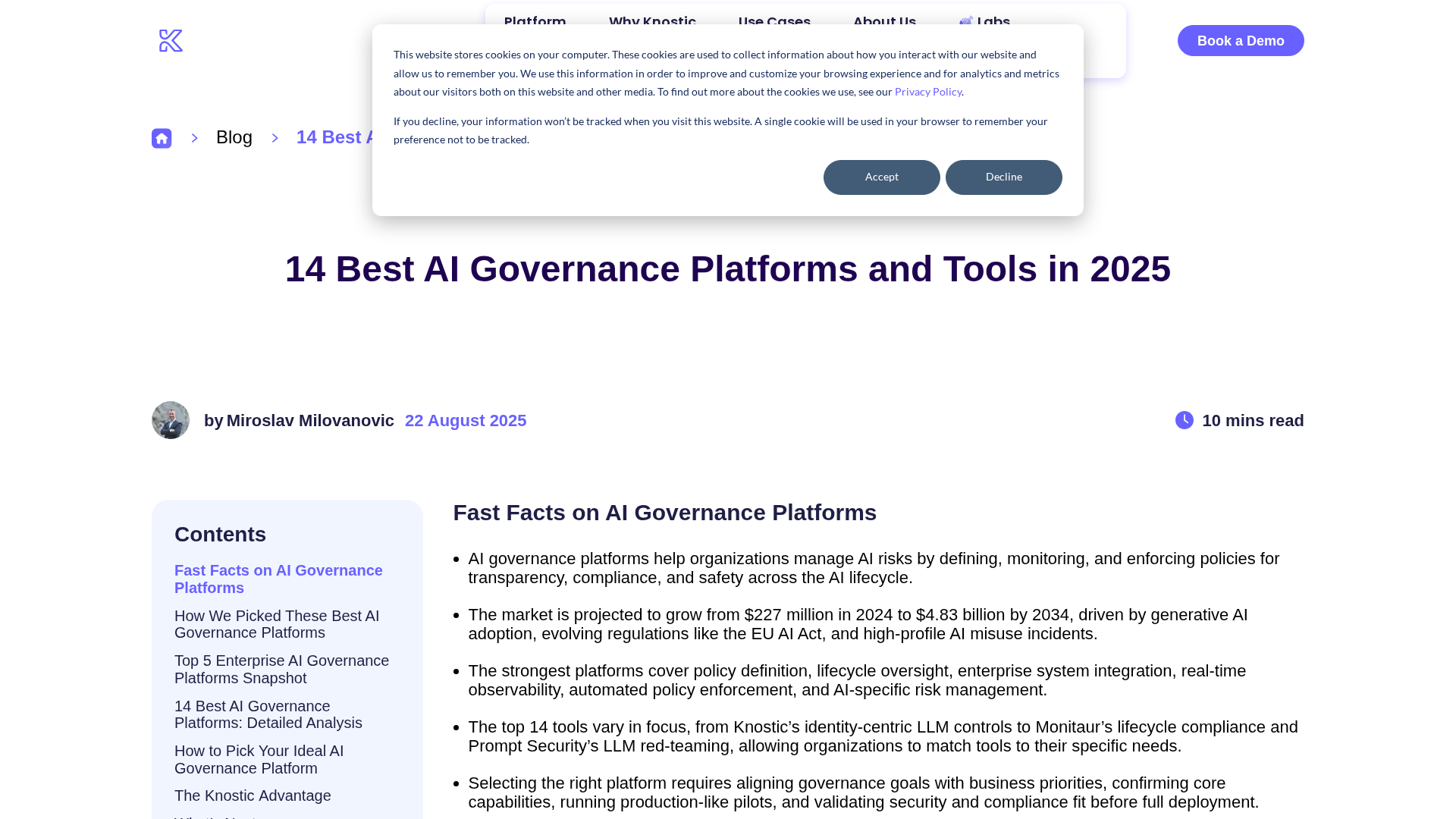
A vendor‑agnostic guide to the 14 best AI governance platforms in 2025, with criteria, comparisons, and practical buying guidance.
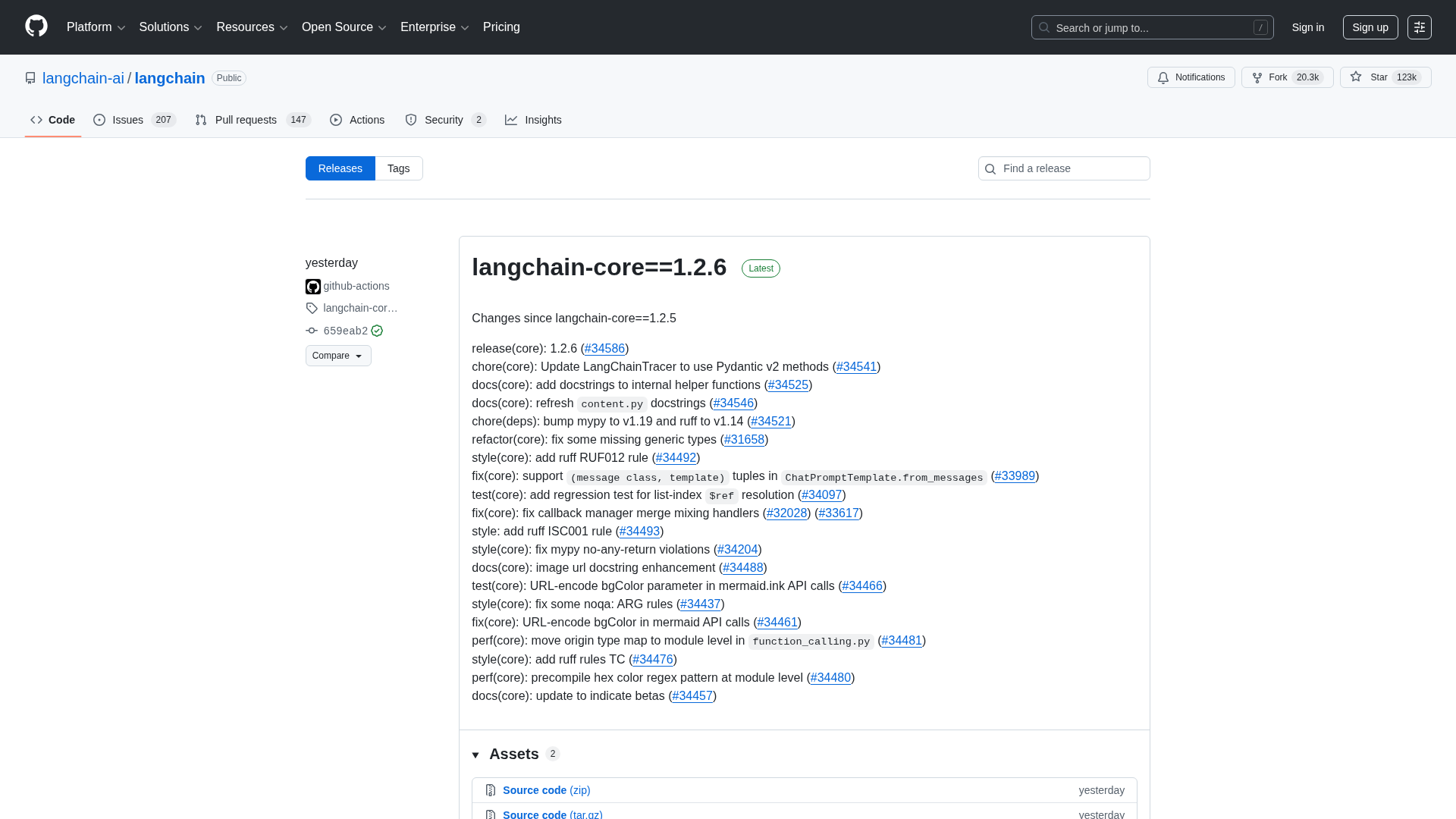
A comprehensive LangChain releases roundup detailing Core 1.2.6 and interconnected updates across XAI, OpenAI, Classic, and tests.

Cannot access the article content due to an access-denied error, preventing summarization.
Adobe nears a $19 billion deal to acquire Semrush, expanding its marketing software capabilities, according to WSJ reports.
Wolters Kluwer expands UpToDate Expert AI with UpToDate Lexidrug to bolster drug information and medication decision support.