Topic Overview
Automated Laboratory & Scientific R&D AI Platforms cover a new generation of systems that combine machine‑learning experiment design with robotic execution, multi‑agent orchestration, and data‑centric tooling to accelerate discovery. As of 2026, organizations are moving beyond point solutions: they need platforms that integrate agentic automation, secure data search, model acceleration, and governance to run reproducible workflows at scale. Key vendor categories include agent frameworks and orchestration (LangChain for building and testing stateful LLM agents; Kore.ai and IBM watsonx Assistant for enterprise multi‑agent orchestration and governed assistants), UI‑action agent systems that automate software workflows (Adept/ACT‑1), and infrastructure for training and serving models at scale (Together AI). Complementary capabilities—semantic search and document QA (DeeperMind.ai, AI Knowledge Search by Amurex, PDF.ai)—turn lab notes, protocols and literature into queryable knowledge that closes the loop between data and hypothesis generation. DeepMind Automated Labs (and comparable offerings) sit at the intersection of these layers: ML‑driven planning, automated wet/dry lab execution, and downstream data curation. Practical adoption is being driven by improvements in agent reliability, faster model fine‑tuning and inference, and richer semantic indexing of domain data. At the same time, users must weigh reproducibility, traceability, regulatory compliance, and human oversight when moving from pilot to production. For R&D teams, the relevant evaluation questions are interoperability with LIMS and ELNs, agent auditability, data lineage and searchability, compute and model‑ops support, and end‑to‑end test automation for protocols. Comparing DeepMind’s approach to agentic and data‑platform competitors requires assessing those integration and governance tradeoffs rather than feature lists alone.
Tool Rankings – Top 6

Engineering platform and open-source frameworks to build, test, and deploy reliable AI agents.
Agentic AI (ACT-1) that observes and acts inside software interfaces to automate multistep workflows for enterprises.

Enterprise AI agent platform for building, deploying and orchestrating multi-agent workflows with governance, observabil

Enterprise virtual agents and AI assistants built with watsonx LLMs for no-code and developer-driven automation.

A full-stack AI acceleration cloud for fast inference, fine-tuning, and scalable GPU training.
AI-powered semantic search for your documents
Latest Articles (105)
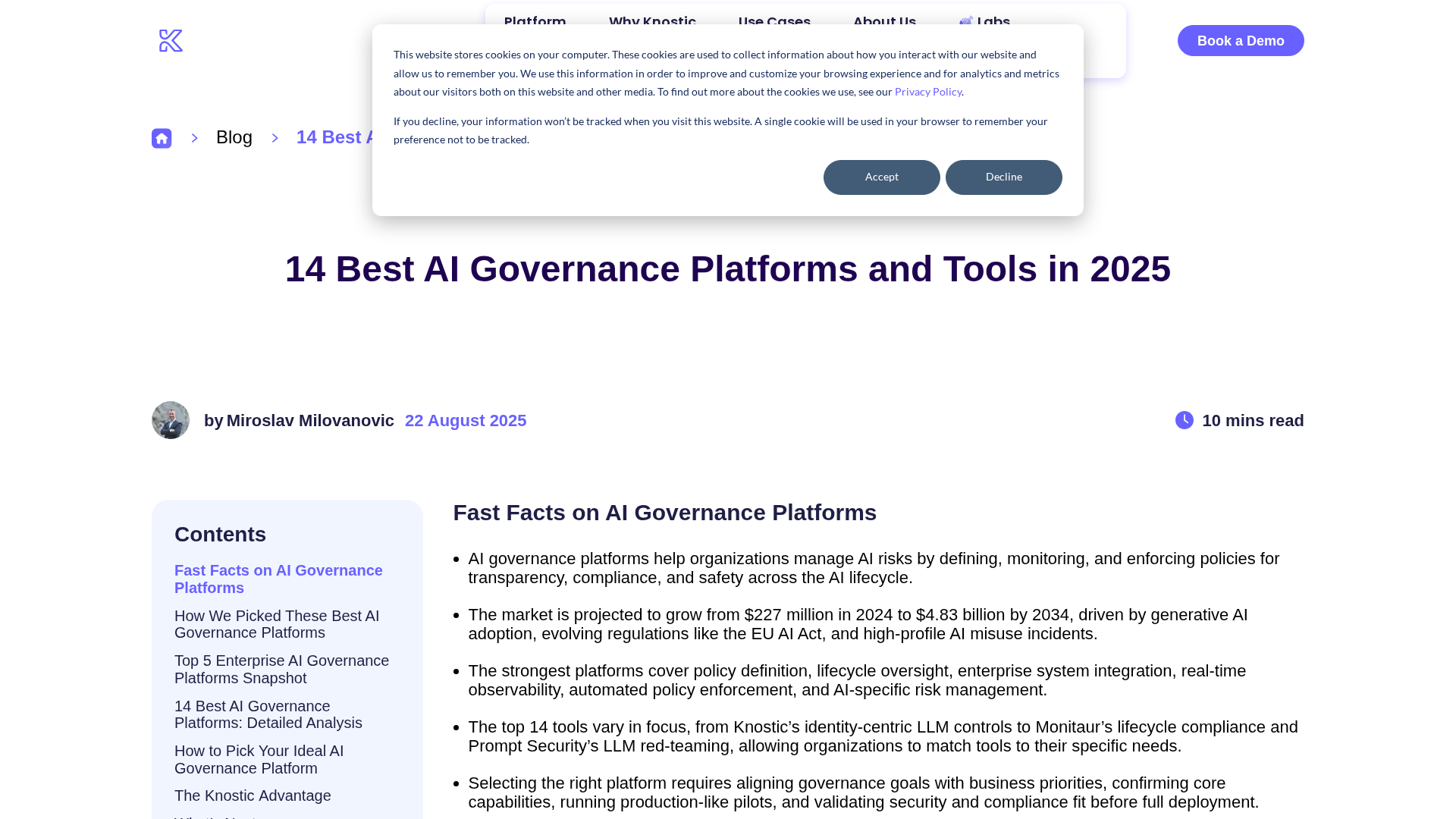
A vendor‑agnostic guide to the 14 best AI governance platforms in 2025, with criteria, comparisons, and practical buying guidance.
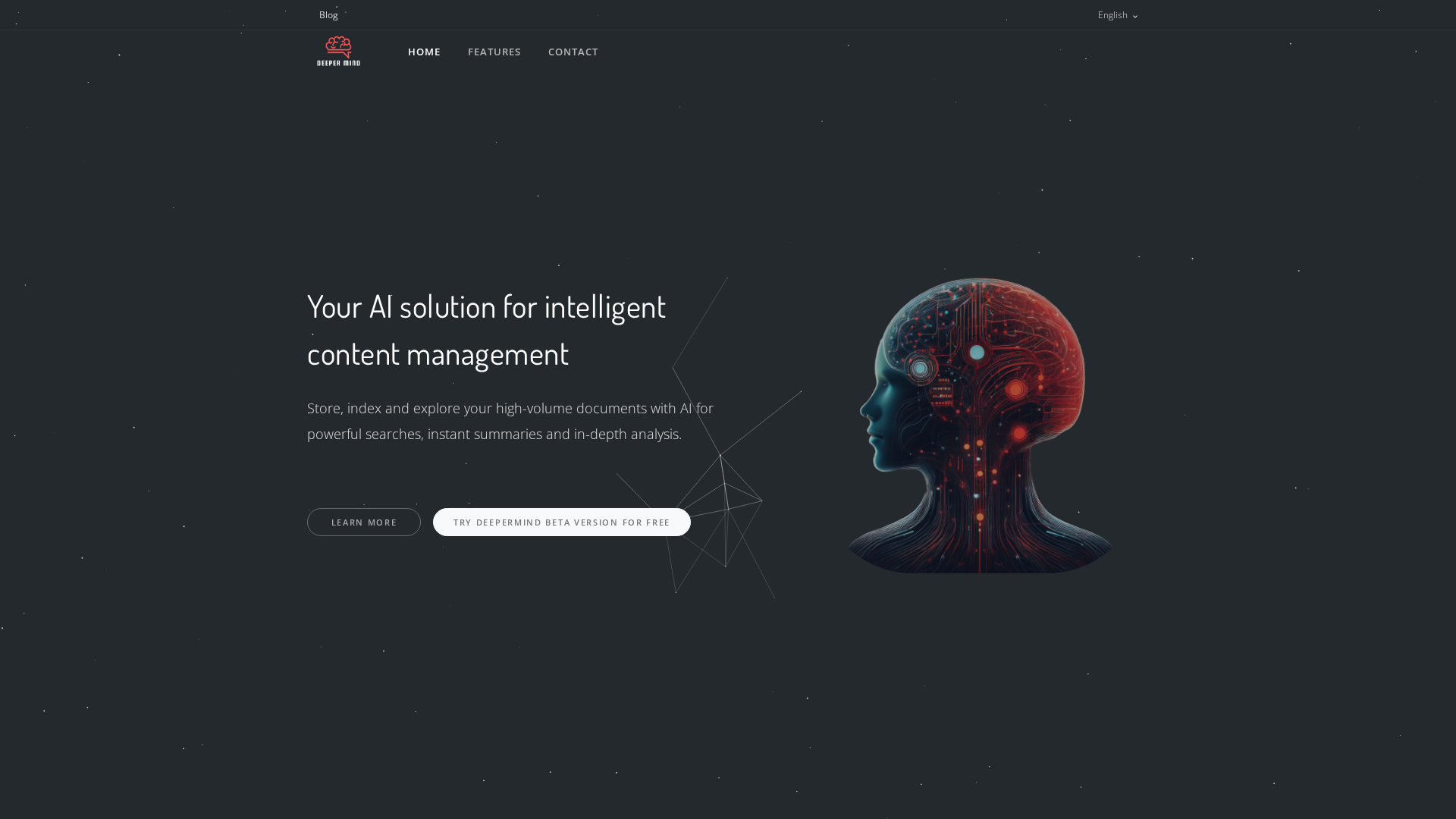
AI-powered platform delivering secure storage, smart indexing, contextual search, and automated meta-analyses for large document corpora.
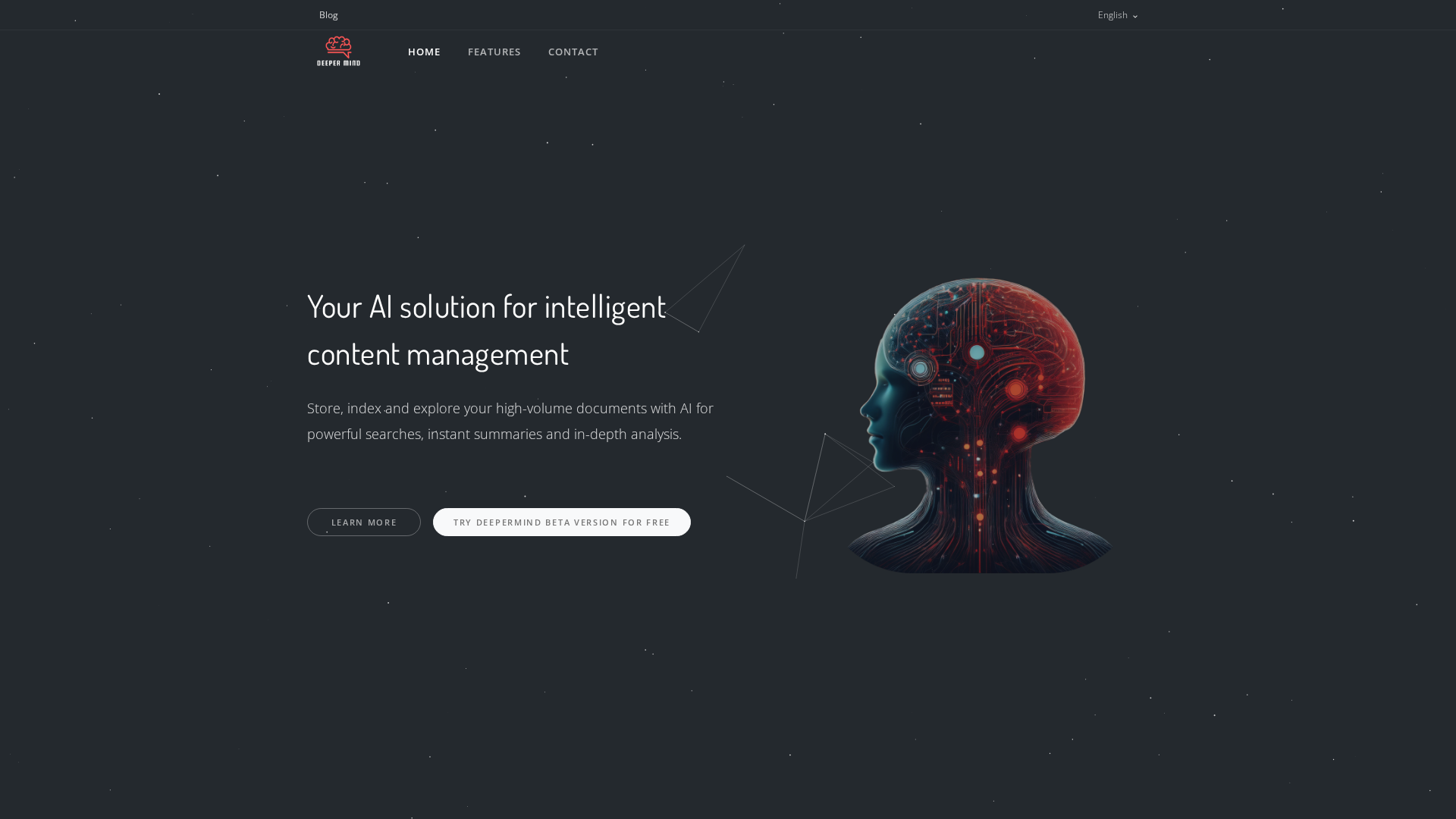
A RAG-powered AI platform for secure storage, smart indexing, contextual search, meta-analyses, and interactive document dialogue.
Un assistant IA qui lit, résume et dialogue avec vos textes et images, et peut bâtir un chatbot personnalisé.
Découvrez DeeperMind, l’IA qui analyse des corpus documentaires complexes et booste textes, idées et images.