Topic Overview
Enterprise LLM + Data Platforms refers to the production architecture that combines large language models (LLMs) with enterprise-grade data storage, vector search, governance, and developer tooling. In practice this means choosing a model-hosting/serving layer (Anthropic via Snowflake integrations, Azure OpenAI Service, or AWS Bedrock) and pairing it with vector stores, data lakes, and orchestration tools to build retrieval-augmented generation (RAG) applications, document agents, and secure inference pipelines. This topic is timely as of 2025-12-09 because organizations are moving beyond proofs-of-concept to scale LLM apps: they must manage model selection and fine-tuning, ensure data lineage and compliance, support multimodal data, and instrument model behavior in production. Key trade-offs are vendor lock-in, data gravity (placing compute near your enterprise data), privacy controls, latency/cost, and model governance. Relevant tools and categories: LangChain and LlamaIndex provide engineering frameworks to build, debug, and deploy agentic LLM applications and production RAG workflows; Activeloop’s Deep Lake is a multimodal database for storing, versioning, and indexing unstructured data and embeddings; OpenPipe supports capture of LLM interaction logs, dataset creation, fine-tuning, and hosting; Tabnine and Amazon CodeWhisperer (now part of Amazon Q Developer) demonstrate enterprise-focused coding assistants that emphasize private deployments and contextualized suggestions. When comparing Snowflake+Anthropic, Azure OpenAI, and AWS Bedrock, teams should evaluate model availability and customization, native data integrations, compliance and certification posture, cost model, and how well the platform plugs into developer stacks (LangChain, LlamaIndex, vector DBs, and observability tooling). The practical conclusion: choose the stack that aligns with where your enterprise data lives, the governance controls you require, and the developer ecosystem you plan to standardize on.
Tool Rankings – Top 6

Engineering platform and open-source frameworks to build, test, and deploy reliable AI agents.

Developer-focused platform to build AI document agents, orchestrate workflows, and scale RAG across enterprises.

Deep Lake: a multimodal database for AI that stores, versions, streams, and indexes unstructured ML data with vector/RAG

Managed platform to collect LLM interaction data, fine-tune models, evaluate them, and host optimized inference.

Enterprise-focused AI coding assistant emphasizing private/self-hosted deployments, governance, and context-aware code.

AI-driven coding assistant (now integrated with/rolling into Amazon Q Developer) that provides inline code suggestions,
Latest Articles (57)
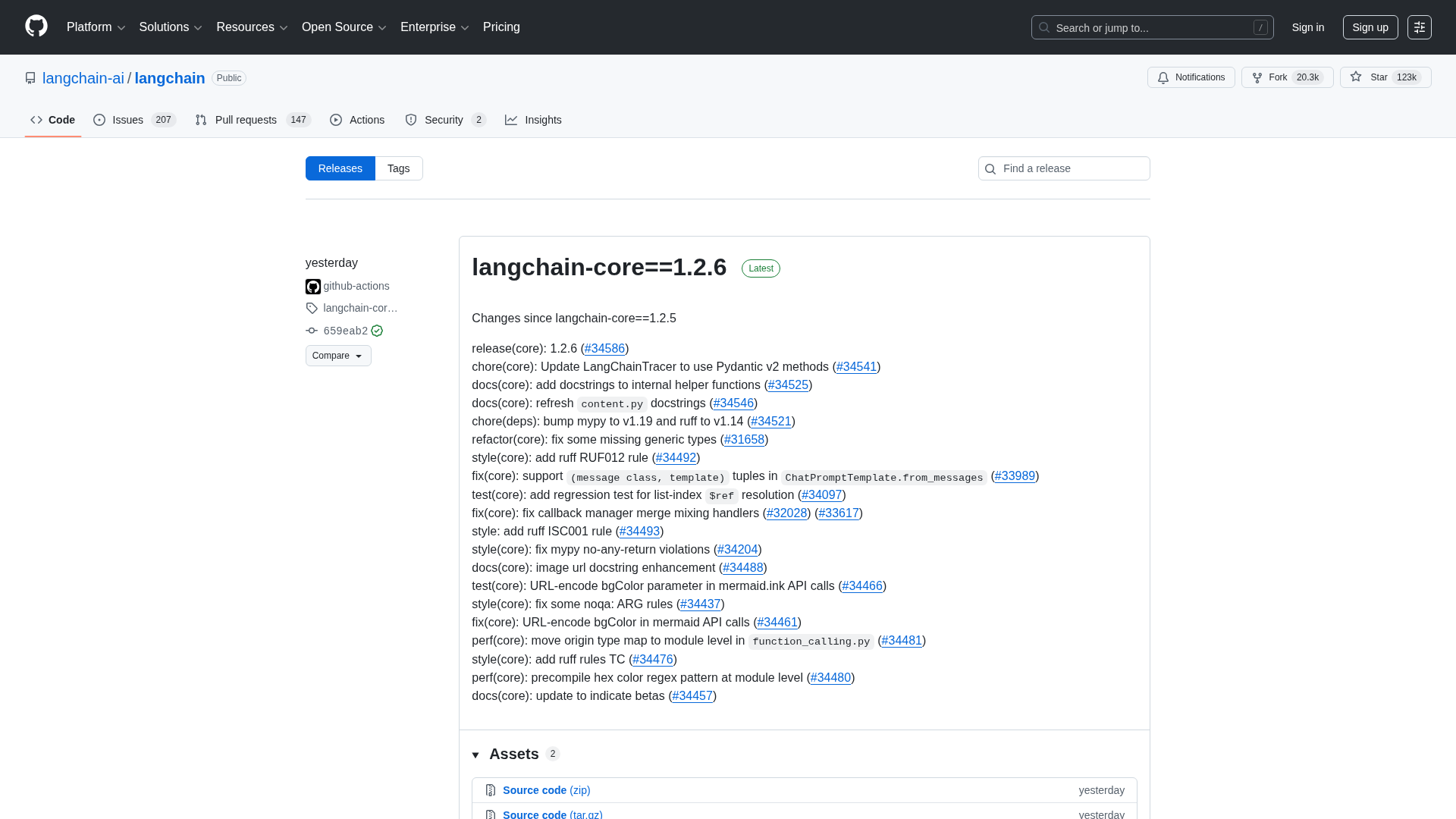
A comprehensive LangChain releases roundup detailing Core 1.2.6 and interconnected updates across XAI, OpenAI, Classic, and tests.
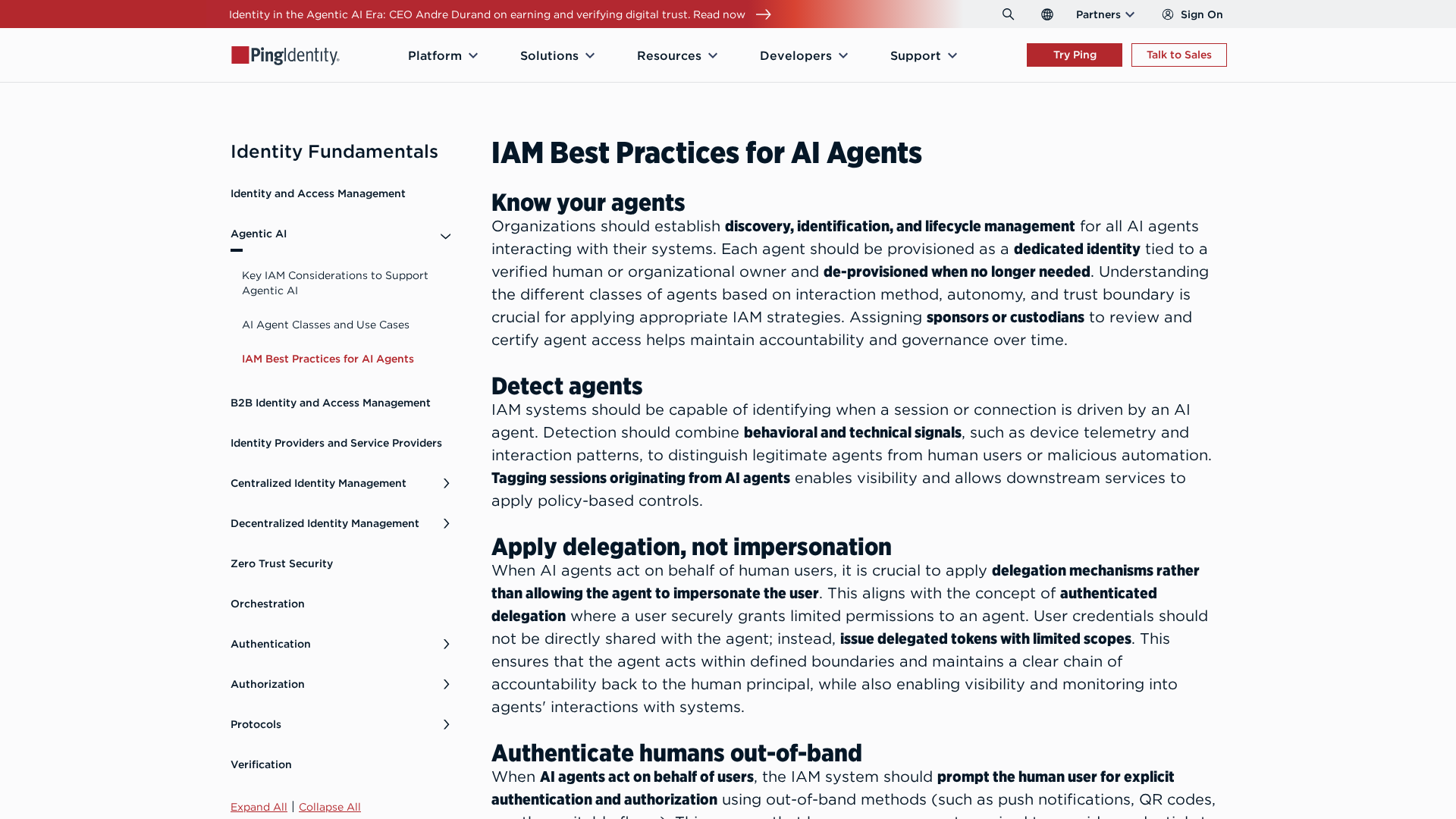
Best-practices for securing AI agents with identity management, delegated access, least privilege, and human oversight.

Cannot access the article content due to an access-denied error, preventing summarization.
A quick preview of POE-POE's pros and cons as seen in G2 reviews.
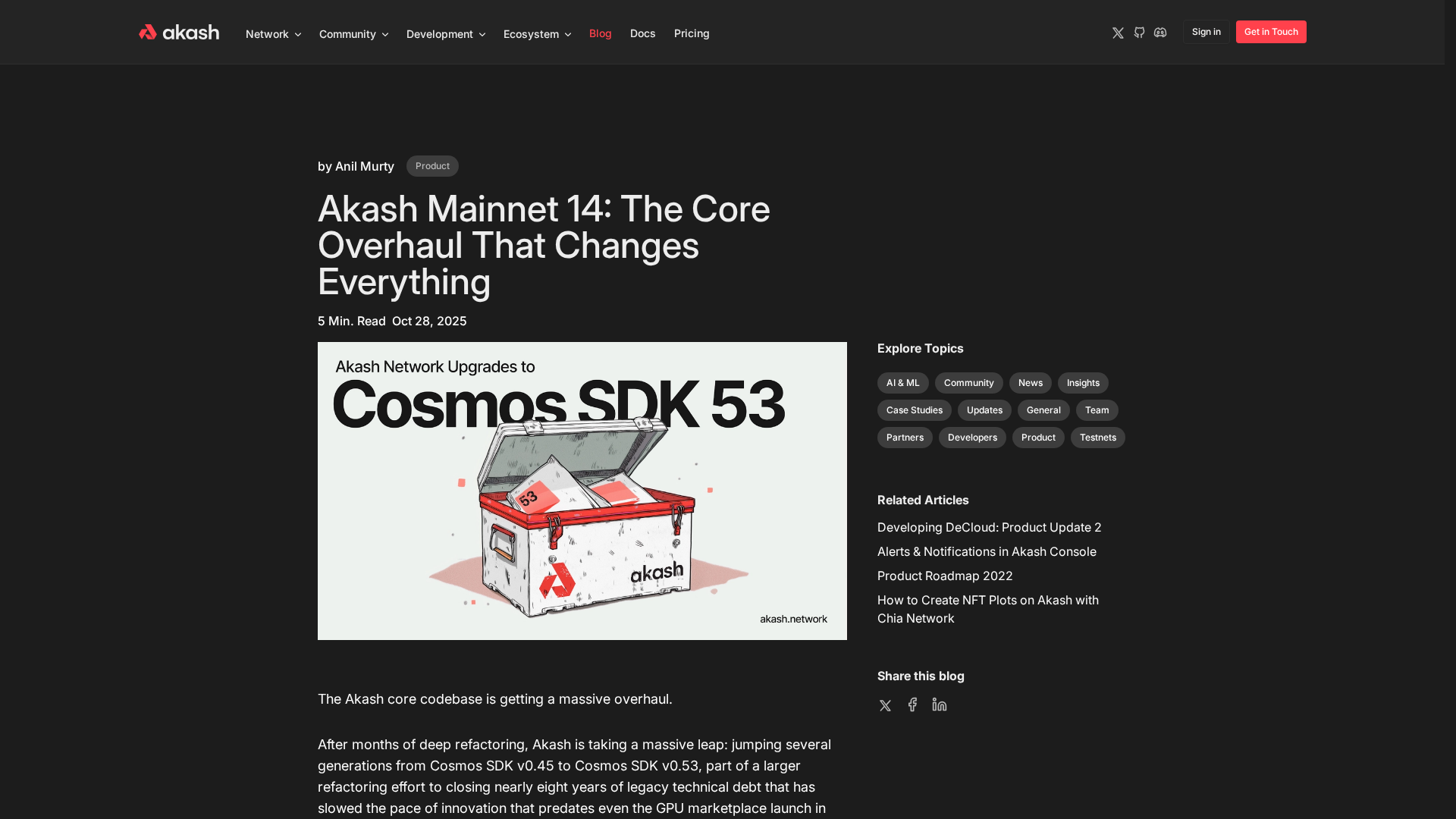
A foundational Core overhauL that speeds up development, simplifies authentication with JWT, and accelerates governance for Akash's decentralized cloud.