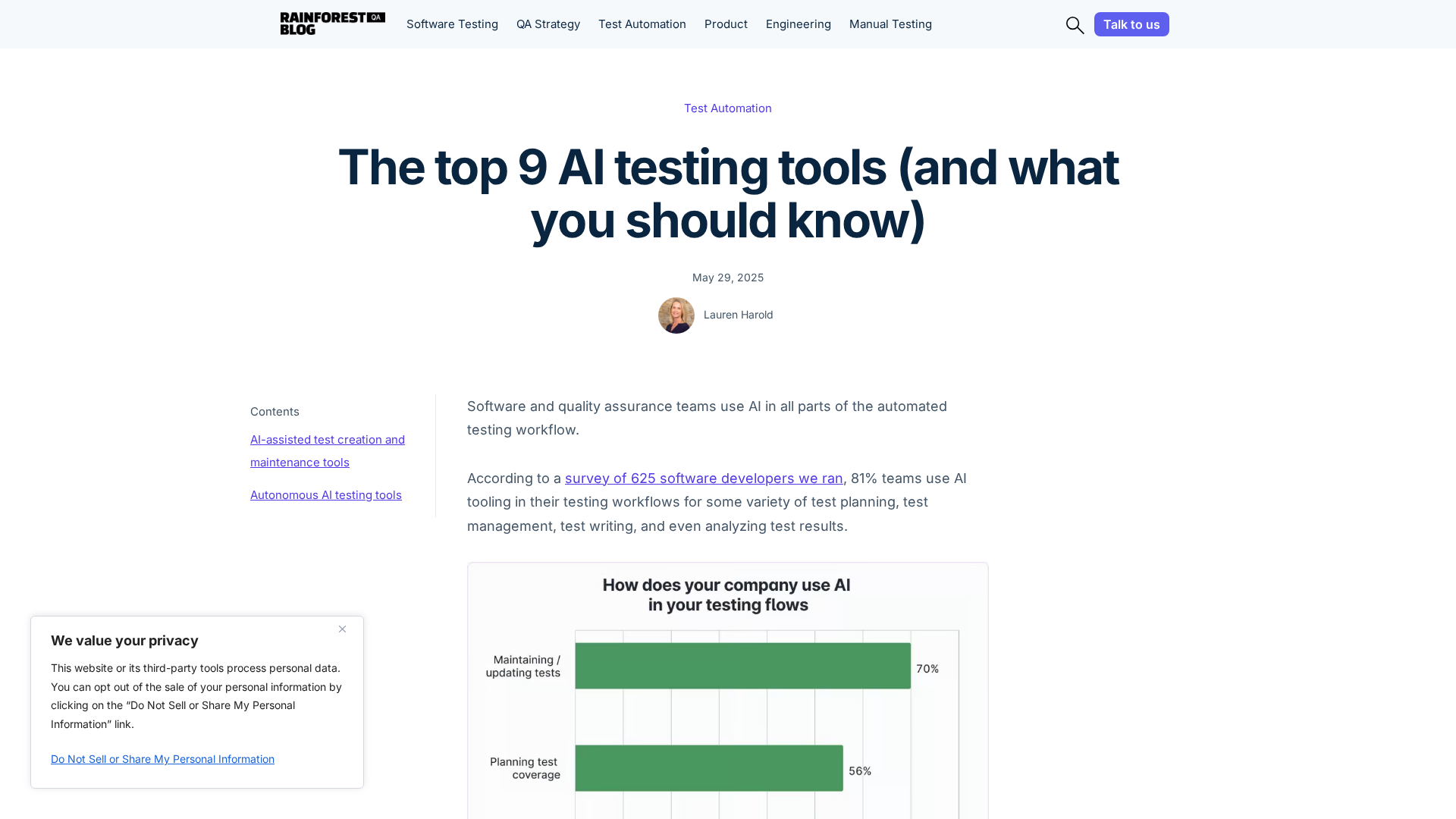
Topic Overview
Autonomous QA and AI testing tools apply generative models and agent automation to create, run, and maintain tests across the development lifecycle. As of 2026-02-13 this category spans AI Automation Platforms, AI Test Automation, and GenAI Test Automation: from no-code agent platforms that orchestrate workflows to in‑IDE copilots that suggest fixes and security checks. Key capabilities include natural-language and code-derived test generation, self‑healing E2E and visual tests to reduce flakiness, automated code and security review, and recording-rich evidence (video, logs) for faster debugging. Representative tools illustrate complementary roles: Bugster focuses on real‑browser end-to-end and visual tests with self‑healing and video/log evidence for flaky-test reduction; CodeRabbit provides context‑aware, AST- and code-graph-based AI code reviews that combine linters and SAST to produce senior‑engineer-level feedback; GitHub Copilot and JetBrains AI Assistant act as in‑IDE copilots that accelerate test and code authoring and enable autonomous agent workflows; Claude and similar LLM-based assistants support conversational test design, analysis, and triage; StackAI and like platforms provide no‑code/low‑code agent orchestration and governance for enterprise automation. The relevance now comes from maturity in model-driven test generation, tighter IDE and CI/CD integration, and demand to reduce manual maintenance costs. Adoption raises practical considerations: test reliability, explainability of generated tests, false positives in security analysis, and governance of autonomous agents. Evaluations should therefore weigh accuracy, integration with existing pipelines and issue trackers, observability (evidence capture), and controls for security and compliance rather than vendor claims alone.
Tool Rankings – Top 6
Software testing agent

AI-powered, context-aware code reviews that learn from feedback and integrate with IDEs and issue trackers.

An AI pair programmer that gives code completions, chat help, and autonomous agent workflows across editors, theterminal
In‑IDE AI copilot for context-aware code generation, explanations, and refactorings.
Anthropic's Claude family: conversational and developer AI assistants for research, writing, code, and analysis.

End-to-end no-code/low-code enterprise platform for building, deploying, and governing AI agents that automate work onun
Latest Articles (32)
Comprehensive release notes detailing new test-generation features, monorepo support, and CI/CD improvements across Bugster CLI.
A practical, step-by-step guide to fine-tuning large language models with open-source NLP tools.
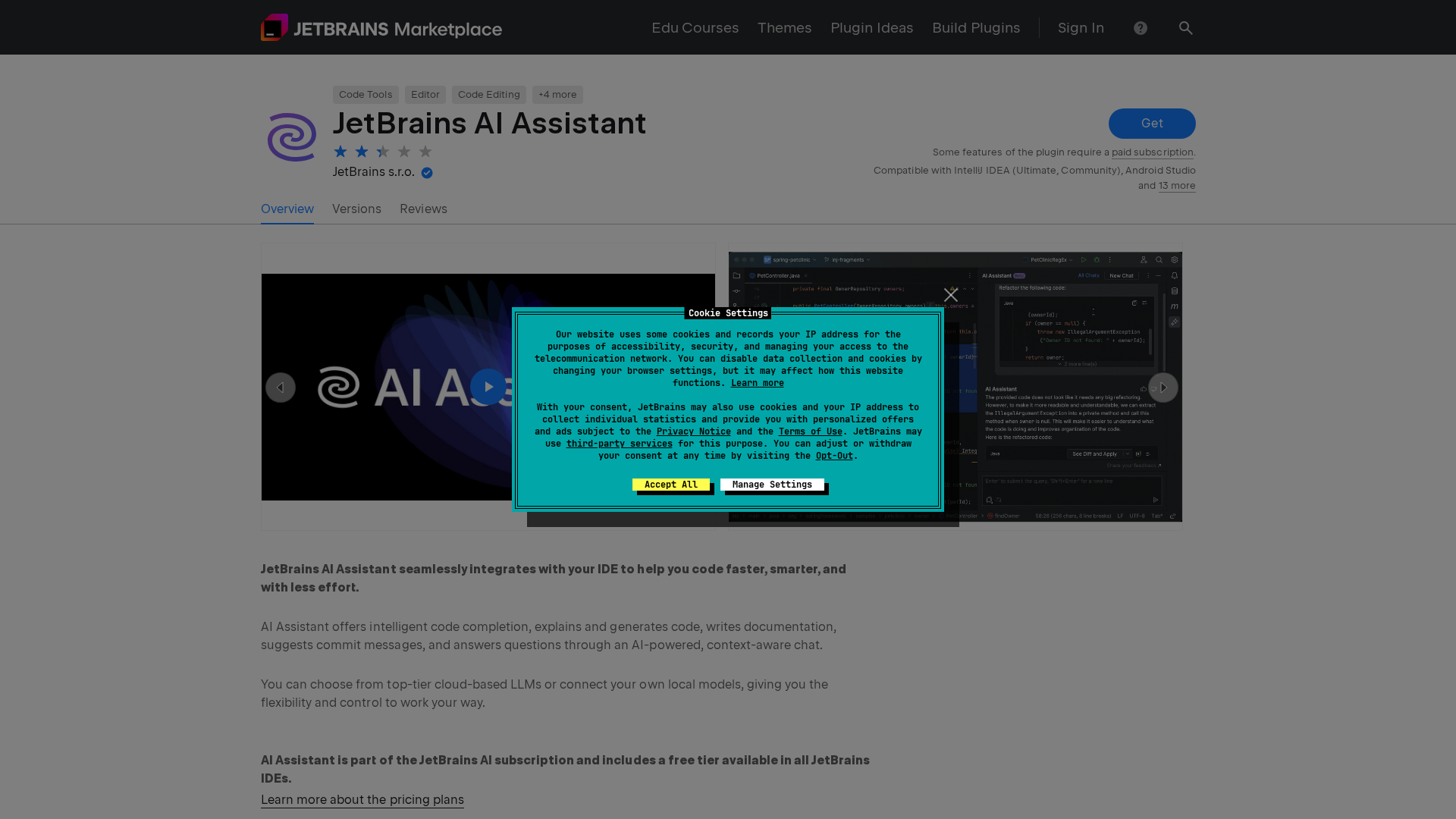
AI-powered coding assistant integrated into IntelliJ IDEs to generate code, explain concepts, and streamline development.
Google’s Gemini 3 Pro debuts with top benchmarks and wider integration, signaling a potential edge in the AI arms race.

Gemini 3 introduces vibe-codes, generative interfaces, and an experimental Gemini Agent to automate tasks across Google services.