Topic Overview
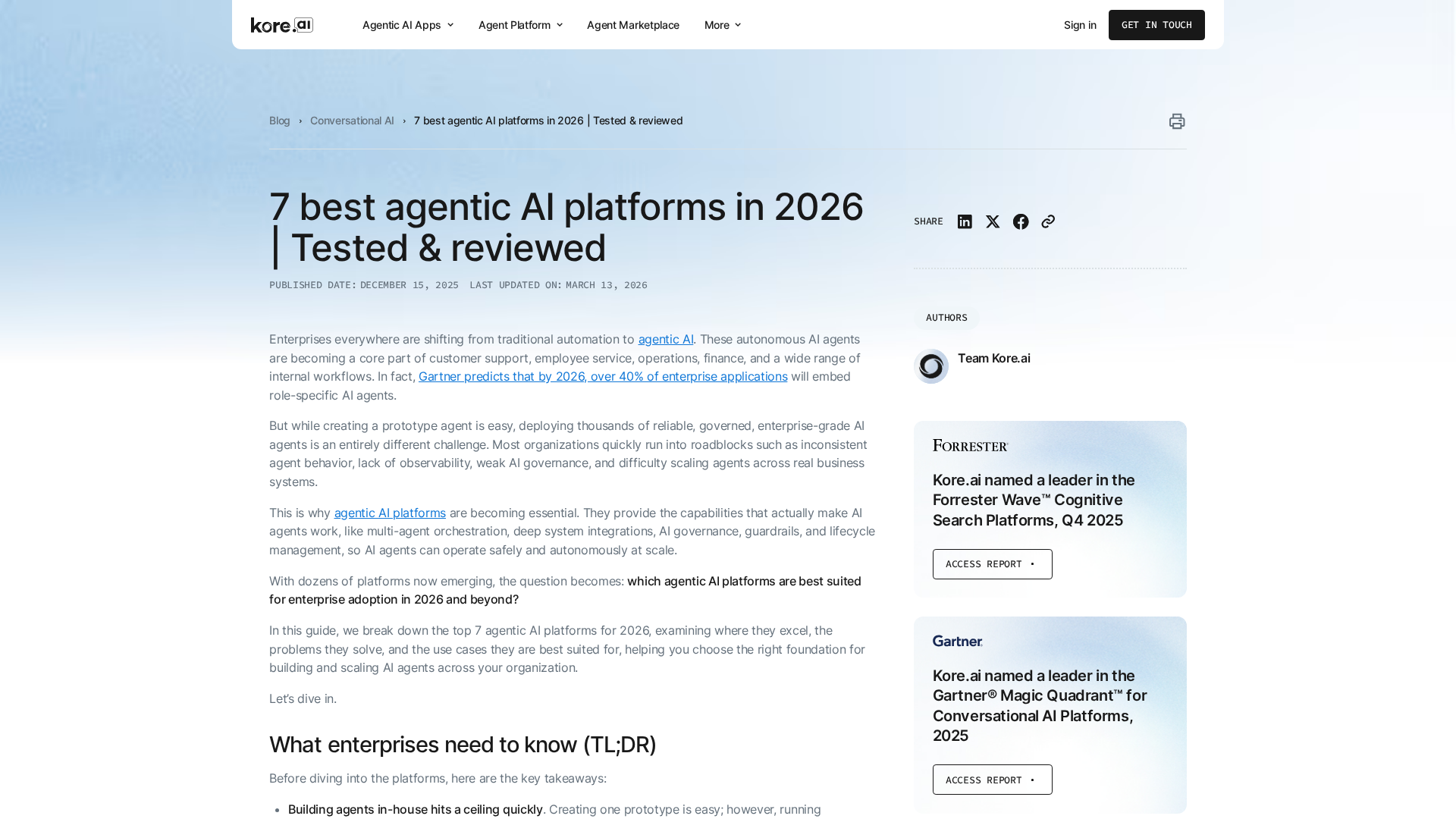
Agentic AI — autonomous agents that observe, plan and act across software and channels — has moved from prototype labs into production stacks. As of 2026, organizations choose between no-code/low-code builders, developer-first SDKs, infrastructure providers, and marketplaces depending on use case, scale, and governance needs. Key categories include AI Agent Marketplaces and Tool Marketplaces for discovery and monetization; Agent Frameworks and developer platforms for lifecycle, memory, and event chaining; AI Automation Platforms for workflow automation across interfaces; and Brand/Enterprise Agent Platforms for customer and employee experience. Representative tools illustrate the landscape: Lindy targets non‑technical teams with no‑code/low‑code agent creation and governance; GPTConsole and Cursor provide developer SDKs, APIs, CLIs and embedded editor agents for production agent development; Replit and GitHub Copilot accelerate build-and-deploy cycles via web IDEs and autonomous coding workflows; Adept’s ACT-1 focuses on agents that act inside software interfaces for multistep enterprise automation; Xilos emphasizes enterprise-grade visibility and service connectivity; Yellow.ai targets CX/EX automation across channels; Qodo (formerly Codium), Amazon CodeWhisperer and Aider address code quality, test generation and pair-programming support for agent-enabled SDLCs; Claude and other assistant families supply conversational and reasoning backends. Today’s decisions weigh developer velocity, observability, security and governance: teams select no-code platforms to speed pilots, developer SDKs for custom production agents, and infrastructure/marketplaces to scale, monetize and maintain visibility. The current trend emphasizes integrated lifecycle management (memory, event chains, testing), enterprise observability, and clearly defined governance to move agentic AI from experimentation to reliable, auditable automation.
Tool Rankings – Top 6

No-code/low-code AI agent platform to build, deploy, and govern autonomous AI agents.
Agentic AI (ACT-1) that observes and acts inside software interfaces to automate multistep workflows for enterprises.

Developer-focused platform (SDK, API, CLI, web) to create, share and monetize production-ready AI agents.

AI-powered online IDE and platform to build, host, and ship apps quickly.

An AI pair programmer that gives code completions, chat help, and autonomous agent workflows across editors, theterminal
Intelligent Agentic AI Infrastructure
Latest Articles (114)
OpenAI’s bypass moment underscores the need for governance that survives inevitable user bypass and hardens system controls.
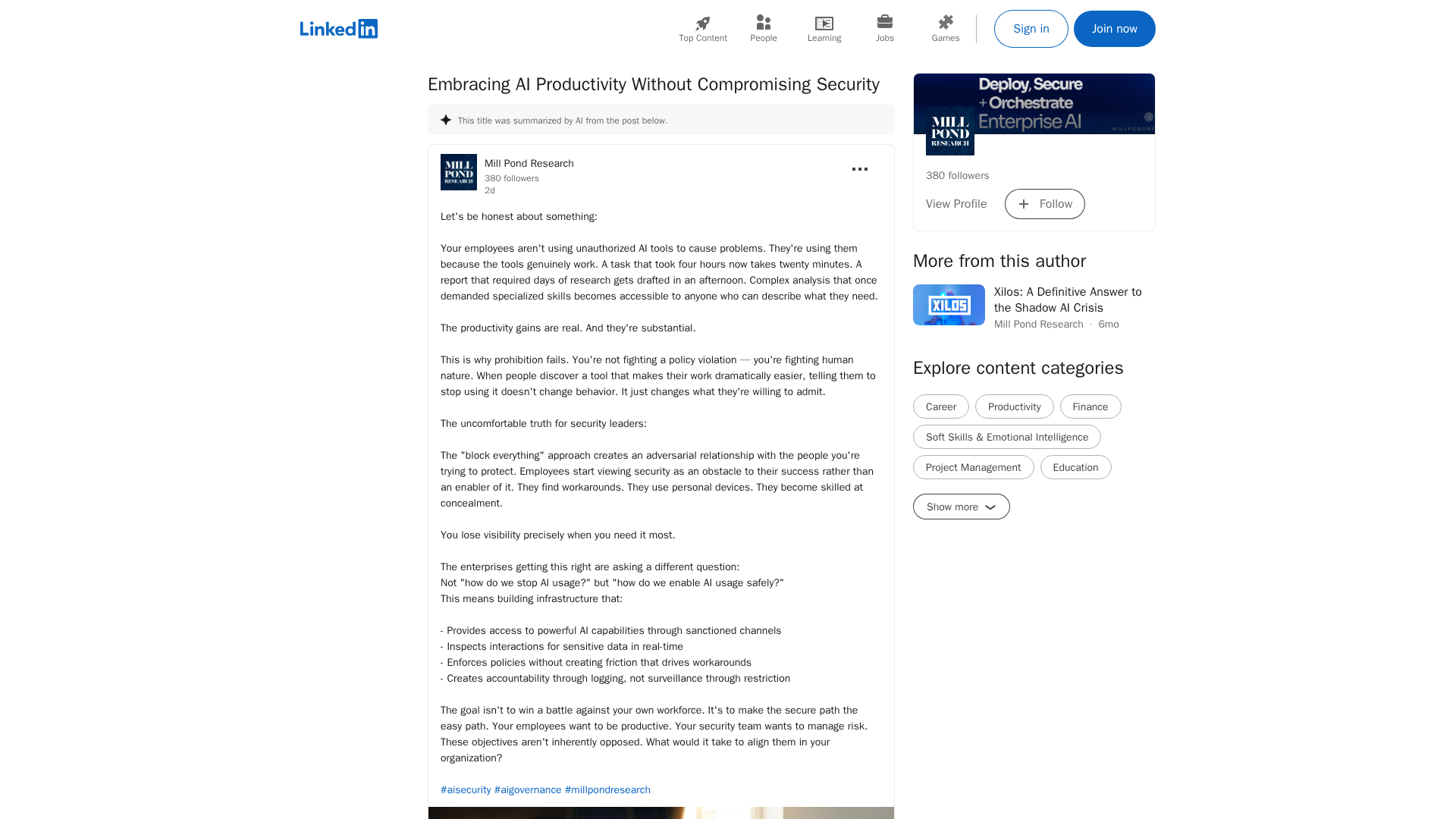
A call to enable safe AI use at work via sanctioned access, real-time data protections, and frictionless governance.
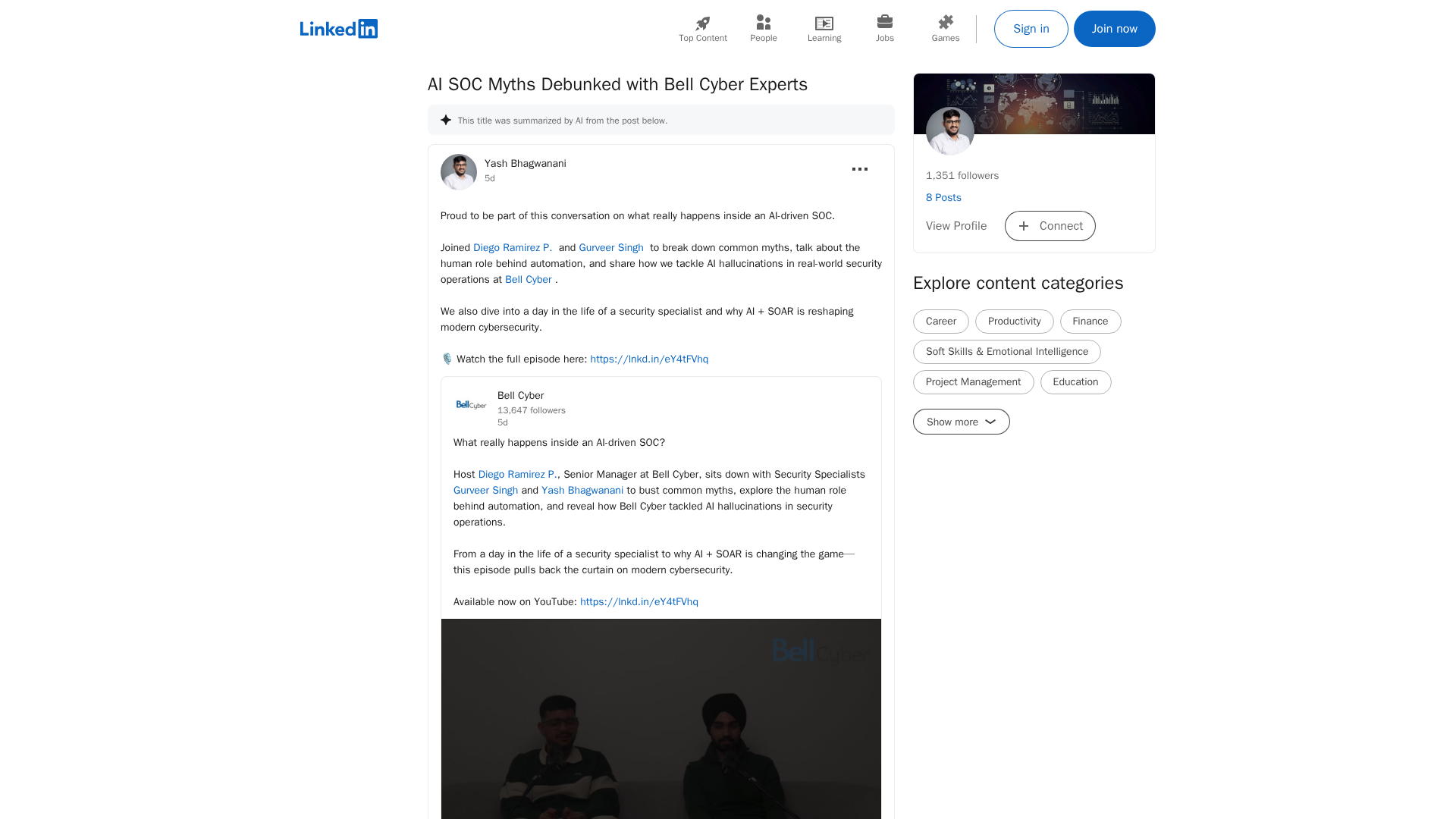
A real-world look at AI in SOCs, debunking myths and highlighting the human role behind automation with Bell Cyber experts.
Explores the human role behind AI automation and how Bell Cyber tackles AI hallucinations in security operations.
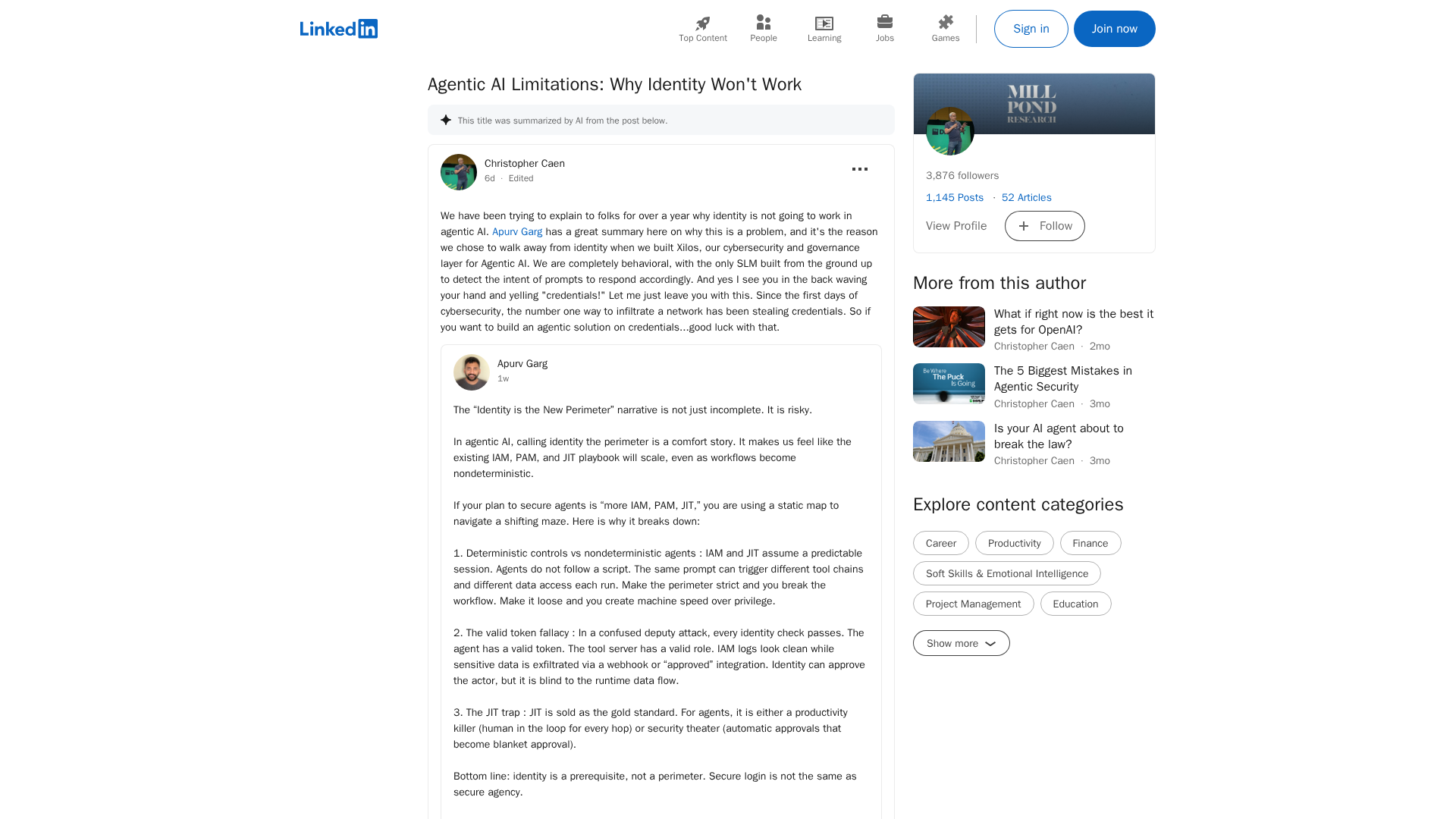
Identity won’t secure agentic AI; you need runtime visibility and action-based policy.