Topic Overview
Enterprise AI agent suites bundle foundation models, connectors, orchestration, and governance to automate complex business workflows. This topic examines how major platform families (Microsoft Copilot, Google Gemini, Anthropic Claude, OpenAI Enterprise) align with three practical categories—AI Automation Platforms, Low‑Code Workflow Platforms, and Agent Frameworks—and how specialist tools (Kore.ai, LangChain, GPTConsole, Notion, GitHub Copilot, JetBrains AI Assistant) fit into real deployments. As of 2026‑06‑03 organizations are prioritizing multi‑agent orchestration, observable pipelines, and stronger governance controls when moving from pilots to production. Enterprise buyers choose suites based on integration with existing SaaS and cloud stacks, data residency and compliance, observability for agent decision paths, and the degree of low‑code vs. pro‑code work required. Kore.ai represents no‑code to pro‑code multi‑agent orchestration with an emphasis on governance and observability; LangChain and similar frameworks provide developer‑centric libraries and stateful tooling (e.g., LangGraph) for building, testing and deploying reliable agents; GPTConsole offers SDKs and lifecycle tooling for production agent deployments. Google Gemini, Anthropic Claude, Microsoft Copilot and OpenAI Enterprise supply model families, APIs and managed services that teams plug into these frameworks. Notion, GitHub Copilot and JetBrains AI Assistant are examples of workspace and in‑IDE copilots that shorten the feedback loop for knowledge work and developer productivity. Choosing the right combination depends on control, scalability and developer resources: low‑code platforms accelerate adoption, while agent frameworks and developer platforms are essential for bespoke, audited automation. Key evaluation criteria are security/compliance, observability, memory and state management, integration breadth, and testing/evaluation tooling.
Tool Rankings – Top 6

Enterprise AI agent platform for building, deploying and orchestrating multi-agent workflows with governance, observabil

Google’s multimodal family of generative AI models and APIs for developers and enterprises.

Engineering platform and open-source frameworks to build, test, and deploy reliable AI agents.
A single, block-based AI-enabled workspace that combines docs, knowledge, databases, automation, and integrations to sup

Developer-focused platform (SDK, API, CLI, web) to create, share and monetize production-ready AI agents.

An AI pair programmer that gives code completions, chat help, and autonomous agent workflows across editors, theterminal
Latest Articles (61)
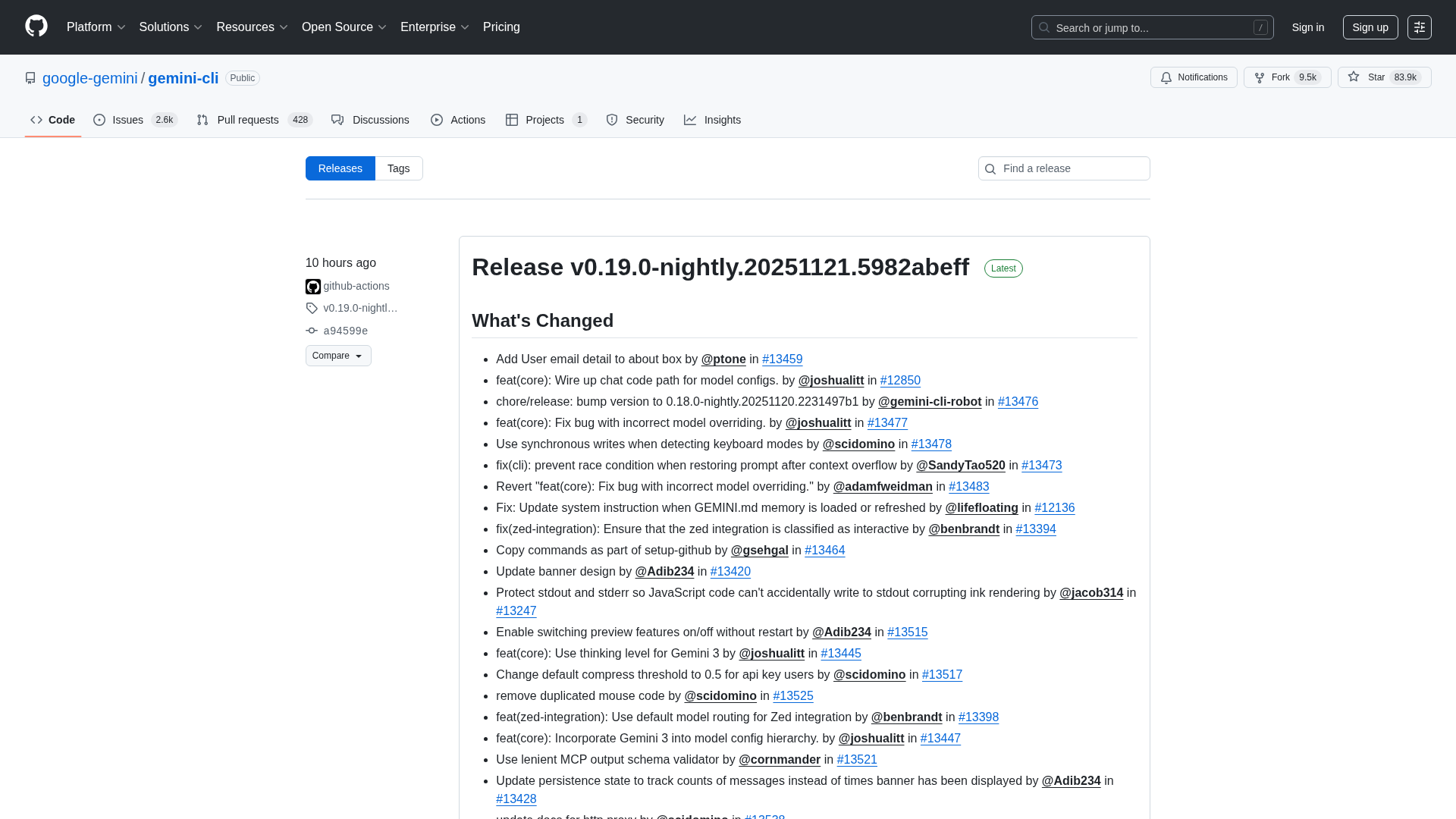
Overview of the Gemini CLI v0.36.0-preview release series, highlighting architectural, CLI, and UI changelogs across multiple pre-release versions.
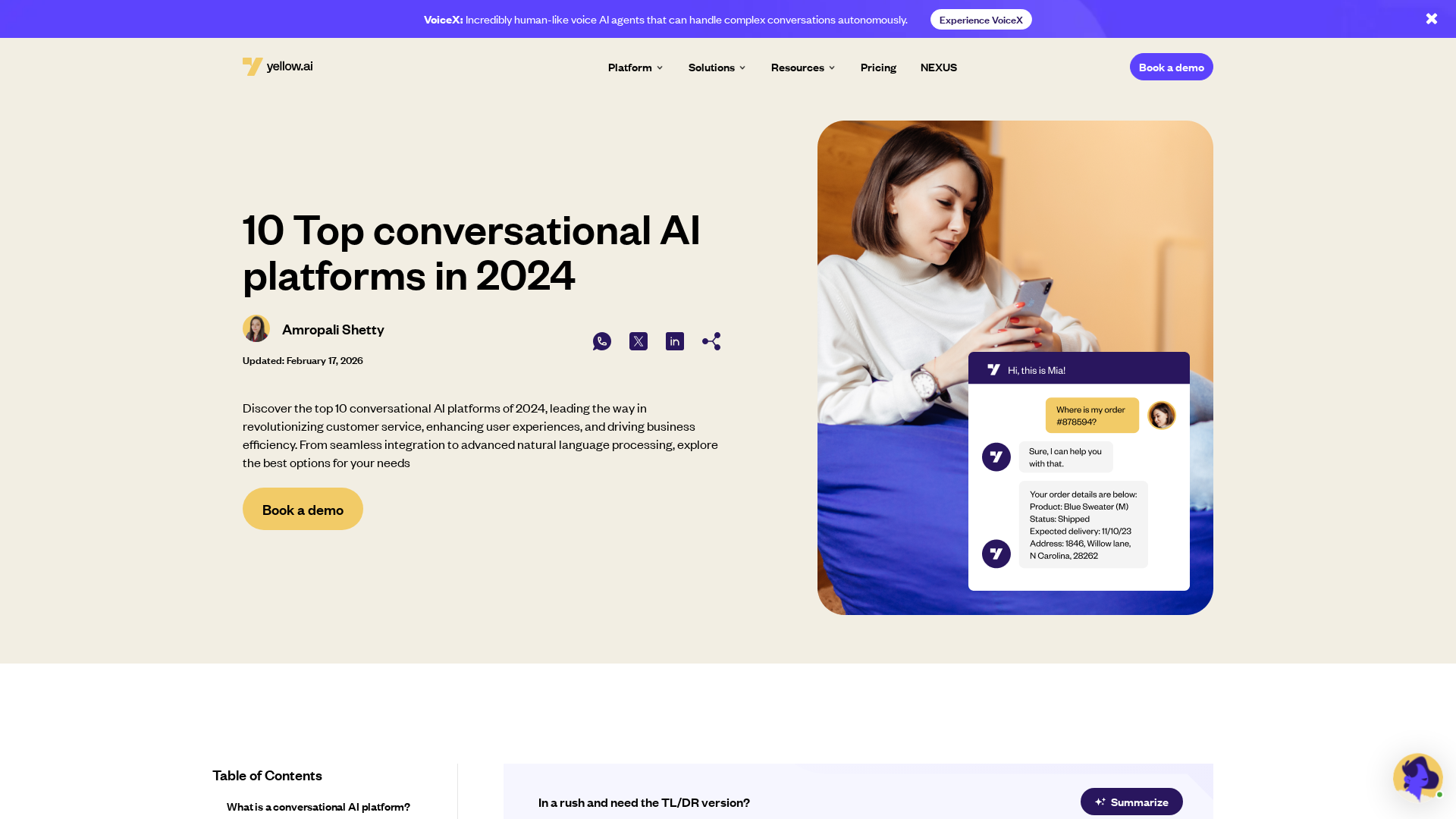
A concise guide to the top 10 conversational AI platforms in 2024, with features, benefits, and use cases.
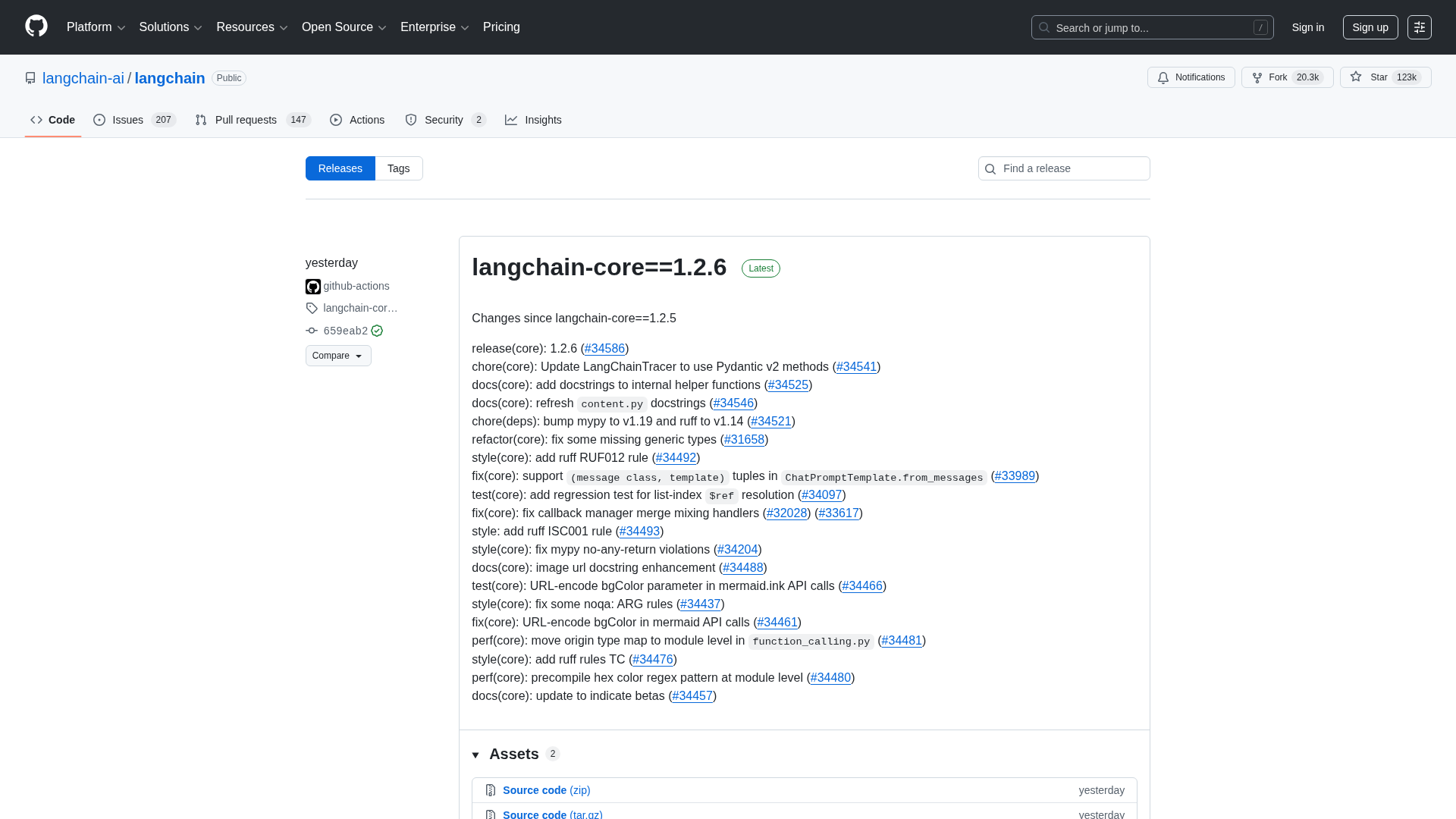
A comprehensive LangChain releases roundup detailing Core 1.2.6 and interconnected updates across XAI, OpenAI, Classic, and tests.
In-depth look at Gemini 3 Pro benchmarks across reasoning, math, multimodal, and agentic capabilities with implications for building AI agents.

Cannot access the article content due to an access-denied error, preventing summarization.