Topic Overview
This topic examines the current landscape of frontier large language models (LLMs) and multimodal platforms as they compete for enterprise and developer adoption through AI marketplaces. By 2026, multimodal generative AI has shifted from experimental demos to production platforms that combine text, images, code and actions; organizations now evaluate models not only on raw capability but on integration, governance, customization and cost. Key offerings include Google Gemini (a multimodal family accessible via Google AI APIs, AI Studio and Vertex AI), Vertex AI (Google Cloud’s end-to-end platform for discovery, fine-tuning, deployment and monitoring), Anthropic’s Claude family (conversational and developer assistants), Cohere (enterprise-focused private/customizable LLMs and retrieval), Mistral (efficiency- and openness-oriented foundation models and production tooling), IBM watsonx Assistant (no-code and developer tools for enterprise virtual agents), and Adept (agentic systems that act inside software to automate workflows). OpenAI remains a central reference point for capability benchmarks and broad developer adoption, while Amazon’s Project Prometheus—an industry-reported initiative—signals Amazon’s intent to embed advanced multimodal models across AWS and consumer services; public details continue to evolve. The comparison focuses on three practical axes: model capability (multimodal reasoning, context length, agentic APIs), platform services (fine-tuning, retrieval, orchestration, monitoring), and enterprise controls (data privacy, governance, on-prem/cloud options). For AI marketplaces, these trends matter because buyers increasingly choose stacked offerings—model + tooling + deployment—rather than isolated models. Understanding trade-offs among openness, customization, integration overhead, and operational controls helps procurement teams and developers match use cases (agents, automation, conversational interfaces, search) to the right platform.
Tool Rankings – Top 6

Google’s multimodal family of generative AI models and APIs for developers and enterprises.

Unified, fully-managed Google Cloud platform for building, training, deploying, and monitoring ML and GenAI models.
Anthropic's Claude family: conversational and developer AI assistants for research, writing, code, and analysis.

Enterprise-focused LLM platform offering private, customizable models, embeddings, retrieval, and search.

Enterprise-focused provider of open/efficient models and an AI production platform emphasizing privacy, governance, and

Enterprise virtual agents and AI assistants built with watsonx LLMs for no-code and developer-driven automation.
Latest Articles (85)
A vendor‑agnostic guide to the 14 best AI governance platforms in 2025, with criteria, comparisons, and practical buying guidance.
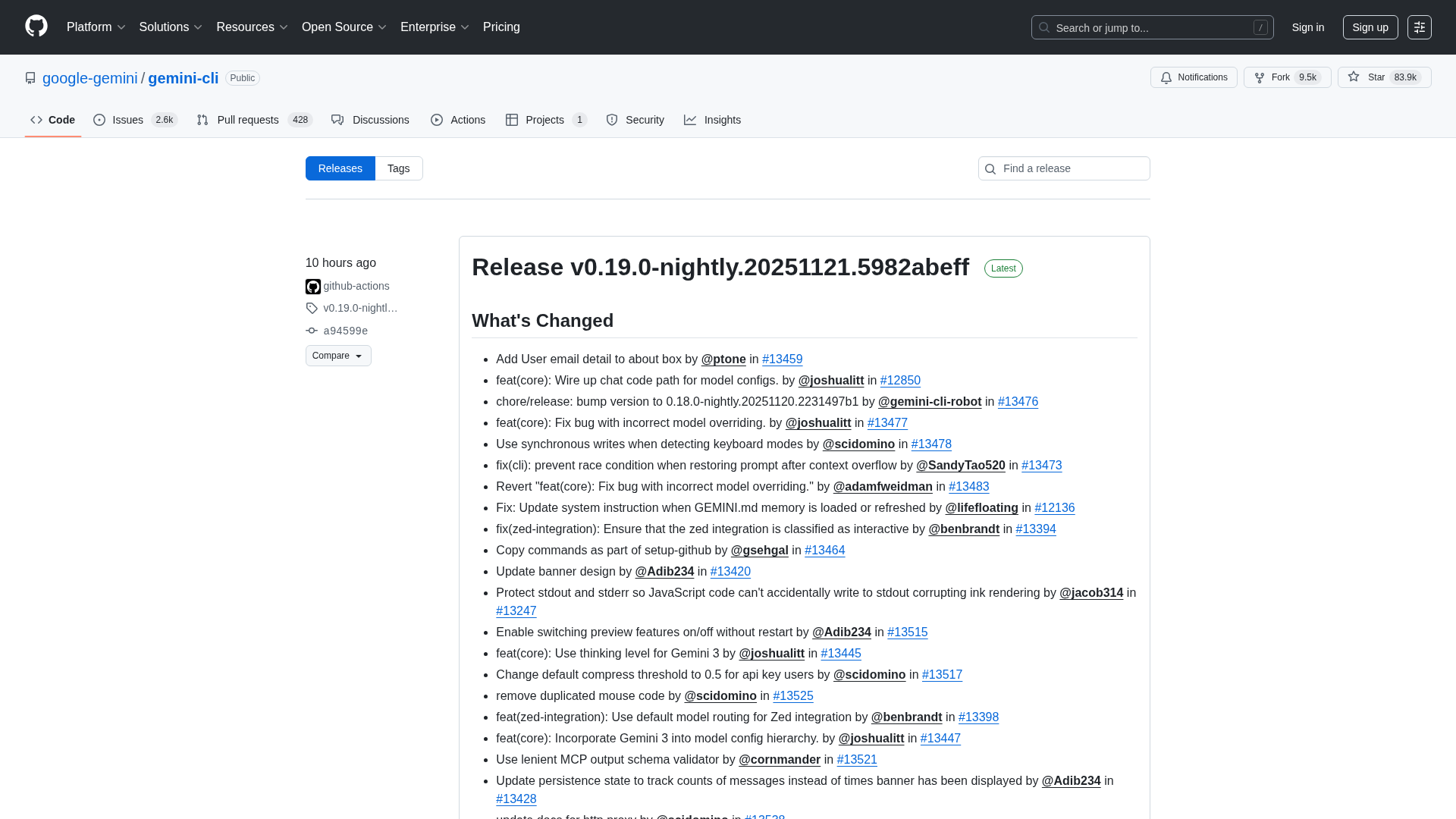
Overview of the Gemini CLI v0.36.0-preview release series, highlighting architectural, CLI, and UI changelogs across multiple pre-release versions.

Adobe nears a $19 billion deal to acquire Semrush, expanding its marketing software capabilities, according to WSJ reports.
Wolters Kluwer expands UpToDate Expert AI with UpToDate Lexidrug to bolster drug information and medication decision support.
A practical, step-by-step guide to fine-tuning large language models with open-source NLP tools.